Roll into any campground at sunset and you can usually spot who has been on the road for years. The veterans look like they’re doing nothing, just sitting back with a drink. In reality, they’re quietly setting up the rig for the night, and first-timers tend to see only the chairs and the campfire.
Some of these habits take two minutes. A few were learned the hard way, with stories nobody tells at campground happy hour. Veterans agree on most of them and argue loudly about a couple, and we’ll flag which ones. The strangest habit involves a flashlight and a slow walk, and the one waiting at #1 costs almost nothing.
#15 – Nose-Out Parking, So the Rig Can Leave in Minutes
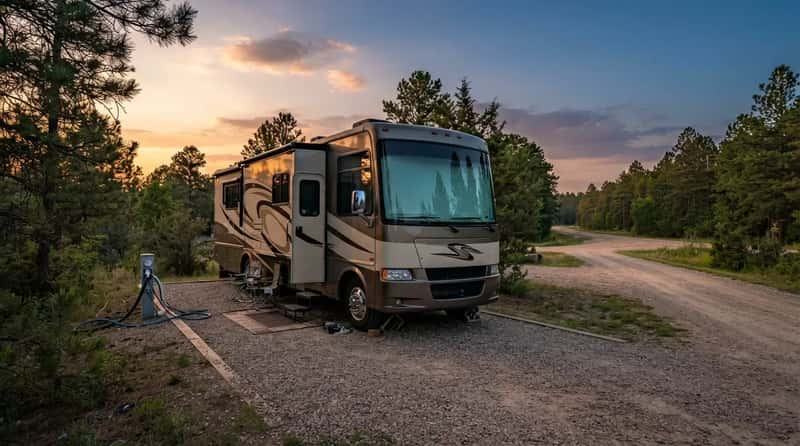
Before the sun drops, plenty of long-haul regulars decide which way the rig points. Many back in so the front faces the road. That means a fast exit if a storm, a wildfire alert or a neighbor’s emergency forces a move. Nobody wants to reverse a 30-foot rig in the dark with a siren in the distance.
Some travellers also keep the keys, phone and a flashlight in the same spot every night. At 2 a.m., nobody wants to hunt for them. Not everyone buys into the nose-out rule, though. Some veterans call it overrated at established campgrounds, where staff handle evacuations and sites are laid out for specific angles. In remote boondocking spots it makes far more sense.
#14 – The Slow Flashlight Walk Nobody Explains to Newcomers
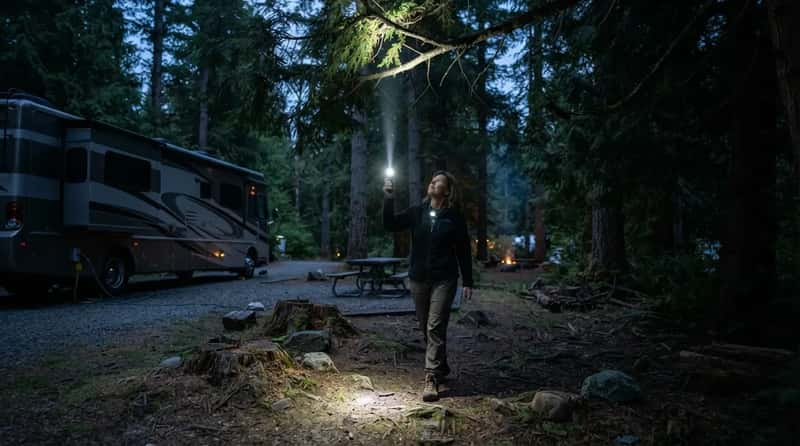
As the light fades, experienced campers walk the whole site, and they aren’t admiring the view. They look up for dead limbs, which land managers call “widowmakers,” and down for stumps, rocks and soft ground. A rig can sit under a hazardous branch for hours before anyone notices it. Forest and park agencies do close sites when hazard trees are found, which shows how seriously the risk is taken.
They also look for animal signs like droppings, burrows and trampled paths to water. A site that looks perfect at 4 p.m. can feel very different once wildlife starts moving. Then they walk where the stabilizers and steps will go to test the ground. First-timers skip all of this because the site looked fine on arrival, and that’s exactly the mistake.
Worth Knowing
- Look up: dead limbs, split trunks and leaning trees over your roofline.
- Look down: hidden stumps, sharp rocks and soft, damp soil.
- Look around: burrows, droppings and trails leading to water.
- Walk the footprint: test the exact spots where jacks and steps will land.
#13 – Leveling for Your Bed, Not Just for the Fridge
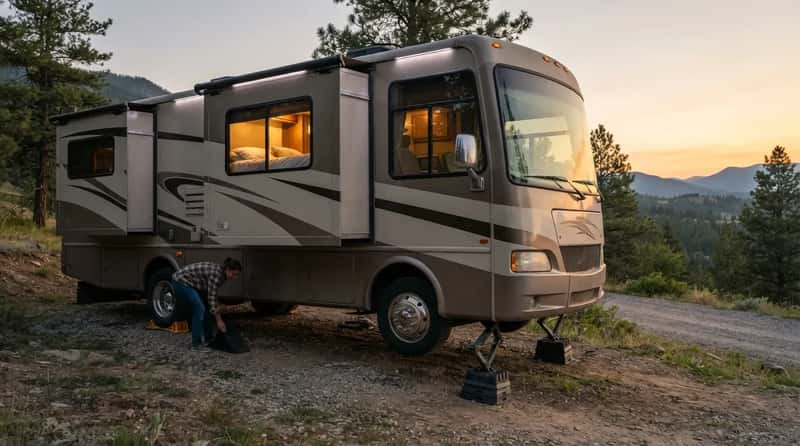
Newcomers level the rig once, mostly to stop things rolling off the counter. Long-haul travellers check it again at dusk, because that’s when the bed becomes the priority. Even a slight tilt can leave you sliding toward one side of the mattress all night. Many veterans prefer sleeping with their head slightly uphill and adjust to suit.
They also re-chock the wheels after leveling, since settling ground can shift a rig that looked stable an hour earlier. It takes five minutes, and it explains why seasoned RVers rarely complain about bad nights. Plenty of first-timers blame the mattress for a problem that was really the parking spot.
#12 – Rolling Up the Awning Before the Wind Picks a Fight
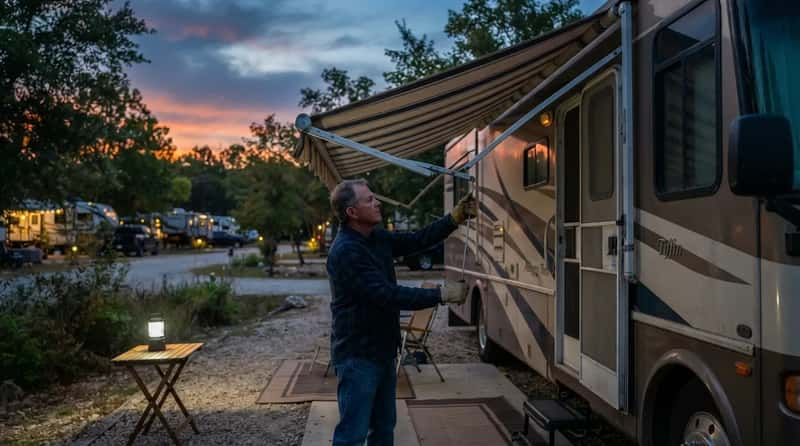
Walk through any campground at dusk and you’ll spot the first-timers by their open awnings. Veterans retract theirs for the night, even under a clear sky. Wind often picks up after dark, and an extended awning acts like a sail bolted to the side of your home. Wind-damaged awnings are a common and costly repair, and it usually happens when nobody is watching.
Many travellers also treat the awning as a leaving-the-site rule. If they walk off for dinner or a hike, it goes up. In rain, some tilt one end down so water runs off instead of pooling and bending the arms. A few argue this is overkill in calm, dry regions, but ask anyone who has watched an awning fold over a roof. They don’t take the chance.
#11 – Locking Down Every Crumb Before the Night Shift Arrives
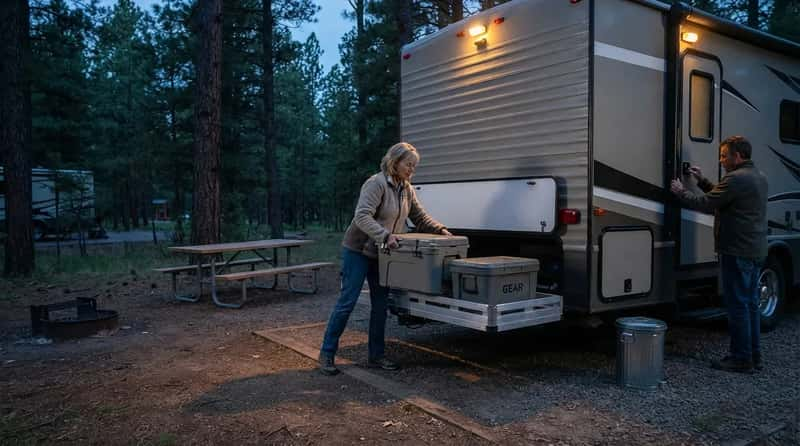
At dusk, wildlife starts treating your campsite like a buffet. Experienced RVers bring in coolers, dishes, pet food and trash, or lock them in a hard-sided vehicle. Raccoons, skunks and rodents are the usual visitors, and in bear country the stakes are much higher. Parks often treat scented items like toothpaste, soap and sunscreen as attractants too.
Regulars also check for the small gaps that invite visitors, like a cracked outdoor-kitchen door or a loose vent screen. A mouse needs only a tiny opening, and rodents are known to chew wiring. First-timers learn this by finding droppings in a drawer. Veterans never get that surprise because they secure the rig first.
#10 – Cracking a Vent Open, Even When It’s Cold
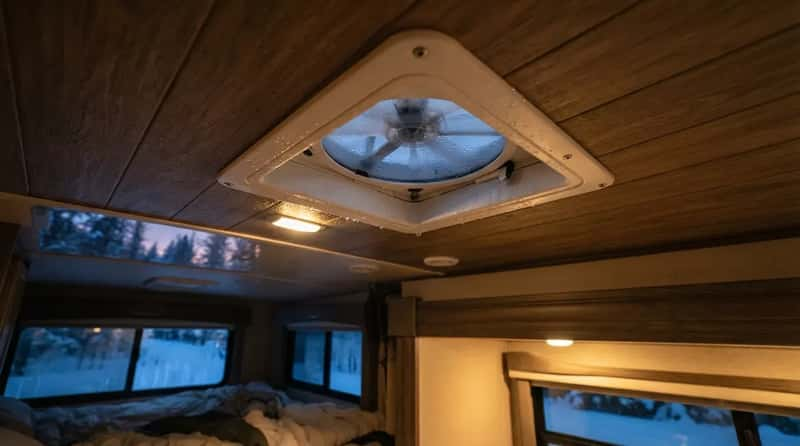
It feels backward to let outside air into a sealed, heated rig on a chilly night. Yet long-haul travellers do it on purpose, usually by cracking a roof vent or window slightly. Cooking, showering and even breathing release moisture, and a tight RV traps it. By morning, that moisture can show up as dripping windows and damp corners where mold likes to settle.
Cold climates make this more important, not less, because warm indoor air meets cold glass and the water appears. Travellers who winter in an RV often treat humidity as a daily chore. First-timers usually find out in week two, when they wipe a window and see black spots.
#9 – The Two-Second Alarm Test That Veterans Never Skip
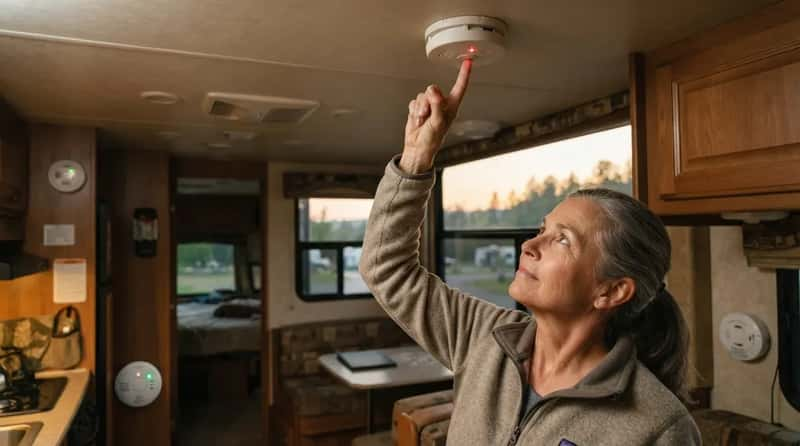
Before settling in, careful RVers press the test buttons on their smoke, carbon monoxide and propane alarms. It takes seconds, and it matters because a small, closed space leaves little margin for error. Alarms don’t last forever, and most have an expiration date printed on the back. Veterans check that date as part of the routine and replace anything past it.
Propane is heavier than air, which is why leak detectors sit low in the rig. Many travellers also glance at their propane connections and confirm the stove knobs are off. If a generator or heater is part of the evening plan, they think about where the exhaust will drift. First-timers treat alarms as set-and-forget, and that’s the gap.
Fast Facts
- Smoke alarms are generally replaced about every 10 years, a timeline fire-safety groups like the NFPA recommend.
- Carbon monoxide alarms often last only 5 to 7 years, depending on the model.
- Propane vapor is roughly 1.5 times heavier than air, so it pools near the floor.
- Check the date on the label, not the date you bought it.
#8 – Switching to Red or Warm Light After Sunset
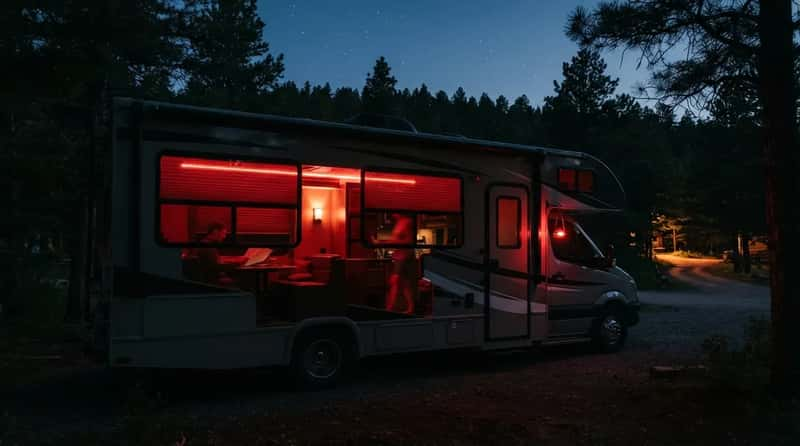
Walk through a dark campground and you’ll notice some rigs glowing white while others look almost invisible. The invisible ones have switched to red or dim, warm lighting. Stargazers and astronomers have long used red light because it protects night vision. That’s why many veterans keep a red headlamp by the door instead of a bright flashlight.
Closing the blinds matters too. A bright interior at night draws bugs, shows the neighbors your business and dulls the sky for everyone nearby. Many travellers treat it as basic etiquette in dark-sky areas. It’s also nearly free, since it costs one bulb swap.
#7 – Filling, Dumping and Hooking Up While the Light Lasts
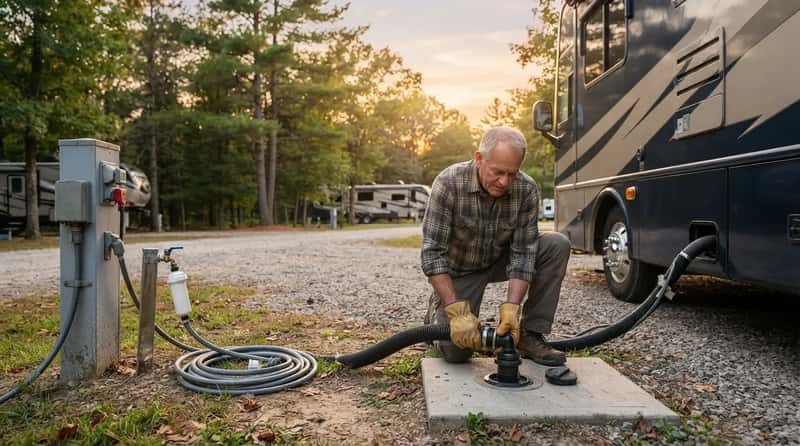
Smart RVers handle the messy jobs before dark. Dumping tanks, connecting hoses and topping off fresh water are all easier when you can see your fittings. Doing sewer work by flashlight is one of the surest ways to end up with a very bad evening. Veterans schedule tank work for late afternoon so nothing is left for the dark.
If temperatures are heading below freezing, they disconnect the hose and drain exposed lines before bed. Water left in a hose can freeze and crack fittings, and a split connection is not a nice surprise at 6 a.m. First-timers tend to say “I’ll do it in the morning,” and then discover why that fails.
Quick Compare
- Daylight dump: you can see drips, cracked fittings and loose connections right away.
- Flashlight dump: one hand holds the light, and small leaks hide in the shadows.
- Night at 32°F or below: a connected hose is the one most likely to freeze overnight.
#6 – The Final Lap Around the Rig
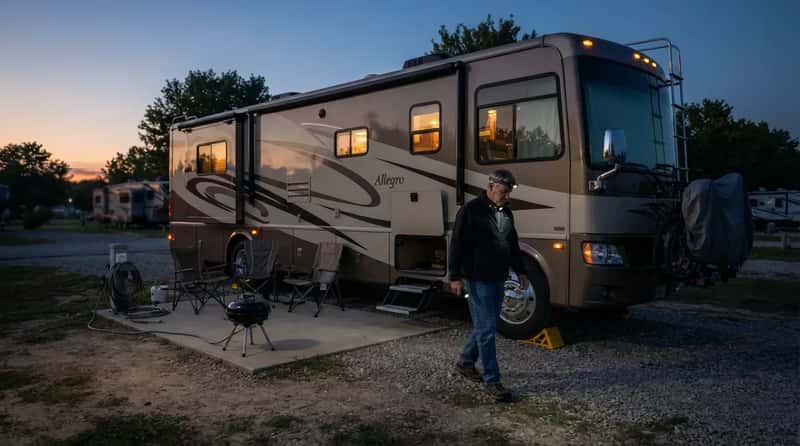
Just before bed, many long-haul travellers walk once around the outside. They stow folding chairs, mats, grills, bikes and anything else that can blow away, get stolen or become a trip hazard. That one lap is how plenty of people catch an open storage bay or a forgotten step. It also gives them a last look at the stabilizers, hitch and tire chocks.
It’s not glamorous, and nobody posts a photo of it. But it’s the moment when forgotten stuff gets noticed, instead of after the wind has already moved it. Many long-timers say this lap is what separates the cautious from the casual.
#5 – Putting the Campfire Out Properly, Not Politely
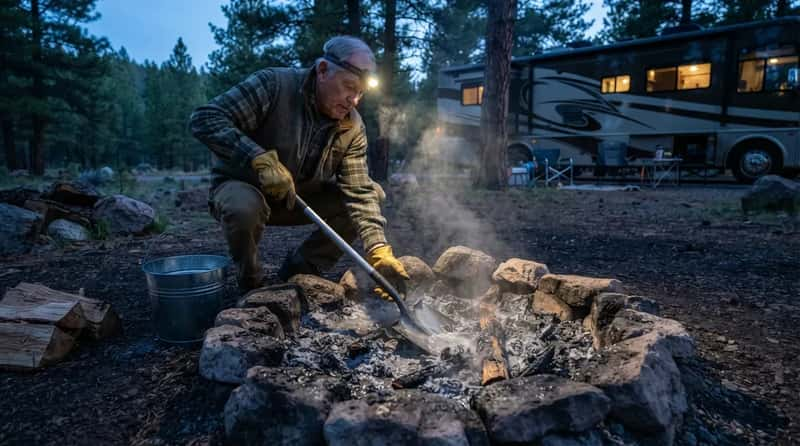
A campfire is the classic dusk ritual, and veterans take the shutdown part seriously. The widely taught method is “drown, stir and feel,” the same message Smokey Bear has promoted for decades. A fire that looks dead can still hide hot coals that reignite when the wind picks up. Veterans pour water, stir the ashes and keep going until the pit is cool to the touch.
Here’s the controversial bit. Some seasoned RVers now skip wood fires altogether, arguing that a propane fire ring is cleaner, safer and easier to shut off. Traditionalists say that’s not real camping. Either way, nobody argues with a cold pit at bedtime.
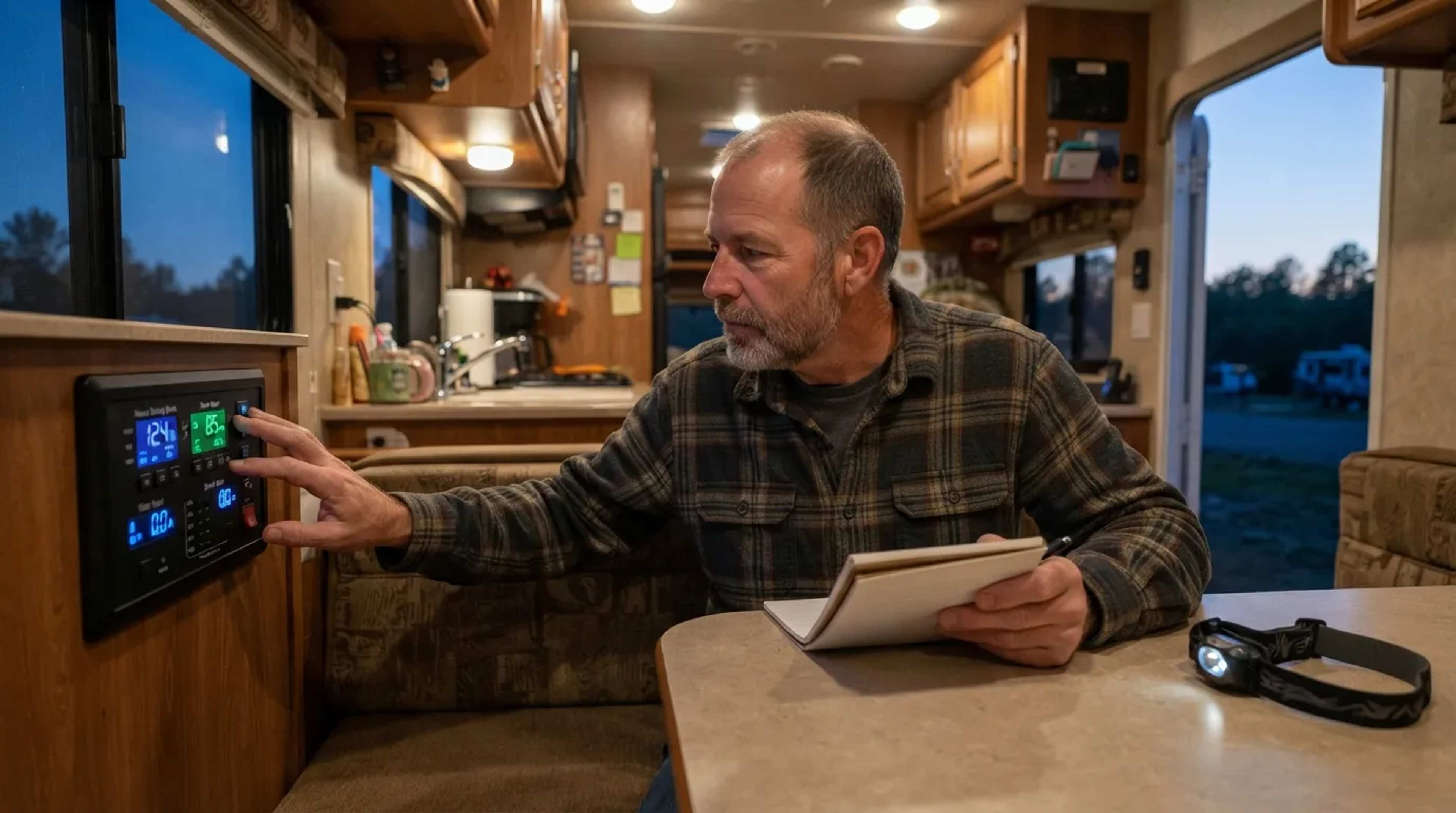
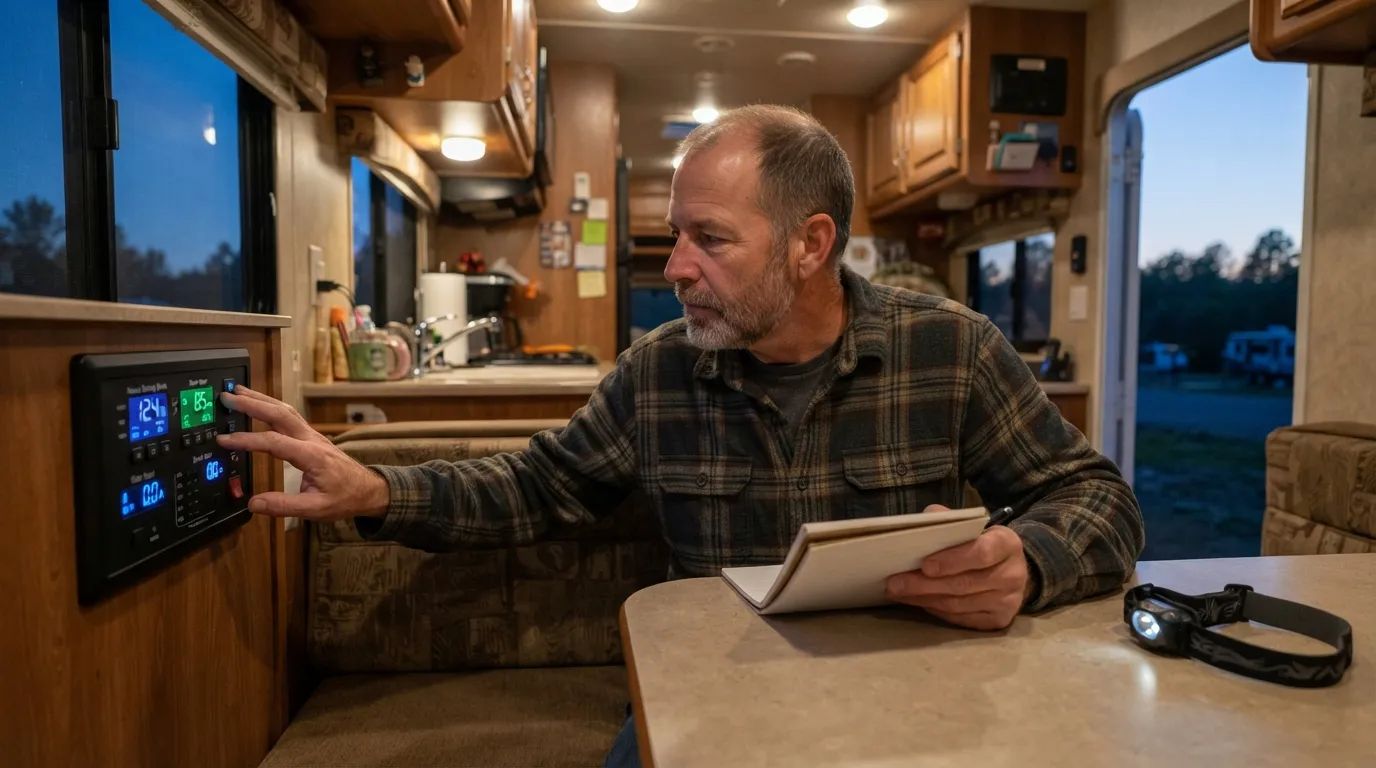
#4 – The Evening Power Audit Most Newbies Never Do
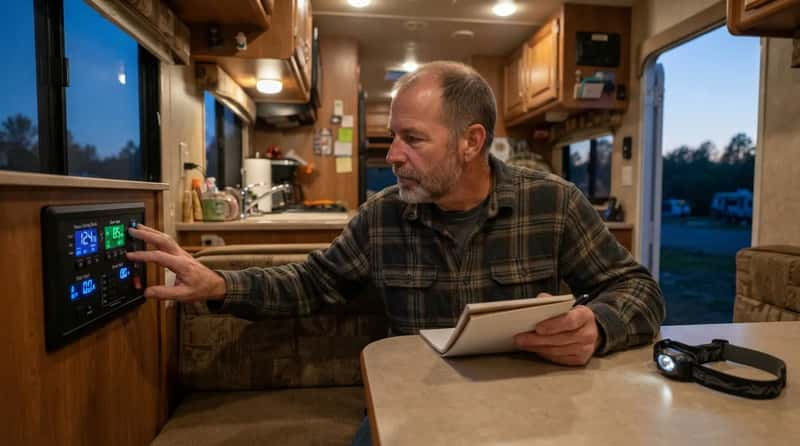
Veterans check their battery level at dusk, because that’s the moment solar stops helping. Whatever charge is left has to last until morning light. Plenty of first-timers wake up to a dead battery and a silent furnace fan. Experienced travellers decide in the evening what can run, whether that’s lights, the water pump, a fan or a laptop charger.
Battery type matters. Traditional lead-acid batteries are generally best kept above about half charge to protect their life, while lithium batteries tolerate deeper use, though makers still publish limits. Many travellers also shut off phantom loads like inverters they aren’t using. Some insist solar upgrades are overhyped for short trips, and that’s a fair debate.
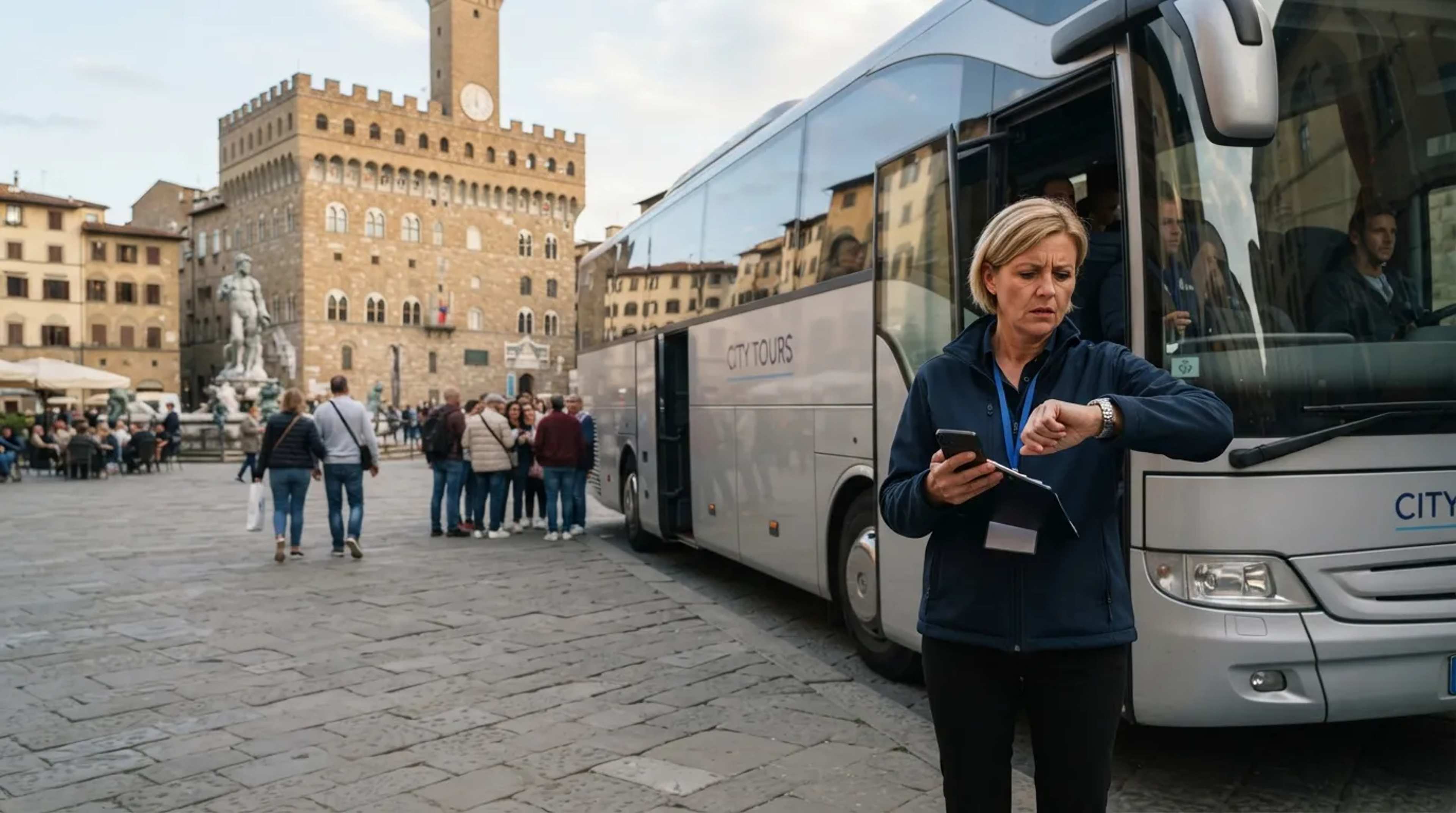
#3 – Checking Tomorrow’s Wind and Route Before Bed
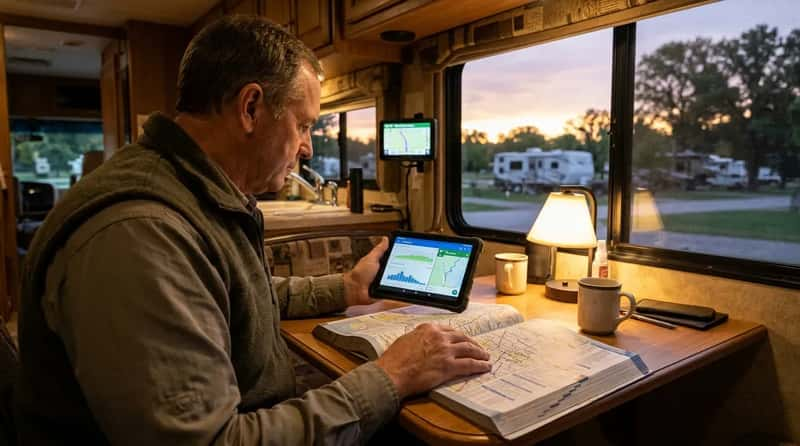
Long-haul travellers do tomorrow’s homework at dusk, while they still have signal and a relaxed mind. They look at the route, fuel stops, road closures, bridge and tunnel clearances, and weather along the way. For tall, boxy RVs, the gust forecast often matters more than the headline wind speed. A calm morning can turn into a white-knuckle afternoon if you miss one detail.
They also use RV-specific navigation tools or double-check their route, since standard map apps don’t always account for height, weight or length. First-timers learn this at a low-clearance underpass, and it’s a very expensive lesson. Veterans learn it from other people’s stories, then plan accordingly.
#2 – Reading the Ground for Water Before the Storm Arrives
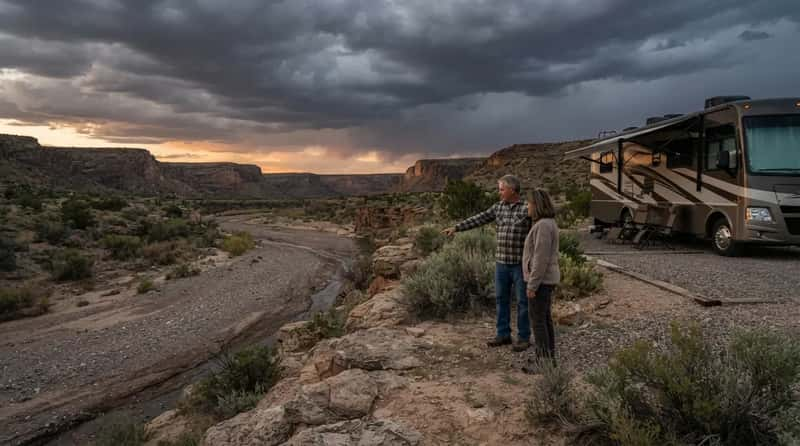
Experienced desert and mountain campers think about water even when the sky is clear. They avoid dry washes, arroyos and low channels for overnight parking, since a storm miles away can send a flash flood through a spot that looks bone-dry. The danger can reach you with little warning, and often after dark. Veterans check the forecast for the whole area, not just the campsite.
That’s why the National Weather Service campaign “Turn Around, Don’t Drown” stresses never driving through flooded roads. At dusk, veterans pick higher, firmer ground and note the nearest exit route. They also keep an eye out for signs of rain upstream. It’s a quiet habit, and it may matter more than anything else on this list.
#1 – Leaving a Pin and a Plan With Someone at Home
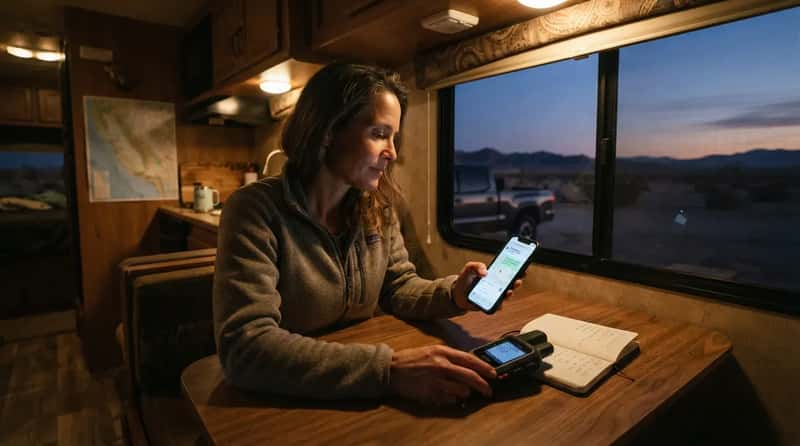
The most experienced travellers share their location and route with someone they trust before the night begins. This matters most when they’re boondocking on public land, where cell coverage can be patchy or missing. Plenty of remote areas have little or no signal, so the plan has to exist before anything goes wrong. A simple text with a pin, the next planned stop and a check-in time can turn a long silence into a quick search.
Many also carry a satellite messenger or use a phone with satellite emergency features, but they treat those as backup, not a replacement. The point isn’t fear. It’s that a few hundred miles from home, somebody should know where you are. First-timers think of it as something for hardcore adventurers, while veterans do it on even the quietest evenings. And it costs one text message.
At a Glance
- The pin: drop your exact location in a message.
- The route: name tomorrow’s road and your next planned stop.
- The deadline: pick a check-in time so a missed text means something.
- The backup: a satellite messenger covers the places with no bars.
Almost none of these habits are exciting, which is exactly why first-timers skip them. Together they take less than an hour, and they’re the difference between a smooth trip and a stressful one. Veterans didn’t invent them from nowhere. Wind, water, wildlife and dead batteries taught them, one rough morning at a time.
Which one did you learn the hard way?