You think you left the room “basically fine.” Housekeeping walked in and read your entire trip like a diary within ten seconds. The mess, the mood, the late-night decisions – none of it stays as private as most guests assume, and the people who clean up after you almost never say a word about what they actually saw.
Most travelers imagine housekeepers only care about towels and trash. What they’re really tracking is far more personal, and a few of these habits quietly follow guests from hotel to hotel without them ever realizing it.
#15 – The “Do Not Disturb” Trap That Backfires Every Time
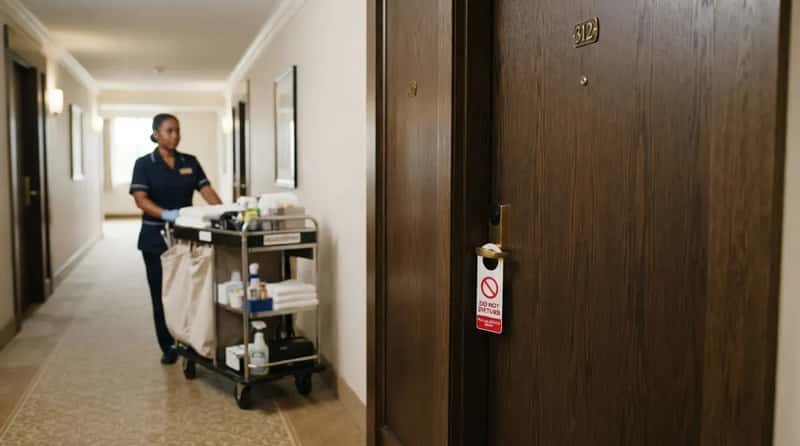
This is the single biggest frustration housekeepers bring up, and it’s almost always self-inflicted. Guests hang the sign out first thing in the morning, disappear for the day, and come back annoyed that the room looks exactly like they left it. Housekeepers can’t read minds, and they definitely can’t walk through a locked door.
Some guests take it further, flipping the sign the moment they see the cleaning cart approaching, then pulling it down later and complaining the room was never touched. Housekeepers notice this pattern immediately, and it’s one of their most common on-the-job frustrations. Rooms left untouched for days also need a much deeper clean once staff finally get inside, which slows down every reservation after yours.
#14 – Sitting There and Watching Them Clean
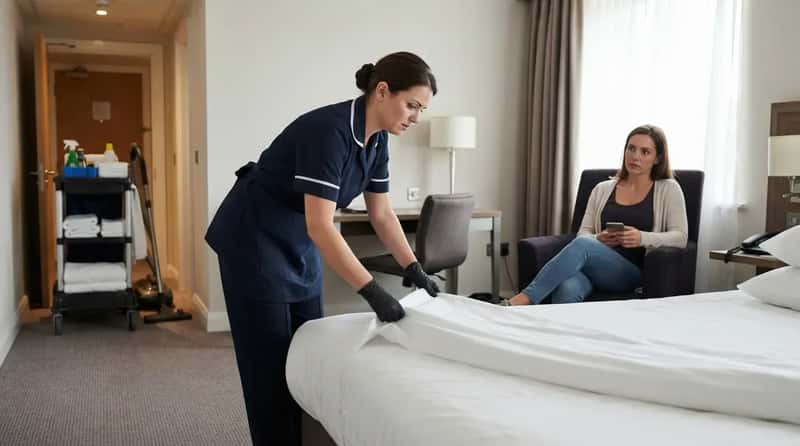
It seems harmless from the guest side, but staff describe it as one of the most awkward parts of the entire shift. Most housekeepers are trained to move fast and hit specific checkpoints in a tight window, and a guest hovering nearby throws off that entire rhythm.
The job is physical and timed, and every extra minute of self-consciousness adds up across dozens of rooms a day. Most housekeepers would honestly rather come back later than clean around someone who’s still in the room. It’s not personal – it’s just easier to work like a machine when no one’s watching the machine work.
#13 – The Great Remote Control Scavenger Hunt
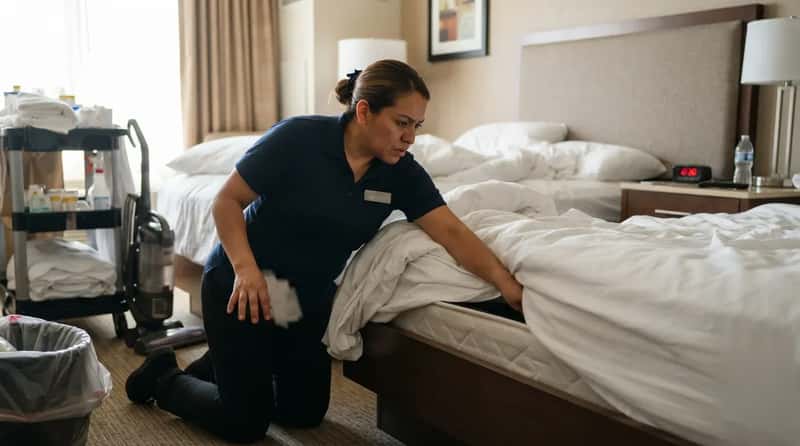
Nothing derails a fifteen-minute room turnover faster than a missing remote. One hospitality trainer has noted that remotes get lost constantly, turning up between sheets, wedged behind the bed, or tucked into the most obscure crevices of the room.
Falling asleep with the TV on is usually the culprit, and it leaves the next room attendant hunting through blankets like it’s a scavenger hunt. It sounds trivial, but multiply that search across a full floor of rooms and it becomes real lost time. Housekeepers remember which rooms always seem to swallow the remote – and it’s rarely a coincidence.
Fast Facts
- Housekeepers are typically given only about 20 to 30 minutes to fully turn over a standard checkout room
- A small multi-state study found the light switch and TV remote rank among the most germ-covered surfaces in hotel rooms
- That’s part of why a missing remote isn’t just annoying – it eats directly into an already tight cleaning window
#12 – The Laptop Left Sitting on the Bed
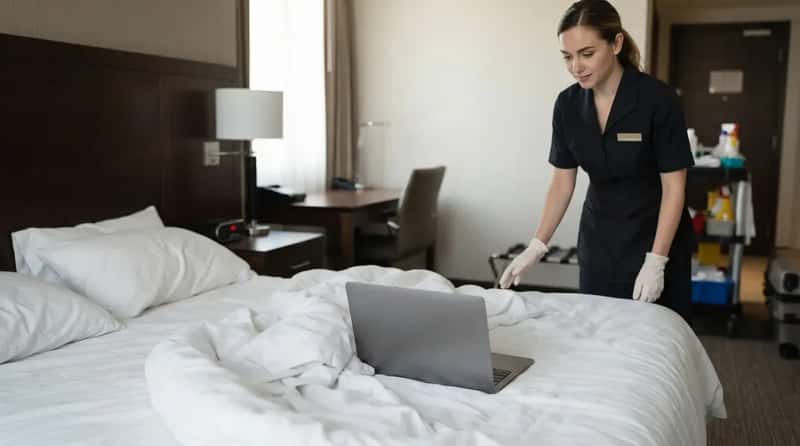
Guests rarely think twice about this one, but it puts housekeepers in an awkward spot every single time. One housekeeper explained she always notices when people leave their computers on the bed, because she doesn’t want to invade anyone’s privacy but still wants to make the bed look nice.
It’s a small habit with a bigger ripple effect than most guests realize. Housekeepers end up either working carefully around expensive electronics or skipping a full bed-make entirely, which leaves the room looking less finished than it should. A nightstand or desk takes the same five seconds and solves the whole problem.
#11 – The Coffee Station Explosion
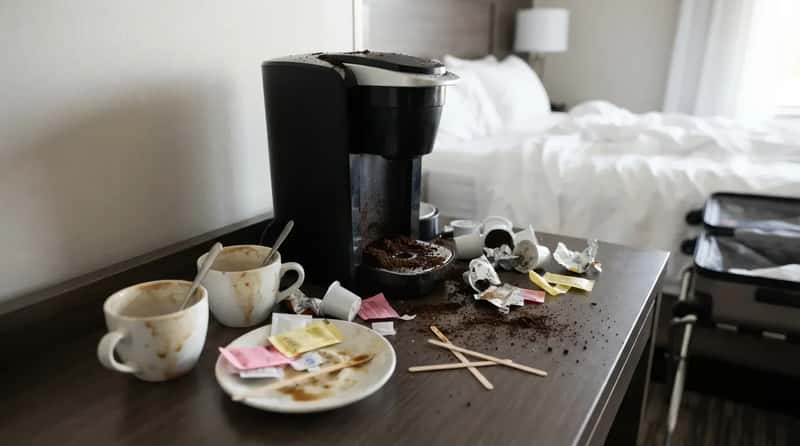
Your morning caffeine routine tells housekeepers more than you’d think. Torn sugar packets, stirrers left on the desk, and grounds spilled around the maker are small details that quietly reveal how a guest treats the rest of the room.
Since housekeepers have to restock and sanitize that station for every turnover, its condition has a direct effect on how much time the rest of the room gets. A tidy station versus a caffeine explosion is the difference between a 30-second task and a five-minute cleanup. It’s a tiny detail, but it sets the tone for the whole clean.
#10 – Smoke and Vape Residue, Even in “Nonsmoking” Rooms
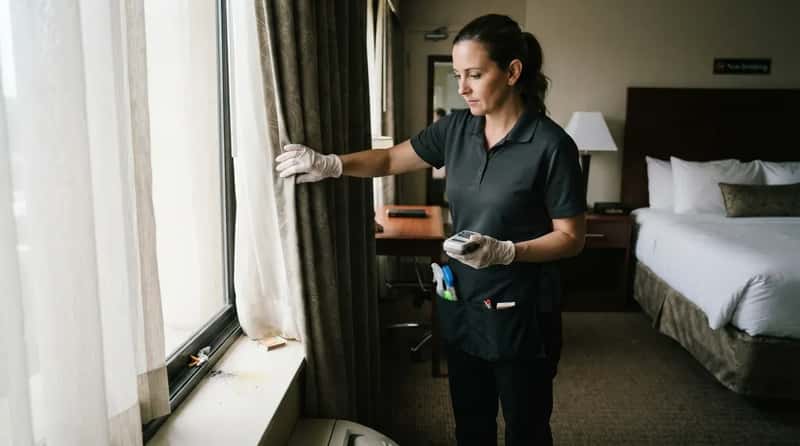
This is one habit guests genuinely think they’re getting away with – and almost never are. Even in non-smoking rooms, housekeepers can usually detect cigarette or vape residue almost instantly, since smoke clings to curtains, upholstery, bedding, and even walls in ways guests badly underestimate.
The consequences go beyond smell. Staff are specifically trained to report it, because many hotels charge cleaning fees for smoking violations. If technology doesn’t catch it, a trained nose usually does – and either way, that charge tends to land on the final bill.
#9 – Getting Accused of Theft Before Anyone Actually Looks
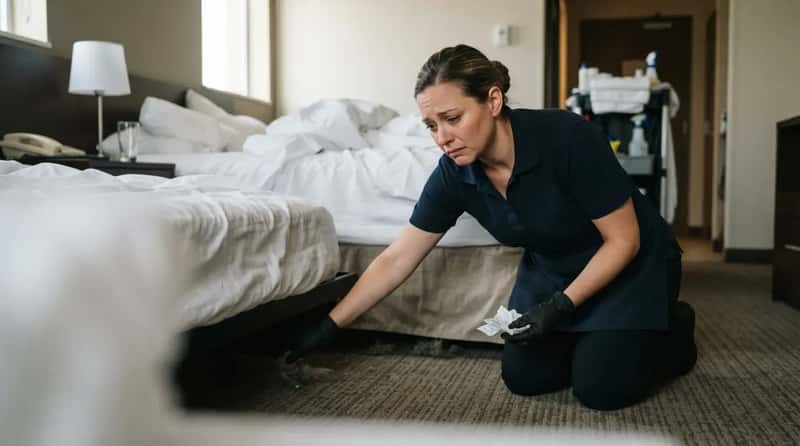
This one genuinely stings for housekeeping staff, and it happens more often than guests realize. A phone charger tangled in the sheets or a ring left in the soap dish gets treated as a crime scene before anyone bothers to check under the bed.
Here’s an unpopular truth worth saying out loud: most “stolen” items are never actually stolen. They’re left behind, kicked under furniture, or packed into the wrong bag entirely. Housekeepers absorb the blame anyway, often without any real investigation happening first.
#8 – Why That Drinking Glass Isn’t as Clean as You Think
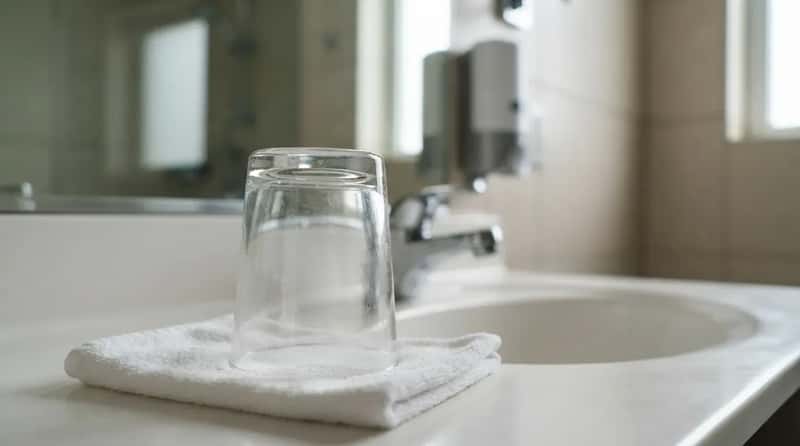
This is the detail that quietly changes how a lot of travelers behave once they hear it. A former housekeeper who worked at several upscale hotels admitted in a Reddit AMA that dishes aren’t cleaned as thoroughly as guests assume, writing plainly, “Don’t use the glasses.”
The reason comes down to time pressure, not laziness. Housekeepers are often given only 15 to 30 minutes per standard turnover to strip beds, clean bathrooms, dust, vacuum, and restock – and the math simply doesn’t work, so corners get cut. It’s not malice; it’s triage against an impossible clock.
At a Glance: Where Turnover Minutes Actually Go
- Inspection and prep as they walk in: about 2 to 3 minutes
- Stripping and remaking the bed: roughly 5 to 7 minutes, often the single most time-consuming task
- Bathroom, dusting, vacuuming, restocking, and the coffee station: whatever’s left of the 20-to-30-minute window
- Anything extra – like scrubbing a glass by hand – simply doesn’t fit the math
#7 – Guests Who Refuse to Use the Trash Can at All
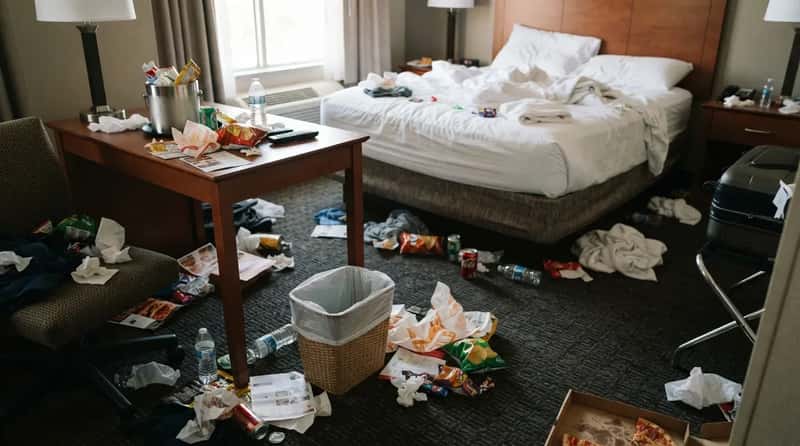
Some habits genuinely baffle staff, and this one sits near the top. One veteran housekeeper recalled a family that never used the bin once during their entire stay, saying she couldn’t believe anyone would live like that – it felt, in her words, like they thought housekeeping was “part of the price and their servants.”
Her advice for that type of guest was memorable and blunt: “If you’re a dirty, smelly person, just stay at home.” Harsh, maybe, but it reflects a real and recurring frustration housekeepers rarely get to say out loud.
#6 – Food Left to Rot, Especially Seafood
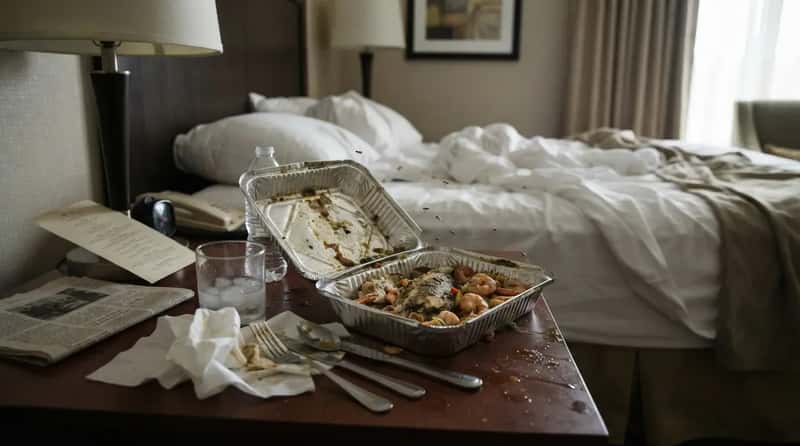
Room service is fine. What’s not fine, according to staff, is what happens after the meal ends. Housekeepers notice, and quietly resent, food left to sit for days – not because of the eating itself, but because of the elaborate attempts to hide the evidence.
Seafood containers are apparently the worst offenders, since a few days of sitting creates a smell that permeates everything and needs industrial-strength fresheners to fight off. Beyond the odor, leftover food can attract pests surprisingly fast in hotel environments, turning one lazy evening into a multi-day cleanup headache for staff.
#5 – Personal Items Left Sitting in Plain View
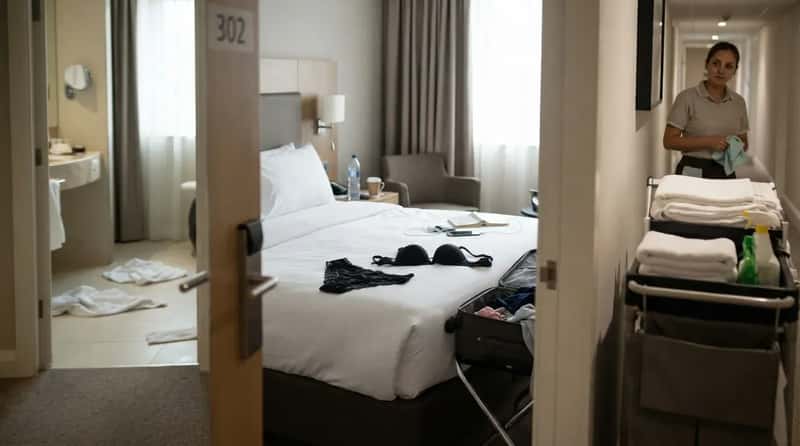
This one surprises a lot of guests who assume housekeeping barely glances at anything. A former housekeeper who worked at several major hotel chains said she saw far too many pieces of underwear, bras, and bra inserts left out in the open – and did not enjoy the experience.
It’s not that housekeepers are searching for these details – they’re simply unavoidable when a room needs to be fully reset. A closed suitcase or a shut drawer takes seconds and keeps the whole stay feeling more private, both for the guest and for the person cleaning up after them.
#4 – Souvenirs That Reveal More Than Guests Realize
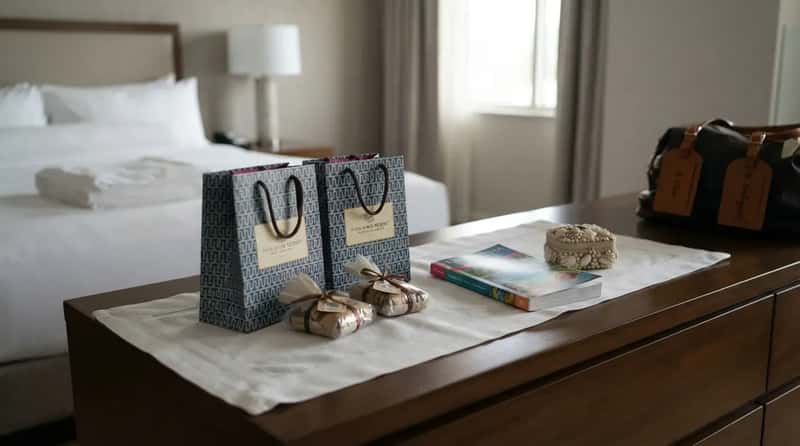
Small objects tell bigger stories than most travelers assume. One former housekeeper admitted, “I sometimes noticed the souvenirs and things that the guests had in their rooms and could make an educated guess about what type of relationship they had.”
A matching pair of gift shop bags, two suitcases with two different last names on the tags, or a single overnight bag for a supposed “business trip” – housekeepers piece these details together without ever asking a question. It’s not gossip; it’s pattern recognition built from thousands of rooms.
#3 – Being Stepped Over Like You’re Invisible
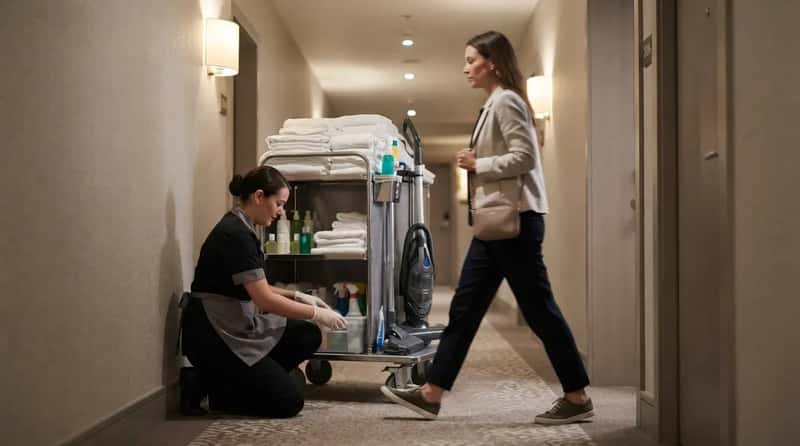
Of every habit on this list, this is the one that seems to sting the most personally. One longtime housekeeper recalled kneeling in a hallway by her trolley when a guest walked past without a word – not even “excuse me” – and “literally stepped over me as if I wasn’t there.”
It’s a small moment, but it lands hard. Housekeepers remember the guests who acknowledge them far more clearly than the ones who leave a spotless room. A simple nod or “thank you” costs nothing and apparently goes further than most travelers assume.
#2 – The Evidence of an Overnight Guest
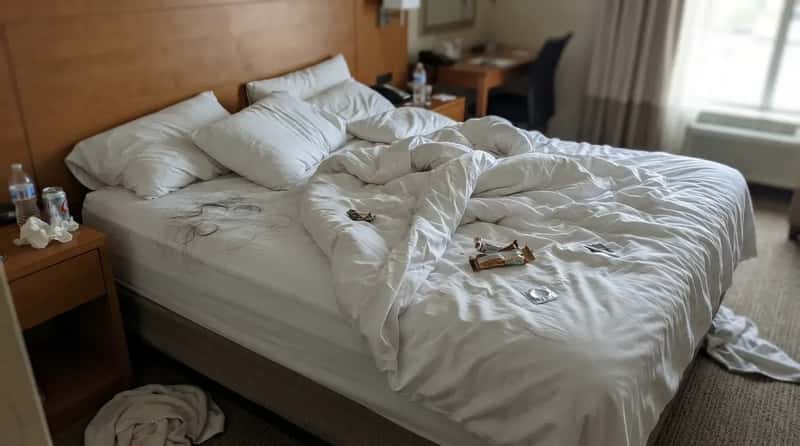
This is the detail housekeepers almost never mention out loud, yet nearly every long-time staffer has a version of the same story. One former housekeeper explained she could usually tell if someone had a guest overnight, with a messy bed, certain hairs on the sheets, and stray wrappers serving as the clearest giveaways.
Her advice was refreshingly direct rather than judgmental: just throw those items away yourself before checkout, since disposing of them for someone else isn’t exactly fun. It’s not shame housekeepers are after; it’s just basic consideration for the next person who has to clean the room.
#1 – The Tiny Habit That Quietly Changes How You’re Treated
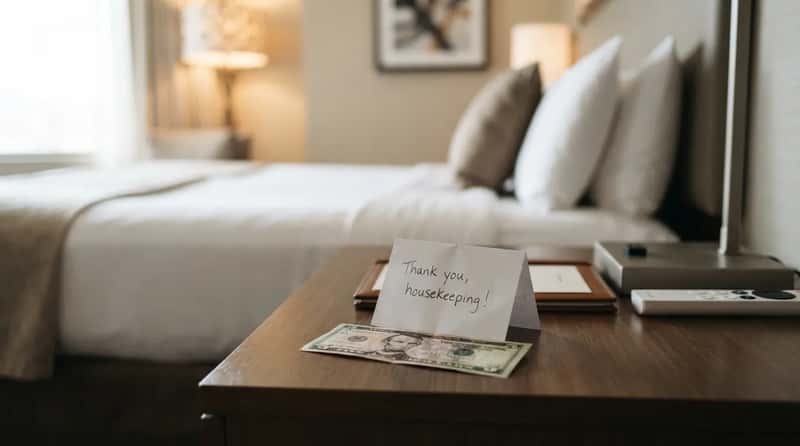
Out of everything on this list, one habit stands out because it flips the entire dynamic. Housekeepers absolutely notice when a guest leaves a small tip or a quick thank-you note, and it rarely gets forgotten by the next shift.
It doesn’t take much – $2 to $5 in a clearly labeled envelope, or a note that simply says “Thank you, housekeeping,” is often enough to shift how a room gets treated for the rest of a stay. Staff have real discretion behind the scenes, and guests who are warm and respectful tend to get noticeably better treatment than ones who are rude or demanding. It’s the cheapest upgrade in the entire hotel, and almost nobody uses it.
Quick Compare: Housekeeping Tip Ranges
- Budget or mid-range hotel: $1 to $5 per night, the range suggested by the American Hotel & Lodging Association
- Luxury hotel or resort with turndown service: typically $10 to $20 per night, sometimes higher
- Extra guests or kids making extra mess: etiquette experts suggest “an additional $1 per person can be appropriate”
- Left daily instead of in one lump sum, since a different housekeeper may service the room each day
None of this is about catching guests being “bad.” It’s about the small, human moments that housekeepers absorb quietly, room after room, year after year – the messy coffee stations, the missing remotes, the little notes of thanks that actually get remembered.
The next time you check out, the person walking in behind you will notice more than you think. Which one of these habits describes you a little too well? Drop it in the comments – housekeepers are probably reading, too.