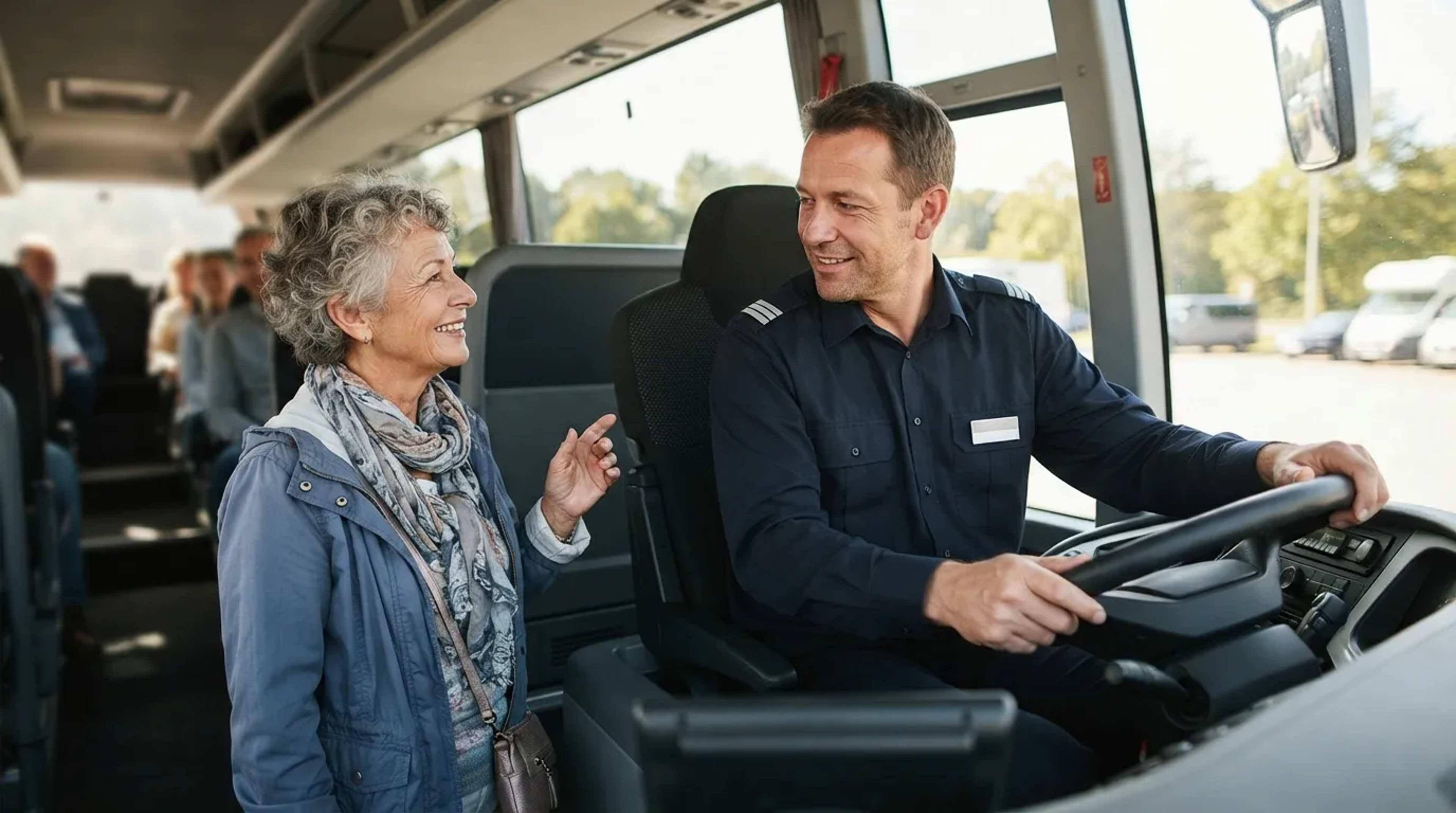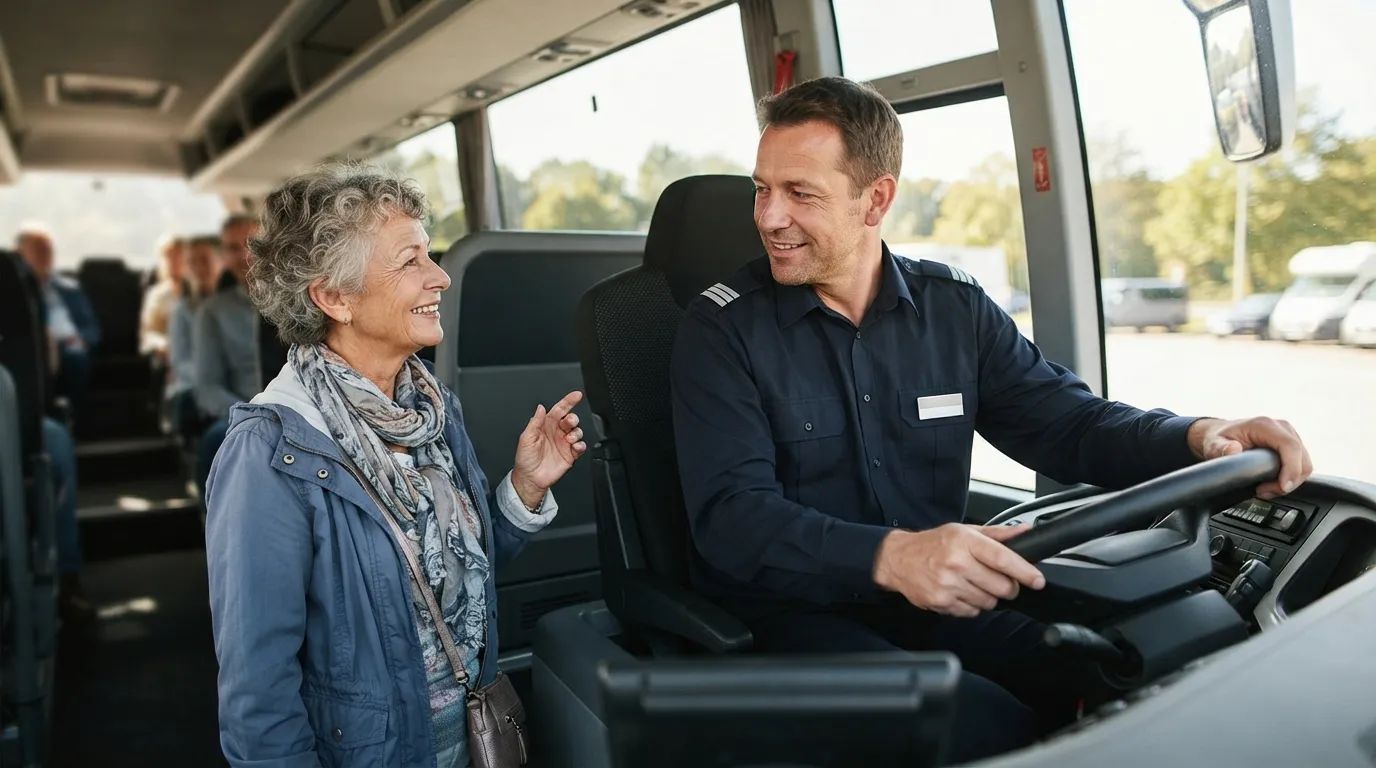
The coach hasn’t even cleared the city limits, and the driver already knows more about your group than you’d guess. Drivers say the first twenty miles work like a quiet roll call. Who grabbed the front seat, who pulled out a blanket, and who is already checking the clock all show up in the big mirror above the windshield.
None of this is about complaining, and none of it is a rule about any one person. These are patterns drivers commonly describe. But a few of them explain why some tours feel easy from mile one while others start wobbling before the first rest stop. And the very last observation isn’t about the passengers at all.
#15 – The Front Rows Fill Up Before the Luggage Bay Is Even Closed
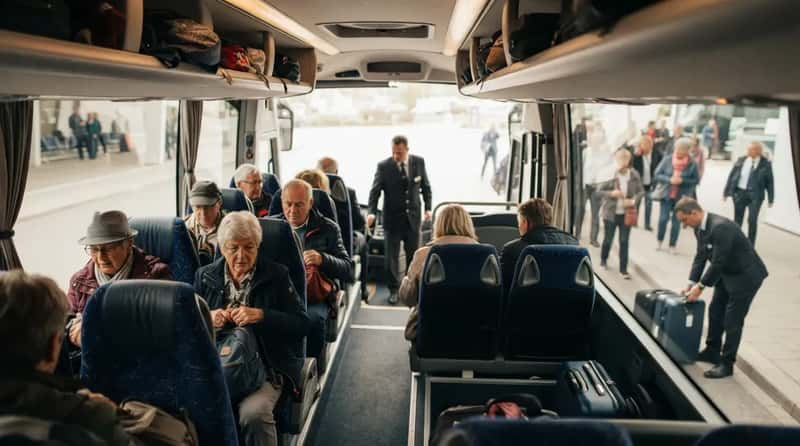
Drivers say the seating decision happens faster than anything else on the coach. Many travelers over 65 head for the first few rows while the bags are still going under the floor. The logic is practical. The front means fewer steps down the aisle, a shorter walk to the door, and less jolt than the seats over the rear wheels. Many operators quietly hold the front rows for passengers with mobility needs before the group even arrives.
Experienced drivers also watch who hesitates at the top of the steps and who walks straight on. That tells them who will probably want a steadying hand later in the day. Younger passengers sometimes drift toward the front for the view and get a polite nudge backward. Drivers say it’s rarely personal. But the next observation has nothing to do with seats and everything to do with the thermostat.
#14 – The Blanket-and-Scarf Crowd Who Ask About the Air Conditioning Before Mile One
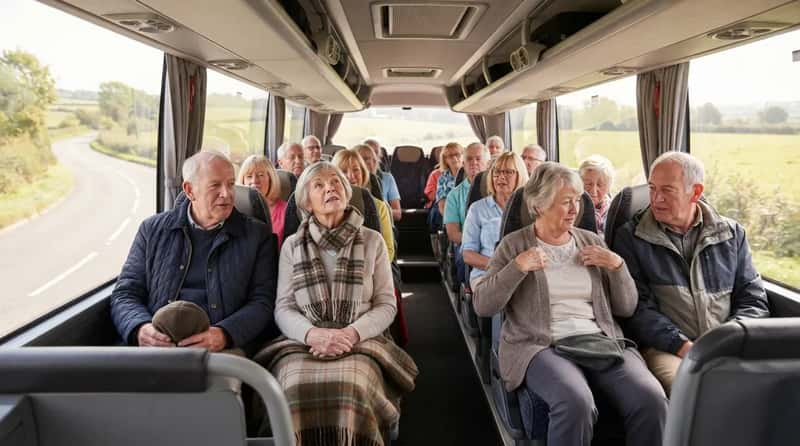
Drivers can usually spot the cold-blooded passengers before the engine has warmed up. They board with a jacket over one arm, a scarf in a tote bag, or a folded blanket on the lap, even in summer. Then comes the question about the air vents, often within the first ten minutes. Health agencies note that older adults can lose body heat more easily, so this isn’t fussiness. It’s physiology.
Worth Knowing
- Most modern coaches have overhead vents you can aim or close at your own seat.
- Layers you can shed in seconds beat one heavy coat.
- A quiet word to the driver works better than a vote from row twelve.
- The coldest air often lands on the seats nearest the vents, so a different row can help.
Here’s the part that sparks the arguments. Many drivers say the thermostat is among the most common sources of friction in the first hour. A coach holds dozens of people with dozens of opinions about temperature, and no setting pleases everyone. Most drivers adjust the vents and move on, but a few admit they dread the warm-weather tours. Meanwhile, another group is already planning for a different problem: lunch.
#13 – The Packed Lunch That Comes Out Before the First Rest Stop
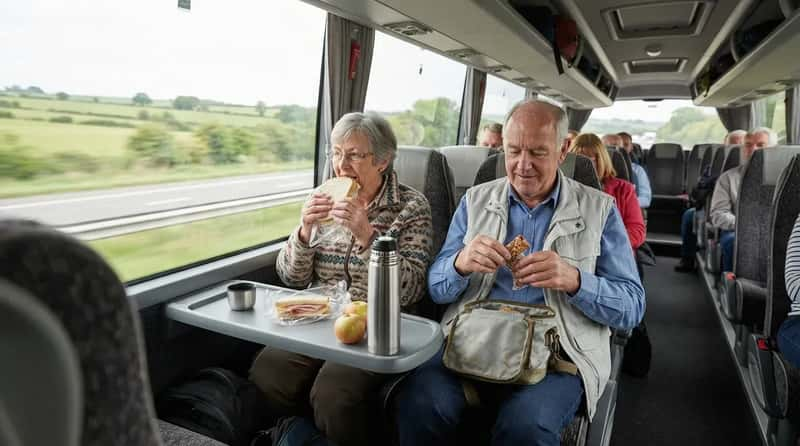
Drivers notice who brought a food supply before the wheels even turn. Sandwiches, granola bars, and a thermos of coffee often appear within the first half hour. These travelers are clearly ready to skip whatever the rest stop offers. Drivers say the reasons vary: dietary needs, a bad gas-station meal years ago, or a wish not to depend on someone else’s schedule.
Drivers often describe the snack-packers as the tell for a seasoned tour traveler. First-timers tend to trust the itinerary completely. Veterans have learned that stops run long, lines run longer, and the café may be closed. Some drivers call this habit simply smart, while others wish more people would try the local lunch. The bigger worry, though, is rarely about food at all.
#12 – The Bathroom Question That Gets Asked Before Anyone Admits It
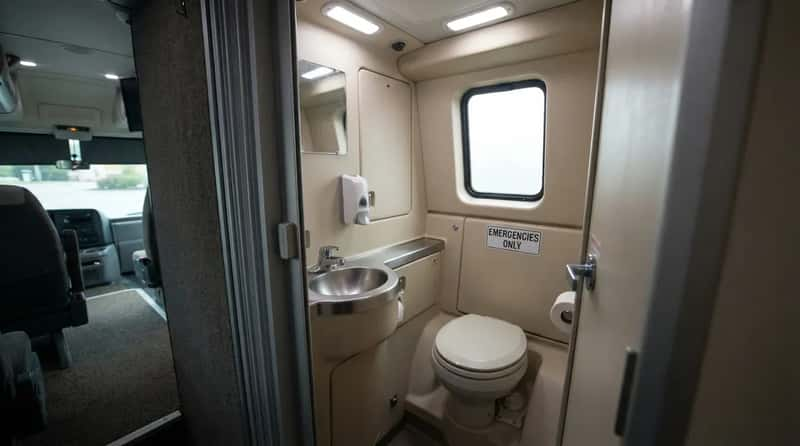
Drivers say restroom access is the unspoken topic of the opening stretch. Many full-size coaches do have an onboard toilet, but tours often treat it as emergency-only. It’s small, basic, and has a limited tank. That’s why operators schedule regular comfort stops, typically every couple of hours, instead of leaning on it.
Drivers say “how long until the first stop?” is often among the earliest questions of the day. A good driver announces the next stop before anyone starts fidgeting, and that one habit can set the mood for the whole trip. Some guides even steer groups to a quiet museum café or visitor center instead of a crowded highway plaza. But one passenger on the coach usually gets to the questions first.
#11 – The Unofficial Group Spokesperson Who Appears Within the First Hour
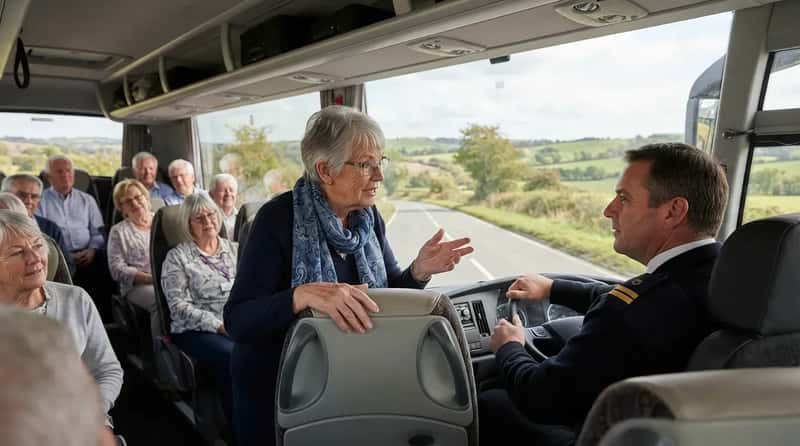
Almost every coach produces one. Drivers say there’s usually a passenger who takes it upon themselves to ask the detailed questions for everyone else. They want exact timing, a backup plan if it rains, and confirmation of every stop. Nobody elected them. They simply start asking, and the rest of the group is quietly grateful.
Opinions split here. Some drivers call this passenger the best co-pilot they’ll ever get, while others privately say they can be exhausting. The upside is real, because one clear answer to one person saves repeating it twenty times. The downside is that a spokesperson with strong views can steer the mood of the whole coach. Next up is a passenger who asks the same thing on a loop, and the reason may surprise you.
#10 – The Same Itinerary Question, Asked Three Different Ways
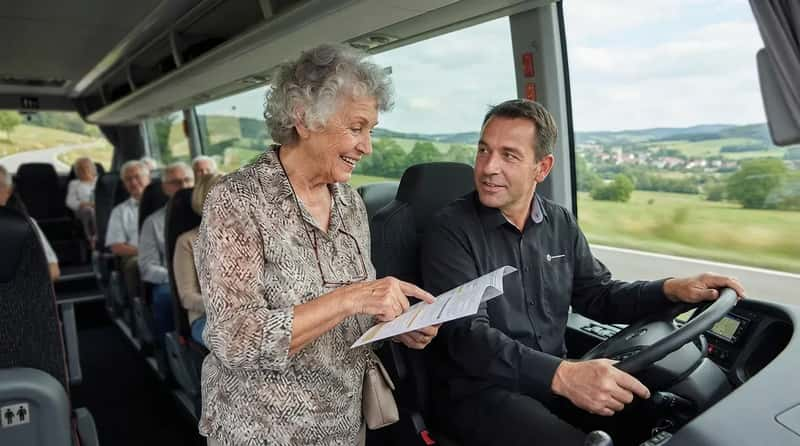
Some travelers can’t relax until every detail has been confirmed out loud. Drivers say these passengers ask about arrival times, bathroom locations, and lunch options more than once in the first hour. This happens even when the itinerary is already printed and in their hands. It can test a driver’s patience around mile fifteen.
Experienced drivers say it isn’t distrust. They’ve learned that the repeated question often means the person is worried about being the one who slows everyone down. The best drivers answer calmly every time, because the calm answer is what the passenger actually came for. Still, worry isn’t the only reason a driver ends up repeating things. Another reason is far more physical.
#9 – The Lean-Forward, Cupped-Ear Moment During the First Announcement
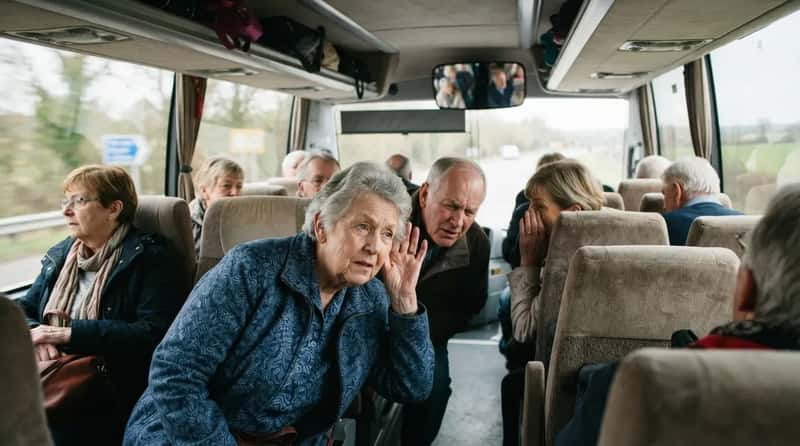
The first onboard announcement is a quiet test, and drivers and guides can see the results in the mirror. Some passengers lean toward the aisle, cup an ear, or turn to a neighbor with a whispered “what did he say?” That’s common. According to the National Institute on Deafness and Other Communication Disorders, about one in three Americans aged 65 to 74 has hearing loss. Nearly half of those older than 75 have difficulty hearing.
Drivers adapt quickly. They face the group, slow down, and repeat key details such as the return time. Some write the departure time on a card near the front. Most people don’t realize how much a coach experience depends on the microphone. And speaking of time, there’s one habit that has an entire coach watching the clock.
#8 – The Ten-Minutes-Early Crowd Waiting by the Door

Drivers say the people who show up early are rarely the ones who delay the departure. Many seasoned travelers arrive about ten minutes before the posted time. They have already found the restroom, refilled their water bottle, and picked a spot to wait. Everyone on the coach notices who the group is waiting on, and these travelers prefer it not to be them.
Many drivers say punctuality is the quickest way to earn goodwill on a coach. It also builds a buffer, which matters for slower walkers who need extra time getting back to the door. The late arrival, by contrast, becomes a story the whole group tells for days. But there’s one moment where punctuality can’t help, and drivers watch it closely.
#7 – The Careful Descent Down the Coach Steps at the First Stop
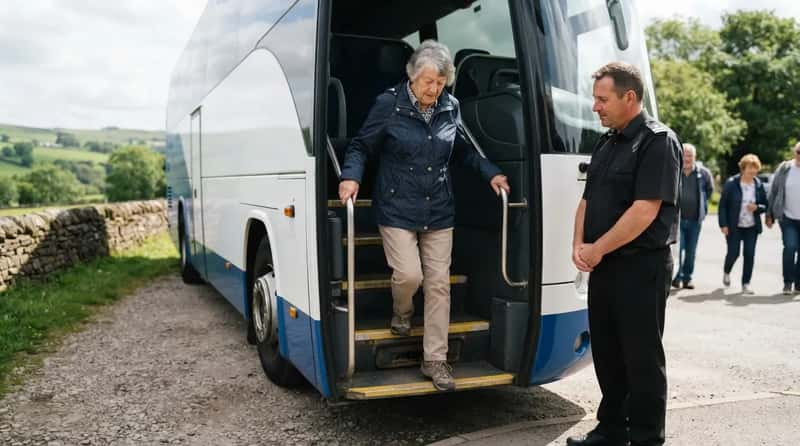
Coach steps are steep, and drivers know exactly where passengers pause. At the first stop, many drivers stay near the door and watch. They notice who grips the handrail, who steps down sideways, and who looks around for a helping hand. A well-timed “watch the last step” can prevent a bad moment without making anyone feel singled out.
Quick Compare
- A grabbing hand: Can feel like a verdict on someone’s independence.
- A steadying presence: A driver standing nearby lets the passenger choose whether to reach out.
- A quick verbal cue: “Last step is a big one” helps without singling anyone out.
Many drivers say they learn more from the first descent than from any passenger list. Here’s the touchy part. Some travelers politely refuse help, and drivers say they’ve learned to offer a steadying presence instead of a grabbing hand. It’s a balance between pride and safety. Meanwhile, some passengers quietly skip something at every stop, and it isn’t the restroom.
#6 – The Water Bottle That’s Still Full at Lunchtime
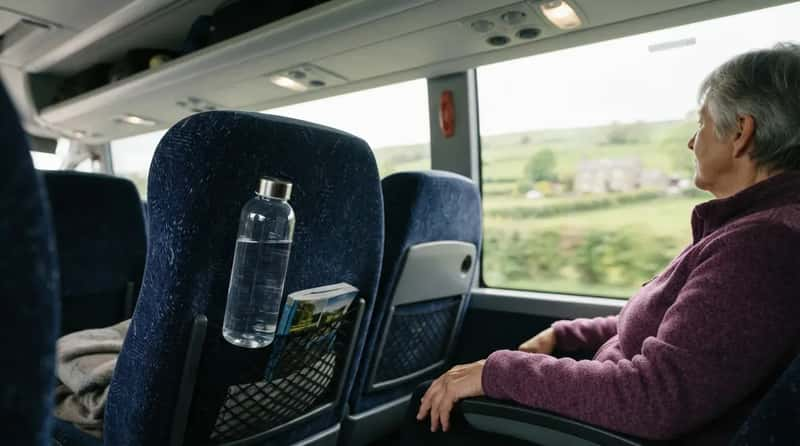
Drivers say they notice who sips and who doesn’t. Some travelers deliberately drink less to avoid asking for a stop, which is the oldest bad bargain on the coach. The bottle stays full in the seat pocket, and the person feels fine until they don’t. Drivers see the consequences later in the day, often in the form of a tired, flushed passenger.
Skipping water to avoid a bathroom stop is a habit many drivers say they spot in the very first hour. The truth is that scheduled stops exist precisely so nobody has to choose. When a driver announces a stop within the next hour, the bottles often come out right away. And there’s another quiet habit that drivers hear before they see it.
#5 – The Seatbelt Click That Tells Drivers Who Has Done This Before
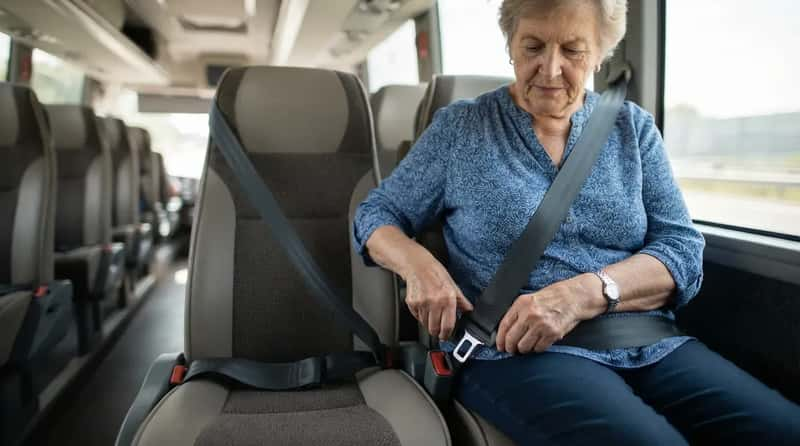
Many drivers say they can tell a seasoned coach traveler by the sound of the buckle before the coach moves. Since 2016, new motorcoaches built for the U.S. market must have lap-shoulder belts at every seat under federal safety rules. Still, plenty of passengers sit on the belt, leave it hanging, or assume a vehicle this big doesn’t need one. It’s a quiet source of frustration for drivers.
The visible consequence comes with sudden braking, when an unbuckled passenger has nothing to hold them in place. Drivers don’t enjoy playing seatbelt police, so most make a short announcement and move on. The ones who buckle without being told tend to be the ones drivers remember fondly. The next observation is about something softer, and drivers say it matters just as much.
#4 – The Seatmate Chat That Builds a Group Before Mile Twenty
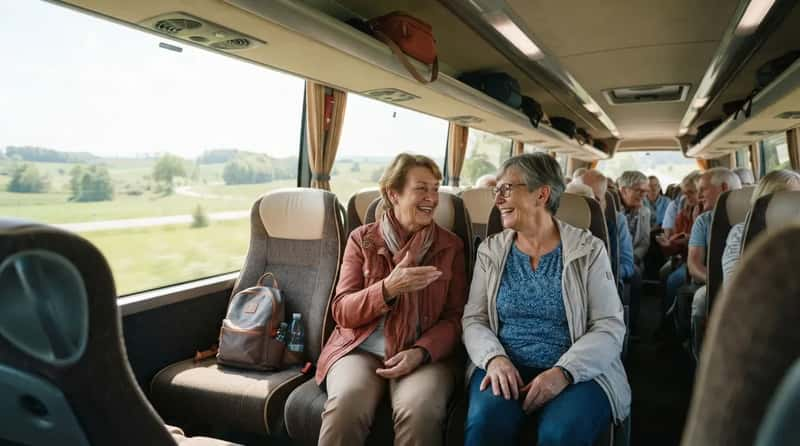
By the time the coach clears the city limits, drivers say the cabin noise changes. People swap names and hometowns. Someone finds a shared acquaintance, and a solo traveler gets folded into a row of new friends. Drivers hear it all drifting up the aisle, and it tells them the trip is going to be easy.
Why It Stands Out
- It costs nothing and needs no planning.
- Solo travelers often become part of a group within the first hour.
- Shared jokes make delays feel shorter.
- Drivers say it is the earliest sign of a good week.
Many drivers say they can predict the mood of the entire tour from the sound of the first twenty miles. A warm, chatty coach tends to forgive delays, long lines, and stiff seats. A silent one tends to notice every flaw. Drivers say the difference often starts with one or two friendly people who make introductions. But not every seat story is so friendly, and one custom splits coach groups right down the middle.
#3 – The Seat Rotation Rule That Some Passengers Quietly Resent
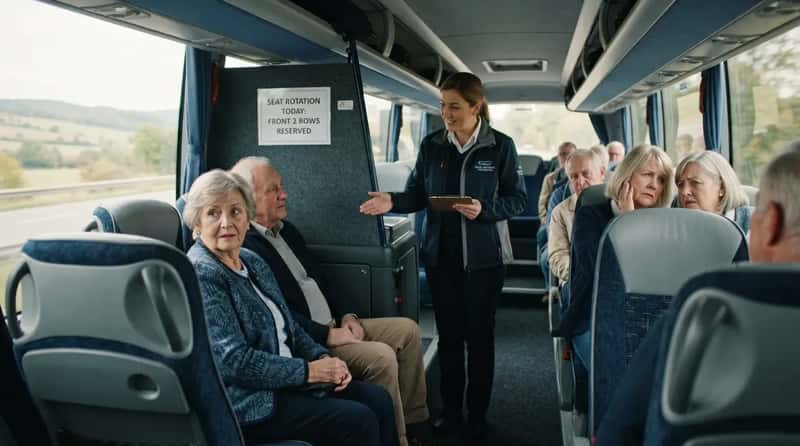
Many tours rotate seats daily so everyone gets a turn at the front. It sounds fair, and on paper it is. Experienced guides, however, often bend the rule for people who struggle with steps, motion, or long walks down the aisle. Most passengers understand. A few do not, and drivers hear the grumbling from the back.
The controversy is that nobody announces the exception, so nobody knows why the rule bends. Some drivers argue the exceptions should be stated openly to avoid resentment. Others say naming the reason would embarrass the very people it protects. It’s a real disagreement, and honestly, it might be a debate worth having. Meanwhile, another planning headache happens far from the seats.
#2 – The “Around Noon” Answer That Makes Planners Nervous
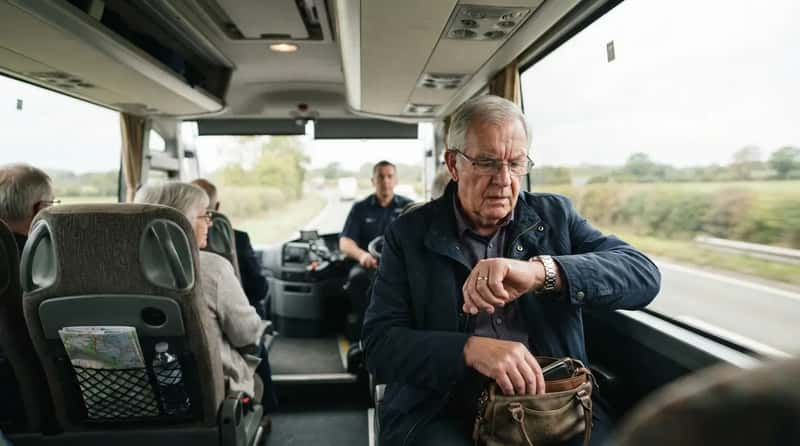
Drivers say many travelers plan the whole day around meal and medication times. That makes vague answers feel risky. “We’ll stop around noon” can sound like a promise to someone who eats on a schedule, and like a shrug to a driver who knows traffic is unpredictable. Passengers glance at their watches, and the drivers notice.
A medication bag stored under the coach is a mistake drivers say they see more often than you’d think. Once the bay is closed, it may stay closed until the hotel. Good drivers will quickly open it, but nobody enjoys the scramble. The final observation, though, isn’t about the passengers at all.
#1 – The Passengers Who Notice the Driver, Too
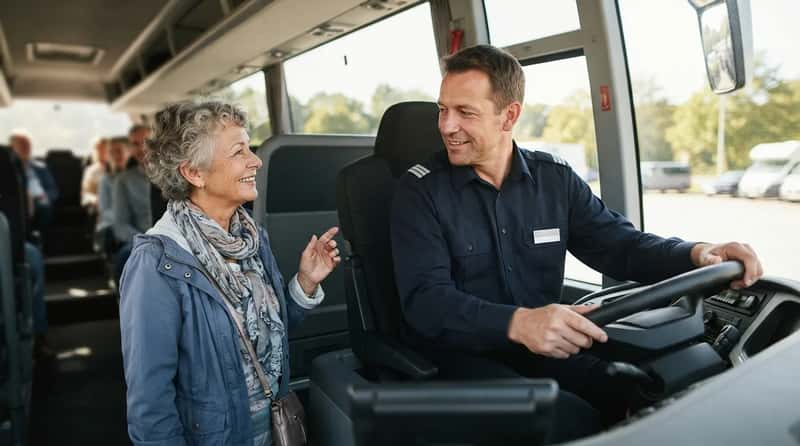
Many drivers say the travelers they remember best are the ones who greet them by name. They ask how the driver slept, whether the road ahead is clear, and how long the driving day will be. A thank-you at the first stop can stay with a driver for the rest of the week. Drivers are people, and they notice who treats them like one.
That federal clock is why the on-duty window keeps ticking during stops, waiting, and delays. Every extra ten minutes at a rest stop comes out of a tightly regulated day. Passengers who understand this tend to move a little faster without being asked, and drivers return the favor with extra care. The first twenty miles turn out to be a two-way conversation, and both sides are paying attention.
Drivers say none of this is judgment. It’s pattern recognition built from thousands of miles of watching people travel together, and from learning that a coach is really a small town on wheels.
So the next time a tour pulls out of the lot, glance at the mirror above the windshield. Someone up front may already have a good idea what kind of trip you’re about to have.