Most people over 60 approach airport security the same way they have for two decades – shoes already half off, belt loosened, silently praying the line moves fast. What almost none of them realize is that TSA has an entire hidden layer of accommodations, exemptions, and silent adjustments built specifically for older travelers. Not one of them gets announced out loud at the checkpoint. Some are federal policy. Others are things experienced agents apply on instinct, without a word spoken.
Here’s what makes this genuinely surprising: between TSA’s age-based accommodations, the TSA Cares program, and legal rights most older Americans have never heard of, a traveler over 60 who knows these rules has a completely different airport experience than one who doesn’t. Every item on this list is real, documented, and available right now. The agents already know all of it. Here’s what they’ve never told you.
#15 – They Quietly Flag You for the 75-Plus Expedited Screening Track – Even When the Line Looks the Same

Since TSA ended the nationwide shoe-removal requirement for all passengers in July 2025, the checkpoint looks a little more relaxed for everyone. But travelers 75 and older still have something extra: a formal expedited screening designation that goes well beyond shoes. Agents are trained to route passengers in that age bracket through a modified process that reduces physical demands at every step – not just footwear.
Passengers 75 and older can receive expedited screening through risk-based, intelligence-driven security that allows TSA to better focus resources on travelers who more likely pose a risk. If the system doesn’t flag your age automatically, you can self-identify to the TSA officer and request the pathway directly. Most travelers who qualify have been shuffling through the standard lane for years without knowing a faster, easier track already had their name on it.
At a Glance: What the 75+ Expedited Track Covers
- Light jackets may still need removal for Advanced Imaging Technology (AIT) screening
- Seated screening available on request if standing is difficult
- Passengers unable to stand are cleared through alternative methods entirely
- Self-identification at the checkpoint is all that’s required – no paperwork, no fee
#14 – They Slow Down Their Own Pace the Moment You Step Up
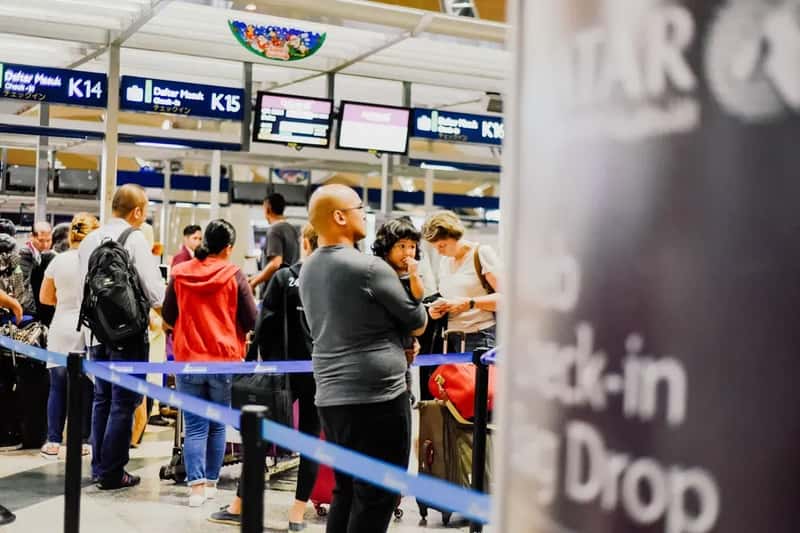
Watch a seasoned TSA agent work a checkpoint and you’ll notice something most passengers miss entirely: when an older traveler steps up, the agent’s internal clock resets. The rapid-fire “laptop out, shoes off, belt in the bin” cadence drops into a slower, clearer register. It’s not posted in any TSA manual as a formal rule – it’s a trained behavioral adjustment that experienced officers apply automatically.
For travelers managing arthritis, limited mobility, or any condition that makes repetitive bending difficult, that shift in tempo is the difference between a calm checkpoint and a humiliating scramble in front of a crowd. Agents who recognize this don’t announce anything. They quietly adjust their pace, create physical space, and let the traveler move without the pressure of an impatient line building behind them. The people in that line rarely notice it’s happening at all.
#13 – They Mentally Assess Whether You Need a Passenger Support Specialist – Before You Ask
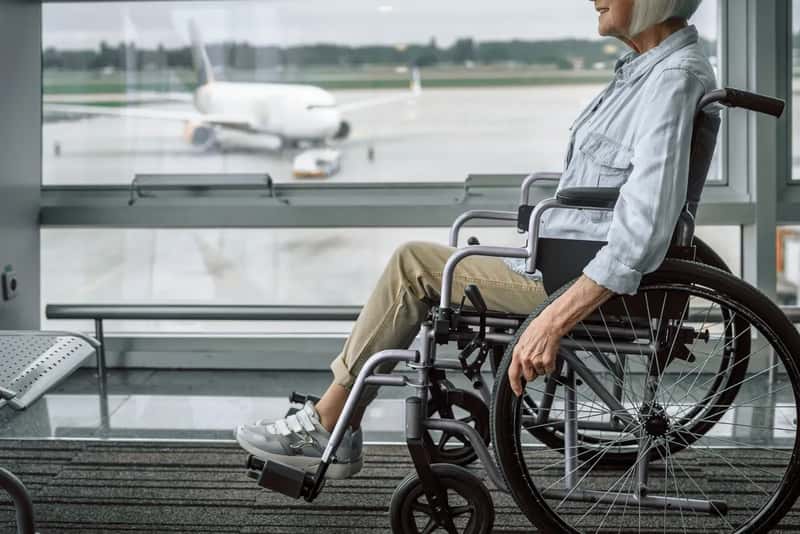
Passenger Support Specialists are TSA officers specially trained to assist travelers with disabilities, medical conditions, or those traveling with medical devices – and you can request one at the front of the line or by calling the TSA Cares helpline ahead of your trip. What most travelers don’t know is that agents at the checkpoint entrance are trained to visually assess whether a traveler would benefit from one before anyone says a word.
Travelers requiring special accommodations or concerned about the security screening process may ask any TSA officer or supervisor for a Passenger Support Specialist who can provide on-the-spot assistance. That quiet visual assessment at the door exists so no one who needs a specialist ever gets funneled into a standard lane by accident. It’s a safety net most travelers don’t know is there.
Fast Facts: Passenger Support Specialists
- Available at airports nationwide – no advance scheduling required
- Can be requested on the spot by asking any TSA officer or supervisor
- Trained to assist with disabilities, medical devices, and first-time travel anxiety
- Operate under the TSA Cares program, which handled 69,000 travelers in 2024 alone
- No fee, no doctor’s note required for most accommodations
#12 – They Reroute You the Second You Mention a Pacemaker or Implant
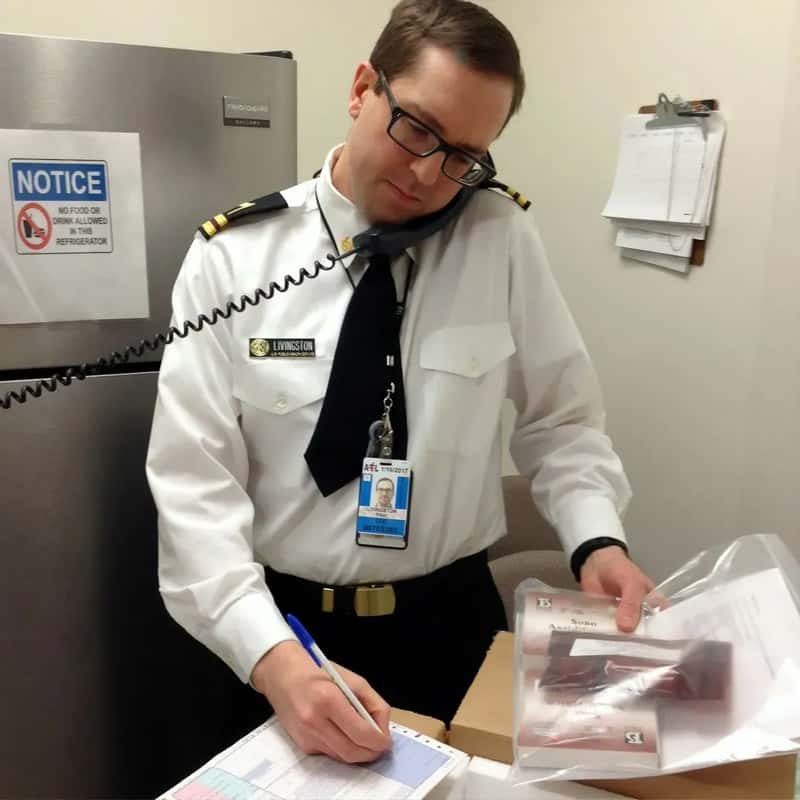
This one carries real medical stakes – and most travelers over 60 have no idea it applies to them. If you inform the TSA officer that you have a pacemaker, defibrillator, bone growth stimulator, or other internal medical device, you should not be screened by the walk-through metal detector. The agent’s job at that moment is to immediately route you to an alternative screening pathway. No debate, no delay, no waiting for an alarm to sound first.
You can also request Advanced Imaging Technology screening, which may reduce the likelihood of a pat-down – particularly if you’ve been issued a boarding pass with the TSA PreCheck indicator. The critical detail is that the agent acts the moment you say something, not after the metal detector alarm triggers and the entire checkpoint grinds to a stop. Saying it upfront changes everything about how that interaction unfolds.
#11 – They Bypass the 3-1-1 Rule for Your Medications Without Making a Scene

Millions of travelers over 60 quietly pack large-format liquid medications into their checked bags because they assume the 3-1-1 rule applies. It doesn’t – not for medically necessary liquids. TSA has confirmed that liquid medications in containers exceeding 3.4 ounces are permitted in carry-on baggage, and a trained agent who sees an older traveler declaring prescription liquids doesn’t escalate. They route those items into a separate bin and move forward.
Ice packs, gel packs, syringes, and pumps needed to administer medically necessary liquids are also permitted through security. The one requirement: you must declare these items to the TSA officer before screening begins. Most travelers over 60 who carry daily liquid medications have been checking them for years without ever realizing they didn’t have to. That’s not a small inconvenience – that’s a carry-on they’ve been unnecessarily surrendering on every trip.
#10 – They Offer a Seated Pat-Down When Standing Is Difficult

Almost nobody outside of TSA training knows this option exists. Agents are instructed to offer a seated pat-down when a traveler’s mobility or physical condition makes standing painful or impractical. It’s not an upgrade or a special favor – it’s a documented accommodation that experienced agents extend the moment they recognize it’s needed. The traveler doesn’t need to ask in the right words or produce paperwork on the spot.
A traveler may remain seated while the TSA officer conducts the screening, and a travel companion may provide walking support for those who can stand but need steadying. Agents who work busy checkpoints develop a sharp eye for who needs this option, and the best ones offer it before the traveler has even processed what’s being asked of them. The entire interaction stays quiet, calm, and completely invisible to the rest of the line.
#9 – They Handle Your Walker or Cane with a Protocol Designed to Keep It in Your Hands

Because TSA has found prohibited items in wheelchairs and other mobility devices, all mobility aids must be screened in some fashion. But what most travelers don’t realize is that the inspection protocol is specifically designed to protect the device and return it to the traveler as fast as possible – often before the traveler has even cleared the scanner on the other side.
Walkers, canes, and crutches are X-rayed or hand-inspected, and you can ask upfront for their immediate return after screening. A trained agent working the mobility aid lane knows that separating an older traveler from their cane – even for 30 seconds – creates a genuine fall risk on a crowded airport floor. The best agents position themselves so the traveler never takes a single unsupported step during the process. That’s not coincidence. It’s procedure.
Quick Compare: Mobility Aid Handling at the Checkpoint
- Canes & walkers: X-rayed or hand-inspected; you can request immediate return after screening
- Wheelchairs: Must be screened; agent coordinates so you’re never left unsupported
- Prosthetics: You do not need to remove a prosthetic limb; alternative screening methods apply
- Orthopedic shoes: May be screened separately; agents are trained to handle them with care
#8 – They Use the TSA Notification Card to Pre-Clear Your Medical Devices Without a Word Spoken
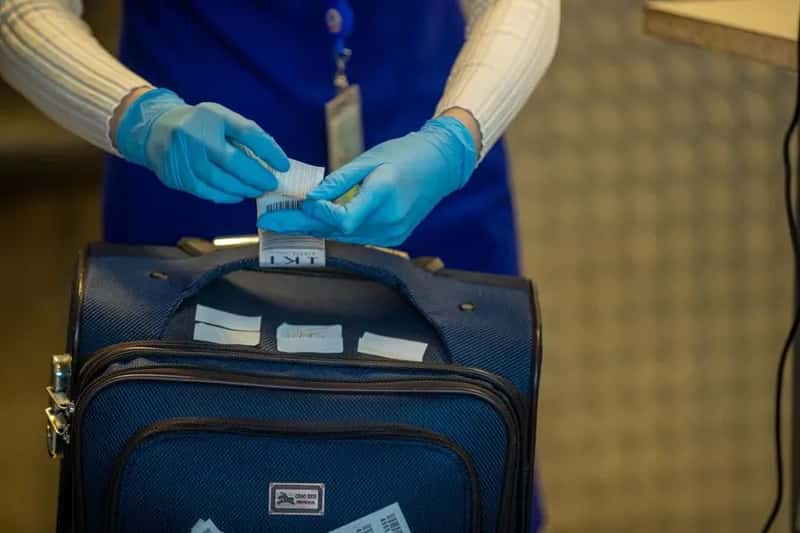
The TSA Notification Card is a physical card that travelers with medical conditions, disabilities, or implanted devices can carry and hand to an agent at the start of screening. Hand one over and the entire dynamic of your checkpoint interaction changes instantly. There’s no explaining your condition out loud in a crowded line, no waiting while the agent figures out which pathway applies, and no moment where you have to repeat yourself over terminal noise.
The card specifies your health conditions, disabilities, or medical devices that may affect screening – and handing it over immediately triggers the correct modified pathway. From an agent’s perspective, this card removes all ambiguity and accelerates the whole process. It’s free, printable directly from TSA’s website, and takes about three minutes to complete. Most travelers over 60 who need one have never heard it exists – which means they’ve been having harder checkpoints than they had to.
#7 – They Quietly Reroute You When They Sense You’re Overwhelmed
Checkpoint overwhelm in older travelers looks different from the impatience of a rushed business traveler. Agents trained to work with seniors recognize it fast – a hesitation at the bin area, a confused look at the scanner entrance, hands that aren’t moving with any urgency. These are the moments when experienced agents step forward and say something low and calm, just for the traveler in front of them.
At airports with dedicated TSA Cares teams, travelers encounter staff specifically trained to de-escalate the stress of security and guide passengers toward their gates with minimal friction. The reroute isn’t announced over the intercom. The agent simply steps out of the main flow, lowers their voice, and walks the traveler into a calmer lane. The rest of the line keeps moving. Nobody around them ever notices it happened.
#6 – They Pre-Coordinate Your Whole Checkpoint If You Called TSA Cares in Advance
TSA Cares – reachable at (855) 787-2227 – is a helpline specifically for travelers with disabilities, medical conditions, or circumstances requiring extra checkpoint assistance. Travelers can call 72 hours before their flight to flag their situation and arrange support. What happens after that call is the part nobody talks about: agents at your departure airport are notified, and a support pathway is quietly prepared before you ever walk through the door.
In 2024, the TSA Cares helpline assisted 69,000 travelers with disabilities, medical conditions, and other special needs – a number that reflects how widely the program is used by those who know about it, and how many more could benefit. The travelers who know about this move through the airport in a fundamentally different way than those who don’t – same terminal, same lines, completely different experience. The only thing separating those two groups is knowing the option exists.
“TSA Cares provides information on security procedures aimed to help passengers with disabilities, medical conditions and individuals needing additional assistance to better prepare for the security screening process.”
Transportation Security Administration (TSA.gov)
#5 – They Flag Your Hearing Aid Before It Triggers a Confusing Secondary Screening
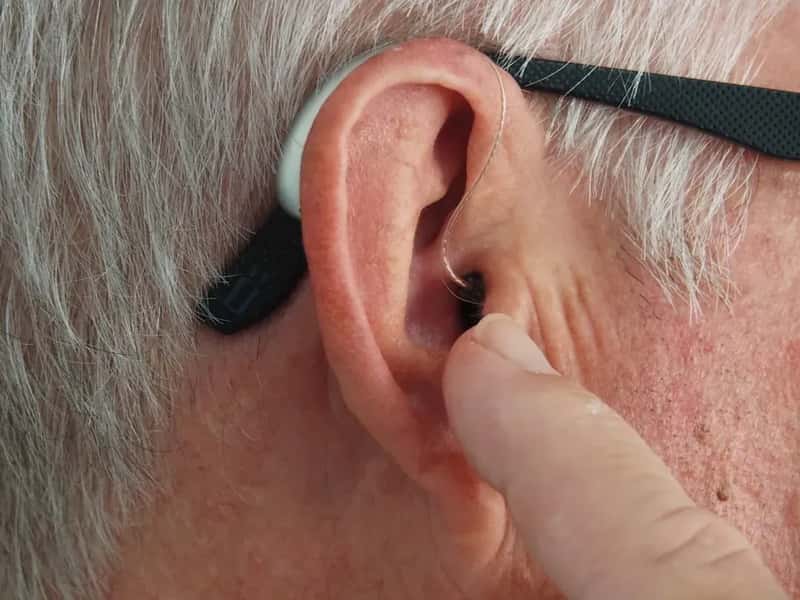
Here’s one that catches travelers completely off guard. A traveler wearing hearing aids walks through the Advanced Imaging Technology scanner. The device registers. The agent calls them over. Without any context, that moment feels like a red flag – and for someone who’s hard of hearing, the back-and-forth conversation that follows in a loud, echoey terminal can become genuinely distressing. Trained agents know to get ahead of this.
Travelers are not required to remove hearing aids or cochlear implants, but additional screening may be required if the device alarms during the scan. An agent who notices hearing aids before screening begins will quietly note it, position themselves closer to the traveler during the process, and communicate more directly – making sure no one ends up confused and stranded in the middle of an additional screening they never saw coming.
#4 – They Apply Your Air Carrier Access Act Escort Right Without Ever Naming It

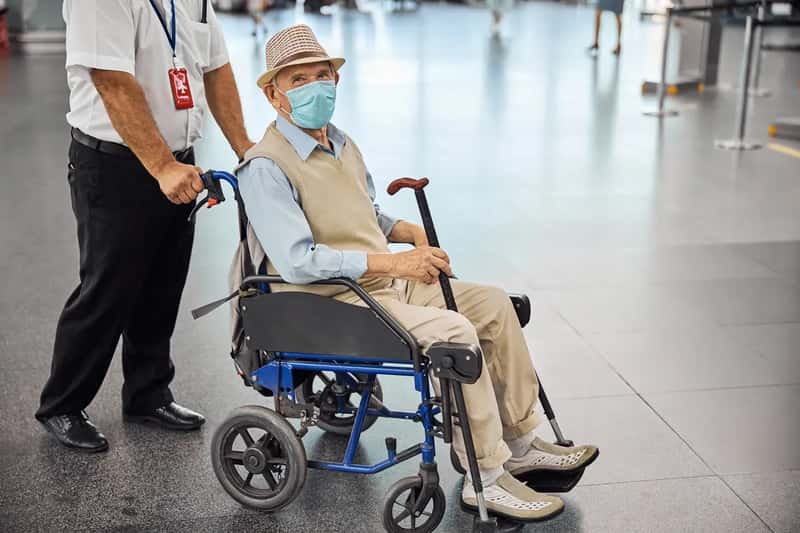
Seniors aged 60 and older are legally entitled to free wheelchair or ambulatory assistance throughout their airport journey, regardless of visible disability – and the Air Carrier Access Act guarantees escort through security, help with carry-ons, and priority boarding. Most travelers over 60 have never heard of this law. Agents and airport staff who regularly work with older travelers know it well, and they apply it without ever reciting the legal citation.
What this looks like in practice: a staff member notices an older traveler moving slowly through the pre-checkpoint area, steps out to assist, and walks them through the entire process – bins, scanner, reassembly, and onward to the gate. It’s a professional escort from curb to gate, completely free. The traveler usually thinks they just got lucky with a particularly kind employee. They didn’t. It was a federal right the entire time.
#3 – They Give Your CPAP Machine Its Own Separate Bin – Without Being Asked
CPAP machines are among the most commonly traveled medical devices in the over-60 population, and they require specific checkpoint handling that most travelers discover only by accident – usually after they’ve already created a bottleneck in line. An experienced agent who sees a CPAP case come down the belt knows exactly what to do before it even reaches the X-ray tunnel.
A CPAP, BiPAP, or APAP must be removed from its carrying case for X-ray screening – but facemasks and tubing may remain inside, and you can provide a clear plastic bag for the device if you prefer. Even better: a CPAP does not count toward your standard carry-on allowance under federal guidelines, meaning it travels as a separate medical device. A trained agent quietly pulls the CPAP from the regular flow, sets up a dedicated bin, and handles it with the same deliberate care reserved for laptops. The traveler watching their equipment get its own careful process doesn’t realize this is a documented protocol. They just feel like they got a particularly attentive agent that day. They did – but it wasn’t random.
Worth Knowing: Flying with a CPAP
- Must be removed from its case for X-ray; facemasks and tubing may stay inside
- You can request a clean plastic bag to protect it during inspection
- Does not count as a carry-on – you still keep your full luggage allowance
- Distilled water for the humidifier qualifies as a medically necessary liquid (exempt from 3-1-1), but must be declared
- No doctor’s note legally required, but a prescription copy can smooth any questions
#2 – They Brief the Checkpoint Before You Arrive If You Used the TSA Cares Helpline
Most travelers who call TSA Cares think they’re just getting information. They’re not – they’re setting off a coordination chain. In many cases, local TSA management is notified after a TSA Cares call and will assign a Passenger Support Specialist to assist through the entire checkpoint screening process. The call doesn’t just prepare you. It prepares them for you.
This means that when you walk into the terminal on travel day, a Passenger Support Specialist may already know you’re coming. They know your condition. They know which lane works best for you. They know which screening method won’t interfere with your medical device. The entire checkpoint experience is quietly customized around you before you set foot in the building – and every traveler around you assumes the same rules apply to everyone. They don’t.
#1 – They Treat Every Disclosure You Make as a Trigger for a Completely Different Screening Experience
This is the one that changes everything. Every accommodation on this list – the expedited screening track, the seated pat-down, the mobility aid protocol, the medical liquid bypass, the specialist escort – is triggered by the same thing: you saying something. A simple heads-up to the agent at the start of the line unlocks a different experience entirely. “I have a pacemaker.” “I’m traveling with insulin.” “I use a walker.” Each phrase opens a documented pathway that agents are trained to follow the moment they hear it.
These aren’t tricks or loopholes. They’re real programs, real exemptions, and real procedures that exist specifically for older travelers – and that most Americans go their entire lives without hearing about, because no one at the checkpoint is paid to announce them. The agent at the head of that line already knows all of it. The gap between a stressful checkpoint and a smooth one is usually just a handful of quiet words spoken at the right moment. Now you have them.
TSA Cares is reachable at (855) 787-2227. The Notification Card is free and printable from TSA’s website. The Passenger Support Specialist program is available at airports across the country. None of it requires a fee, a formal appointment, or a doctor’s note for most accommodations. It just requires knowing to ask. If someone you know dreads that security line, share this with them – because the hardest part of their travel day doesn’t have to be.