


Age alone rarely wipes out an airline fee. A first checked bag on Southwest costs $45 on tickets booked on or after April 9, 2026, no matter how many birthdays you have had.1
But some charges really do disappear at the counter, because a legal right, a fare rule or a status you can name does the work a birthday can’t. Some of these are worth real money, and the biggest sum sits in the last item, where age has nothing to do with it. The first free help starts at the curb.
#17 – Curb-to-Gate Wheelchair Help Costs Nothing
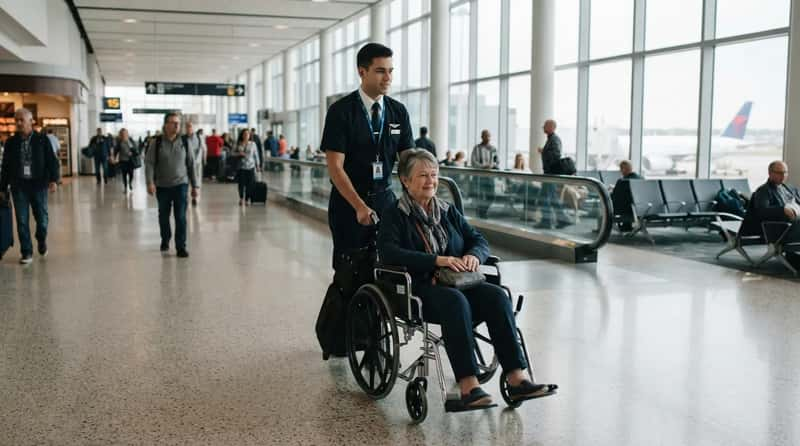
Under the Air Carrier Access Act, U.S. airlines, and foreign airlines flying to or from the United States, must promptly provide wheelchair or guided help to passengers with disabilities who ask for it. That covers getting from the terminal entrance to the gate, boarding, connecting between flights, deplaning and reaching baggage claim.2
Airlines can’t charge for it, and they generally can’t require advance notice.3 The Department of Transportation still recommends calling ahead, so put the request on your reservation when you book.
The help is tied to a mobility limit, not a birthday. Many travelers who request a wheelchair at the airport don’t use one in daily life, and if a long terminal walk is what worries you, a request is a fair use of the service.
The chair that takes you to the gate belongs to the airline, but your own walker or wheelchair falls under a separate rule.
#16 – Your Own Walker or Wheelchair in the Cargo Hold
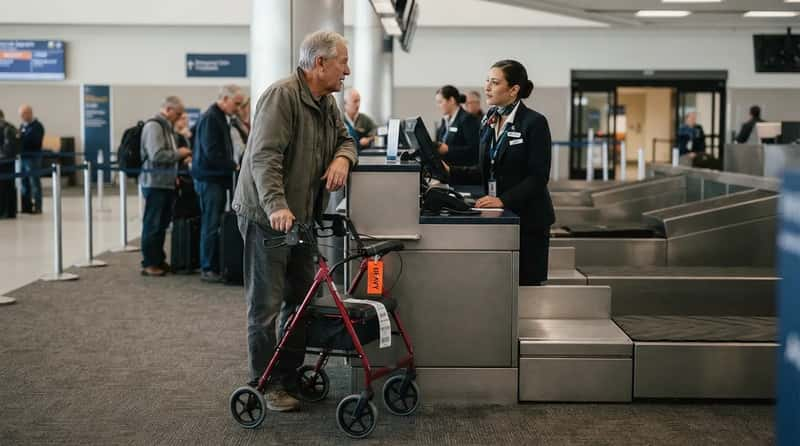
Airlines are required to provide free and safe transportation for the personal wheelchairs and mobility devices of passengers with disabilities. If you have to check an assistive device, that is done for free as well.3
The one place a fee can appear is a traveler bringing several wheelchairs, where regular baggage fees may apply. For a single cane, walker or chair, the right answer at the counter is no charge.
If an agent tries to charge you, ask for the Complaint Resolution Officer immediately.3 In December 2024 the department also issued a final rule that formally defines “safe” and “dignified” assistance, which matters most when a device is handled roughly.
Fast Facts
- Cost to check your own walker or wheelchair: $0
- Possible fee: only when a traveler brings several wheelchairs
- If an agent pushes back: ask for the Complaint Resolution Officer
- December 2024: a final rule defined “safe” and “dignified” assistance
Once you are on board, the question shifts from what the airline carries to what you may bring into the cabin.
#15 – Canes and Folding Walkers in the Cabin
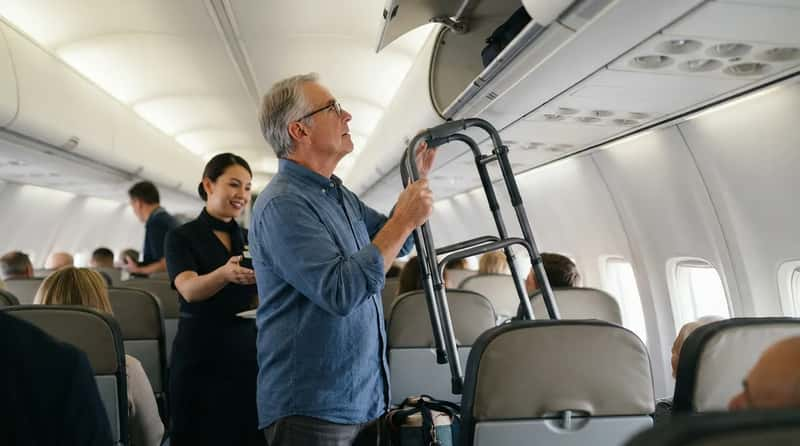
Airlines must allow assistive devices as carry-ons in the cabin free of charge. Some carriers go further in writing.
Allegiant, for example, charges nothing for walkers or canes and doesn’t count them toward your allowed carry-on items. That distinction matters most on budget carriers that bill for bags in the overhead bin.
You can also ask for help stowing and retrieving the device. The department suggests arranging that in advance, along with your seat.
A device you use is covered, while a second bag of ordinary belongings is not, so keep the two apart at the gate. If an agent disputes it, ask them to check the airline’s disability policy instead of debating the point in the boarding line.
#14 – Preboarding Without Paying for Priority

Carriers must offer preboarding to passengers with disabilities who self-identify at the gate as needing additional time to board. Because it is a right and not a product, it costs nothing, and it replaces the paid priority boarding that some airlines sell as an add-on.
If you genuinely need the extra time, there is little reason to pay for priority, since the free route exists for exactly that purpose. It is tied to need, though, so tell the gate agent what you need, whether that is a slow walk down the jet bridge or a device to stow.
Preboarding gets you on the plane early, but where you sit is its own request.
#13 – A Seat That Fits Your Needs, Not Your Wallet
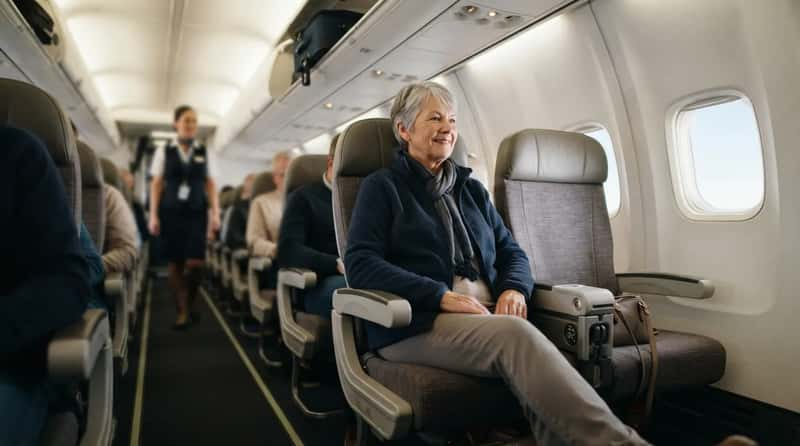
Free seat assignment that meets your disability-related needs is part of what the Air Carrier Access Act protects. The department recommends calling ahead to arrange it.2
If a stiff hip or knee means you need an aisle, ask for it before paying a seat-selection fee.
The obligation is a seat that meets the need, so do not expect a free extra-legroom upgrade, which is a product airlines sell separately. Name the need plainly, such as an aisle or a seat near the front, instead of asking for a “senior seat,” because that is the wording an agent can act on.
Quick Compare
- Usually covered: an aisle or front seat that meets a disability-related need
- Not covered: a free extra-legroom upgrade
- Better wording: “I need an aisle for my hip,” not “a senior seat”
- Best timing: call ahead, as the department recommends
#12 – The On-Board Wheelchair to the Lavatory
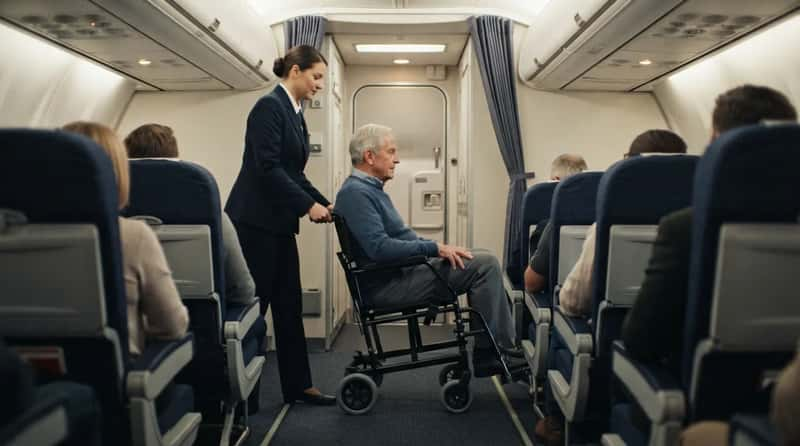
Airlines cannot charge extra for wheelchair assistance, stowage of mobility devices, or use of an on-board wheelchair.4 That on-board chair is a narrow aisle chair stored on the aircraft for moving passengers to the lavatory.
Passengers who need it must receive help maneuvering it from carrier personnel.
It is not automatic, so request it when you book and confirm it at the gate. On a long flight, that confirmation is the difference between a chair waiting down the aisle and a request nobody saw.
Not every free service comes from the airline, though, because the checkpoint has its own.
#11 – Screening Help From TSA Cares
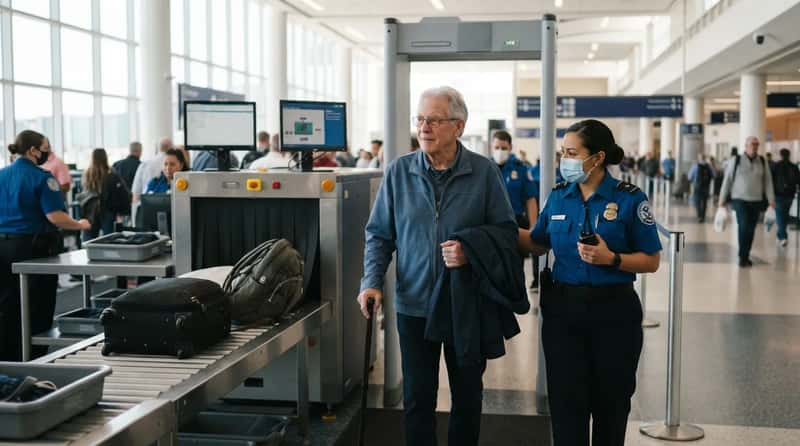
TSA Cares is a free Transportation Security Administration program that gives travelers with disabilities, medical conditions or other special circumstances dedicated help through security screening.5 Because the federal agency runs it, no airline can attach a fee to it.
It will not save you money, so judge it by how much worry it lifts at the checkpoint. It is worth arranging before a first flight in several years, when the layout, the medication rules and the pace of the line are all unfamiliar.
TSA’s website explains how to contact the program ahead of your trip.
#10 – Senior Fares on a Handful of Routes
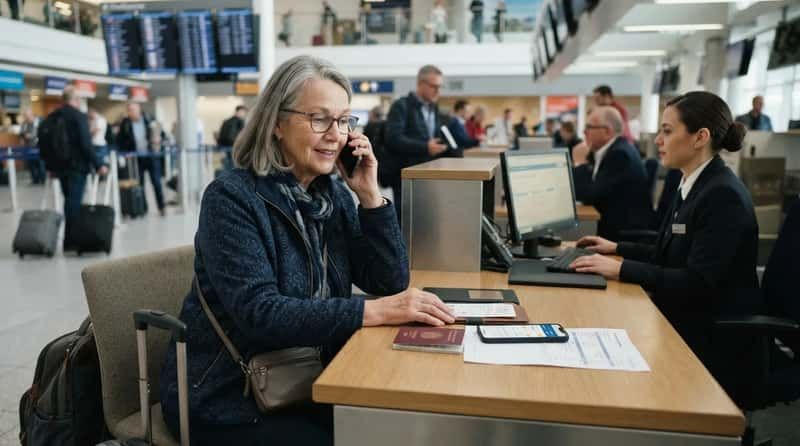
Here the ask pays off, but only sometimes. American, Delta and United still file senior fares for passengers 65 and older on a limited set of routes, but none publishes what the discount is worth, and some take the booking only by phone.6
A fare discount is not a fee waiver, and it will not remove a bag charge.
Before you call, price the same trip online, because a published sale fare can easily beat a quiet senior fare. The agent can quote both if you ask.
Even that modest ask has outlived several better-known programs.
#9 – Discount Programs That Have Already Ended
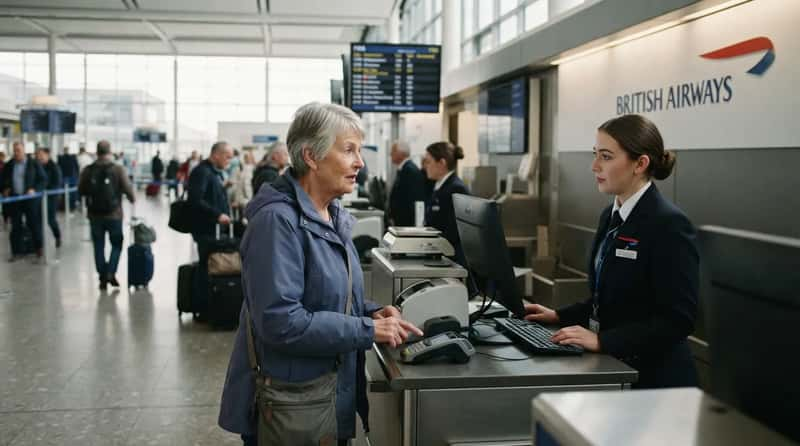
British Airways ended its AARP discount in January 2026, and Frontier’s 55FOR55 offer expired in February 2025.6 Both still turn up in older lists, which is why asking an agent for them goes nowhere.
If you go looking for a senior discount, take phone numbers only from the airline’s own website. Some pages in search results are crowded with numbers and make promises the airline itself does not make.
Treat any page that offers a “senior discount line” as a reason to go back to the carrier’s site and check there.
Of the programs that ended, the one readers remember best belonged to a different airline.
#8 – The Southwest Senior Fare That Is Gone
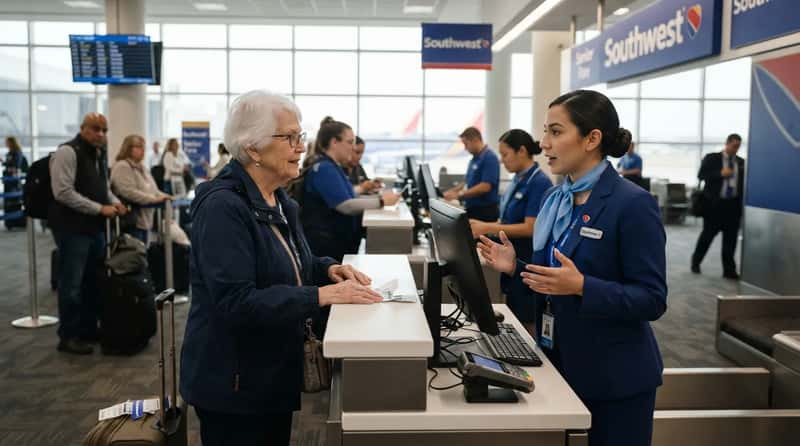
Southwest ended senior fares on December 11, 2019, and its help center now says plainly that it does not offer them. The program had run since 1983, with the last day to book on December 11, 2019 and final travel by May 15, 2020.7
Asking a gate agent for it will not work, because there is nothing to apply.
What Southwest has added since then is bag charges that apply at every age.
#7 – Southwest’s Checked Bag Fee at Any Age
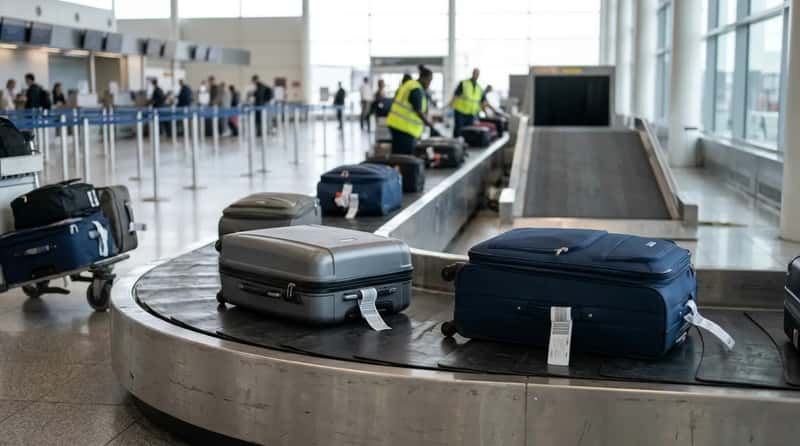
Southwest ended “Bags Fly Free” on May 28, 2025. For tickets booked on or after April 9, 2026, the first bag is $45 and the second is $55.1
Free checked bags still go to A-List and A-List Preferred members, Southwest co-branded cardholders, Choice Extra fares and active-duty military. Age is not on that list.
If you fly Southwest often with a bag, compare a year of fees against a co-branded card’s annual fee, because the card is the one waiver anyone can qualify for. If you fly once a year, pay the fee or pack a carry-on, which stays free on every fare.
A bag that is allowed can still draw a second charge if it is too heavy.
#6 – The Overweight Surcharge You Can Avoid at Home
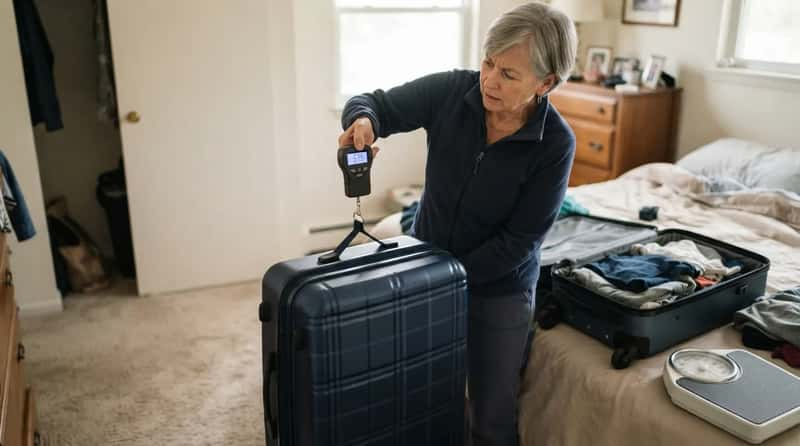
At Southwest, a bag weighing 51 to 70 pounds incurs an extra $100 on top of the standard fee. The limits to remember are 50 pounds and 62 linear inches.
No age exemption exists, and the waiver for active-duty military is the only one in the baggage rules.
This is the easiest fee on the list to beat, because the fix costs nothing. Weigh the bag on a bathroom scale and move anything heavy into your carry-on, which is free at Southwest.
Repacking at the counter, with the scale in front of you, is the second-best option.
#5 – Your Bag Fee Back When the Bag Arrives Late
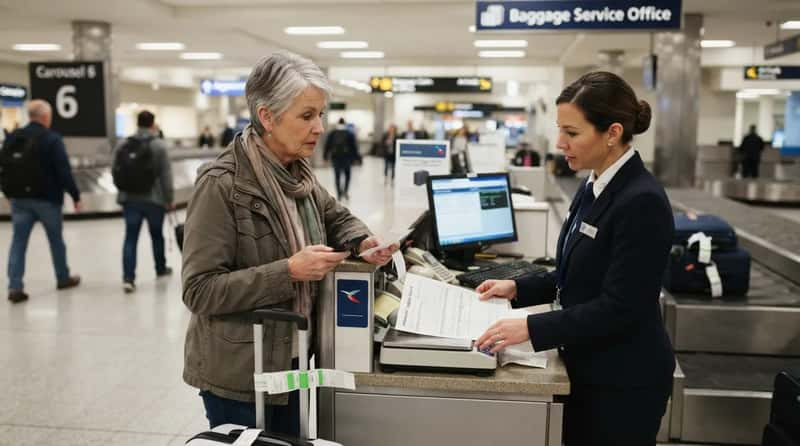
Under the Department of Transportation’s refund rules, if you file a mishandled baggage report, you are entitled to a refund of your checked bag fee if the bag isn’t delivered within twelve hours of a domestic flight reaching the gate. For an international flight the window is fifteen to thirty hours, depending on the length of the flight.
The airline that flew the last segment generally issues these refunds automatically in certain circumstances.
The report is what starts everything, so file it at the baggage office before you leave the airport. Without it, you are asking for money back on an event nobody recorded.
A late bag is one service you paid for and didn’t get, and the same rule covers others.
#4 – Paid Extras That Never Showed Up

The department’s 2024 refund rule applies to more than cancelled flights. It requires carriers and ticket agents to provide prompt automatic refunds for cancelled flights, significant schedule changes, significant baggage delay and failure to provide paid ancillary services.8
A seat you paid to select and didn’t get, or in-flight Wi-Fi that never worked, falls into that last category.8
Look at your card statement after the trip. The refund is supposed to come without a request, but a small charge for a service you didn’t receive is easy to miss.
At a Glance
- Cancelled flights
- Significant schedule changes
- Significant baggage delay
- Paid extras not delivered, such as a seat or Wi-Fi
The rule has one narrow exception that catches travelers off guard.
#3 – A Flight That Only Changes Its Number
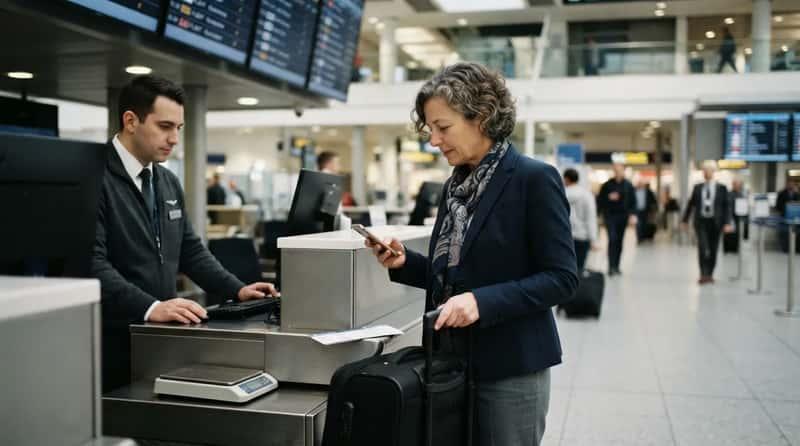
Under the April 2024 rule, a flight given a different number than the one assigned at purchase is treated as a canceled flight, which triggers automatic refund obligations. The department has since used limited enforcement discretion for that situation.
A change in flight number alone is treated differently when there is no significant change or delay. That narrow corner has been shifting, so check the department’s current guidance before you rely on it.
Look at the other details first. Airport changes, added connections and class-of-service downgrades also count as significant changes.
A ticket you have just bought comes with a simpler right.
#2 – Twenty-Four Hours to Change Your Mind
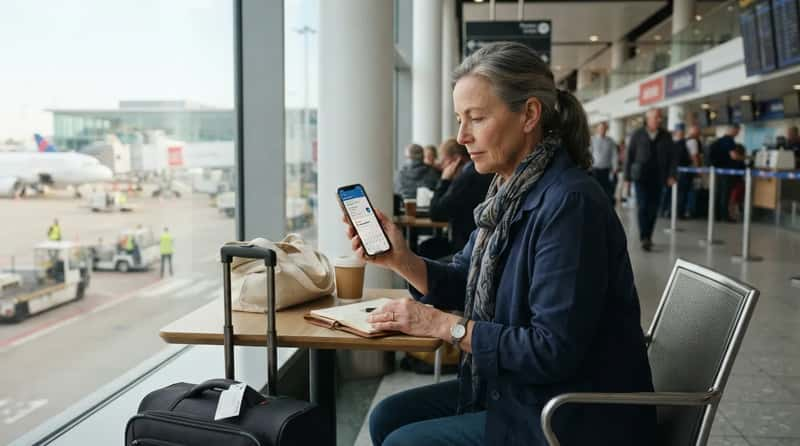
If an airline requires payment when you reserve, it must provide the 24-hour cancellation-and-refund option under the rule. In general this applies to tickets bought at least a week before departure.
That makes it the cheapest protection on this list, since it works at any age and the airline cannot talk you out of it.
Put a reminder in your phone the moment you book. If you find a better fare, a calendar conflict or a mistake in a name, the free window is when you can fix it.
Once the 24 hours pass, the amount of money at stake depends on what the airline does next.
#1 – A Cash Refund When Your Flight Is Cancelled
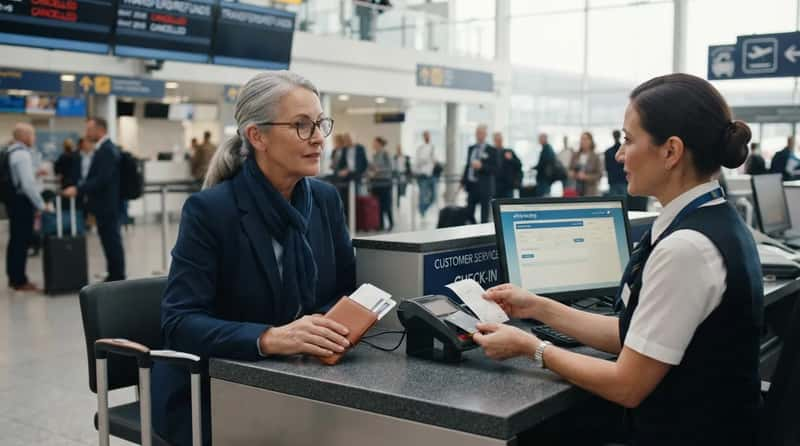
If your flight is cancelled and you choose not to accept a rebooking, the airline is legally required to refund the full ticket price to your original payment method. The airline must start that refund without you asking.
On a credit card, the deadline is 7 business days. A domestic delay of three hours or more, or an international delay of six hours or more, can also qualify.
The risk is the voucher. Once you actively choose a voucher or travel credit, the automatic-refund clock stops, so decline the offer before you tap anything in the airline’s app.
The rule covers all airlines operating flights to, from or within the United States, including budget carriers. Compared with this, a $45 bag fee is small change, and age has nothing to do with either one.
So the real trick was never the birthday. Next time you stand at a counter, skip “Is there a senior discount?” and ask about the specific thing you need.
“Is there a fee for checking my walker?” and “I’d like the refund to my card, not a credit” are requests an agent can act on, and both have a rule behind them. A general plea for a break on the price usually gets a polite no.
Keep the confirmation emails, the claim numbers and the agent’s name for anything that involves money, and check the airline’s own site for current terms before a big trip.
Which charge on your last ticket did you pay without asking whether a rule or a status covered it?
Bonus: The Insider Trick Nobody Tells You

Knowing your rights is half the battle. The other half is having a paper trail and a second route for your money when an airline stalls or says no.
- Get it on record: Before you leave the counter or hang up the phone, ask the agent to note your request in the reservation. Write down the date, the time and the agent’s name.
- File with the government: If the airline refuses or drags its feet on a refund you are owed, file a complaint through the Department of Transportation’s air travel consumer complaint page. Attach your confirmation emails and claim numbers.
- Use your card as a backup: If you paid by credit card for a flight or extra that was never delivered, dispute the charge with your card issuer. Under the Fair Credit Billing Act, a written dispute generally has to reach the issuer within 60 days of the statement that shows the charge.
Do the first step on the spot and the other two the same week. The people who get their money back are usually the ones with dates, names and numbers in hand, not the ones who argue loudest.
- NBC DFW Southwest Bag Fees: https://www.nbcdfw.com/news/local/southwest-becomes-the-latest-airline-to-increase-checked-bag-fees/4007913/
- DOT Traveling With Disability: https://www.transportation.gov/individuals/aviation-consumer-protection/traveling-disability
- DOT Assistive Device Stowage: https://www.transportation.gov/resources/individuals/aviation-consumer-protection/assistive-device-guides/assistive-device-stowage
- DOT Travel Tips Disabilities: https://www.transportation.gov/individuals/aviation-consumer-protection/general-travel-tips-persons-disabilities
- TSA Cares Program: https://www.tsa.gov/travel/tsa-cares
- Senior Airline Discounts Overview: https://seniorsite.org/resource/11-hidden-senior-discounts-on-flights-that-save-you-100-in-2025
- CBS Southwest Senior Fares: https://www.cbsnews.com/texas/news/southwest-airlines-to-discontinue-senior-fares-this-december
- DOT Automatic Refund Rule: https://www.transportation.gov/briefing-room/dot-launches-rulemaking-protect-passengers-stranded-airline-disruptions
