
Most people assume flight attendants are too busy pouring drinks and pointing at exit rows to notice much about any single passenger. That assumption is wrong. Passengers over 60 get watched more closely than almost anyone else on the plane, and it has nothing to do with age discrimination.
It’s pattern recognition, built from thousands of flights and more than a few real emergencies. Crew won’t say any of this to your face, but behind that polite smile at the door, a mental checklist is already running the second you step onto the jet bridge. Here’s what experienced flight attendants actually clock – and why some of it might surprise you.
#17 – The Carry-On That Reveals Everything Before You Even Sit Down
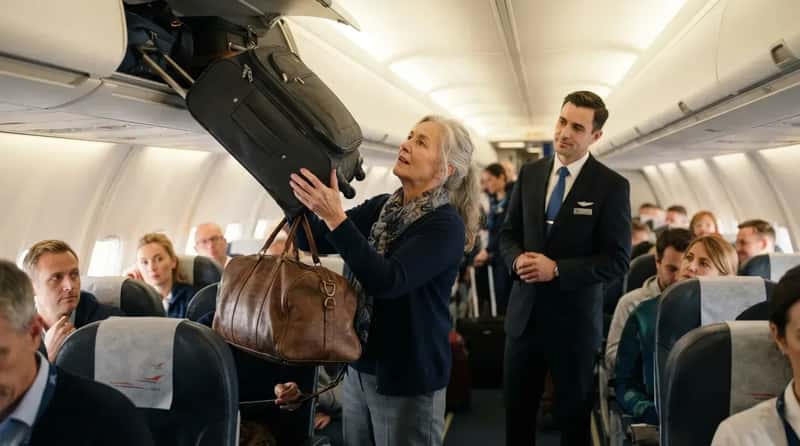
How much you pack, and how you pack it, tells crew more than you’d think. A frequent flyer knows exactly where their bag goes and settles in within seconds. A struggling passenger signals something entirely different to the crew scanning the aisle.
For passengers over 60, an overstuffed roller bag or an awkward duffel isn’t just inconvenient – it’s a small red flag crew quietly file away. They’re not judging your packing skills. They’re simply noting who might need a hand once the seatbelt sign goes off and the aisle gets crowded again.
#16 – Requesting the Aisle Seat Near the Restroom
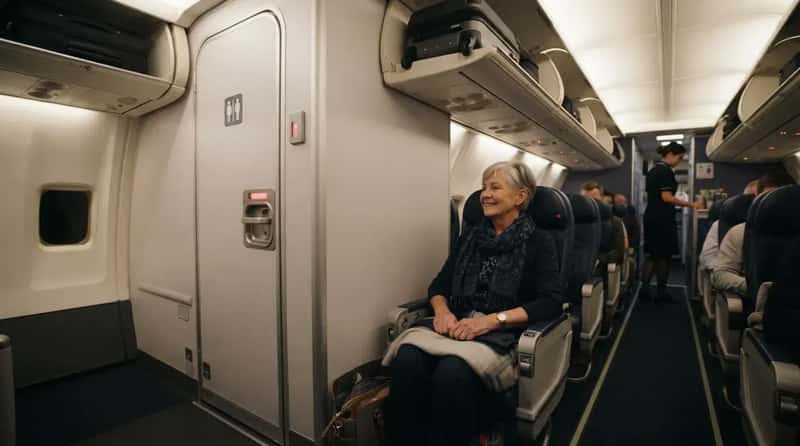
Seat selection habits are one of the clearest tells crew pick up on almost instantly. Passengers over 60 who specifically ask for an aisle seat close to a lavatory are usually planning ahead for circulation, medication timing, or simple comfort on a longer flight. It’s a small, smart travel hack – pick a seat that fits the trip you’ll actually need to take, bathroom included.
Crew notice this pattern because it changes how they plan the beverage cart and aisle traffic for that row. It’s not a red flag at all. Flight attendants read it as the sign of an experienced, self-aware traveler rather than a complaint waiting to happen.
#15 – Bringing Their Own Water Bottle Onboard
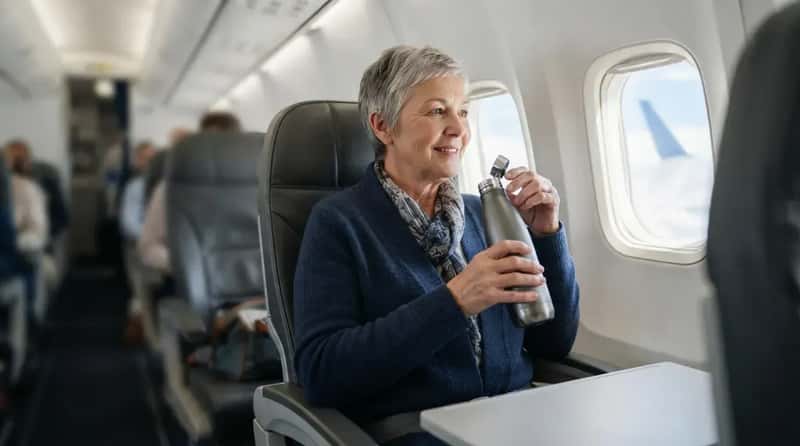
Dehydration hits harder at altitude, and older travelers who show up with a personal water bottle already know it. Cabin air is notoriously dry, and passengers who hydrate proactively tend to fare noticeably better on long flights than those who wait for the cart to reach them. Crew quietly clock this as a sign of a seasoned flyer who understands their own body.
It’s a tiny habit with an outsized effect. Flight attendants say the passengers who sip water steadily throughout a flight are far less likely to get the dizziness or fatigue that sends others reaching for the call button. Older travelers use this simple self-care move more consistently than almost any other age group.
Fast Facts
- Cabin humidity often drops to just 10-20%, drier than most deserts.
- Dehydration at altitude can worsen fatigue, headaches, and dizziness mid-flight.
- Many seasoned flyers carry an empty bottle through security and refill it past the checkpoint.
#14 – Dressing Like They Mean It
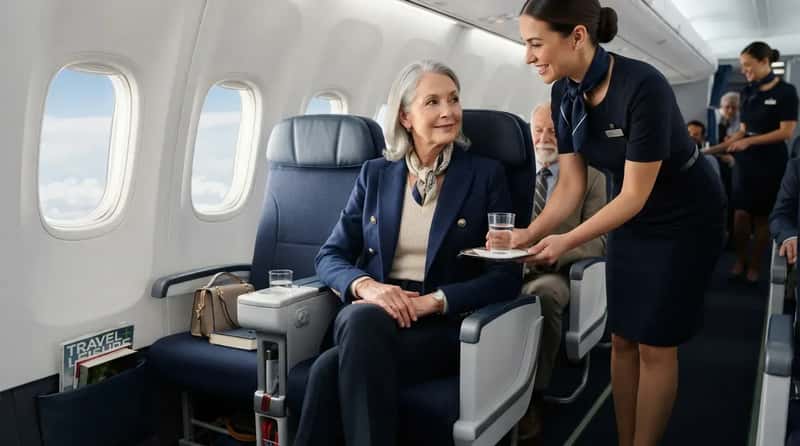
Appearance still quietly shapes how passengers get treated, whether anyone admits it or not. Crew notice what people wear more than most travelers realize, and looking put-together, paired with a respectful attitude, measurably increases the odds of better service. Older passengers who dress with intention usually aren’t doing it for style points.
Flight attendants have openly said a clean, pulled-together look changes first impressions before a single word gets exchanged. It’s a bit of an uncomfortable truth – plenty of travelers argue clothing shouldn’t matter at 35,000 feet – but crew consistently say it does, in ways both subtle and surprisingly direct.
#13 – Greeting the Crew by Name or With a Genuine Hello
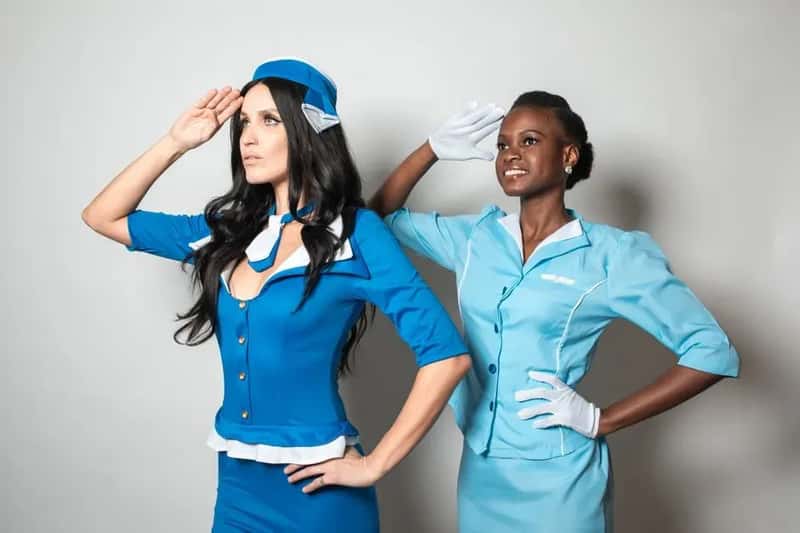
A simple hello at the door does more than most passengers realize. Flight attendants genuinely notice a kind greeting or a returned smile, and they remember who bothered to acknowledge them as a person. Passengers over 60 do this far more often than younger flyers who rush past with headphones already in.
That small gesture doesn’t just make crew feel human – it can quietly change your entire flight. Returning a greeting makes a better impression automatically, and good cabin etiquette has been known to earn a passenger a free drink or an extra snack. It sounds almost too simple, but crew say it works exactly that way.
#12 – Handling Luggage Independently, Even When It’s Clearly a Struggle
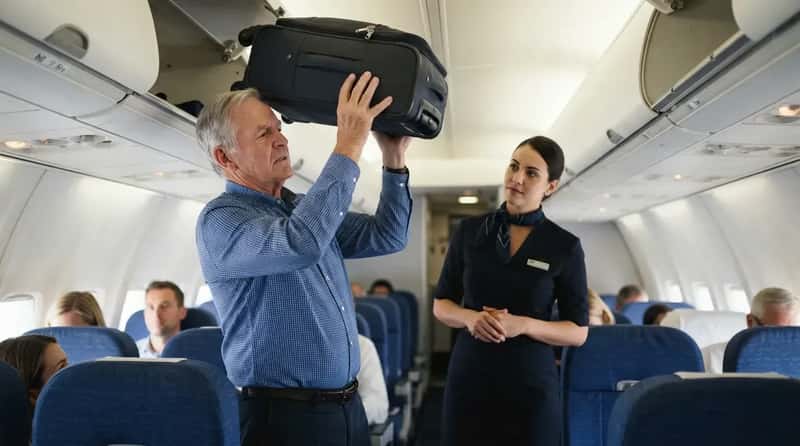
Pride shows up in the overhead bin more than anywhere else on the plane. Many older passengers insist on lifting their own bag even when it’s obviously heavy, and crew are trained to watch this moment closely rather than step in right away. It’s a familiar tug-of-war between humans and luggage, and most crew members clock it the second a passenger approaches the plane.
It’s less about the bag and more about what the struggle reveals. Crew say this one moment often tells them more about a passenger’s mobility and comfort level than anything written on a boarding pass.
#11 – Nodding Along to Instructions They Didn’t Quite Hear
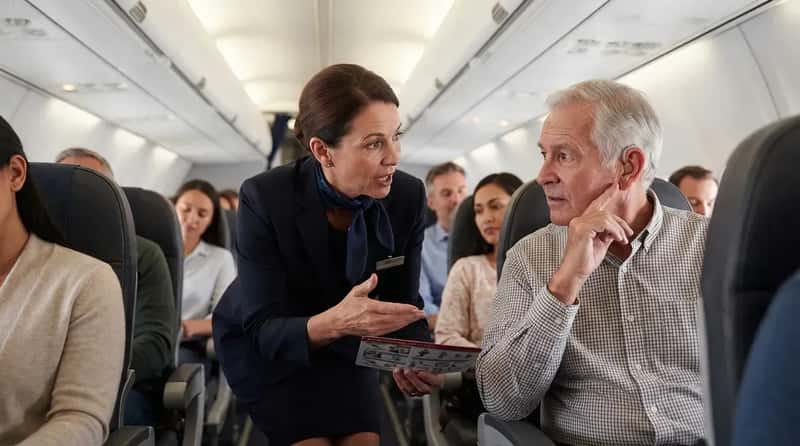
This one is more common than most families realize, and crew notice it constantly. The traveler who clearly can’t hear the safety briefing but nods along anyway is a familiar sight to experienced flight attendants. It’s rarely stubbornness – it’s usually a quiet effort to avoid drawing attention to hearing loss.
Crew say they’ve learned to repeat instructions closer, slower, and more directly to passengers who show this pattern, without ever pointing it out. It’s one of the more compassionate adjustments happening in the background of a flight most passengers never notice at all.
#10 – Keeping Medications in the Carry-On, Not the Checked Bag
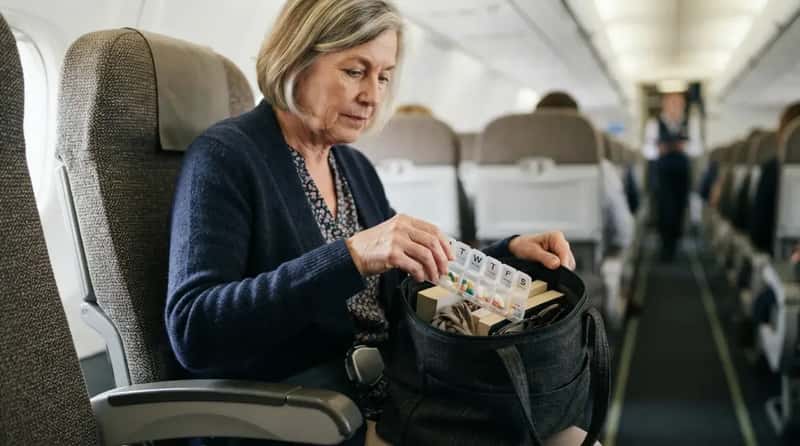
Seasoned older travelers rarely make the rookie mistake of checking their medication. Bags get lost or delayed, so the smart move is packing medication in a carry-on rather than trusting it to the belly of the plane. Crew notice when a passenger pulls a labeled pill organizer from a personal bag instead of fumbling through baggage claim mid-crisis.
This habit matters more than most passengers assume. When a medical situation arises at altitude, crew ask about medications almost immediately, and a passenger who already has them within reach saves precious time. It’s a quiet signal of someone who has done this before and planned accordingly.
#9 – Footwear That Flight Attendants Silently Flag
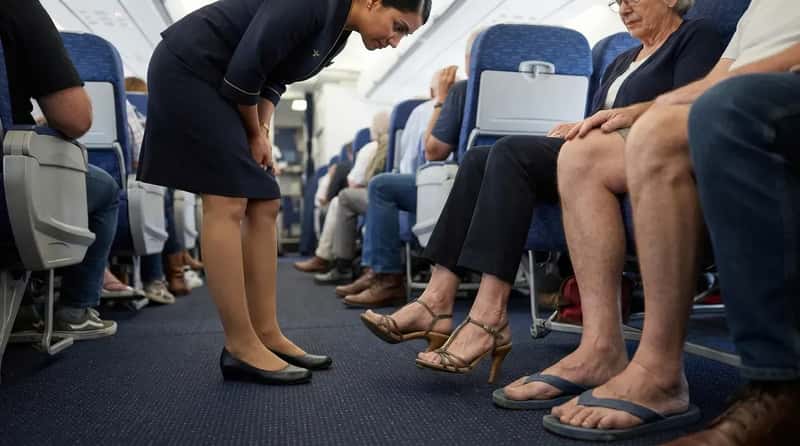
Shoes get more attention from crew than almost anything else a passenger wears. Flight attendants watch for sharp or unstable items, like high heels, that would need to come off in an emergency because they can puncture the evacuation slide. For passengers over 60, hard-soled or unstable shoes carry extra weight in a crew member’s quiet risk assessment.
It’s not fashion criticism. One flight attendant put it simply: she looks at what kind of shoes a passenger is wearing to gauge whether they could move quickly if needed, and flip-flops get the same scrutiny as heels. A stable, closed shoe quietly earns a passenger a lower spot on the crew’s worry list.
#8 – Whether Special Assistance Was Actually Arranged in Advance
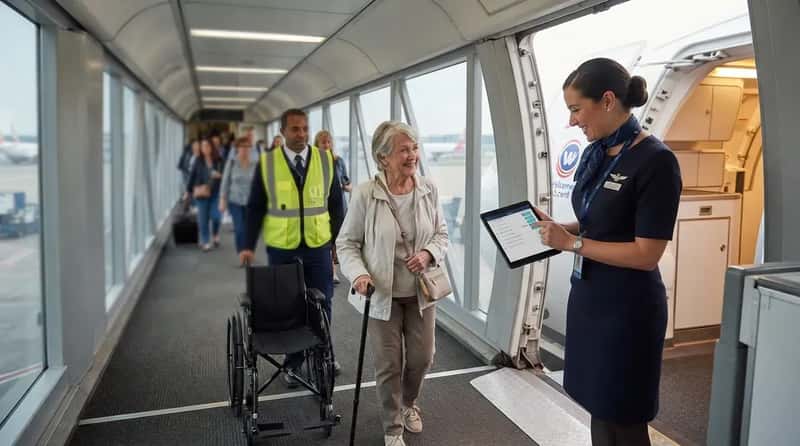
This is one of the biggest hidden factors shaping how a flight unfolds for older travelers. Flight attendants receive a manifest before boarding, and it includes notes on anyone who requested special assistance. Crew instantly know the difference between someone who called ahead and someone flying solo without a plan.
Most passengers over 60 don’t realize how far that notation travels. Airlines generally ask for at least 48 hours’ notice for wheelchair support or mobility help, and a confirmed request means airport staff and cabin crew are already synced before the passenger even arrives. Skipping that call is one of the most common – and most avoidable – mistakes crew see.
At a Glance
- Airlines typically ask for at least 48 hours’ notice for wheelchair or mobility assistance.
- Special assistance requests get flagged on the crew’s manifest before passengers ever arrive at the gate.
- A confirmed request syncs airport staff and cabin crew before boarding even begins.
#7 – Requesting Oxygen or Flagging a Respiratory Condition Early
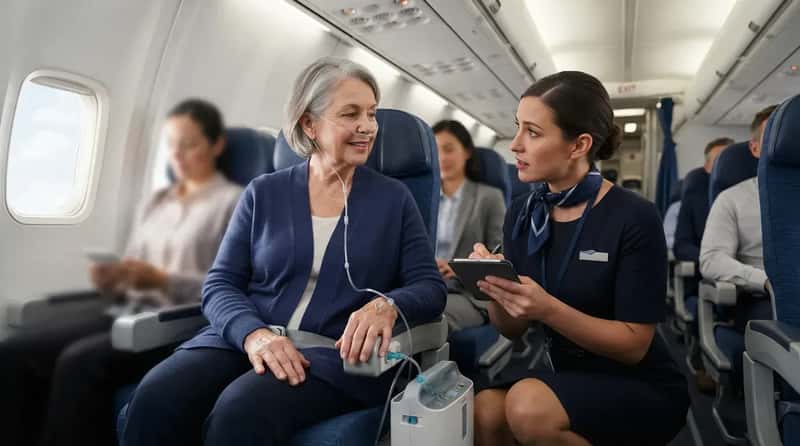
Cabin altitude isn’t sea level, and older travelers with heart or lung conditions feel that difference the most. Commercial cabins are pressurized to the equivalent of roughly 6,000 to 8,000 feet, and that reduced oxygen can worsen existing respiratory or cardiovascular issues even on a short domestic hop. Crew watch closely for passengers who arrange oxygen support ahead of time versus those who say nothing at all.
This isn’t a minor detail to flight attendants. Oxygen is the most common in-flight medical intervention crew perform, and passengers with known pulmonary conditions can typically request supplemental oxygen in advance through most major U.S. airlines. Crew genuinely prefer knowing beforehand rather than reacting mid-flight in front of a full cabin.
#6 – Hovering Near the Overhead Bin Instead of Asking for Help
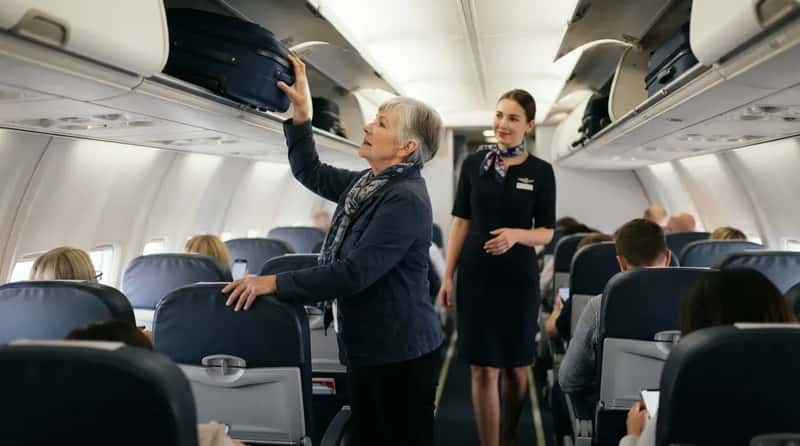
This is one of the quietest, most repeated moments crew describe. A passenger hovering near the overhead bin, clearly needing a hand but unwilling to ask for one, is a scene experienced flight attendants see on almost every flight. It’s a small act of pride crew have learned to spot – and gently step into – before it becomes a bigger problem.
Flight attendants say they’re trained to offer help before it’s requested in exactly these moments, because so many older passengers won’t ask directly. It’s one of the more human exchanges happening quietly in the aisle while everyone else is scrolling on their phone.
#5 – Flying Solo Without Anyone in the Adjacent Seat
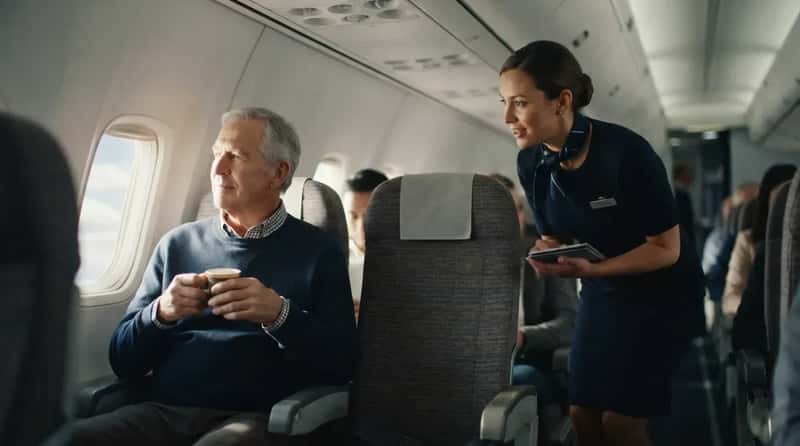
Traveling alone changes how closely a passenger gets watched, whether they realize it or not. Flight attendants stay alert to who might need extra help in an emergency, and a solo older traveler means there’s no one beside them to flag a problem if one develops at altitude. Crew quietly adjust their entire service rhythm around that fact.
This isn’t intrusive monitoring – it’s deliberate, practiced attentiveness. The attendant working that section will check on a solo older passenger more frequently than others nearby. Solo travel is completely fine, but it does change how closely the crew tracks a passenger’s well-being for the whole flight.
#4 – The Physical Signs of Fear Crew Are Trained to Catch
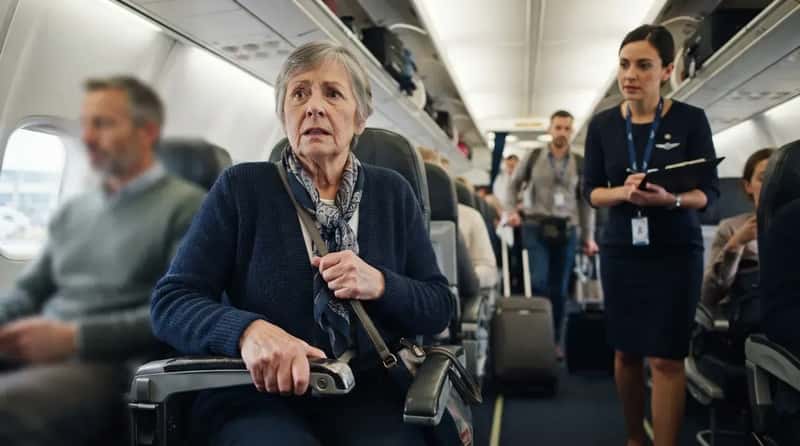
Nervous flying doesn’t disappear with age – it just shows up differently. White knuckles on the armrest, rapid shallow breathing, a wide-eyed freeze at any unexpected sound – these are things flight attendants are trained to spot immediately. Crew read this instantly, and it shapes how they treat that passenger for the rest of the flight.
For older travelers, this observation carries extra weight. Anxiety symptoms can overlap with genuine cardiac symptoms in passengers over 60, which makes the crew’s read on this even more careful. They won’t call it out publicly, but a passenger who grips the door frame while boarding gets quiet, consistent check-ins whether they asked for them or not.
Quick Compare
- Anxiety signs: rapid breathing, sweaty palms, restlessness that eases once distracted.
- Possible cardiac signs: chest pressure, shortness of breath that doesn’t ease, pain spreading to the arm or jaw.
- Crew are trained to watch for both, since the two can look nearly identical in the first few minutes.
#3 – Traveling With a Family Member Who Quietly Speaks Up for Them
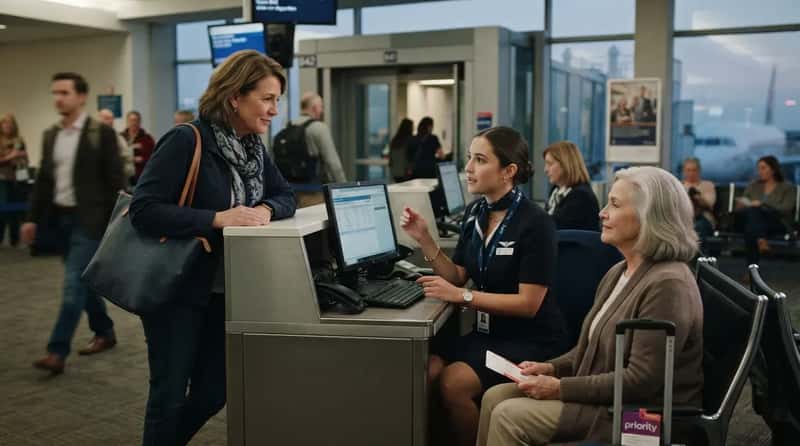
This habit is less about the older passenger and more about who’s beside them – and crew notice it fast. When an adult child or spouse mentions a comfort need at check-in or the gate, that information doesn’t just evaporate. A gate agent typically adds it to the passenger record, and the flight crew is briefed before that passenger ever boards.
Passengers over 60 who travel with someone willing to make that quiet ask tend to have noticeably smoother flights than those flying without an advocate. Crew say it’s one of the most consequential five-minute conversations most families never think to have – and one of the most common regrets they hear about afterward.
The passenger who quietly insists everything is fine while clearly struggling is the one we watch most carefully from takeoff to touchdown.
Flight attendant, on-the-job observation
#2 – Insisting “I’m Fine” While Clearly Struggling
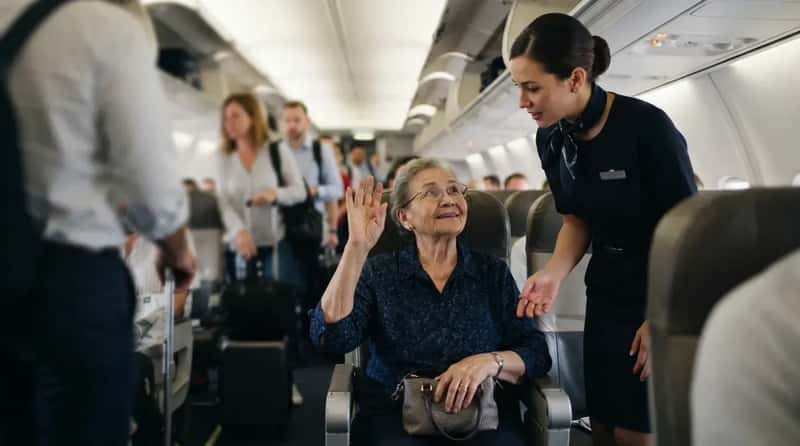
This is the habit crew talk about most, and it’s rarely about stubbornness alone. An older woman traveling alone who waves off the flight attendant with a firm “I’m fine” while clearly struggling is a scene experienced crew recognize instantly. Independence and dignity run deep, and many older passengers would rather push through discomfort than admit they need help in front of strangers.
Flight attendants say this is exactly why they’re trained to act on what they see, not just what they’re told. It’s the quiet moments, not the loud requests, that shape how closely a crew member watches a passenger for the rest of the flight.
#1 – Declining a Wheelchair Out of Pride, Even When They Clearly Need One
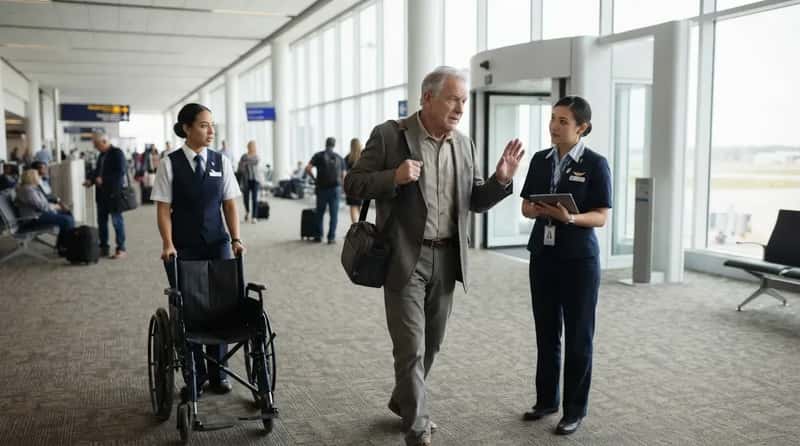
Of every habit crew quietly notice, this is the one that sticks with them the longest. Older passengers frequently wave off wheelchair assistance at the gate, insisting they can walk the distance themselves, even when the terminal stretches for a quarter mile and the walk is visibly taking a toll. It’s rarely about ability – it’s almost always about not wanting to feel old, fragile, or like a burden.
Crew and gate staff say this single moment carries more quiet emotional weight than almost anything else they witness. More than one in three senior travelers report real stress navigating busy airports, and much of it is self-inflicted by turning down help that was offered freely, without judgment. Experienced flight attendants wish more older passengers understood that accepting a wheelchair isn’t surrender – it’s just the smarter way to arrive at the gate with something left in the tank.
Worth Knowing
- More than one in three senior travelers report real stress navigating busy airports.
- Wheelchair assistance is offered at no extra charge by every major U.S. airline.
- Accepting help early often means shorter waits at security and boarding, not longer ones.
None of these habits are about weakness, and none of them are being judged from the jump seat. They’re quiet data points a trained crew uses to make sure the flight goes smoothly for everyone, especially the passengers who’d rather not ask for help out loud. The most striking pattern across all 17 isn’t age at all – it’s pride, and how often it quietly overrides comfort at 35,000 feet.
Which one of these hits closest to home – for you, or for a parent who still insists they don’t need the wheelchair? Tell us in the comments.