


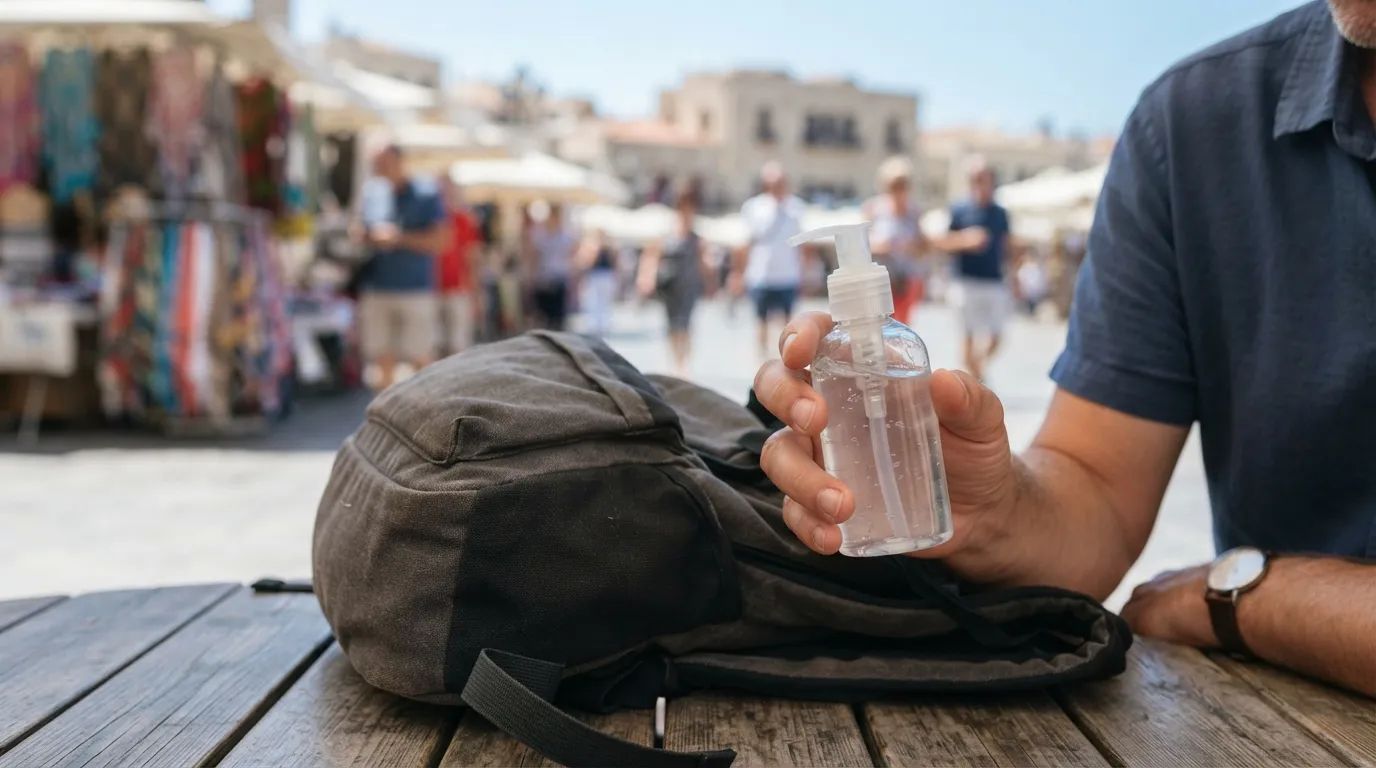
The things people wish they had packed for a two-week cruise are rarely the glamorous ones. They are the hooks, the sprays, the labeled bottles and the one-page sheet that look like genius by night nine.
Fourteen nights is long enough for a bad pack to cost you, either through something held at the terminal or a replacement at ship-shop prices. One fix on this list costs nothing and protects the whole trip, but we start with the steel walls of your cabin.
#17 – Magnetic Hooks for a Steel Cabin
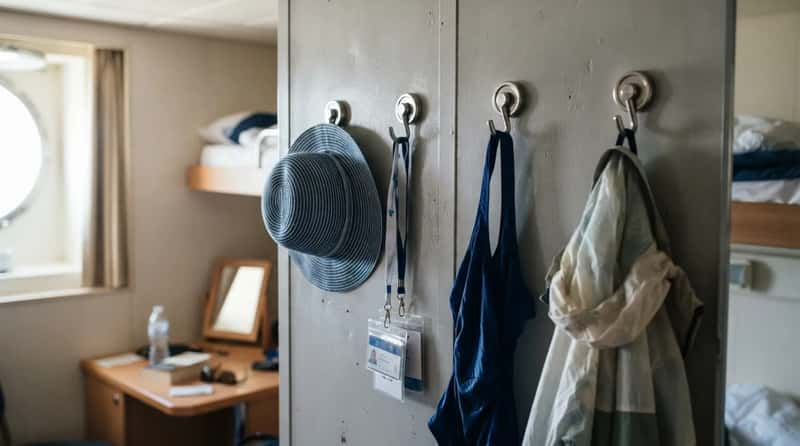
Cabin walls on a ship are steel, so a few magnetic hooks give you places to hang hats, lanyards and a damp swimsuit without adhesive strips. Over two weeks a small cabin fills up fast, and hooks keep the clutter off the desk.
The same magnets can go on the door, with a catch. Norwegian bans door decorations, while other lines allow magnetic ones, so check your line’s rules before you hang anything in the corridor.
#16 – A Small Fan for Warm Cabins

Royal Caribbean’s current policy allows small personal fans, which makes one of the few cooling gadgets you can count on getting past security. Cabins are small and outlets are scarce, so a USB or battery model beats one that needs its own plug.
If your route stays in cold water, leave it at home. On a fortnight through warm ports it earns its space, but confirm your own line’s list first.
A fan helps with stuffy air and does nothing for creased shirts. The iron that would fix them is banned on most cruise lines.
#15 – Wrinkle-Release Spray Instead of an Iron
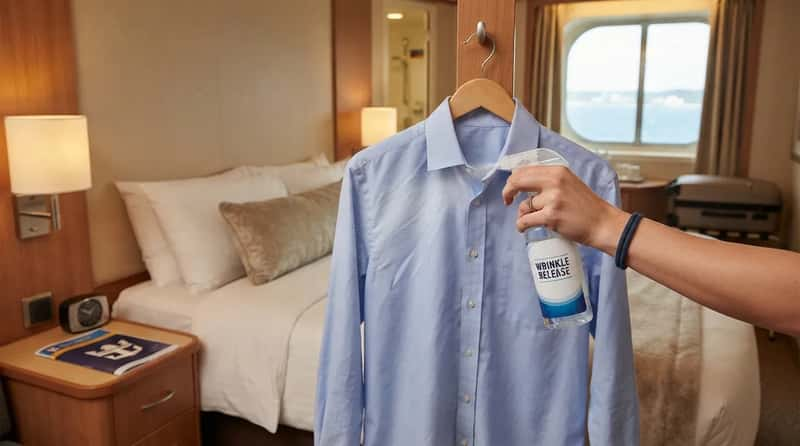
Royal Caribbean says irons and clothes steamers are prohibited because of fire risk, and they are among the items most often taken at the terminal.1 A bottle of wrinkle-release spray carries no such risk, and the ship’s pressing service is the other option.
I would leave the iron at home even if your line’s list looks looser. A seized iron does you no good for the length of the voyage, and the spray handles a dinner shirt just fine.
#14 – Your Own Hair Dryer
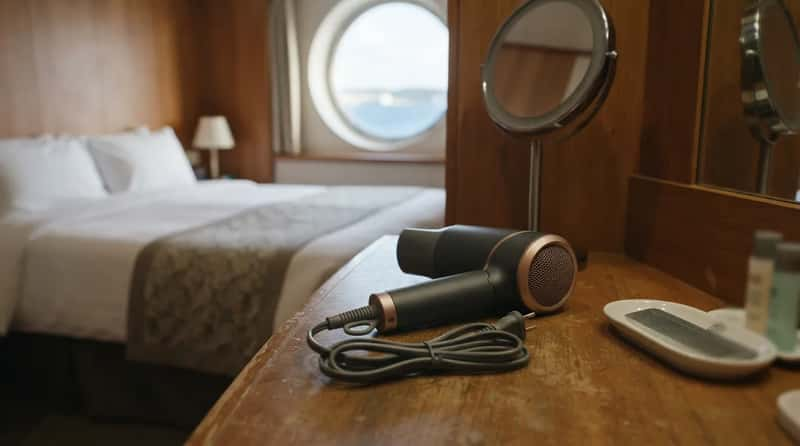
Royal Caribbean’s current list allows hair dryers, curling irons and straighteners, and notes that cabin dryers are weak.2 Over two weeks that adds up to a lot of mornings with a poor dryer.
The same line bans items that generate heat or an open flame, such as heating pads, irons and hot plates. Hair dryers are allowed by name, so confirm your own line’s page before you pack one.
Quick Compare
- Allowed on Royal Caribbean: hair dryers, curling irons and straighteners
- Banned on Royal Caribbean: irons, clothes steamers, heating pads and hot plates
- Your move: check your own line’s page before packing either kind
If you rarely use a dryer at home, skip it. If you use one daily, bring it.
#13 – Quick-Dry Clothes You Can Rewash
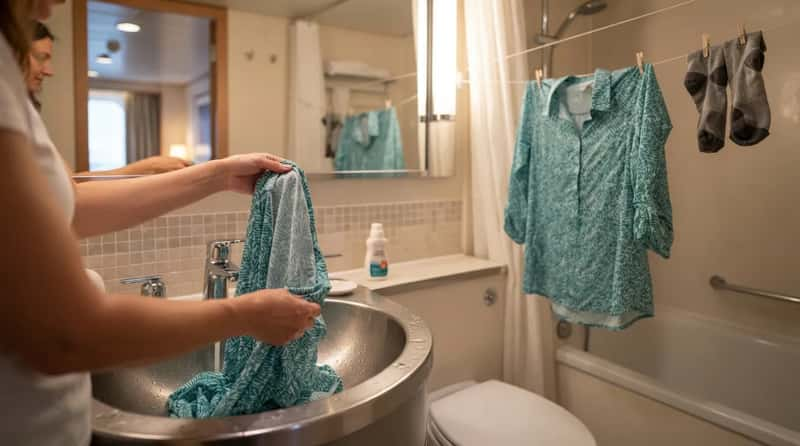
On a sailing of ten nights or longer, planning at least one laundry cycle makes lighter packing much easier. Quick-dry, wrinkle-resistant fabrics suit that plan, because a shirt that survives a sink rinse can dry in the cabin overnight.
Packing too light has its own cost. One spill or a delayed laundry return can leave you without the clothes you expected to wear.
For fourteen nights I would pack roughly a week of changes, plan one wash, and keep a spare outfit for accidents.
How easy that wash is depends on whether your ship has machines at all, and several of the biggest lines do not.
#12 – Travel Detergent and a Laundry Plan
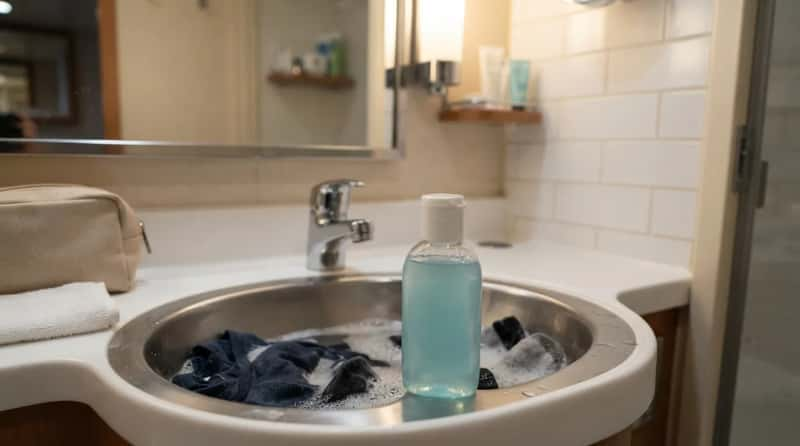
Carnival has self-service laundry rooms on all ships except those in its Excel Class, and Princess also provides self-service launderettes.3 Celebrity, Holland America, MSC, Norwegian and Royal Caribbean do not.
On those ships you are left with paid send-out service, or a few items washed by hand in the cabin sink. A small bottle of travel detergent covers that gap.
Not booked yet? Machine access is a fair tiebreaker between two similar itineraries, since on a long voyage it can meaningfully reduce how much clothing you need to pack.
Clean clothes are one shortage solved. The cabin has another, which is electrical outlets, and you often get only one.
#11 – A USB Hub Instead of a Power Strip
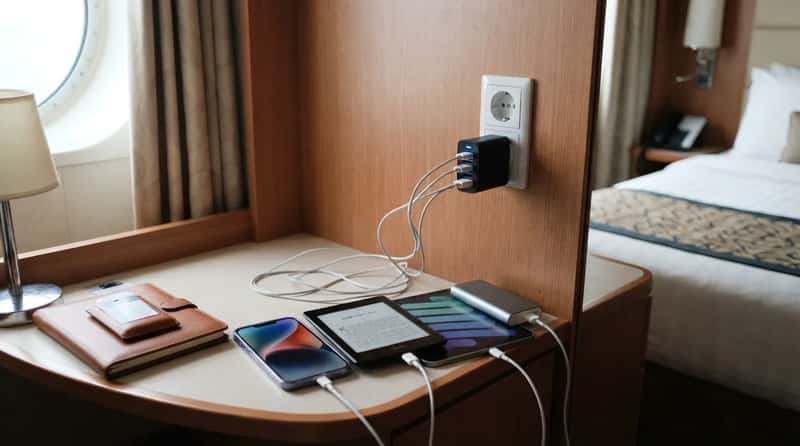
Royal Caribbean, Carnival, Norwegian, MSC, Princess, Holland America and Celebrity all ban surge protectors, and security holds a seized one until you leave the ship. In September 2024 Royal Caribbean also banned virtually all multi-plug strips and outlet extenders with AC sockets.4
That catches people who have used a plain strip on cruises for years. USB-only charging hubs are generally allowed, so I would bring one and skip the strip entirely, since phones, tablets and e-readers are what most travelers need to charge.
A hub keeps the cabin charged. It does nothing for your phone while you spend a day in a port town.
#10 – A Battery Pack for Port Days
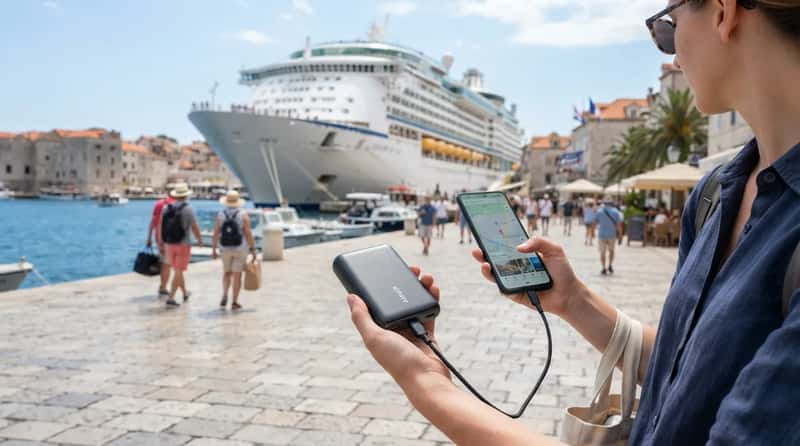
Portable battery packs under 100Wh are allowed on every cruise line. Port days are when you need one, because you are away from the cabin for hours while your phone handles maps, photos and messages.
Airlines require spare lithium batteries in carry-on bags rather than checked luggage, so the pack travels with you to the ship as well.
#9 – Sunscreen, Aloe and Insect Repellent
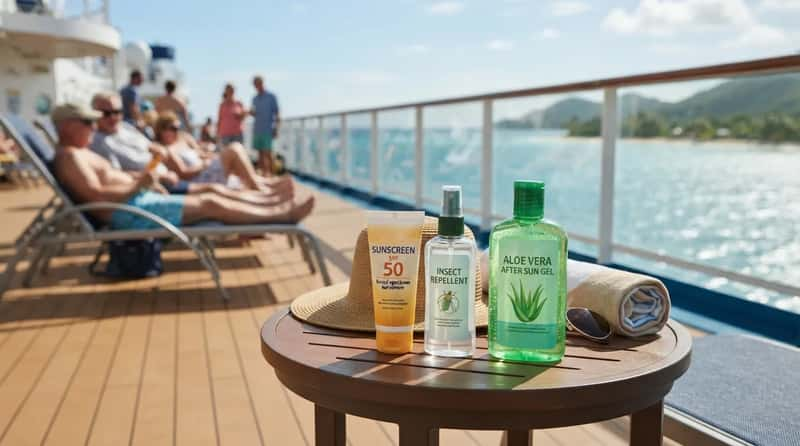
The CDC’s travel health kit list includes insect repellent, sunscreen of SPF 15 or higher and aloe, depending on your destination. A fortnight of sea days and shore excursions means plenty of exposure, so bring a full supply from home rather than hoping to find your usual brand in a port.
Whether you need repellent depends on your route. The CDC’s destination pages list the health risks for each place you will visit.
Sun is a problem you can see coming. Stomach illness spreads through shared spaces without warning.
#8 – Hand Sanitizer for the Daypack
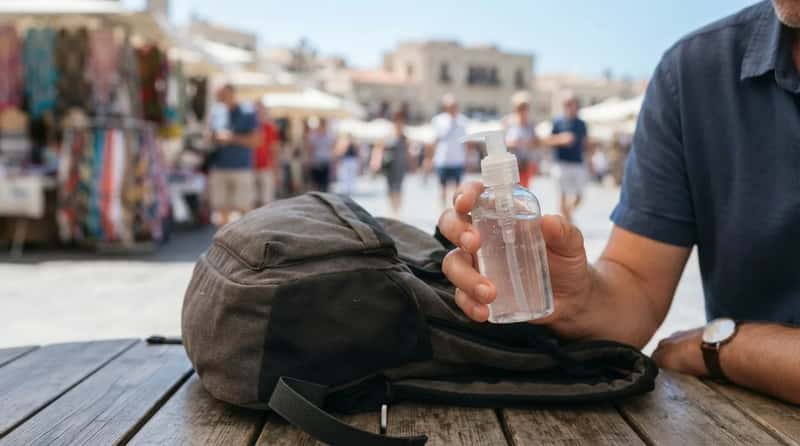
Because outbreaks are more likely in a cruise ship setting, the CDC says to call the ship’s medical center promptly, even for mild GI symptoms, and to follow isolation instructions.5 Prevention matters most, and alcohol-based hand sanitizer is on the CDC’s travel kit list.
Sanitizer belongs in your pocket for moments when no sink is close, such as a shore excursion or a buffet line. Soap and water before meals is still the better habit when you are near a sink.
Worth Knowing
- Mild stomach symptoms still warrant a prompt call to the ship’s medical center
- Follow any isolation instructions you are given
- Alcohol-based sanitizer is on the CDC’s travel health kit list
- Near a sink, soap and water before meals comes first
Not every upset stomach comes from a germ, and sanitizer does nothing for the one caused by the ship’s motion.
#7 – Motion Sickness Remedies From Home
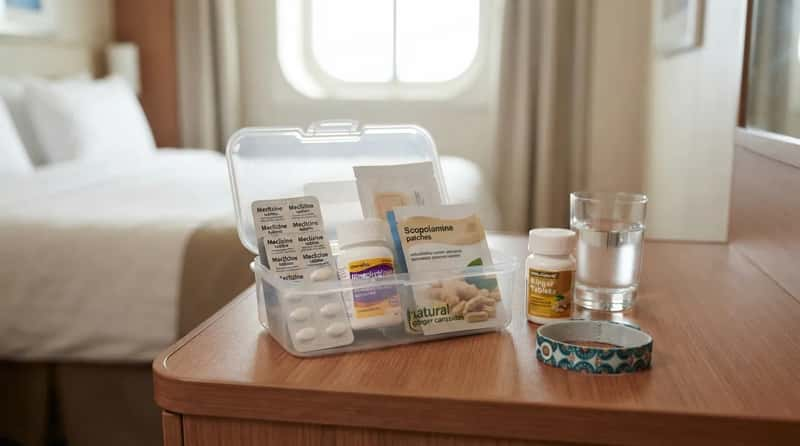
Seasickness can affect cruise passengers, and a rough day is the wrong time to learn that a remedy does not suit you. Ask your pharmacist or doctor whether it fits with your own medicines before you leave, rather than packing whatever is on the shelf.
Fourteen nights includes long stretches at sea. Test your remedy at home first if you can.
A remedy bought on board is also one of the more expensive ways to solve this, which brings up the cost of the ship’s shop in general.
#6 – Over-the-Counter Basics and Test Kits
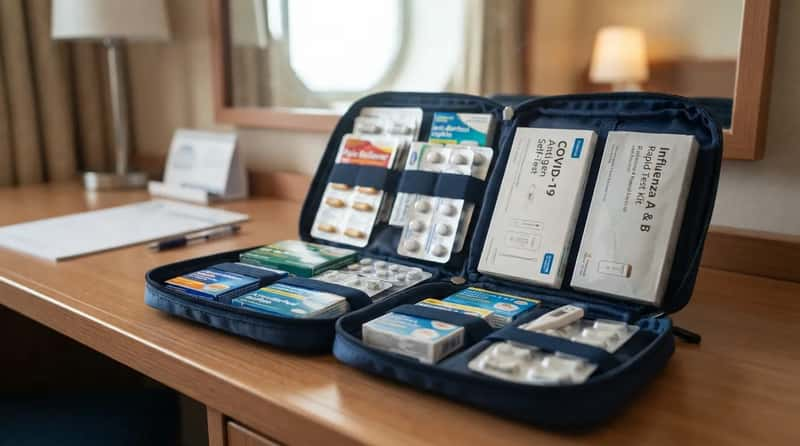
The CDC’s Yellow Book says over-the-counter medicines tend to cost more on the ship, and suggests packing them along with COVID-19 and influenza test kits. A sensible pouch holds pain relief, stomach medicine, an antihistamine and motion sickness medicine.
I would assemble that pouch at home. Doing it from a ship’s shop while you feel unwell is the most expensive and least comfortable way to do it.
A pouch of basics covers minor problems. A serious one puts you in front of the ship’s medical staff, who need your history quickly.
#5 – A One-Page Sheet of Medical Details
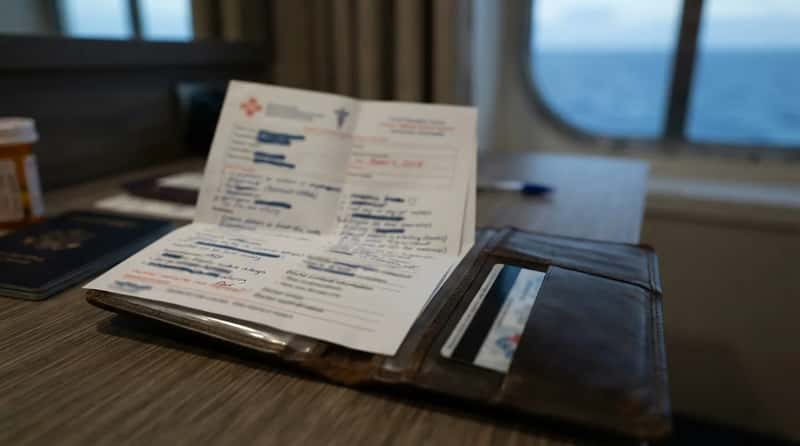
Doctor contacts, your insurance card, allergies and conditions in one place help the ship’s medical staff act faster. You will not want to rebuild that from memory on a bad night.
Keep a paper copy in the carry-on that holds your medicines, because a phone can die or get lost ashore.
- Allergies and current conditions
- Medicines and doses
- Doctor and pharmacy phone numbers
- Insurance card and policy numbers
The card on that sheet matters only if the plan behind it pays for care abroad.
#4 – Proof of Coverage for Care Abroad
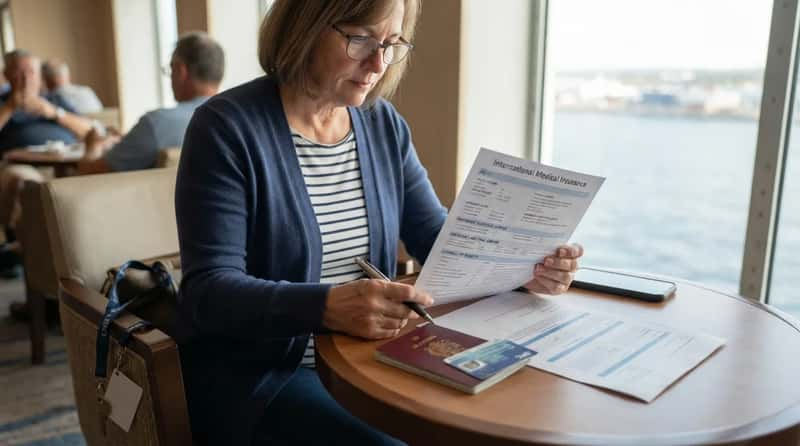
The CDC tells cruise travelers to find out whether their health insurance covers medical care abroad, since they are usually responsible for paying hospital and other medical costs out of pocket at most destinations. It also says to consider coverage for overseas care, including medical evacuation.5
Original Medicare generally does not cover care outside the United States, so if you are on it, ask your plan or a licensed agent what you have. I would put this above every gadget on this list, since it is a phone call you can make from your kitchen.
Put the policy and emergency numbers on the sheet from the previous item.
Fast Facts
- Travelers usually pay hospital and medical costs out of pocket at most destinations
- The CDC suggests considering overseas coverage that includes medical evacuation
- Original Medicare generally does not cover care outside the United States
- The one call that settles it: your plan or a licensed agent
Insurance settles who pays. It does not settle what a port official does when a bottle of pills comes out of your bag.
#3 – A Prescriber’s Note for Controlled or Injectable Medicines
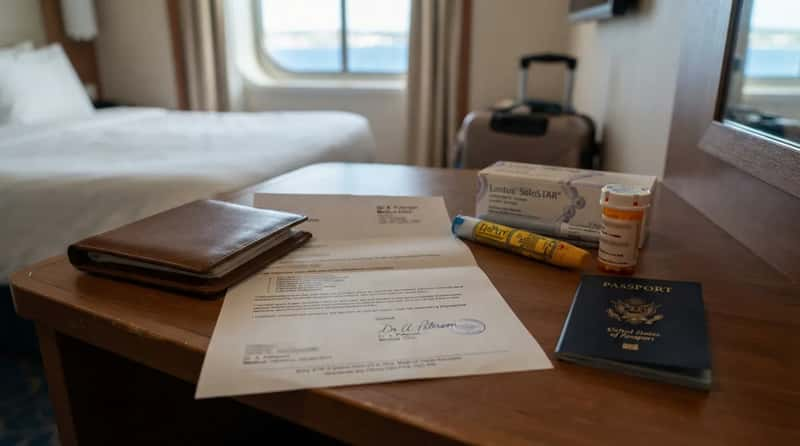
The CDC recommends a note from the prescribing provider for controlled substances and for injectables such as EpiPens and insulin.6 Customs in some ports may inspect medications, and a short letter answers the question before it is asked.
The note should name you, the medicine, the dose and the condition it treats. Two weeks and several countries mean more chances to be asked, so it is worth the single phone call.
A note supports the medicine, but the medicine itself needs to look like what the note describes.
#2 – Original Labeled Containers
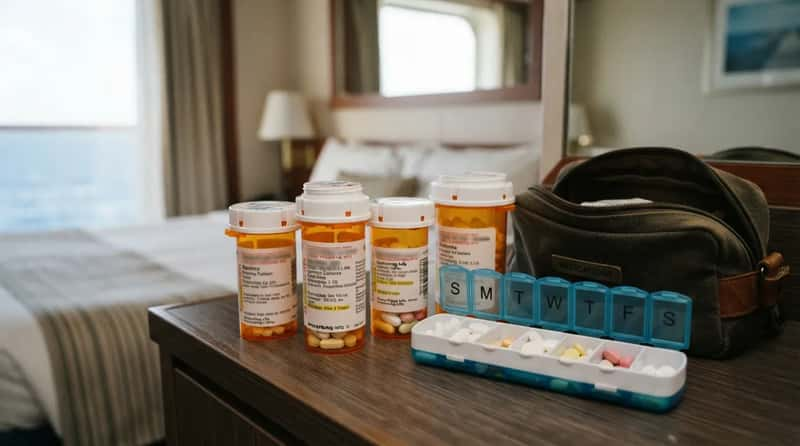
The CDC recommends keeping medicines clearly labeled with your name, the provider, the medicine name and the dosage. The original pharmacy bottle does all of that at once, and cruise lines typically expect medications to travel in their original containers.
A weekly pill organizer is handy in the cabin. Keep the labeled bottles in your bag too, and fill the organizer from them.
A label shows what you carry, though not how much of it you have.
#1 – Enough Medicine in Your Carry-On, Plus Extra
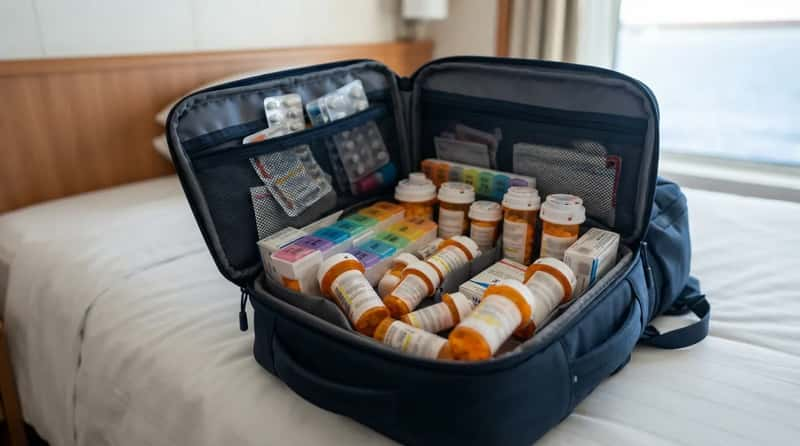
The CDC says to take enough medicine to last your entire trip, plus extra in case of travel delays. It also recommends keeping medicines in your carry-on in case checked luggage is lost or delayed.6
Moving the bottles from the suitcase to the bag you hold costs nothing, and it is the change that protects the rest of the trip. A ship generally cannot refill your prescription, and the CDC warns that counterfeit drugs are common in some countries, so it advises taking only medicine you bring from home.
Running short means a visit to the ship’s medical center, with the out-of-pocket bill described in the insurance item. Count the days of each medicine, add a margin beyond the last night of the cruise, and ask your pharmacy about refilling early.
A two-week cruise is easy for the first few days and harder the longer you are away from home. Clothes need rewashing, phones need charging in a cabin with few outlets, and medicines keep to a schedule that a late ship does not pause.
Before you zip the suitcase, sort what you own into three piles: things the ship can replace, things it will take away, and things it cannot easily replace. The third pile goes in your carry-on.
Which item from home would you least want to replace at a ship’s shop on day nine?
Bonus: The Insider Step Nobody Tells You
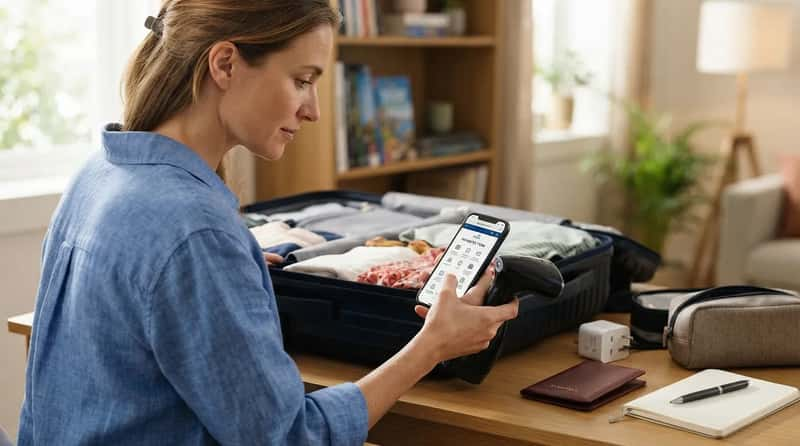
Cruise line rules change, and the version of the rules you read months ago when you booked may not be the one security enforces on embarkation day. The fix is a five-minute check done at the right moment.
- Seven to ten days before sailing: open your own cruise line’s current prohibited-items page and save it as a PDF or screenshot, so you have the exact wording on your phone.
- Go through your suitcase item by item: anything that heats up, plugs into the wall through a strip, or is on the “restricted” list stays home or gets swapped for a safe version.
- For any gray-area item: email the line’s guest services, ask in writing, and carry the reply with you. A written answer is far better than a guess at the terminal.
- The night before: check the page one last time for updates, then move every medicine, your medical sheet and your documents into the carry-on.
This one habit protects every item on the list above, because the rules most likely to catch you are the ones that changed after you stopped reading.
- Royal Caribbean Iron & Steamer: https://www.royalcaribbean.com/faq/questions/iron-steamer-onboard-safety-policy
- Royal Caribbean Prohibited Items: https://www.royalcaribbean.com/faq/questions/prohibited-items-onboard-policy
- Cruise Ship Laundry Guide: https://thepointsguy.com/cruise/cruise-ship-laundry
- Royal Caribbean Multi-Plug Ban: https://cruise.blog/2024/09/royal-caribbeans-new-travel-item-ban-means-you-need-your-cruise
- CDC Yellow Book Cruise Travel: https://cdc.gov/yellow-book/hcp/travel-air-sea/cruise-ship-travel.html
- CDC Travel Health Kits: https://wwwnc.cdc.gov/travel/yellowbook/2024/preparing/travel-health-kits
