Nearly 90 percent of people who cruised in 2025 say they intend to sail again, the highest level CLIA has ever recorded. That sounds like a love story. But for travelers over 60, it’s a love story with a long list of edits.
The regrets that keep coming up almost never involve the buffet. They’re about a cabin parked too far from the elevator, a flight booked too tight, a rule nobody mentioned until it was too late. Some of these will make you wince, and a few might change how you book your next trip.
#17 – The “Bargain” Balcony at the Very End of the Ship
The cheapest balcony on the ship is cheap for a reason. Cruise expert Crotts says older travelers often shop by category instead of location. The discounted cabins tend to sit at the far ends of the ship, which means more motion and a long walk to almost everything. The “deal” gets paid back in steps and restless nights.
A midship cabin in a lower category often delivers a better trip than a poorly placed cabin in a higher one. That’s the mistake advisors flag first. A cheaper, better-placed cabin can beat a pricier one at the end of the hall. The smart second-timer reads the deck plan before looking at the price.
But the next trap is even sneakier, because you don’t get to choose the room at all.
#16 – The “Guarantee” Cabin That Can Land You Anywhere
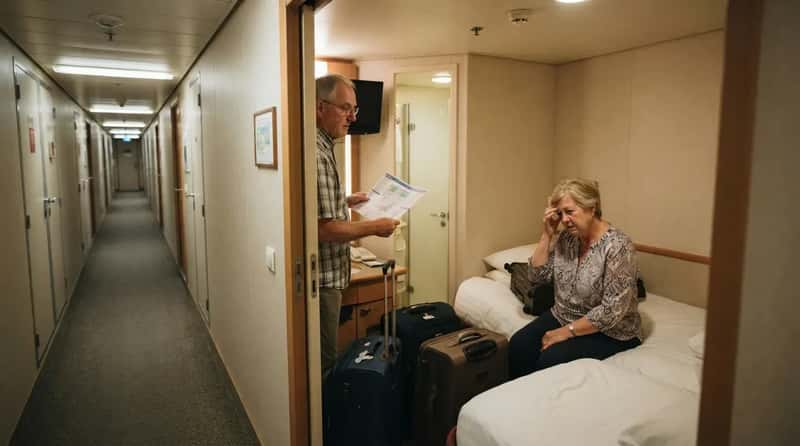
A guarantee fare is a gamble dressed up as a discount. You book a cabin category, but not the exact cabin. The cruise line picks your room later, and you may not learn where you’ll sleep until it’s too late to do much about it.
Crotts’ advice is blunt: never book a guarantee rate. One senior-focused guide says travelers 70 and older, and anyone with mobility issues, shouldn’t book them either. The cruise line decides where you sleep, and you may not like the answer. That could mean a long hallway, a noisy neighbor or a trek to the dining room.
And even a well-chosen cabin has a hidden cost that most people never measure…
#15 – The Elevator Walk Nobody Measured
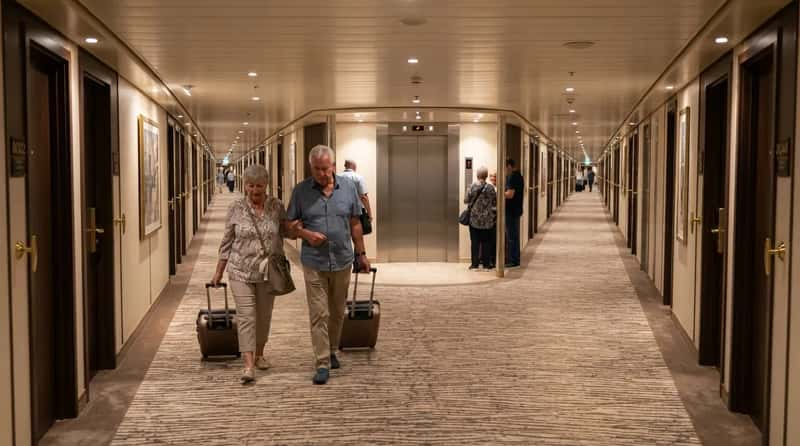
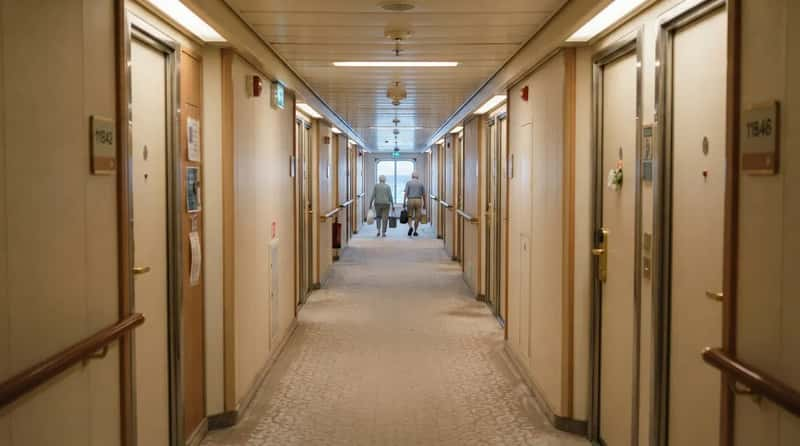
On a big ship, distance is the hidden price tag. One accessibility guide warns that a cabin at the end of a long hallway can add a mile of walking to your daily total. That’s before you’ve visited a single restaurant or the theater.
Guides suggest cabins near an elevator, or near the spots you’ll use most, like dining rooms or pools. Here’s the unpopular take: cabin size matters far less than the walk. A tiny room two minutes from the elevator beats a big one at the far end of the corridor. Second-time cruisers tend to learn this the hard way, usually by day two.
At a Glance
- Long hallway: one accessibility guide says it can add a mile of walking per day.
- Best spots: near an elevator, or near the places you’ll visit most.
- Deck plan trick: find the elevator banks first, then pick a cabin close to one.
- Trade-off: a smaller room beats a bigger one that costs you energy every day.
Timing causes problems too, and it starts before you ever step on the ship.
#14 – Sailing During the Weeks Everyone Else Does

Many older cruisers book the first week that works and never check the calendar. Senior guides say to avoid spring break weeks and the summer family peak from mid-June to mid-August, when ships skew younger and louder. Nothing is wrong with kids. The mistake is not knowing they’re coming.
Around one-third of cruises are multigenerational trips. The average cruiser was 46.7 years old in 2025, and about 34% of passengers were over 60. Roughly two out of three cruisers are under 60. If you want a quieter ship, you have to pick the quieter week.
But the next regret has ended vacations before they even began.
#13 – Flying In the Same Day the Ship Sails

One delayed flight can turn a dream cruise into a very expensive lesson. Ships run on tight schedules, and the captain won’t wait for your suitcase. Experienced cruisers say the fix is simple.
Book a hotel near the port for the night before. You’ll arrive rested, and a one-night delay won’t cost you the cruise. Guides for older travelers also warn against tight flight connections once you’re over 80. A one-night hotel may be the cheapest insurance on the whole trip. It also means you start the vacation relaxed instead of frazzled.
Speaking of insurance, the next mistake is one almost everyone makes at least once.
#12 – Assuming Medicare Rides Along With You
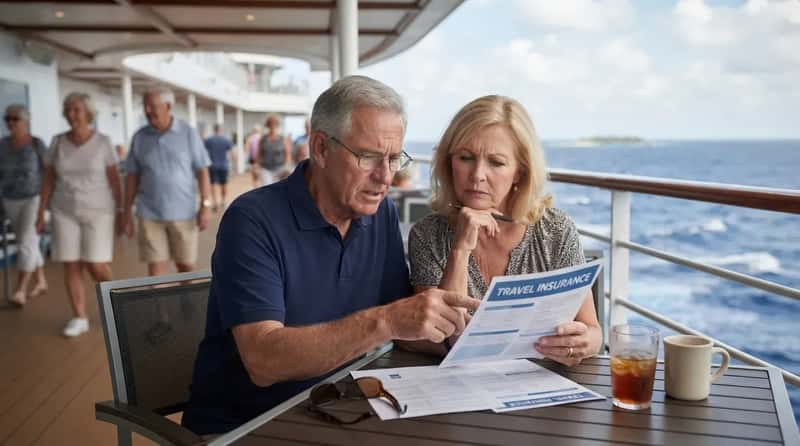
Here’s the shock: Medicare isn’t on board. It generally does not cover medical care received outside the United States, which includes ship infirmary visits and international medical care. That catches plenty of retirees completely off guard.
The U.S. Department of State strongly recommends travel insurance that includes medical evacuation coverage for Americans cruising internationally. Look for cancellation, medical and baggage coverage, and choose a plan meant for cruising. Medicare generally doesn’t follow you offshore. A policy that skips your own health history can leave you exposed.
Next, a mistake that has nothing to do with money and everything to do with energy…
#11 – Stacking Port Days Back to Back

Seven ports in seven days sounds like value until your knees file a complaint. Guides for travelers over 70 list too many port days in a row as a common pitfall. They also point to rest days and the port schedule as things to check before you book.
CLIA says passengers want immersive experiences and more time in destinations. That’s a fine goal, but ambition can outrun stamina. Skipping a port to rest is not wasting money. Plenty of veterans would rather see five ports properly than seven in a blur.
The excursion choice makes this worse, and the brochure is the culprit.
#10 – Booking the Excursion Because the Photo Looked Great

Brochure photos show the summit, not the 200 stairs. Senior cruise guides devote entire sections to what they call the shore excursion trap. The pictures rarely mention how much walking is involved.
Before you book, check the activity level, the walking distance and whether getting on and off the transport takes a big step up. Curated shore excursions and cultural engagement are a growing interest among passengers, which makes the choices even more tempting. One big outing can drain the energy for the next two ports. Second-time cruisers pick fewer, better tours.
But even the easiest tour can’t help you in a port with no dock.
#9 – Ignoring the Word “Tender” on the Itinerary
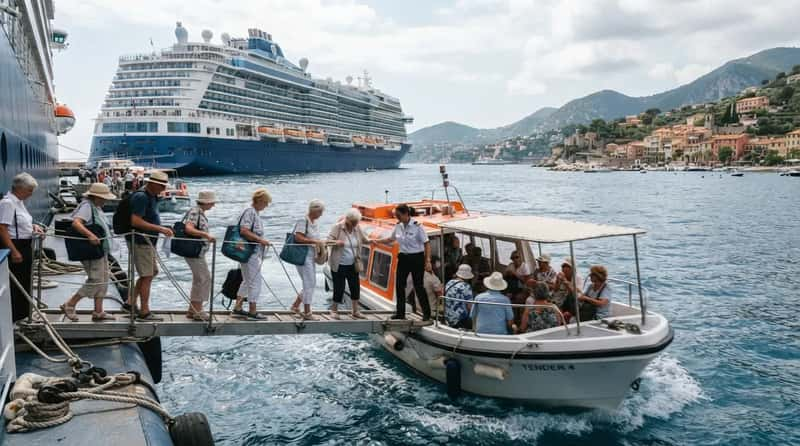
Some ports have no pier big enough for the ship, so passengers ride small boats to shore. Most first-timers never notice the word “tender” on the itinerary. Senior cruise guidance for travelers over 80 says to watch for long tender rides, along with tight connections and cabins far from elevators.
Tendering means stepping from the ship onto a smaller, moving boat. It adds waiting time on the way out, and the return trip adds more. One tender port can eat half a day. Check every stop before you book.
Worth Knowing
- The ship anchors offshore, and small boats shuttle passengers back and forth.
- Boarding means stepping onto a boat that moves with the water.
- Rough seas can complicate or cancel tendering, so a port stop is never a sure thing.
- If mobility is a concern, ask the cruise line about its tender policy before you book.
Next up is a deadline most travelers don’t even know exists.
#8 – Telling the Ship About Special Needs Too Late
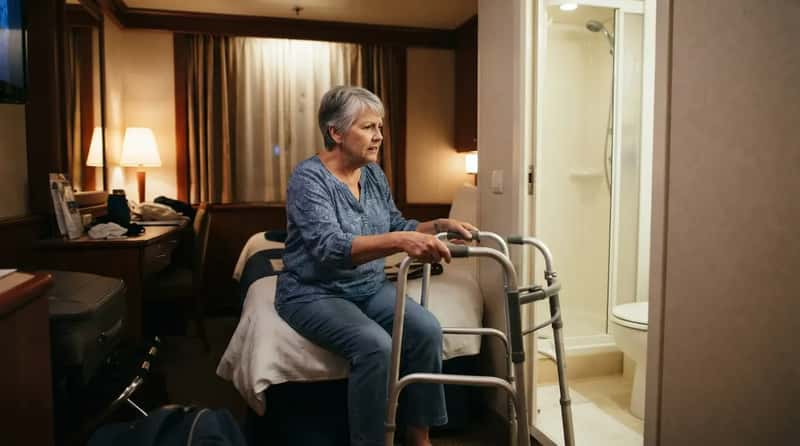
Most cruise companies want to hear about special needs early. Many ask to be told at least 45 days before departure, and early requests give the ship time to arrange what you need. Wait too long and your options shrink.
Cruise lines have only a limited number of fully accessible cabins. Guides list booking accessible cabins too late as a top watch-out for travelers with limited mobility. Accessible cabins are limited, and they sell out. The regret here is rarely about money. It’s about being stuck with a room that doesn’t work.
And then there’s the one rule that can stop you at the gangway.
#7 – The Scooter That Won’t Fit Through the Door

Mobility scooters have size limits, and they’re strict. On many ships, the cabin door is only about 22 inches wide. A scooter that’s slightly too wide can ruin the day you arrive.
If it’s too wide and you can’t rent a suitable replacement at embarkation, you have a serious problem. Confirm acceptability with the cruise line long before you sail. Travel insurance may not pay for a missed cruise caused by this. It covers unforeseen events, not limits of a device you could have checked in advance.
The money regrets come next, and they hit harder than you’d expect.
#6 – Falling for the Cheap Fare That Wasn’t

The sticker price is only the first line of the bill. Guides for budget-focused cruisers list gratuities, drinks, excursions, insurance and flights as part of the true total. They flag a cheap fare with expensive add-ons as the classic trap.
Budget-minded cruisers get more for their money by looking at the whole picture. Off-season Caribbean sailings, shorter cruises and repositioning deals are the options guides suggest. The fare is only one line of the real total. Second-timers add everything up before they click “book.”
Then there’s the biggest assumption of all: that bigger always means better.
#5 – Choosing the Biggest Ship Just Because
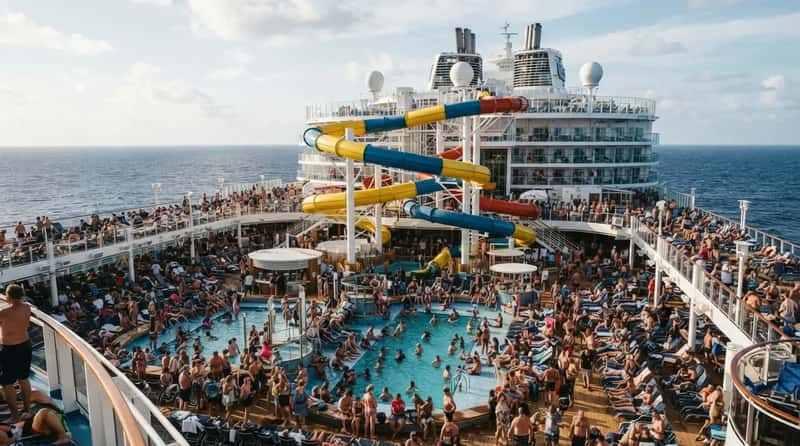
The giant ship with the waterslide gets the ads. Many cruisers over 60 never stop to ask whether it fits them. The global fleet is split roughly evenly: one-third small ships, one-third medium and one-third large. That’s a lot of choice hiding behind a lot of marketing.
Here’s a take that might spark an argument: the mega-ship is often the wrong pick for a traveler who hates crowds and long walks. Expedition passengers jumped 71% between 2019 and 2023, according to CLIA. Expedition cruising is one of the fastest-growing segments in travel. Plenty of second-timers are voting with their feet.
Next, a spending choice that divides cruisers right down the middle.
#4 – Paying Extra for a Balcony You Barely Use
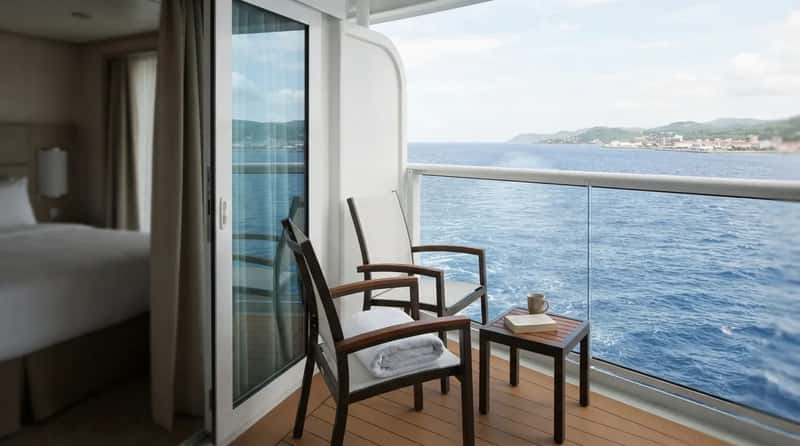
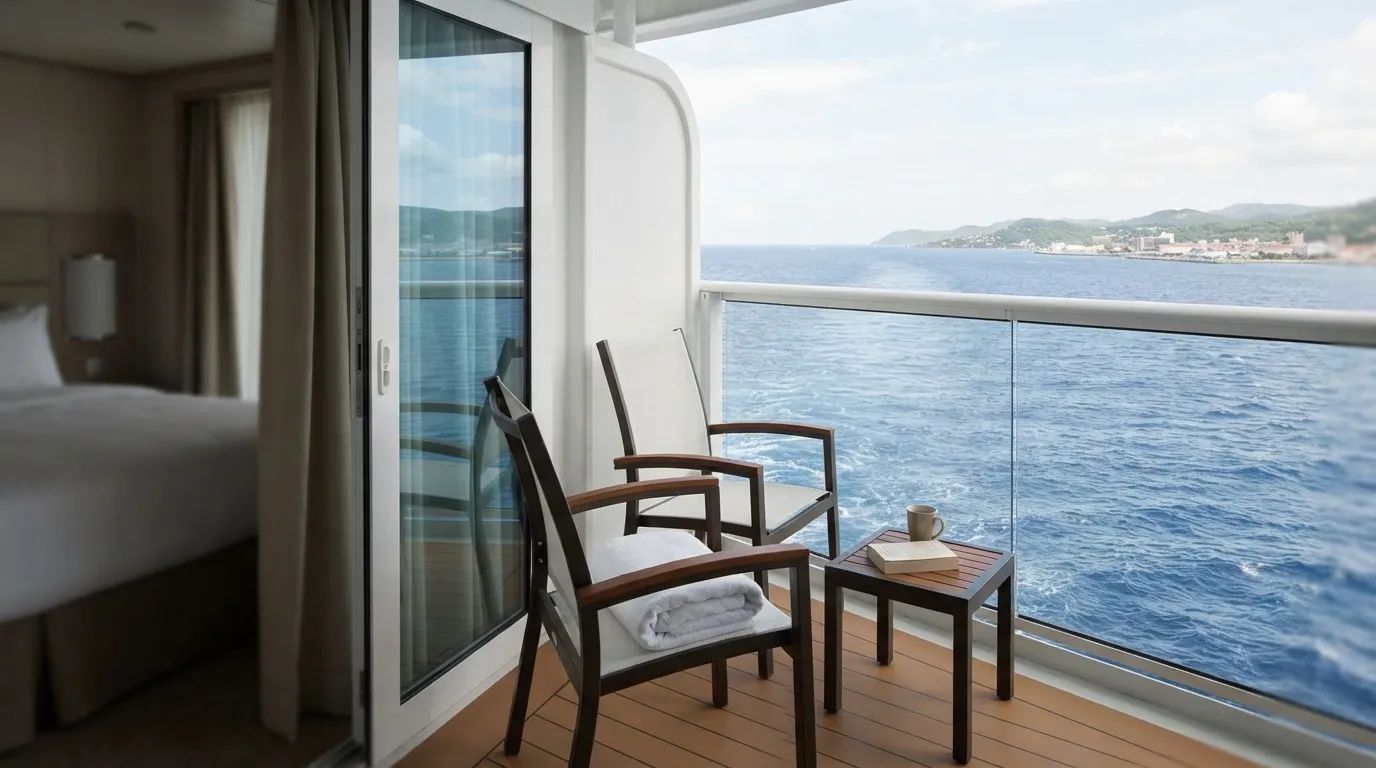
The balcony is the most romanticized upgrade at sea. One senior cruise guide says balconies typically cost $200 to $500 more per person than comparable interior cabins. That’s a hefty price for a private chair with a view.
If you’ll use it for morning coffee, reading or watching port arrivals, it’s worth every penny. If you spend most of your time in public areas, a lower midship interior cabin is often smarter, and the savings go further on excursions or specialty dining. The balcony is overrated for people who are never in the room. Be honest about which kind of cruiser you are.
Quick Compare
- Balcony: private fresh air and port arrivals, at roughly $200 to $500 more per person, per one guide.
- Midship interior: a calmer ride and money left over for tours or a special dinner.
- The deciding question: how many waking hours will you really spend in the cabin?
Another expensive surprise hits travelers who sail without a partner…
#3 – Sailing Solo and Paying for Two

Cabins are priced for two, so one traveler often pays far more than half. Guides for solo seniors name cabin pricing that nearly doubles the cost as the main problem. That’s a real sting for widows and widowers taking a first trip on their own.
The fix is to shop the ship, not just the price. Guides point solo seniors toward solo-friendly ships, hosted activities, solo cabins and group excursions. Single supplements can nearly erase a good deal. Ships built with solo travelers in mind often come out ahead.
But there’s one decision that can fix most of the others.
#2 – Booking Everything Alone, Without an Advisor

The “I’ll just book it myself” confidence fades fast after a bad cabin. According to CLIA, 63% of cruise passengers book through a travel agent. That’s a lot of people who aren’t winging it.
An experienced advisor can flag a bad cabin location or a mismatch between your ship and your itinerary. One Fora advisor says she educates clients about all the options so they feel good about their choice. Advisors often catch the problems you can’t see on a booking page. Skipping one to save time is a gamble.
Why It Stands Out
- 63% of cruisers use an agent, so this is the norm, not the exception.
- A good advisor reads the deck plan the way you wish you had.
- Matching ship to itinerary is where first-timers slip most.
- Mentioning mobility needs early lines up with the 45-day heads-up many lines request.
Which brings us to the regret that sums up all the others.
#1 – Picking the Cruise for the Brochure, Not for the Traveler You Are Now

A 62-year-old and an 80-year-old need different cruises. A healthy 62-year-old may want something very different from an 80-year-old with limited mobility, a widow on a first solo trip, or a couple on a fixed budget. Many travelers choose the trip they’ve imagined for years instead of the one that suits them today.
Guides suggest relaxed ocean cruises, Alaska or Bermuda for travelers over 70, and shorter cruises from simple embarkation ports for those over 80. Europe river cruises and Alaska ocean cruises consistently rate as the most enjoyable starting points for first-time senior cruisers. Many say their second cruise was better than their first. That’s what one travel site reports. They stopped chasing the brochure and started planning for themselves.
Look back over the list and a pattern shows up. The biggest second-cruise regrets rarely involve the ship itself. They’re about where the cabin sat, what the fare really cost, and whether the plan matched the traveler.
Most of these fixes take little more than a few minutes with a deck plan. Seasoned cruisers have learned that the best trip isn’t the one with the most ports, but the one that fits. Which of these would you change first on your next sailing?