You probably think the front desk sizes you up by your credit card, your loyalty status, or the size of your suitcase. Staff say the tone is often set much sooner, somewhere in the first sentence out of your mouth. They hear the same handful of openers every day, and each one tends to land the same way.
Some openers get a warm look and a quiet search for something better. Others get a polite smile and the standard key card. And the line that tends to beat every clever trick costs nothing, takes about five seconds, and isn’t the one most people try first.
#17 – “I Know I’m Early, But Is My Room Ready?” Gets Sympathy and Zero Promises

This opener gets a hopeful look and an honest shrug. Standard hotel check-in is 3 PM, and check-out is 11 AM to noon. The gap in between is the window housekeeping needs to clean, inspect, and restock a room before the next guest arrives.
So the verdict depends on the building’s morning, not on your charm. Early check-in is typically accommodated between 11:00 AM and 1:00 PM if rooms are prepped. Arriving before 10:00 AM often means paying an early check-in fee or booking a day-use rate. The desk isn’t being stingy. That room may still have a guest asleep in it.
But that’s nothing compared to the verdict when your booking didn’t come from the hotel at all, which is #16…
#16 – “I Booked Through a Third-Party Site” Means the Desk Starts Digging
This line makes a manager pause before they smile. Your reservation may live in a system the hotel only partly controls. That doesn’t make you a problem guest. It just means the first job is figuring out what you actually bought.
Here’s a detail most people don’t realize. The FTC’s guidance on fee disclosure covers third-party platforms, resellers, and travel agents, and hotels must give those intermediaries the information they need to calculate the total price. That’s a rule about what gets shown before you pay. Even so, your confirmation details are the best thing you can hand over, because they give the desk something concrete to look up.
Worth Knowing
- Have your confirmation number ready before you reach the counter.
- Check the room type and bed type on your confirmation so you can point to them.
- Mention whether you prepaid the booking or will pay at the hotel.
- The FTC’s fee rule for short-term lodging took effect on May 12, 2025.
The next verdict is the friendliest one on the list, and it comes down to word choice (#15)…
#15 – “Would There Be Any Complimentary Upgrades Tonight?” Is the Line Staff Like Best
This is the opener that gets the friendliest face. Current guides built on front desk advice keep landing on the same phrasing. Asking whether any complimentary upgrades are available for tonight keeps the request open and low pressure.
It also protects both sides. It gives the agent room to say no without anyone feeling awkward. Another guide adds that you should acknowledge that an upgrade depends on availability and make it easy for the employee to say yes or no. Plenty of upgrade requests stall, and phrasing is one of the few parts you control.
Now compare that with the sentence desk staff dread, which lands at #14…
#14 – “I Assume You Can Upgrade Me” Is the Fastest Route to the Standard Room
This one gets a verdict almost instantly, and it isn’t warm. One hotel front desk manager quoted by Fox News said most people ask for upgrades as if they’re entitled to them, and the advice is simply to ask politely. The words may sound confident to you. To the desk, they sound like a demand.
Some travelers swear that boldness gets results. The guidance from desk staff points the other way. One guide lists phrases like “I assume you can upgrade me” and “What can you do for me?” as lines that turn an ordinary request into an uncomfortable negotiation. The room you wanted may have been available. The tone made it harder to hand over.
But a short, honest sentence can soften even the toughest desk, and it’s next at #13…
#13 – “It’s Our Anniversary” Can Change the Whole Mood

This line often gets a smile before the keyboard even starts clicking. A birthday or anniversary gives agents a natural reason to do something nice. It also gives them a story to attach to your reservation.
The payoff isn’t always a bigger room. Staff may offer a complimentary upgrade, and even if they can’t, they might surprise you with extras like drinks or flowers. The verdict only works if it’s true, and nothing is guaranteed. Think of it as context, not a coupon.
The next opener sounds like a small detail, but it quietly moves your name up the list (#12)…
#12 – “I’m in Your Rewards Program” Moves You Up the List, Not to the Top
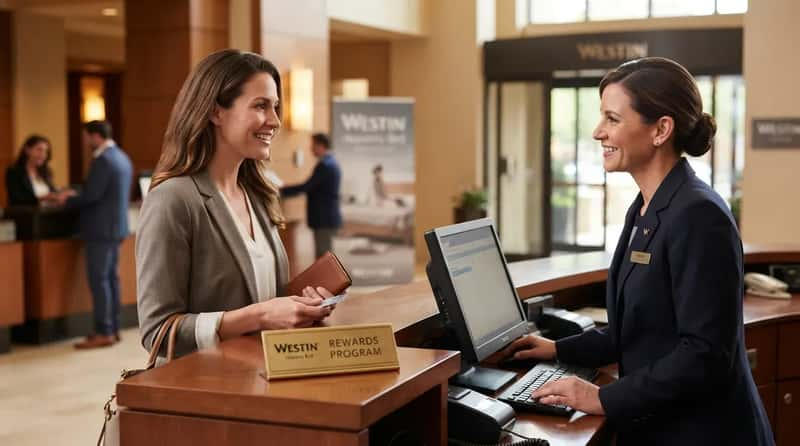
This sentence changes where your name sits when rooms open up. According to The Points Guy, if you have elite status and the hotel is still selling several of the rooms you want, the front desk might give you one. The key word is “might.”
Status isn’t a guarantee. It does move you up the priority list when inventory opens. And you don’t always need it. One former front desk worker described her mother asking a Westin employee whether joining the rewards program could lead to an upgrade. He said yes and moved her to the concierge floor.
The next question gets a tired sigh before a polite answer, and it may be the most controversial verdict here (#11)…
#11 – “What Exactly Is This Resort Fee?” Gets Sympathy, Then a Shrug
This question is fair, and the desk knows it. The fee typically ranges from $25 to $55 per night and is often not included in the advertised room rate. It’s also set well above the person standing across the counter from you.
Here’s the unpopular take. Many travelers call resort fees the biggest rip-off in lodging. The newer rule changed where the number shows up, not whether it exists. The FTC rule doesn’t ban resort fees, cap them, or tell hotels what they can charge. What it requires is that a hotel advertising a room price show the total price including all mandatory fees up front.
The next opener sounds harmless, but front desks quietly wince at what comes after it (#10)…
#10 – “The 800 Number Told Me Something Different” Starts a Trust Test
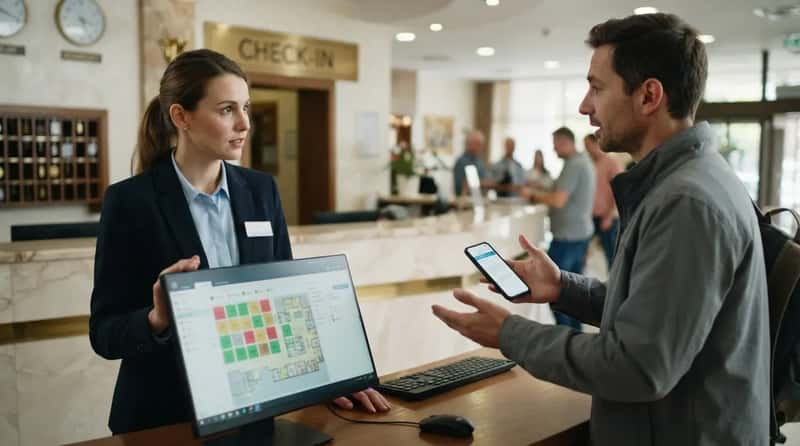
This sentence makes the desk cautious. Not because you’re lying, but because the person you spoke to may not have seen the building’s real situation. Central lines see bookings. The front desk sees the property.
That’s the gap behind a promise that doesn’t survive the walk to the lobby. A call center can confirm a reservation, but only the people in the building know which rooms are actually clean, open, and free. Whatever you were told on the phone, have it in writing if you can.
Quick Compare
- Central reservations line: sees your booking, dates, and rate.
- Front desk: sees which rooms are cleaned, blocked, or out of service tonight.
- Your best backup: an email or confirmation that shows what you were promised.
The next verdict is the most sympathetic one yet, and it comes with a catch (#9)…
#9 – “My Flight Was Delayed” Is the Easiest Check-In of the Day
This opener usually gets compassion. And late arrivals often have the smoothest check-ins. The later your arrival after 3 PM, the more likely your room is ready.
There’s a second reason. If half a hotel’s guests arrive at 3 PM, you get a queue. Arrive after the rush and the agent has time to look at the whole inventory, not just the next face in line. A heads-up call about a delay is simply good manners.
The next line sounds trivial, but it’s one of the smartest things a guest can ask (#8)…
#8 – “Do You Have Anything Quieter?” Shows You Know How Hotels Work
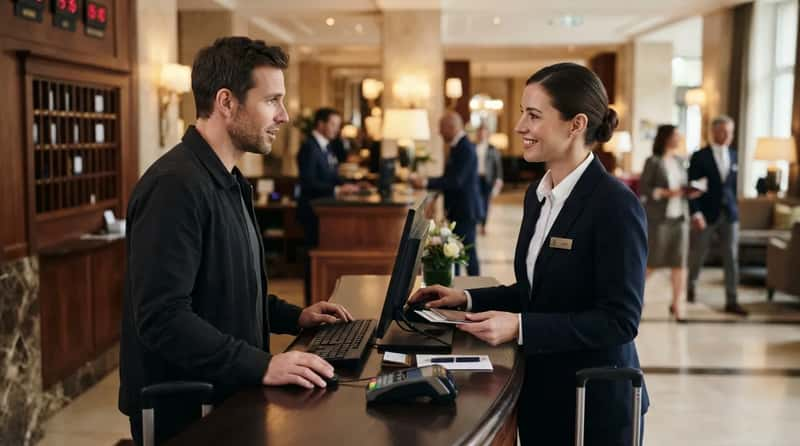
This question gets a respectful nod. It signals you want something specific, not a vague “best room.” Agents can work with specific.
Here’s what most people don’t realize. The front desk knows which rooms are most spacious, which have the best view, and which are the least noisy. One guide suggests wording it around your priority. For example, “If there are any complimentary upgrades available, a quieter room would be most useful to me.”
But the next verdict shows when a complaint actually works in your favor (#7)…
#7 – “The AC in My Room Isn’t Working” Gets Fast Action, Not Eye Rolls
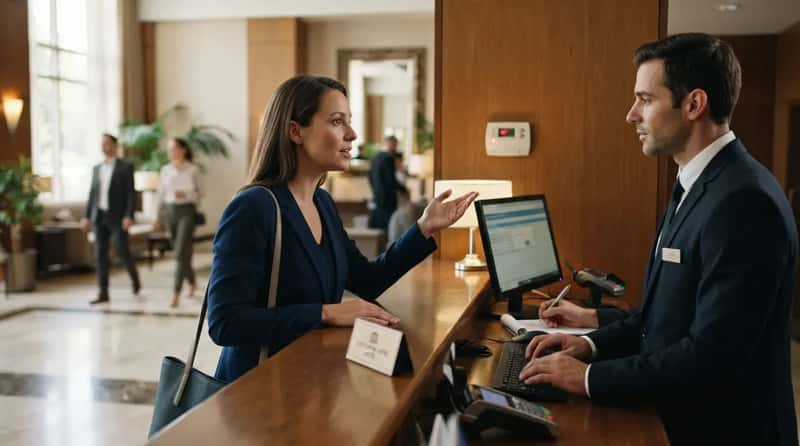
This one earns a quick, serious response. If a room has a non-functioning air conditioner, a broken mini-fridge, or excessive street noise, contacting the front desk immediately is completely reasonable. It may even work to your benefit.
The reason is simple. Properties aim to resolve guest discomfort before it leads to negative reviews. Approaching the desk calmly to explain the issue gives management a chance to make things right. A calm report beats a loud one every time.
The next verdict is the one that makes agents feel for you, even when they can’t fix it (#6)…
#6 – “We’ve Been Standing in This Line Forever” Earns Sympathy, Not Solutions
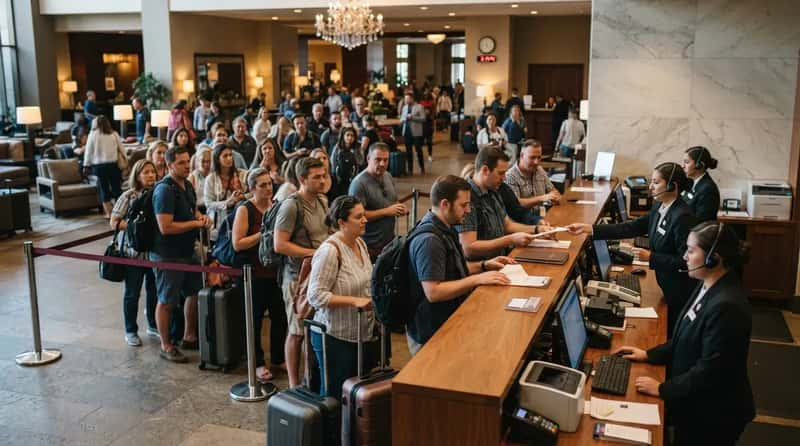
The desk hears this one a lot, and it’s true. It’s not unheard of to wait 30 minutes or more at the front desk during peak check-in hours at some hotels. The agent sees the line too.
Here’s the unpopular opinion. The line is often built into the schedule itself. A fixed 3 PM check-in time makes everyone show up at once, which is why many chains now push digital check-in and mobile keys. Until your hotel catches up, the agent can only go as fast as the next guest in front of you.
But the next verdict reveals a trade-off most guests never consider (#5)…
#5 – “Any Chance of a Late Check-Out?” Depends on Who’s Asking
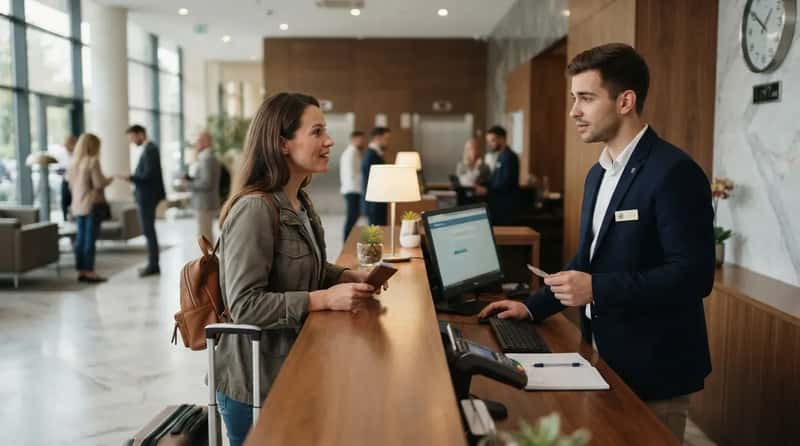
This is a common opener, and the answer is almost always “it depends.” Standard check-out is 11:00 AM to 12:00 PM. Anything beyond that comes out of housekeeping’s window.
Elite guests have a head start. Perks at mid-level status and above can include extending check-out until 4:00 PM. And here’s a surprise for upgrade seekers. If you don’t need a late check-out, you may have a better chance of getting an upgrade, since basic rooms are easier and faster for housekeeping to clean.
At a Glance
- Standard check-out: 11:00 AM to noon.
- Mid-level status and above: late check-out can stretch to 4:00 PM.
- Why it’s tricky: every extra hour cuts into the room’s cleaning window.
- The trade-off: skipping the late check-out request may help an upgrade request.
The next request is one the desk handles best before you ever walk in (#4)…
#4 – “Could We Have a Room With a Good View?” Works Better in Writing
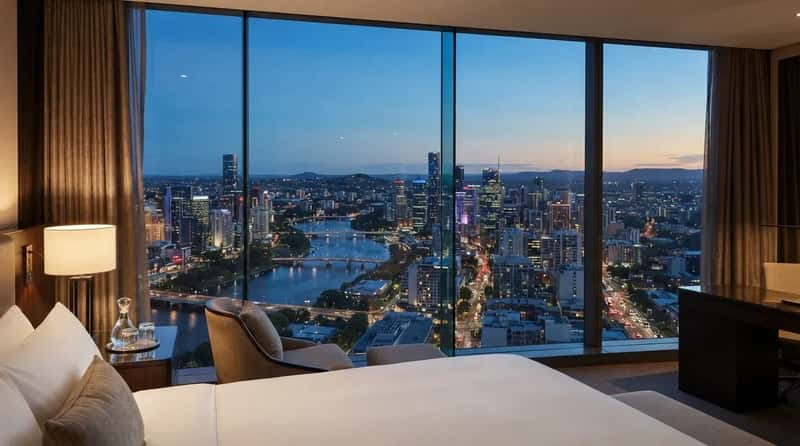
This request does best before you arrive. Online bookings include a special-requests field, and filling it in can increase your chances of an upgrade. Write something specific, like “room with a good view” or “room with bigger space.”
It also pays to keep an eye on timing. A better room may free up partway through a stay, and usually only the front desk can see the behind-the-scenes inventory. It’s worth asking again on day two.
The next verdict belongs to guests who treat time as a gift, and desks remember them (#3)…
#3 – “I’m Happy to Wait if Something Better Opens Up” Gives the Desk Room to Work
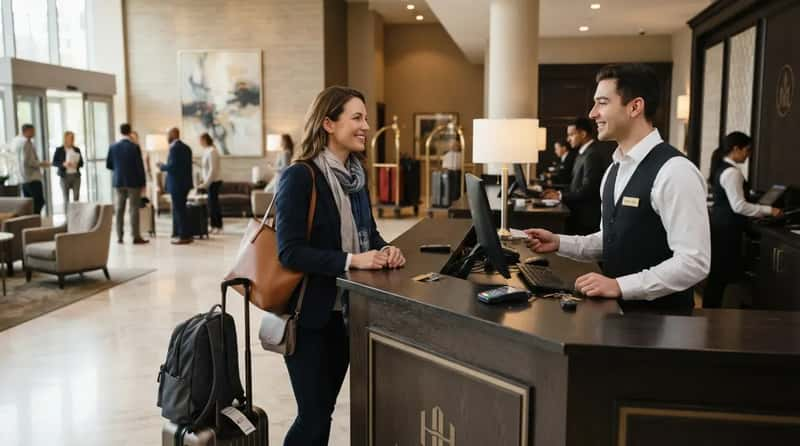
This sentence changes the math for the agent. Instead of needing an answer now, they get time. If you arrive early and no better room is available, tell the front desk you’re willing to wait, even until much later in the day.
The logistics are easier than they sound. Most hotels will store your bags while you head out to sightsee. Length of stay matters too. A free suite upgrade on a seven-night stay forces the hotel to block out high-value inventory for an entire week, which is rare for properties to grant. A single-night stay takes minimal effort to approve.
Why It Stands Out
- It removes the pressure of an instant answer.
- It lets the desk watch for a room that frees up later in the day.
- Your bags can usually be stored while you explore.
- It works best on short stays, where an upgrade is a smaller ask.
But the next verdict is the most divided on the list, because even the guides disagree (#2)…
#2 – “I Emailed Ahead About My Stay” Gets a Mixed Verdict
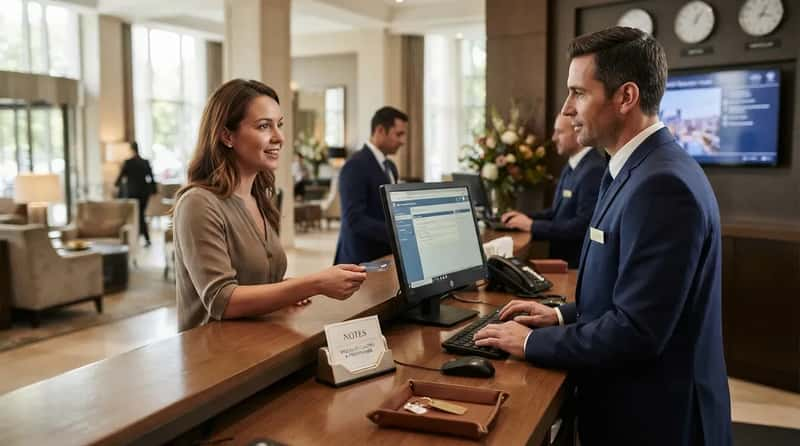
Guides can’t agree on this one. Some say a pre-arrival note works. One suggests emailing guest relations 48 to 72 hours before check-in, mentioning any special occasion and making a polite request. Others say the hotel may put a note on your reservation, and the agent may decide to upgrade you on the spot, especially if they’re not near capacity.
Another view is more cautious. Calling days ahead to ask for a guaranteed free upgrade is less useful because future room availability can change. The common thread is that a note is a nudge, not a contract. Treat it as a preference, then let the desk decide closer to arrival.
And the strongest verdict of all costs nothing and takes about five seconds (#1)…
#1 – “Hi, How’s Your Day Going?” Is the Opener That Beats Every Trick
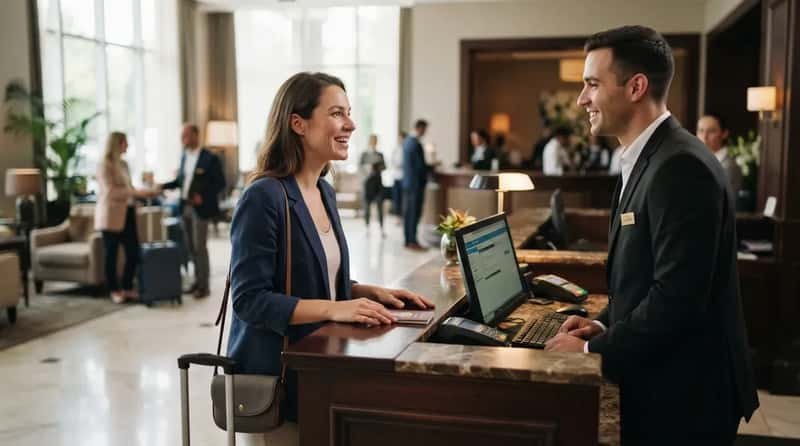
This is the verdict that sums up all the others. Every guide above circles back to tone. A front desk agent fields requests for better rooms constantly, so your first sentence is what sets you apart from the pile.
The reason is human. An agent who feels respected has more reason to look for something better. Even then, nothing guarantees an upgrade, and the advice is to be polite, ask kindly, and find something worth celebrating. These are patterns from staff interviews and travel guides, not a formal poll. But they’re consistent.
Most of what front desk staff decide about you happens in the first few seconds, and none of it depends on how much you paid. Entitled openers fall flat. Specific, polite, flexible ones tend to get a second look.
No sentence can guarantee a better room, but the wrong one can end the conversation fast. Which opening line have you actually used at a hotel desk, and what did it get you?