Most people think the hard part of RVing is the driving. Veteran owners will tell you the real risk starts the moment you park. Before they sit down, grab a drink or hook up the string lights, they run a quiet mental checklist that most campers never think about.
Some of the 25 checks below are obvious. Others sound almost too small to matter, until you hear what they prevent. One costs about $15, one is hanging over your roof right now, and the last is printed on your tires where almost nobody looks.
#25 – The Fridge Door Check That Saves Your Floor
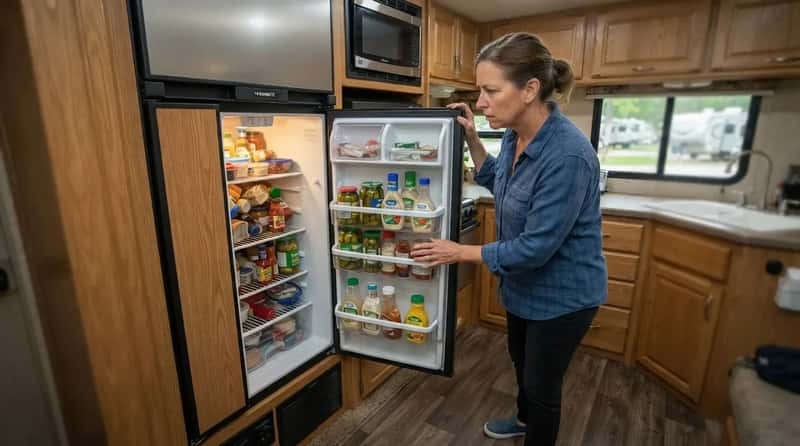
The first thing seasoned RVers do isn’t outside at all. They open the fridge and cabinets slowly, because everything inside has been sliding around for hundreds of miles. A bumpy highway can turn a neat shelf into a pile of loose jars, and a latch that popped open mid-drive can dump a whole fridge onto the floor.
So they stand to one side and keep a hand ready to catch whatever leans out. Then they check for cracked bottles and anything that leaked into the carpet. It takes under a minute. Skip it once, and you may be scrubbing pickle juice out of the flooring while everyone else is grilling.
That’s the easy one. The next danger is hanging over your roof, in #24…
#24 – Widowmakers: The Dead Branch Above Your Roof
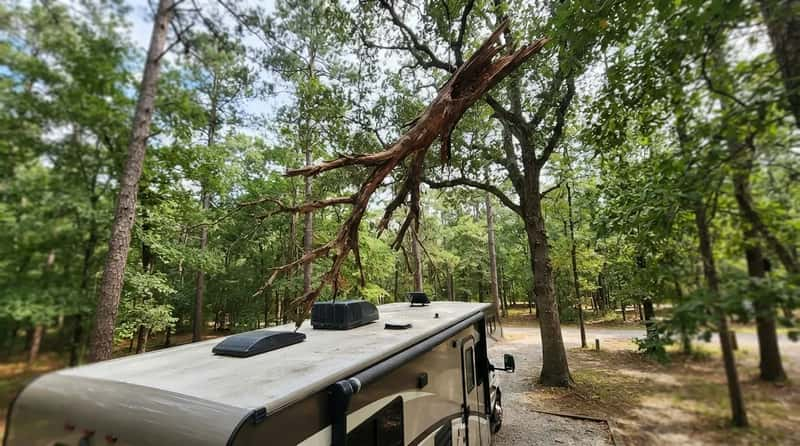
The scariest thing at a campsite is often above you. Campers call dead or broken limbs “widowmakers,” and experienced owners look up before they look anywhere else. A limb that seems harmless can snap in a gust and come down on a roof vent, an air conditioner or an awning.
They scan the canopy for brown, leafless branches and for low ones that could scrape the roof. Many experienced RVers would rather take a sunny, open site than a shady one under big dead trees. Wind is usually what brings those limbs down, and it rarely gives a warning.
But what’s under your tires can be just as sneaky, as #23 shows…
#23 – The Soft Ground That Swallows Tires Overnight
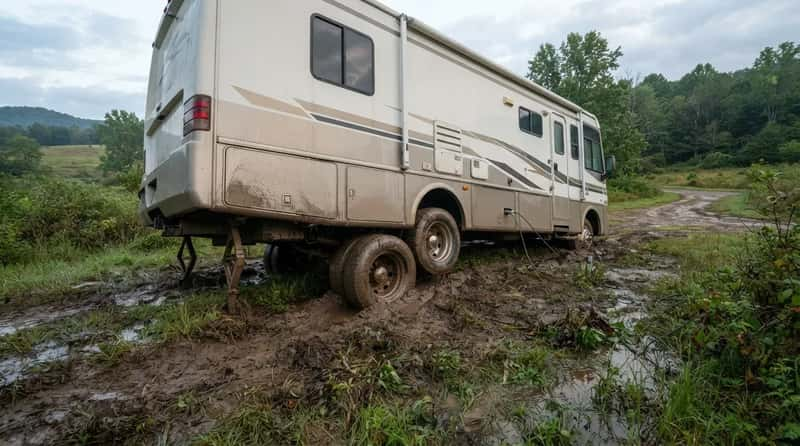
Dry-looking ground can fool you. Experienced RVers press on grassy shoulders, ask about recent rain and notice how other rigs have settled in. A heavy RV parked on soft soil can sink overnight, and then you’re waiting on a tow truck at sunrise.
They also stay out of dry creek beds and low washes, however flat and shady those spots look. Flash floods can hit a dry wash when the rain is miles away. A gravel pad may be boring, but it’s the one that lets you drive out in the morning.
Still, level ground matters for a reason most people never guess, in #22…
#22 – Why Your Fridge Cares About Level Parking
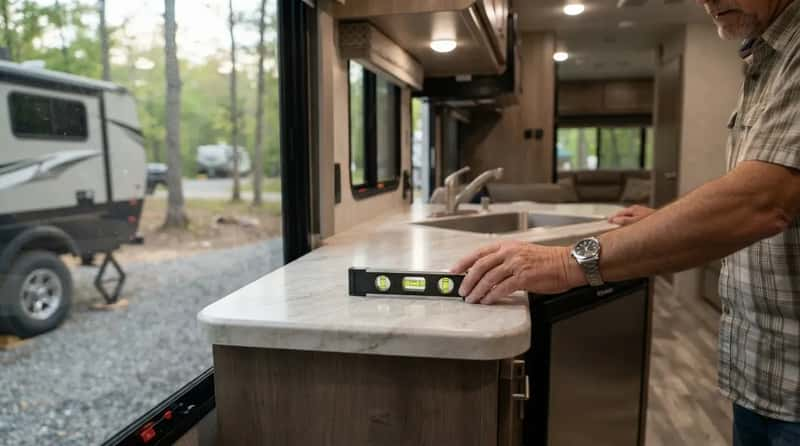
Level isn’t just about sleeping comfortably or keeping a marble on the counter. Many RV refrigerators use absorption cooling, and they work best when the rig is close to level. Run one badly tilted for long periods and you can damage the cooling unit, which is an expensive surprise.
Owners check a bubble level or a phone app before they unhitch. They level side to side first, then front to back. If the marble is already rolling, they adjust before anything else.
And before any of that, there’s a simple step people rush, as #21 reveals…
#21 – Wheel Chocks: The Cheap Wedge Everyone Skips
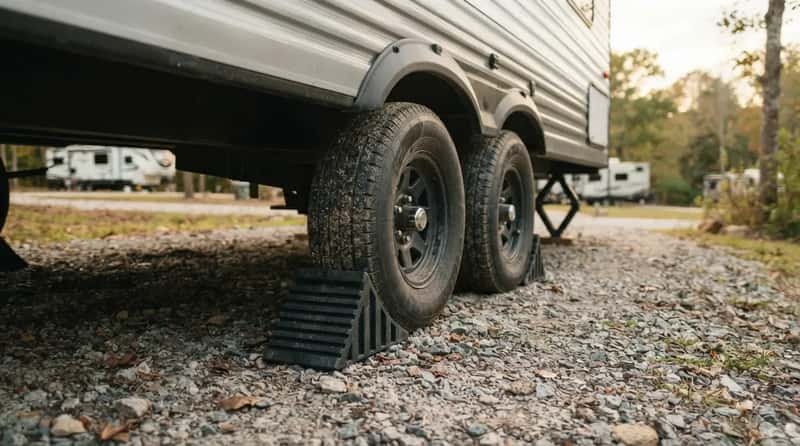
Parking brakes and gears aren’t the whole story. Experienced owners chock the wheels before they unhitch a trailer or climb out of a motorhome. A trailer on a slight slope, with only the tongue jack holding it, is a rolling accident waiting to happen.
Many keep chocks snug on both sides of at least one axle. A rig doesn’t need a big hill to start moving. A gentle grade and one loose connection are enough, and a few dollars of rubber is the fix.
Next comes a gadget that costs about as much as lunch, in #20…
#20 – The $15 Gadget That Can Spot a Wiring Problem
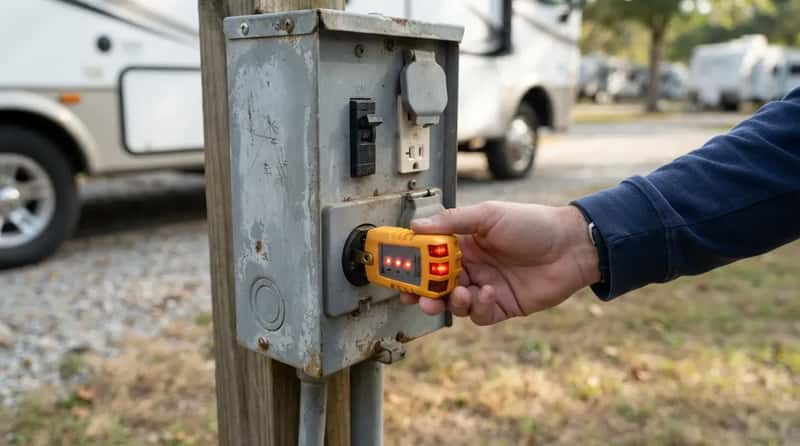
Campground pedestals aren’t always wired correctly, no matter how official they look. Experienced RVers carry a small plug-in circuit tester and check the outlet before they connect anything. It can flag problems like reversed polarity, an open ground or an open neutral.
A faulty pedestal can put your rig, and you, at risk. Many owners won’t plug in until the tester shows a clean result. If it doesn’t, they walk back to the office and ask for another site.
Even a clean pedestal can still hurt your rig, which brings us to #19…
#19 – The Surge Protector Debate That Splits RVers
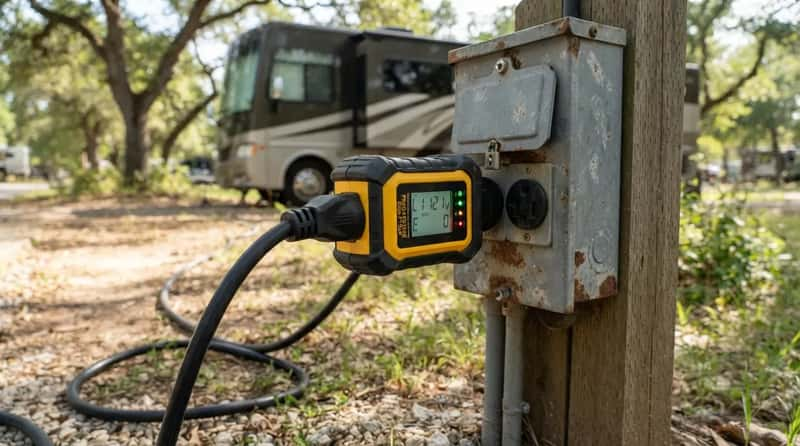
Almost every veteran uses some kind of protection at the pedestal. The fight is over how much. Plenty of experienced owners say a basic surge protector can give false comfort, because it handles voltage spikes but may do nothing about low or high voltage.
An electrical management system (EMS) goes further by also watching for wiring faults and voltage swings. Low voltage can strain air conditioner compressors and other motors. Many owners figure the extra cost is small next to a repair bill.
Quick Compare
- Basic surge protector: Absorbs voltage spikes, usually at a lower price, but may not react to low voltage.
- EMS: Adds monitoring for voltage swings and wiring faults, and can cut power when conditions look unsafe.
- Either way: It goes at the pedestal first, with your RV cord plugged into it.
Whichever you pick, the real limit is the power itself, as #18 explains…
#18 – The Amp Math That Trips Your Breaker at Dinner
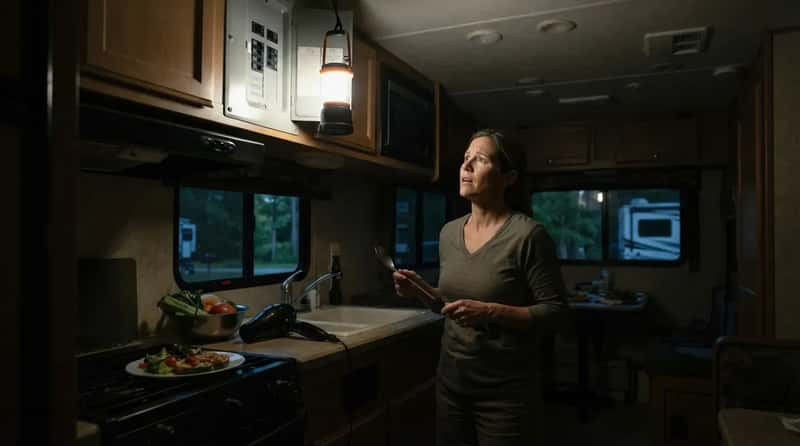
Many people don’t realize a 30-amp hookup has a hard ceiling. Run the air conditioner, microwave and a hair dryer together and the breaker pops, usually right when dinner is half cooked. Experienced owners count what’s running before they add another load.
They also check which service the site offers before they unpack. A 50-amp hookup offers far more power than a 30-amp one. Adapters let you plug in, but they don’t add capacity.
But power isn’t the only thing that can overload your RV. Water can, in #17…
#17 – The Water Pressure That Can Burst Your Plumbing
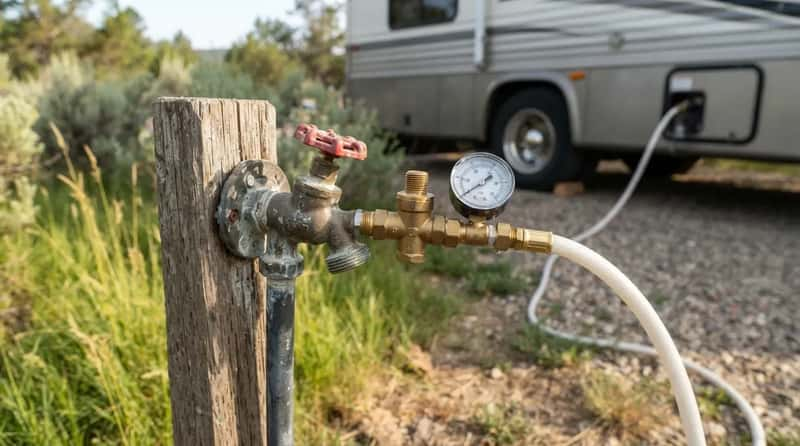
The campground spigot isn’t set up with your RV in mind. RV plumbing is built for much lower pressure than some city-style water systems deliver. Experienced owners attach a regulator at the spigot, every single time.
A fitting that fails behind a wall can leak for hours before anyone notices. Some campgrounds supply water at pressure far beyond what RV lines are designed for. Many owners use an inexpensive regulator and a gauge to check what’s actually coming out.
Then there’s the hose itself, which has its own story in #16…
#16 – Not Every Hose Is Safe for Drinking Water
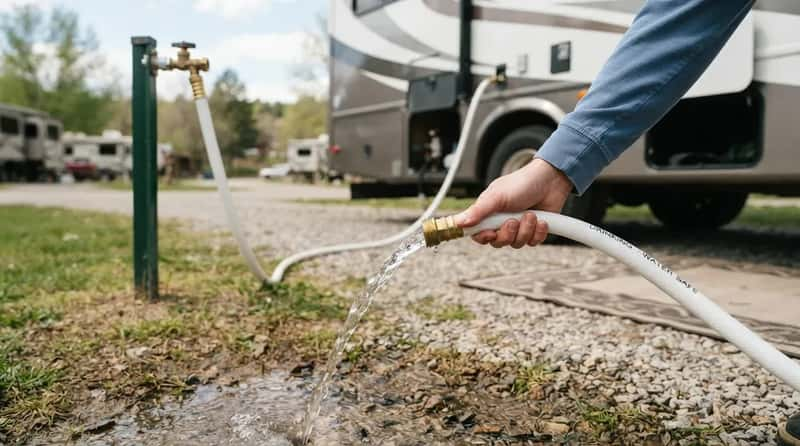
Many ordinary garden hoses aren’t made for drinking water. Experienced RVers use a hose labeled drinking-water safe, usually white or blue. They also let the water run for a bit before they fill the tank or take a sip.
They smell it. They taste it. A hose left in the sun can leave water tasting like warm plastic. A filter helps with taste, but it isn’t magic.
Once the water’s flowing, there’s a heating mistake that costs real money in #15…
#15 – The Water Heater Mistake That Burns Out Elements
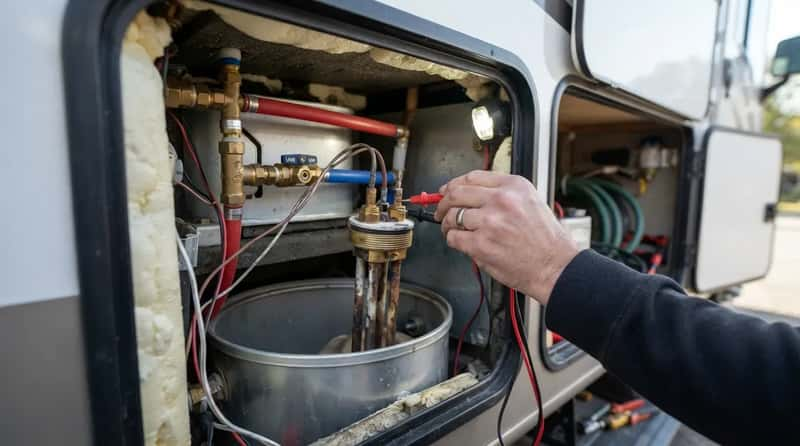
Turning on an electric water heater with an empty tank is a classic rookie move. Experienced RVers confirm the tank is full first. They also check that the bypass valve isn’t set to skip the heater.
Switching on an electric element with no water around it can burn it out. So they run water until it flows steadily from a hot tap, and only then flip the switch. It’s a ten-second habit that saves a ruined heater.
On the other end of the plumbing is the part nobody wants to talk about, in #14…
#14 – The Black Tank Rule That Prevents the Dreaded Pyramid
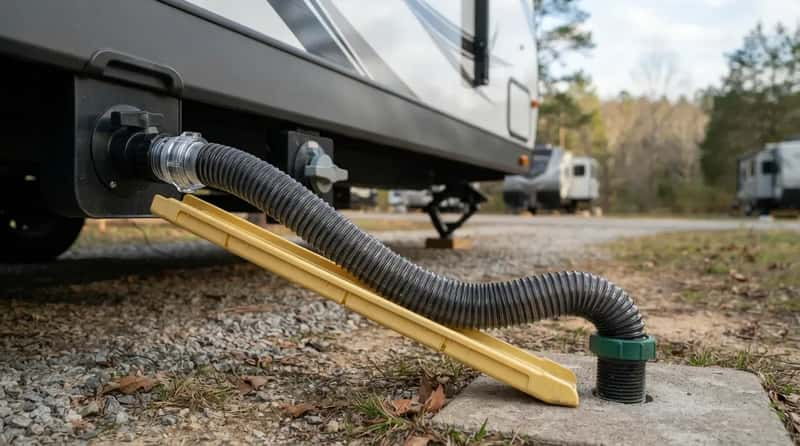
Veteran RVers check the sewer hookup before they relax. They make sure the fitting is snug, the hose slopes downhill and no low sags trap liquid. A hose with dips is a hose that backs up.
They also keep the black tank valve closed until the tank is well filled. Leaving it open can leave solids behind, forming the infamous “pyramid plug.” Liquid is what carries everything out when you finally dump, so the wait is worth it.
Fast Facts
- A common rule of thumb is to wait until the black tank is roughly two-thirds full before dumping.
- Many owners dump the black tank first and the gray tank second, so the soapy water rinses the hose.
- A hose with a steady downhill run, or a support rail, helps everything drain fully.
- The sewer hose and the drinking-water hose should never be mixed up or stored together.
The next item has a smell you’d never miss, but it’s easy to forget anyway, in #13…
#13 – Propane: The Sniff Test Experts Never Skip
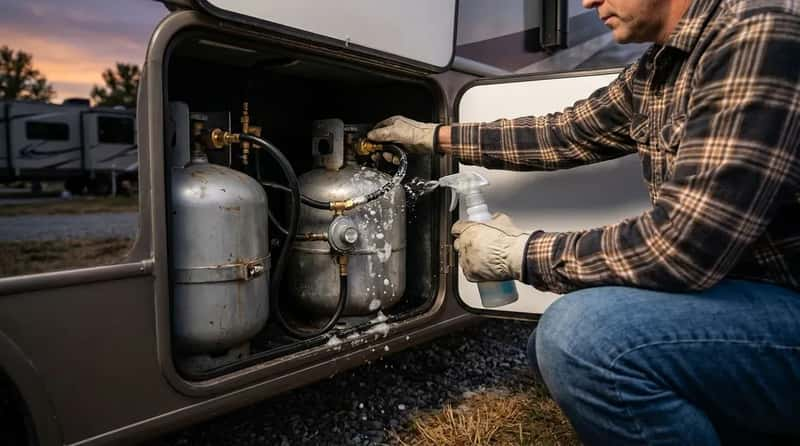
Propane is the quiet workhorse of an RV. It runs the stove, the water heater and often the fridge. Experienced owners check the tank level and listen for hissing. They also test connections with soapy water, because bubbles give away a leak.
They treat any gas smell as an emergency. No lighters, no switches, everyone outside. Then they shut off the supply at the tank.
But the gas you can’t smell is a bigger worry, and it’s in #12…
#12 – Alarms That Quietly Expire on You
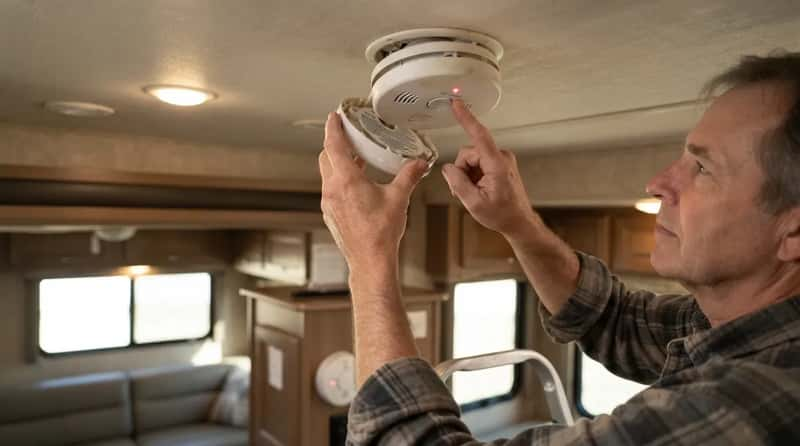
Smoke and carbon monoxide alarms have expiration dates, and plenty of RVs are still carrying ones that ran out years ago. Experienced RVers press the test button when they arrive and flip the alarm over to check the date. Carbon monoxide has no smell, so the alarm is your only warning.
Many also have a propane leak detector. They replace batteries before a trip, not during one. Nobody wants to be hunting for a ladder at 3 a.m. because of a chirp.
Next up is a move that damages more RVs than people admit, in #11…
#11 – The Slide-Out Path Nobody Walks First
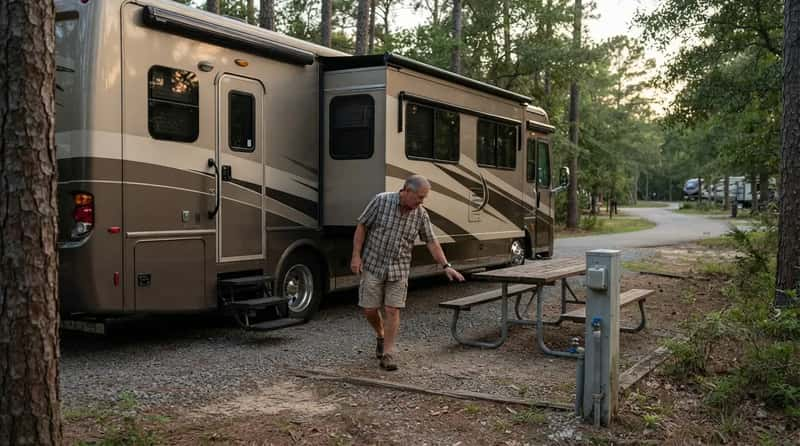
Slide-outs can push out through a surprising amount of space. Experienced owners walk the area outside before they extend one. They look for picnic tables, utility posts, chairs, hoses, low branches and neighbors.
A slide hitting a post or branch can damage seals, trim or the mechanism. The walk-around takes seconds. The repair can take weeks, and your trip sits in a shop while it happens.
Another thing that sticks out from the side of your rig is the awning, which is #10…
#10 – The Awning: Everyone’s Favorite Gamble
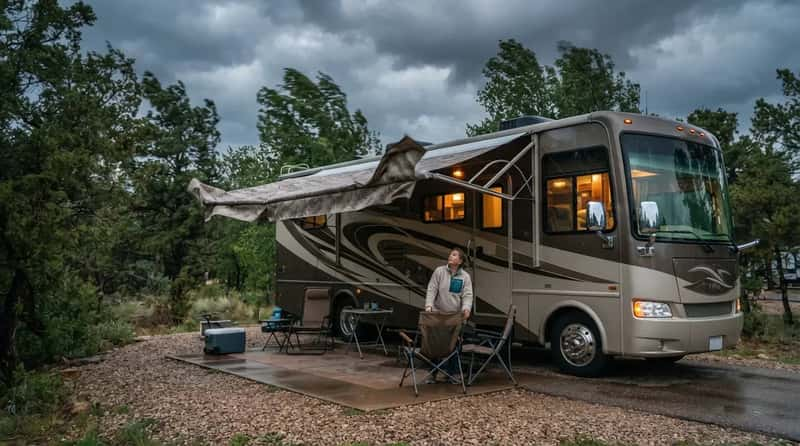
Here’s a hot take that veterans repeat constantly: leaving the awning out overnight is one of the biggest gambles in camping. Wind can pick up fast, and a bent arm or torn fabric isn’t a cheap fix. Plenty of owners have woken up to the sound of it flapping.
Most manufacturers advise retracting in gusty wind. A strong gust can wreck an awning in seconds. Many owners bring it in whenever they go to sleep or leave the site.
Weather deserves more than a glance at the sky, as #9 shows…
#9 – The Forecast Check Beyond “Chance of Rain”
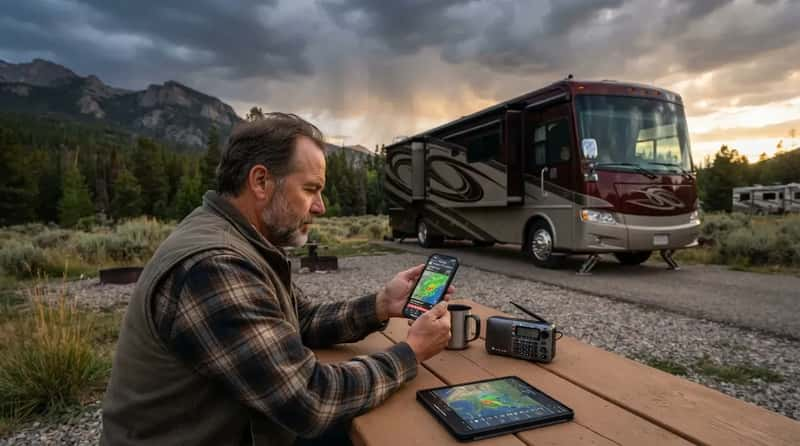
Experienced RVers look at wind speed, storms and alerts, not just the temperature. A tow-behind trailer or tall motorhome catches wind like a sail. They also turn on weather alerts so a warning can wake them.
Flash flood warnings can matter even when it isn’t raining at your campsite. Many owners also note the nearest sturdy building before dark. A plan beats panic.
Worth Knowing
- A flash flood watch means conditions are favorable for flooding. A warning means flooding is happening or about to.
- Gusts matter more than the average wind speed, especially for tall rigs and open awnings.
- Emergency alerts on your phone only help if they’re switched on before you fall asleep.
- A NOAA weather radio can still deliver warnings when cell service drops out.
And what if you can’t get a signal to hear the warning? That’s #8…
#8 – The Signal Bars That Decide How Safe You Feel
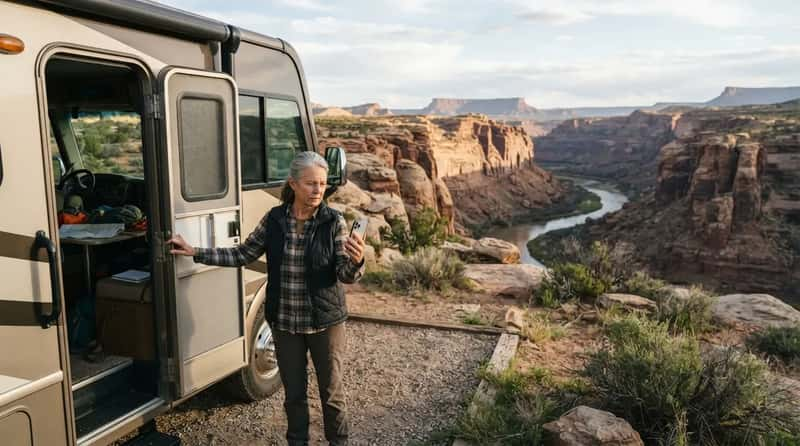
Cell service can vanish in the places that look best on a map. Experienced owners check coverage before they commit to a remote site. They also download offline maps and save key phone numbers, because a beautiful canyon is a lonely place with no bars.
Campground Wi-Fi is shared by every camper in the park, so it’s often too slow for much more than texting. Many owners treat it as a bonus, not a plan.
Sometimes the problem isn’t signal but sound, which is #7…
#7 – The Noise Map Hiding Behind a Pretty Site
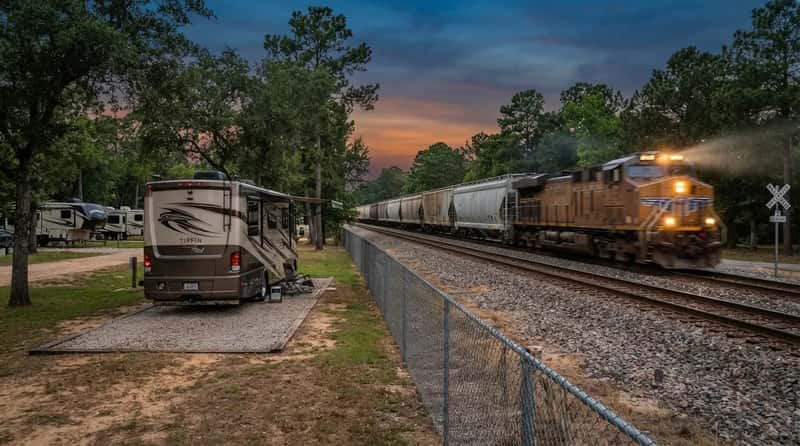
A great-looking site can be a terrible place to sleep. Experienced RVers check where the highway, the camp store and the dump station sit. They also listen for generators and nearby pumps.
Train tracks are the classic trap. Trains generally have to sound horns at public crossings, except in designated quiet zones. That can mean horns all night, right outside a thin RV wall.
If you’re not staying in a campground at all, the rules get even stranger, as #6 explains…
#6 – Why “Free Overnight Parking” Isn’t Always Free
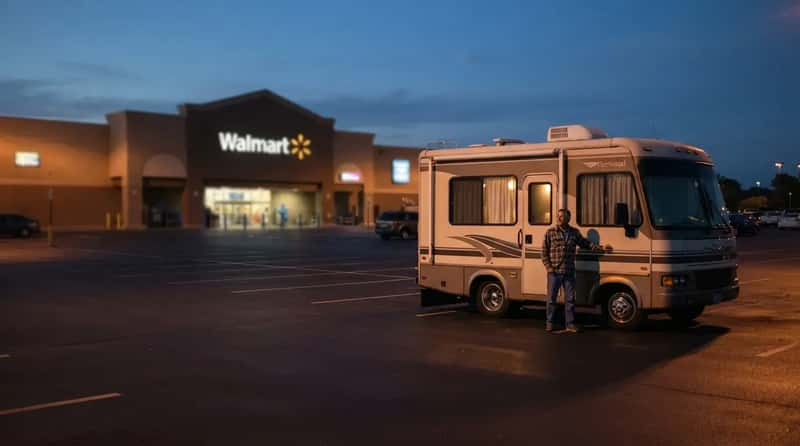
Many travelers treat Walmart parking lots as an easy overnight fix, and plenty of RVers now say that reputation is overhyped. Policies vary by store and by city, and some places prohibit overnight stays outright. A spot that worked for a friend last year may not work tonight.
The only reliable answer comes from the store manager. Experienced owners call or ask in person. Rest areas have rules too, and time limits vary by state.
Next is a gear myth that costs people their frames, in #5…
#5 – Stabilizer Jacks Aren’t Lifting Jacks
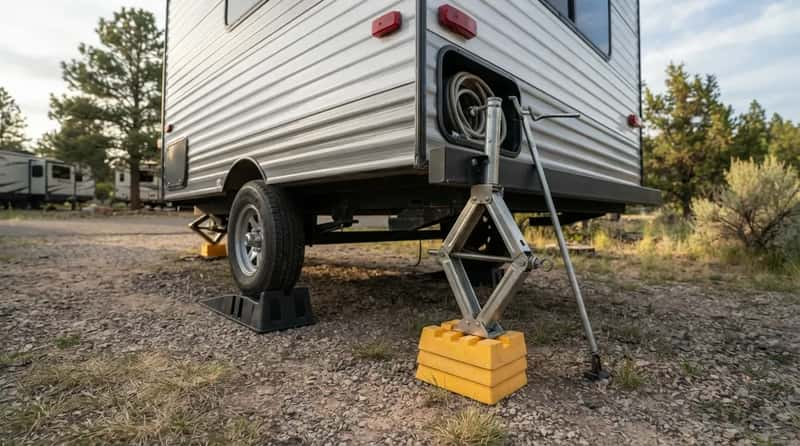
The stabilizer jacks on many trailers and fifth wheels aren’t designed to hold the RV’s weight. They steady the rig and reduce that annoying rocking when someone walks inside. Experienced owners level with blocks or ramps first.
Using stabilizers to lift a rig can bend them or damage the frame. They check the owner’s manual to see what their jacks are rated to do. Then they lower them gently and stop.
Why It Stands Out
- It’s one of the most common gear mix-ups in camping, and the damage is easy to see afterward.
- The right order is simple: level with blocks or ramps, then lower the stabilizers until they’re snug.
- Your owner’s manual spells out what the jacks are rated to do, so it’s worth a minute of reading.
The next question is one most people only ask after it’s too late, in #4…
#4 – The Exit Plan You Make Before Dark
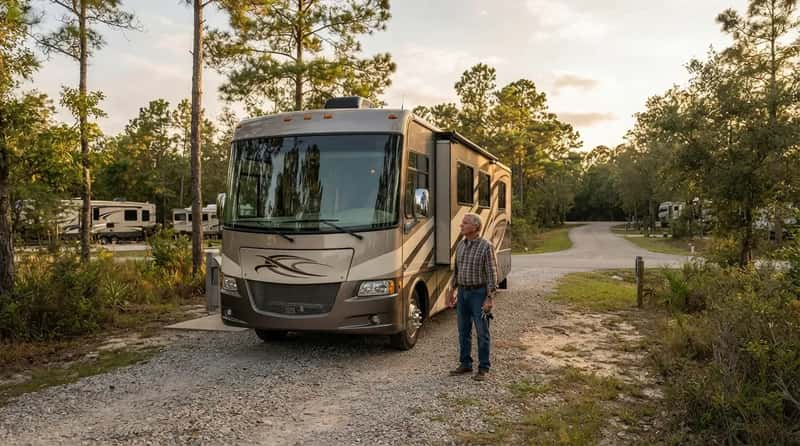
Experienced RVers think about leaving before they’ve fully arrived. Can the rig pull out without backing up? Is a neighbor’s truck or a tree in the way? Could they get out quickly in the dark?
In a wildfire or flash flood, the time you save by planning is the time you need. Pull-through sites make this easier. When they’re backed in, owners keep the path clear and the keys somewhere obvious.
But what’s lurking outside after dark might be even more surprising, in #3…
#3 – The Midnight Visitors Who Love Your RV
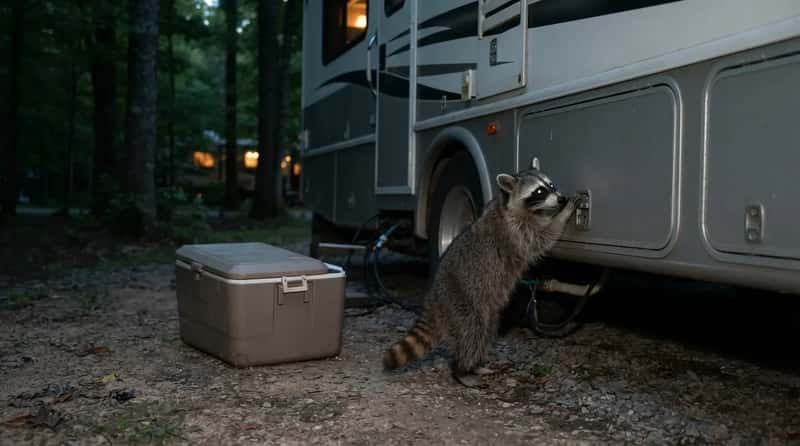
Wildlife doesn’t care about your reservation. Experienced RVers check campground rules for food storage, especially in bear country. They don’t leave trash or coolers outside overnight.
Mice can squeeze through gaps about a quarter inch wide. Owners look for holes around pipes, cables and the floor. Steel wool or a proper sealant keeps small guests from moving in.
Now we reach the checks that matter when you’re back on the road, starting with #2…
#2 – The Lug Nuts That Quietly Work Themselves Loose
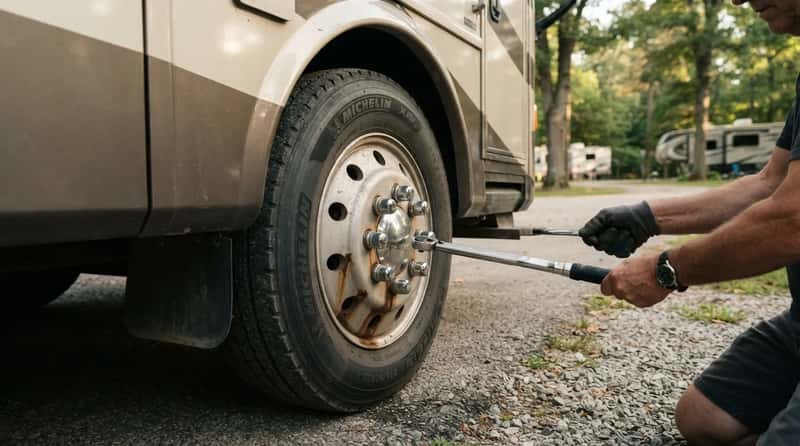
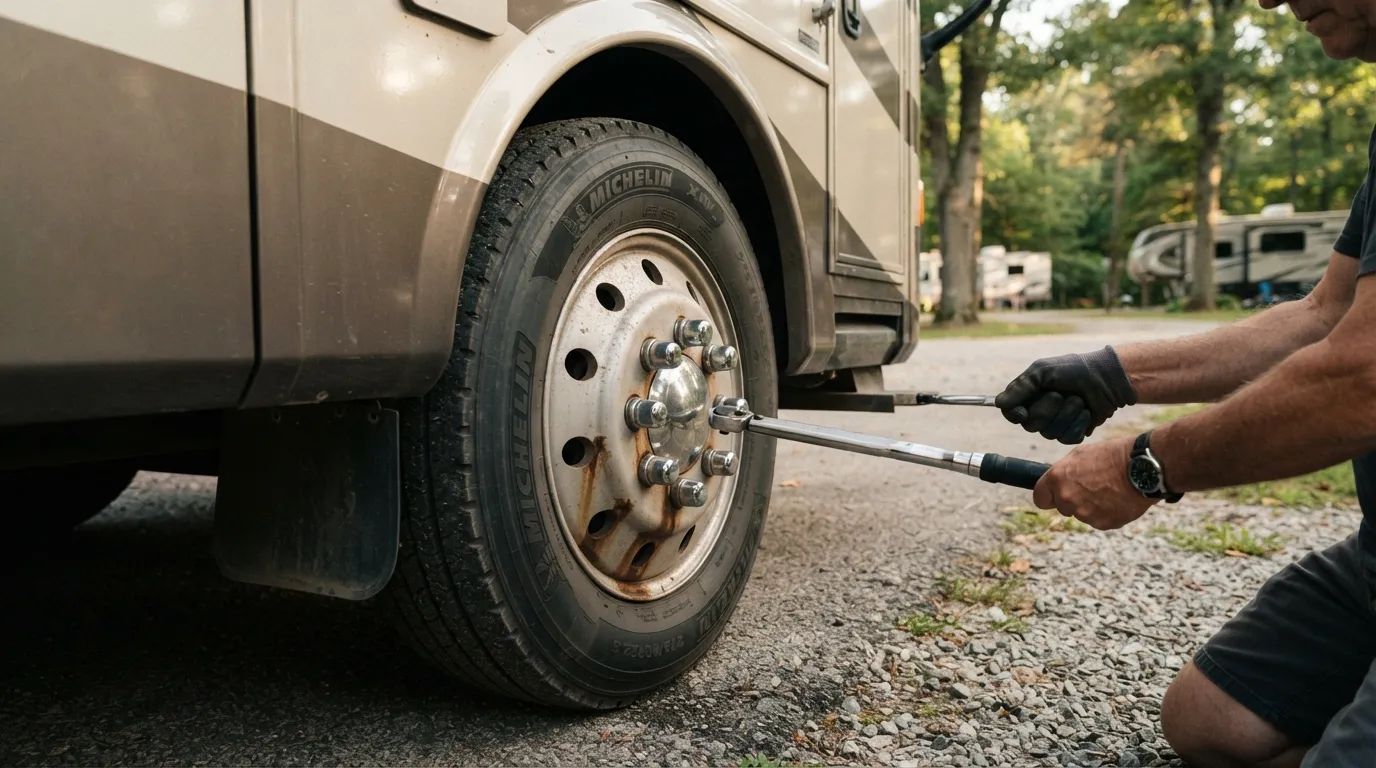
Your wheels are held on by a handful of nuts, and experienced RVers don’t take that for granted. They look for rust streaks around the lugs, which can hint at movement. If a wheel was recently changed, they recheck the torque.
Many tire shops recommend rechecking lug torque after the first 50 miles or so. They use a torque wrench set to the manufacturer’s number. Guessing isn’t a plan when the wheel is carrying your whole house.
But the number one check is printed on every tire, and almost nobody reads it…
#1 – The Four Digits on Your Tire That Reveal Its Real Age
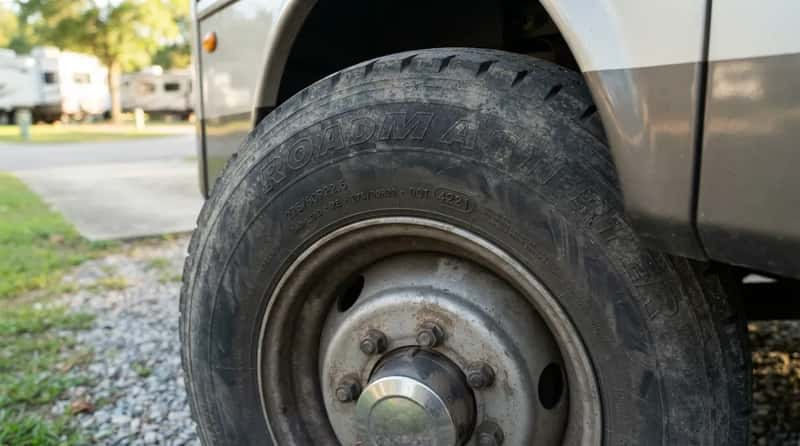
Experienced RVers read the date code on the sidewall. It’s the last four digits of the DOT code, and it shows the week and year the tire was made. RV tires often age out before they wear out, because rigs sit for long stretches and the rubber keeps aging in the driveway.
Many tire makers advise inspecting tires regularly as they age and replacing them by about ten years, no matter how much tread is left, and many RV owners go sooner. They also check pressure cold, using the numbers that match the rig’s actual load. The maximum pressure printed on the sidewall isn’t always the right target.
The smartest RV owners don’t rely on luck. They look up for dead branches, down at soft ground and all around for noise, wind and wiring problems. The biggest surprises are the small ones: a $15 tester, a four-digit tire code and an exit plan made before sunset.
Almost none of it is glamorous, and none of it makes the vacation photos. But it’s the reason the veterans are the ones sitting calmly by the fire while the rest of the campground deals with a tripped breaker, a flapping awning or a very long night.