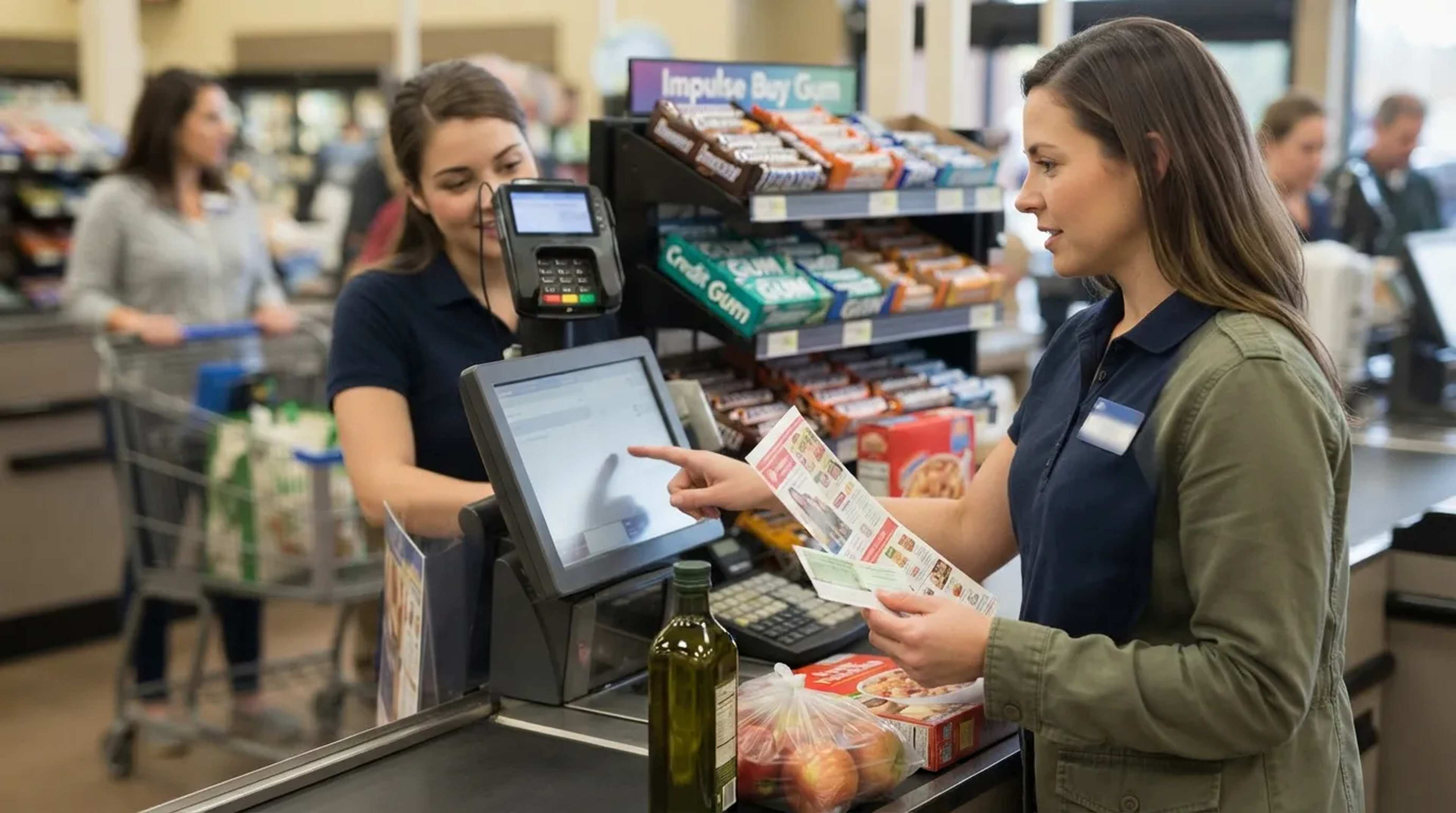
Most of us toss the weekly flyer on the counter, glance at the front page, and call it planning. Then there’s that one person who walks out with a full cart for a fraction of the price. The difference isn’t luck or a coupon binder the size of a phone book. It’s a quiet routine that happens before the car keys come out.
Some of these steps take ten seconds. A few sound way too small to matter, until you see what skipping them costs at the register. Here are all 27, counted down, and the last few are the ones that start arguments.
#27 – They Read the Whole Flyer Before Circling Anything

Most people flip to the front page and stop. Flyer regulars treat the flyer like a menu and read every panel first, including the crowded corners and the tiny print. A full read-through often rewrites the entire shopping list before a single item gets marked.
It takes a few minutes with a cup of coffee. Once you see everything on offer, the headline deal stops looking like the only option. Some of the best prices are hiding in the boring sections.
#26 – They Check the Dates First, Not Last

The sale you’re excited about might have ended yesterday. Flyer pros look at the valid dates before they read a single price. Stores don’t all flip their ads on the same day, so last week’s flyer can still be sitting on the kitchen counter, looking perfectly current.
An expired flyer is the easiest way to show up with a plan built on prices that no longer exist. It’s a small mistake, and it’s a classic. Writing the end date at the top of the list fixes it for good.
#25 – They Read the Fine Print Like a Contract

The small print is where a deal quietly changes meaning. Phrases like “while supplies last” and “not available at all locations” can decide whether you get any recourse when a shelf is empty. A sale price can look generous right up until you notice the limit per household.
Flyer regulars scan for purchase limits, minimum amounts, and card requirements. They’d rather learn the catch at the kitchen table than in the checkout line. It’s dull work, and it prevents the most frustrating surprises of the whole trip.
#24 – They Circle Only What They’d Buy Anyway

A discount on something you never wanted isn’t a discount. Flyer regulars circle only items already on their usual rotation. The test is simple: would I buy this at full price next month?
That filter wipes out a surprising number of “great deals” in a single pass. The most expensive item in any flyer is the one you didn’t need. Some shoppers even cap the circles at a fixed number so the list stays honest.
#23 – They Shop Their Own Pantry First

Half the battle is knowing what’s already on the shelf. Flyer regulars scan the pantry before they scan the sales so they don’t double up on rice, pasta, or canned beans. The USDA has estimated that the average American family of four loses about $1,500 a year to uneaten food.
One study found the average American household wastes 31.9% of the food it acquires. A stocked pantry can turn a “great price” into a bill for something you never needed. A quick look takes two minutes and can save more than most coupons.
#22 – They Open the Fridge and Look for What’s Dying

Fresh food goes bad fastest, so flyer regulars check it first. They plan this week’s meals around whatever needs using up. Fresh fruits and vegetables make up the largest share of household food waste by weight.
That’s why they don’t buy more produce just because the flyer shows it cheap. The wilting bag of spinach in the drawer is the reason they skip the spinach special. It’s a small act of restraint, and no flyer will ever reward it.
#21 – They Treat the Front Page as Bait, Not the Whole Deal
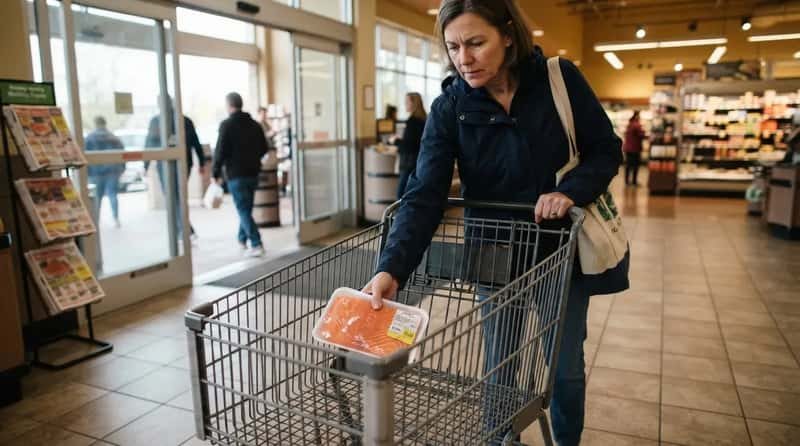
The front page is where stores put the items they most want you to see. Some of those are priced at or below cost just to get you through the door. Flyer regulars know the front page is the hook.
So they grab the bait item and nothing else that isn’t also a deal. Some shoppers make the front-page item the whole reason for the trip. Others skip it entirely because the rest of the store’s prices cancel out the savings.
#20 – They Do the Unit-Price Math Before the Trip

A big package isn’t always a better deal. Flyer regulars compare the price per ounce, per count, or per pound, not just the number in big print. A sale on a smaller size can beat a “bulk” price on the bigger one.
The math is easier at the kitchen table than it is in the aisle with a toddler pulling at your sleeve. A flashy sale can still cost more per ounce than the regular price of a different size. A quick phone calculator settles it.
Quick Compare
Here’s the math on an example cereal, with made-up prices:
- 12 oz box at the regular $3.00: 25 cents per ounce
- 18 oz box at the regular $4.14: 23 cents per ounce
- 12 oz box on sale for $2.40: 20 cents per ounce
- The sale wins here, and the bigger box beats the small one at full price.
#19 – They Load the Digital Coupons Before They Leave

The phone app is where many deals now live, and it doesn’t always cooperate. An NBC Chicago viewer survey found 92% of respondents had trouble redeeming digital coupons. That’s why flyer regulars load and check them at home, not at the register.
One shopper described reaching checkout to find his blueberries ringing up at $4.99 instead of $1.99. Checking the app on your couch beats discovering a glitch with a line building behind you. It’s not glamorous, but it pays.
#18 – They Check Whether a Manufacturer Coupon Can Stack

Some stores let you combine a store sale with a separate manufacturer coupon. Others don’t. Flyer regulars check the policy before they clip, not after.
Rules vary by chain, and they change, so they look up the store’s coupon page for the exact wording. A coupon that works at one chain can be refused at the one across the street. Knowing that ahead of time saves the awkward moment at the register.
#17 – They Screenshot the Advertised Price

Flyer regulars keep proof. They snap a photo of the ad page, or screenshot the app deal, before they leave. If the register rings up something different, they’re ready.
Prices in a printed flyer and a store’s system don’t always match. A dated screenshot turns a “he said, she said” into a thirty-second fix. Some people still bring the paper flyer itself, and that works too.
#16 – They Flip to the Back Page and the Inner Spreads
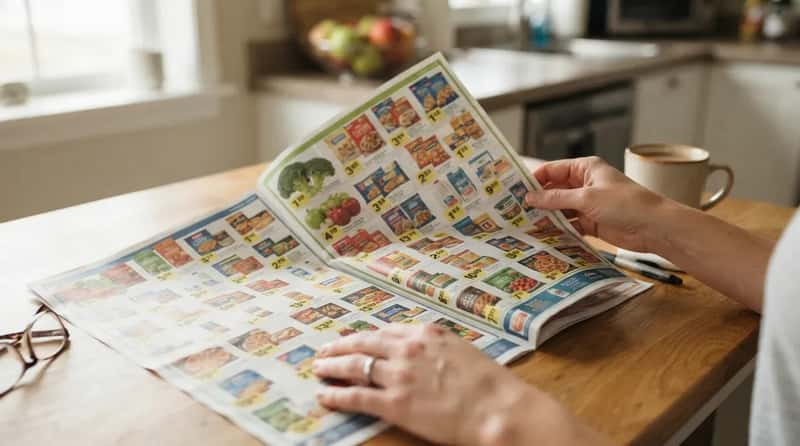
The front page gets the glory. The rest of the flyer often has the staples. Regulars look at the inner spreads and the back page for household basics, pantry items, and frozen food.
That’s where the “boring but needed” deals tend to sit. The best price on something you buy every month can be on a page most people never turn to. It’s a ten-second flip.
#15 – They Check Whether the Price Needs a Loyalty Card

Many sale prices only apply to members. A Consumer Reports survey found 80% of grocery shoppers belong to at least one loyalty program, and 1 in 10 belong to four or more. Flyer regulars look for “with card” in the fine print so the price on the shelf isn’t a surprise.
A “sale price” can quietly mean “member price.” Signing up before the trip beats signing up in line. And a store’s app often holds the extra coupons that never made it into the paper flyer.
#14 – They Check Whether the Deal Makes You Buy Multiples
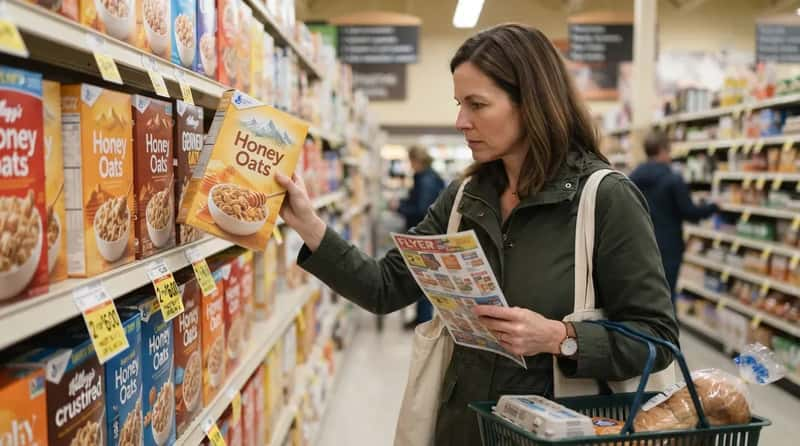
A “2 for $6” sign doesn’t always mean you must buy two. Sometimes it does. Flyer regulars read the wording to find out whether the per-item price applies to one, or only when you hit the quantity.
That’s a big difference when you only need one box of cereal. Some deals sound like bargains until you realize you’re paying for extra you won’t use. The reverse is also true, and a good multi-buy on something you eat constantly can be worth stocking up.
Worth Knowing
- “2 for $6” often works out to $3 each, but check whether the price holds for a single item.
- Words like “must buy 2” or “limit 4” change what the deal really means.
- Multi-buys make the most sense on shelf-stable items you already use every week.
- Skip them on anything that could spoil before you finish the second one.
#13 – They Know the Rain Check Rules Before They Need One
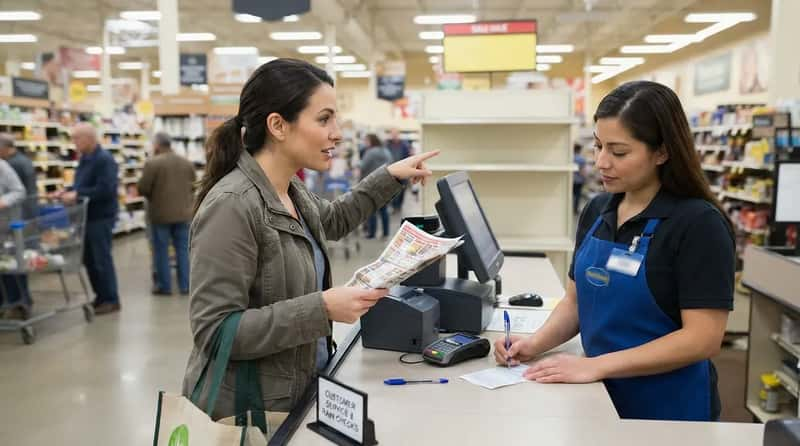
An empty shelf doesn’t have to mean a lost deal. A rain check lets you buy an out-of-stock sale item at the sale price later. Policies vary by store, and some limit how many items you can get per household.
Some states, including Massachusetts, have rules about rain checks for advertised items. Most people don’t realize they can simply ask the customer service desk. Knowing the store’s policy before you go means you’re not guessing at the shelf.
#12 – They Compare Two Flyers, Not Just One

Loyalty to one store can cost real money. A survey of 904 grocery shoppers found 72% check weekly ads or app deals on every trip or most trips. Flyer regulars go one step further and put two stores’ ads side by side.
The question isn’t who has the lowest prices overall. It’s who has the best price this week on the five things you need. The cheapest store changes from week to week, and the flyer is the only way to see it coming. Comparing doesn’t mean driving everywhere, though, and regulars weigh the gas against the savings.
#11 – They Compare the Store Brand to the Sale Price
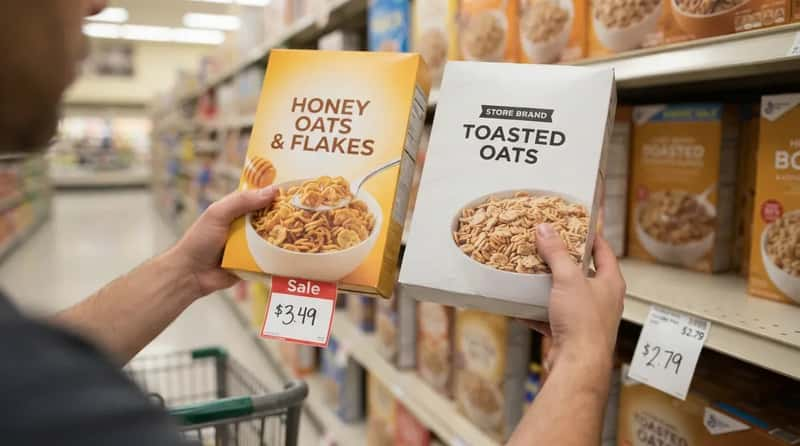
A sale on a name brand doesn’t automatically beat the store brand. Flyer regulars check both. Sometimes the discounted national brand lands below the house label, and sometimes it’s not close.
The only way to know is to compare the actual numbers. A “30% off” tag on an expensive item can still cost more than the everyday store-brand version. It’s a quick check that keeps the flyer honest.
#10 – They Set a Spending Cap Before the Trip

Flyers are built to make you spend. Regulars decide on a number first and treat it like a fence. Some bring cash, some use a set app budget, and some just write it at the top of the list.
The number isn’t about being cheap. It’s about knowing when a “bargain” has quietly turned into a stock-up spree. Without a cap, saving money on each item can still add up to a bigger bill.
#9 – They Time the Trip to the Deal, Not Their Schedule

When you shop matters as much as what you buy. One coupon guide notes that Kroger’s digital promotions should be claimed early in the week, because some stores don’t issue rain checks for items tied only to app coupons. Popular sale items can go quickly.
That’s why some regulars shop on the first day of the ad. A great deal on Thursday can be an empty shelf by Saturday. Early shoppers also get the best selection.
#8 – They Check If the Item Is Actually in Stock

The flyer promises. The shelf decides. Regulars check the store’s app or website for availability before they drive across town. It’s a two-minute check that can save a wasted trip.
It’s not perfect, since inventory counts can be off. Even so, a quick look beats finding an empty shelf with the kids already in the car. Some people call the store for the one item they really need.
#7 – They Write the List in Store Layout Order

A list in the order of the aisles is a quiet money saver. Regulars arrange items by section: produce, dairy, frozen, pantry. That way they don’t backtrack through the store and past every tempting display.
Less wandering means fewer impulse buys. Every extra lap around the store is another chance for something you didn’t plan to land in the cart. It also makes the whole trip faster.
At a Glance
- Start with shelf-stable pantry items and paper goods.
- Move to produce and bakery next.
- Grab meat and dairy near the end.
- Finish with frozen so it spends the least time in the cart.
- Every store is laid out a little differently, so adjust the order to match yours.
#6 – They Make Room for the Stock-Up Before They Buy It

A great meat deal means little if it can’t fit in the freezer. Regulars check the space at home before they buy extra. They already know where everything is going to go.
That includes shelf space for canned goods and paper products. A cart full of deals can turn into a pile on the kitchen floor. A little room-clearing before the trip prevents it.
#5 – They Eat Before They Go

It sounds almost silly, but it’s one of the oldest tricks in the book. Regulars don’t walk into a store hungry. Everything looks like a deal on an empty stomach.
The cart fills with snacks, bakery items, and ready-to-eat foods. A flyer budget can fall apart in the first ten minutes of shopping hungry. A small meal or snack before the trip is enough to prevent it.
#4 – They Pack the Cooler and the Bags
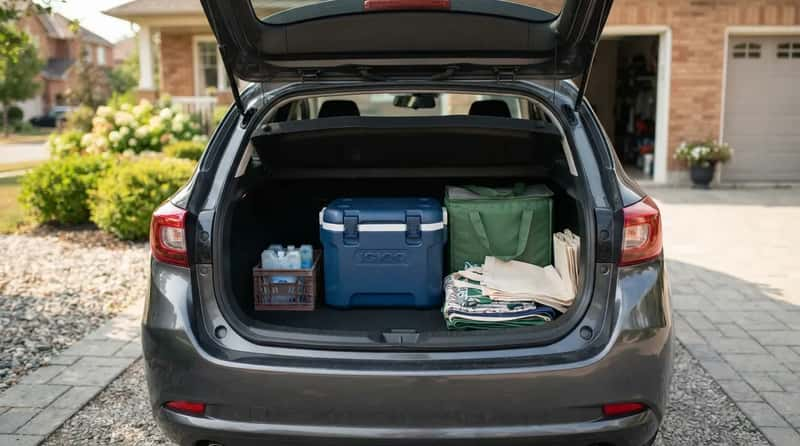
A good meat or dairy deal can spoil on a hot car seat. Regulars bring a cooler or insulated bag, especially in summer. Reusable bags go in the trunk before they leave the driveway.
It’s boring prep that protects the savings. A bargain on chicken isn’t a bargain if it sits in a hot car through three more stops. The order of the errands matters too.
#3 – They Make Sure the Deal Works Without Their Phone

A dead phone can mean a lost discount. Regulars charge up before they leave and keep a backup plan. Some print the coupons or write down the item numbers.
The digital divide is a real issue, and consumer advocates have pushed for stores to offer app-only deals in a non-digital form too. Even so, most stores still expect you to bring a working phone. A backup takes five minutes.
#2 – They Know They Can Ask for a Price Adjustment

When a coupon doesn’t apply, a lot of people just pay. Regulars ask for an adjustment. In the NBC Chicago survey, 80% said they asked for a price adjustment when coupons didn’t apply, and 76% said they successfully received one.
That’s an open online poll, not a national study, but the pattern is hard to ignore. Most of the people who asked said they got the price fixed. The key is to catch it at the register, with your proof ready.
#1 – They Decide Which “Deals” They’ll Walk Past

The most powerful step isn’t about saving. It’s about skipping. Regulars decide ahead of time which sales they’re going to ignore, even when the price looks great.
In a Consumer Reports survey, about 3 in 10 loyalty-program members were dissatisfied with at least one program, and the top reason, at 58%, was that the discounts weren’t as good as they expected. The deals that feel biggest in the flyer can be the ones that disappoint most at checkout. Saying no to them is what keeps the whole routine working.
The weekly flyer isn’t magic. It’s a map, and the shoppers who save the most are the ones who read it before they leave the house. They check the dates, the pantry, the fine print, and the stock, and they let the weak deals go by.
None of these 27 steps is complicated, and most take a minute or less. Together, they’re the difference between a real bargain and a clever ad. Which one would you never skip?