
If you took family road trips in the 1970s, you already know the feeling – the handmade signs with arrows pointing off the highway, the crackling excitement of pulling into a parking lot that smelled like popcorn and sunscreen, the absolute certainty that something magnificent was just ahead. America that decade was packed with roadside oddities: giant fiberglass animals, hillbilly-themed parks, Wizard of Oz walk-throughs, marine shows that felt like the most exotic thing your family had ever seen. Most of them are gone now. Not just closed – erased. Replaced by outlet malls, subdivisions, and long stretches of nothing.
What’s haunting isn’t just that they closed. It’s how completely they vanished from cultural memory. People who loved these places often can’t find a single photograph. Towns that built their entire summer economy around them just moved on. Some of the entries on this list will feel like long-lost friends. Others will be the first time you’ve ever heard the name – which is exactly the problem.
#31 – The Giant Orange Juice Stands of California and Florida
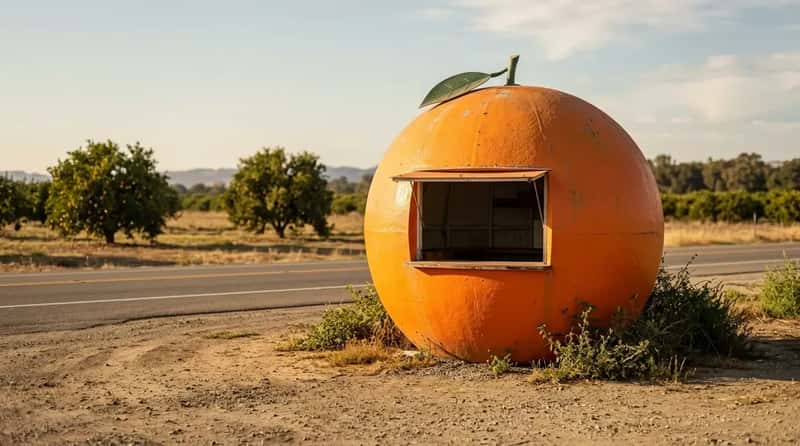
Before fast food colonized every highway exit, giant orange-shaped roadside stands – some 15 to 20 feet tall – were the original American roadside icon. These citrus-colored structures once dotted highways across California and Florida, serving fresh-squeezed juice to thirsty travelers. Pulling off to watch someone squeeze oranges into a paper cup was a genuine event for kids in the back seat. Nothing about it needed to be explained; the building itself was the advertisement.
The interstate highway system diverted traffic away from these local stands, and fast-food chains did the rest. Most had already disappeared before Jimmy Carter left office. Today only a tiny handful survive as architectural novelties – protected curiosities rather than working businesses. The rest are long gone, replaced by gas stations and chain restaurants that nobody photographs nostalgically fifty years later.
#30 – Pacific Ocean Park, Santa Monica, California
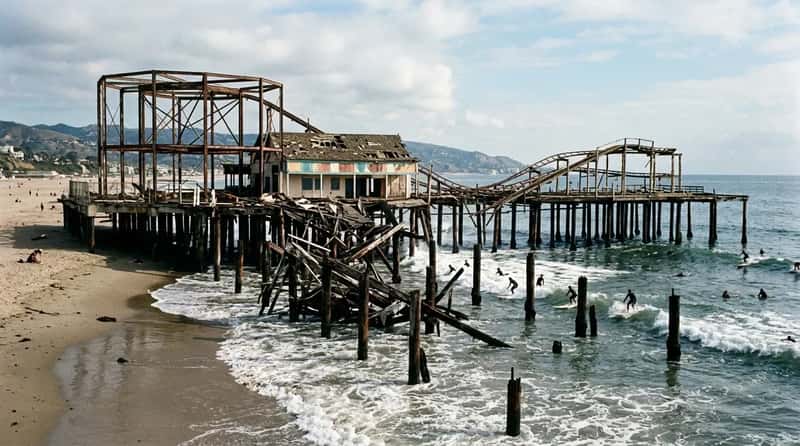
Long before Venice Beach became a destination in its own right, Pacific Ocean Park was California’s answer to Disneyland – built on a pier and open to the actual Pacific Ocean. The 28-acre nautical-themed park opened in 1958 with the ambition to rival Anaheim. By the 1970s it had already closed, but its ruined skeleton sat rotting over the waves for years, becoming an eerie, off-limits landmark that locals couldn’t stop talking about.
The broken pilings actually created a unique wave break that drew surfers from across Southern California – the ruin became more famous than the park ever was. By the mid-1970s the wreckage was finally demolished. What had been a gleaming nautical fantasy was reduced to splinters and salt air. The pier that replaced it has no memory of what stood there before.
#29 – Santa’s Village, Scotts Valley, California
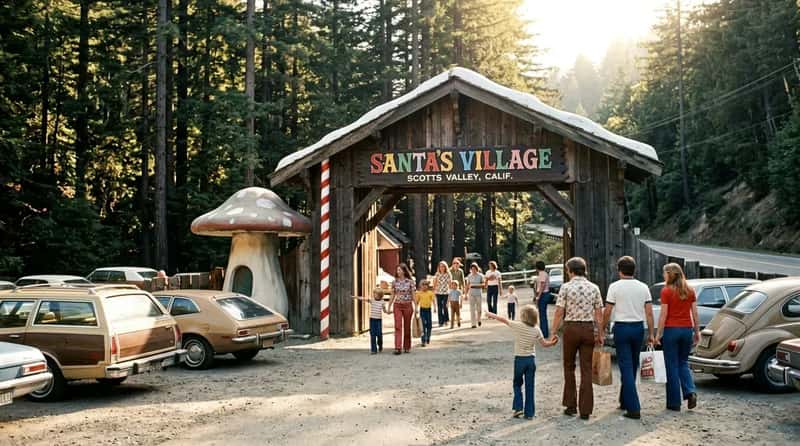
Year-round Christmas sounds like a genius concept – until it isn’t. Santa’s Village in Scotts Valley sat alongside Highway 17 for over two decades, pulling in Bay Area families who couldn’t resist the candy-cane poles and elf-costumed workers. For kids raised in that corridor, a stop there was as reliable as Thanksgiving itself. The park featured a petting zoo, a Jack-in-the-Box the size of a small house, an Alice in Wonderland hall of mirrors, and a frozen North Pole that somehow never melted.
In 1977, the Santa’s Village Corporation filed for bankruptcy. The park closed for good in 1979. As of 2026, the freeway exit signs off Highway 17 still read “Santa’s Village Road” – one of the most quietly poignant roadside ghost signs in America. The park is gone. The sign stays. Nobody who passes it under forty years old knows what it means.
#28 – Dogpatch USA, Marble Falls, Arkansas
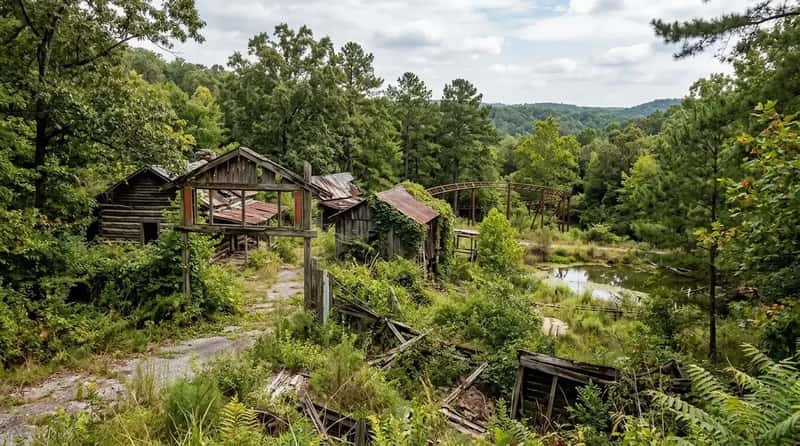
In the 1970s, a hillbilly-themed amusement park in the Ozarks wasn’t a punchline – it was a genuine family destination. Dogpatch USA was built around Al Capp’s Li’l Abner comic strip, and at its peak it was the biggest tourist draw in northwestern Arkansas. Visitors could ride a roller coaster, watch craftspeople at work, or float down a trout-filled river while surrounded by the fictional backwoods world of Dogpatch. It was campy, specific, and completely committed to its own premise.
The park ran from 1968 until 1993, outlasting the era that made it relevant by about fifteen years. After closure, the property was bought, sold, and foreclosed on multiple times. The main structures fell into decay. What had been a living, breathing piece of Ozark vernacular tourism became a cautionary tale about what happens when a cultural reference outlives its audience – and then the buildings outlive even that.
#27 – Ghost Town in the Sky, Maggie Valley, North Carolina
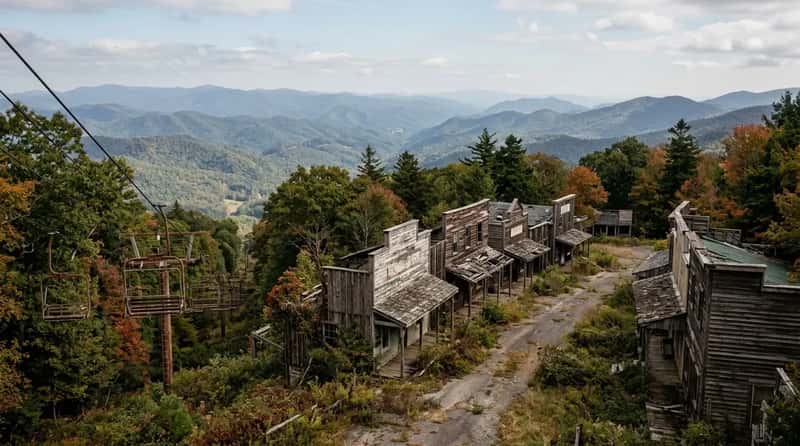
Imagine riding a chairlift up a mountain to reach an entire Wild West town that only existed at the peak. That was the actual premise – and it worked, at least for a while. Ghost Town in the Sky drew up to 400,000 visitors in a single season during its early 1970s heyday, packing them onto a chairlift and delivering them to a full set of Wild West buildings perched above Maggie Valley, where staged shoot-outs ran every hour on the main street.
American enthusiasm for the Wild West faded dramatically through the ’70s, and Ghost Town’s numbers collapsed alongside it. After numerous attempts to revamp and reopen, the park today truly lives up to its name. The chairlift still clings to the mountainside – rusted, silent, pointing up toward something that no longer exists at the top. That image alone is worth the drive.
#26 – Land of Oz, Beech Mountain, North Carolina
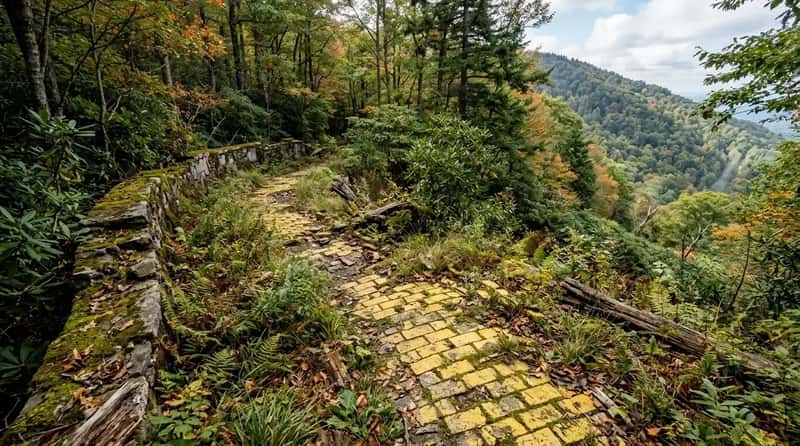
Someone actually built a full-scale Wizard of Oz theme park on top of a mountain in North Carolina – and for one glorious season, it worked spectacularly. Land of Oz drew 400,000 visitors in its very first year in 1970, making it one of the most successful roadside launches of the entire decade. Hot air balloon rides, costumed characters, and an elaborate Yellow Brick walking path through Munchkin Land and Emerald City made the whole thing feel genuinely cinematic.
Its popularity collapsed after its owner passed away and a fire destroyed the Emerald City section. The park closed in 1980, but the physical remains lingered on the mountaintop – overgrown yellow brick roads, abandoned animatronics, Dorothy’s empty house staring out over the Appalachians. The decaying park became more compelling as a ruin than it had ever been as a functioning attraction, which is either beautiful or deeply sad depending on your mood when you think about it.
#25 – Six Gun Territory, Ocala, Florida
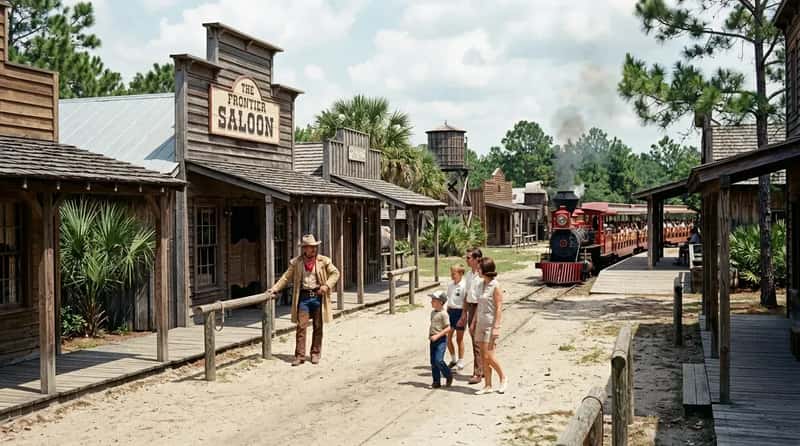
Before Disney swallowed Central Florida whole, small regional parks competed fiercely for the family road trip dollar – and Six Gun Territory was one of the best of them. For families driving up and down Florida in the late 1960s and 1970s, a stop in Ocala for staged gunfights and steam train rides was practically mandatory. Opened in 1963, the park offered saloons, cowboy-themed entertainment, and cheap admission that gave it a full afternoon of genuine value.
For many children of that era, it felt like a must-stop break between bigger destinations – the kind of place that fit perfectly in a world where regional attractions could compete without needing a castle or a mascot. After closing in 1984, the property was redeveloped and most visible traces disappeared. An entire Western town built between a highway and a citrus grove sounds implausible now. That’s exactly what made it perfect then.
#24 – Opryland USA, Nashville, Tennessee
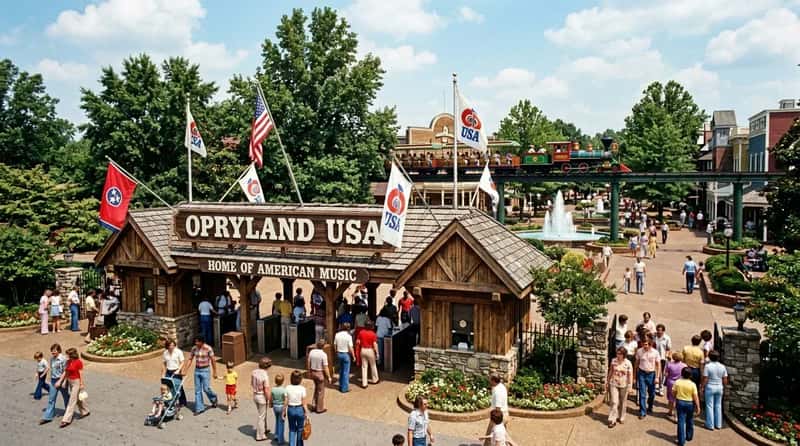
Nashville had a theme park before it had a tourist industry – and for millions of Americans, that park was the reason they ever visited the city in the first place. Opryland USA opened on May 27, 1972, billed as the “Home of American Music,” and averaged 2 million visitors a year during its peak seasons. It employed roughly 2,500 people per season and was Nashville’s top tourist attraction for every year it operated except one.
Opryland was closed and demolished after the 1997 season. On its site sits Opry Mills, a shopping mall that opened in 2000. Nashville natives have never really forgiven that decision. A mall replaced something genuinely irreplaceable, and the transactional logic that made it happen – more revenue per square foot – has never felt like an adequate explanation to the people who grew up spending their summers there.
#23 – Marineland of the Pacific, Palos Verdes, California
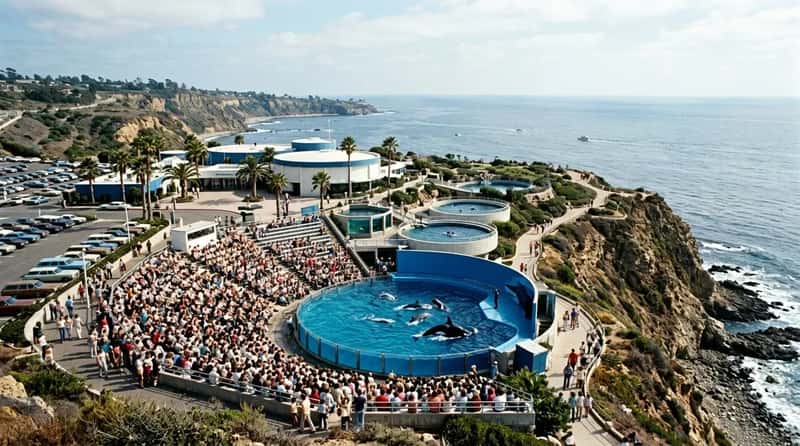
Southern California had its own world-class marine park long before SeaWorld became a household name – perched dramatically on the cliffs of the Palos Verdes Peninsula, with the actual Pacific Ocean spread out behind the tanks. Marineland of the Pacific was a genuine oceanographic wonder that shaped how an entire generation of West Coast kids understood marine life. In the 1970s, it was one of the most visited attractions on the entire coast.
The park tried to stay culturally relevant by operating as “Hanna-Barbera’s Marineland” in the late 1970s and early 1980s, which tells you everything about the financial pressure it was under. SeaWorld purchased it in 1987, transferred the animals, and closed the gates. The dramatic oceanfront site now sits as private property, its grandstand and tanks demolished, the cliffs returned to the kind of silence that makes it impossible to believe anything ever stood there.
#22 – Heritage USA, Fort Mill, South Carolina
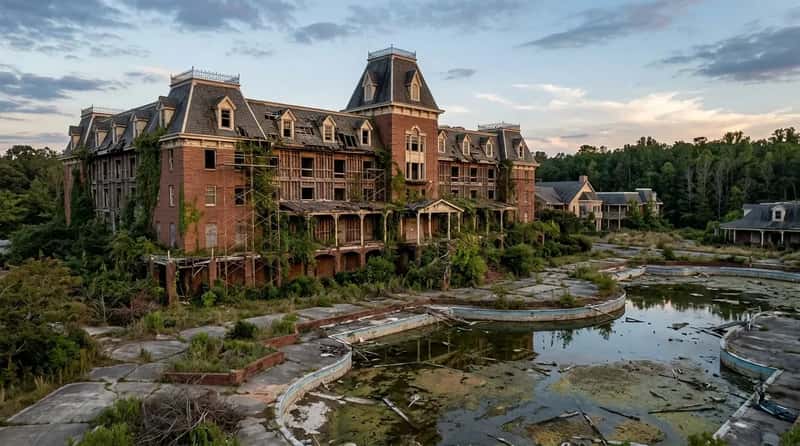
A Christian theme park that out-drew most secular competitors sounds impossible – but for a few years, Heritage USA was the third most-visited theme park in the entire country. Built by Jim and Tammy Faye Bakker in 1978 on a 2,300-acre site in Fort Mill, South Carolina, it drew nearly 6 million visitors a year at its peak in 1986. It had water parks, residential complexes, and enough genuine infrastructure to function as a small city.
The Bakker scandal and Hurricane Hugo damage in 1989 ended it. What remained was an enormous, slowly decaying complex that became one of the most surreal ruins on the East Coast – a collapsed dream on an almost incomprehensible scale. Some buildings have found new uses. Many stand exactly where they were, aging in the Carolina heat, which is somehow more unsettling than demolition would have been.
#21 – Adventureland, Bloomingdale, Illinois
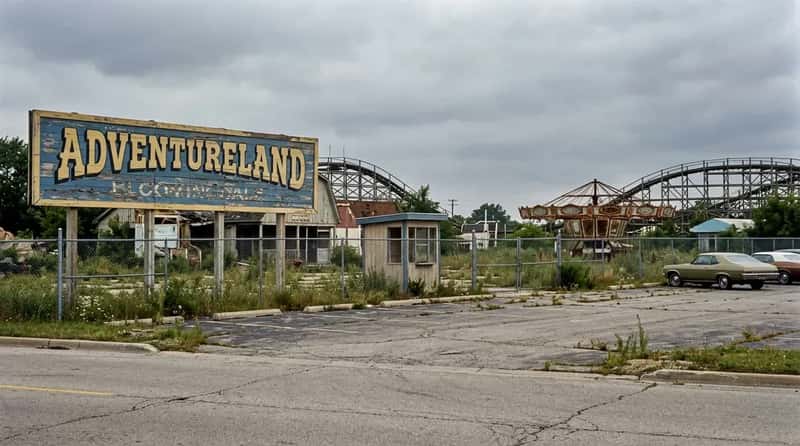
Illinois had its own homegrown answer to Six Flags – a park that generations of Chicago-area families considered their backyard adventure. Adventureland in Bloomingdale was the kind of modest regional park that felt enormous when you were nine years old and arrived with a pocket full of quarters. Originally opened as Storybook Park and renamed in 1961, it gradually expanded to attract older riders alongside its original young audience.
After its owner died in 1970, the park was run by his family until it was purchased by Medinah Investors. It closed in 1977, out-competed by Six Flags Great America. The rides were auctioned off. The land was rezoned. Within a decade there was nothing left to prove it had ever existed – which is the story that played out over and over across 1970s America, so many times that it stopped feeling like a tragedy and started feeling like weather.
#20 – Igloo City, Alaska
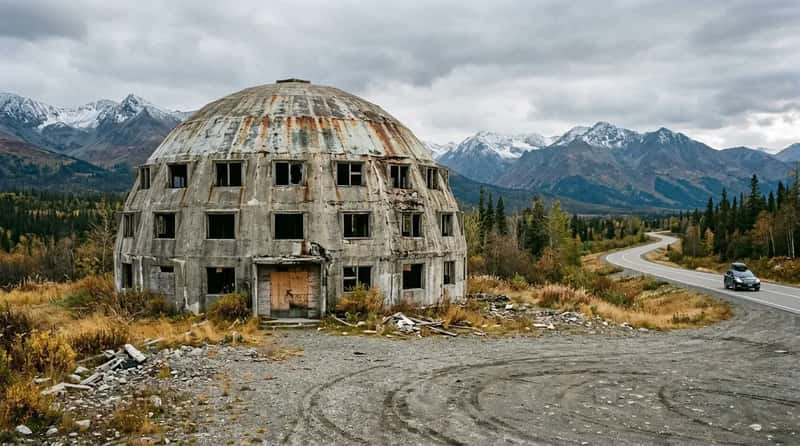
Someone once decided to build a four-story hotel shaped entirely like a giant igloo in the Alaskan wilderness – and the only thing stranger than the plan is how long the structure survived without ever opening. Igloo City, just off the George Parks Highway between Anchorage and Denali, was constructed in the 1970s with genuine commercial ambition. The building was never completed. Not a single guest ever checked in.
It sat empty beside the highway for decades, drawing rubberneckers from every passing vehicle, becoming more famous as an abandoned ruin than it ever would have been as a working hotel. For anyone making that Denali drive, it was an unavoidable, bewildering landmark – a monument to ambition that ran out of road. The structure eventually deteriorated beyond any possibility of use and was demolished. Only photographs remain, and the highway that never stopped moving past it.
#19 – The Mystery Fun House, Orlando, Florida
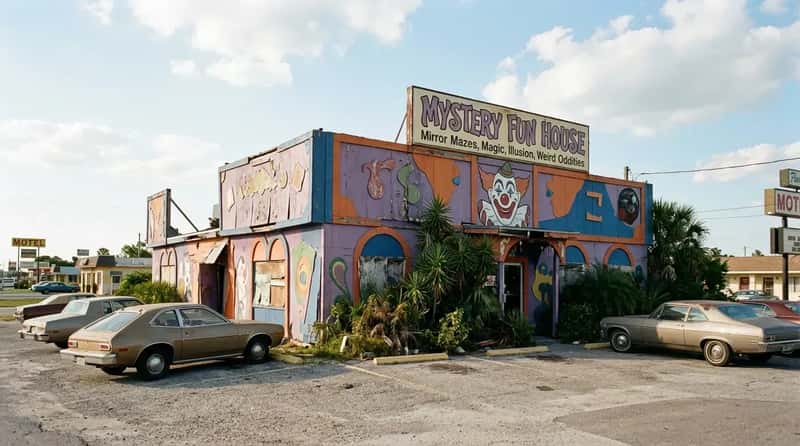
Before Orlando became a megaplex of branded theme parks, it had its own weird, independent attractions that gave the city much of its original personality. The Mystery Fun House, opened in 1976, was exactly the kind of gloriously strange roadside stop that made 1970s travel feel genuinely unpredictable. Mirror mazes, eerie lighting, and strange animatronics gave it a haunted-house quality even when it wasn’t trying – many visitors left feeling more uneasy than entertained, which was somehow the point.
The attraction closed in 2001, and its disappearance reflected exactly how Orlando’s tourism district moved: toward bigger, branded, committee-designed experiences that pushed out the oddball indoor attractions that once gave the strip its personality. Regulars insist no chain-run funhouse has ever come close. The chaos was real, the mirrors were legitimately disorienting, and it wasn’t designed by anyone who had ever attended a focus group. That’s precisely what killed it, and precisely what people who knew it can’t stop missing.
#18 – The Desert of Maine, Freeport, Maine
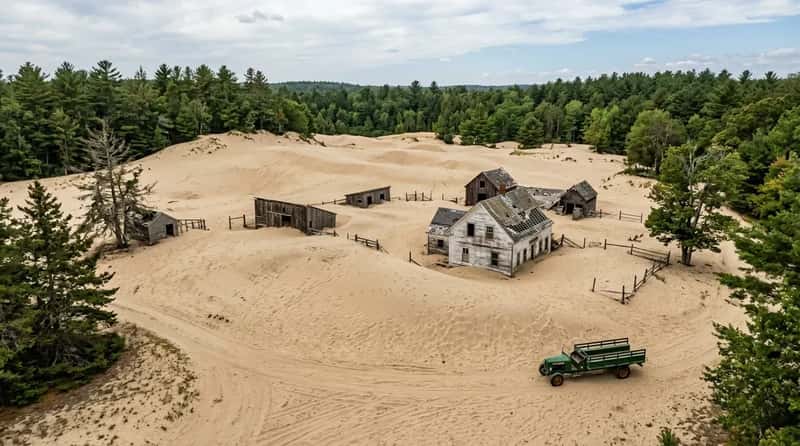
A real desert in the middle of Maine shouldn’t exist – but it does, and in the 1970s it was one of the most visited roadside curiosities in all of New England. The Desert of Maine is a natural geological oddity where a glacially exposed sand deposit gradually consumed an entire working farm, buildings and all. The attraction needed no embellishment; nature had already done the showmanship. Visitors would find the ghostly remains of farm structures half-buried in shifting dunes, which felt less like a roadside attraction and more like a small apocalypse.
The attraction still technically exists in a scaled-back form, but the sweeping 1970s experience – guided wagon tours, a gift shop full of bottled colored sand, the full theatrical treatment of something genuinely bizarre – is long gone. What remains is a quiet shadow of what made it famous. The desert is still there. The wonder attached to it, in that specific context, is not.
#17 – Storybook Forest, Ligonier, Pennsylvania
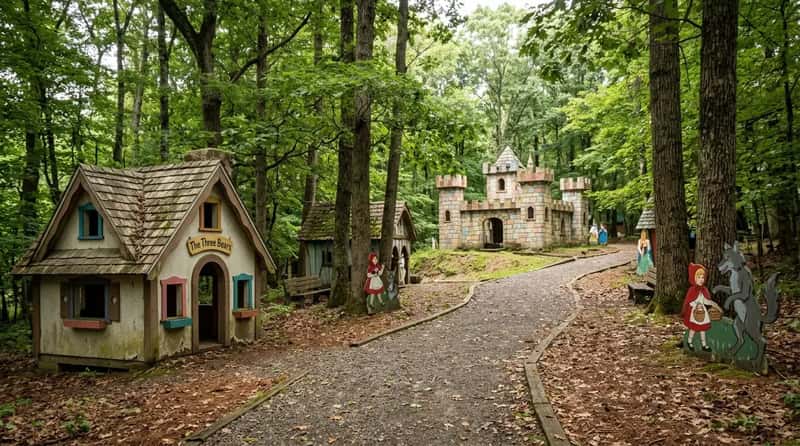
Fairy tale-themed parks scattered across the American countryside were a genuine industry in the postwar decades, and Storybook Forest in Ligonier was among the most beloved examples east of the Mississippi. Generations of Pennsylvania families made the drive to walk through plywood cottages representing every story they’d ever been read at bedtime. You could actually walk into the Three Bears’ house, climb past the Giant’s castle, and follow a winding path through scenes that existed nowhere else in the real world.
The appeal was pure tactile nostalgia – and it was hand-built, which meant every figure was painted by a local craftsman and every building had a specific, remembered smell. That intimacy couldn’t scale, and by the late 1970s, as gasoline prices spiked and family travel patterns shifted, the economics of small-scale storybook parks became impossible. The park opened in 1956 and became a fixture on the Western Pennsylvania family circuit for two decades before the math finally stopped working. That intimacy was the whole thing, and you can’t franchise intimacy.
#16 – Enchanted Forest, Hope Valley, Rhode Island
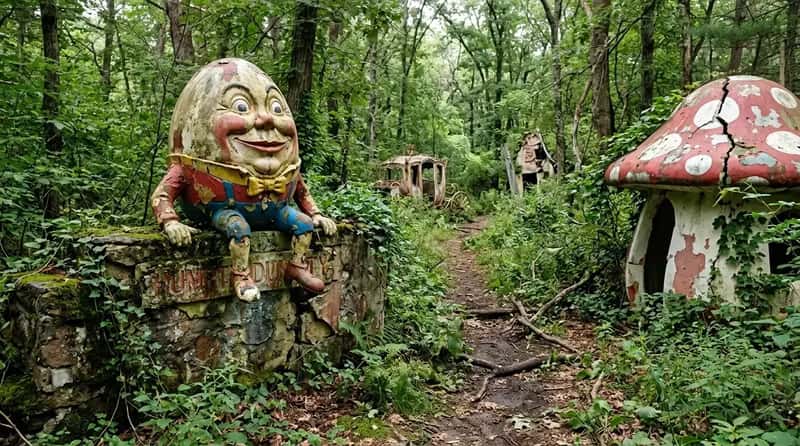
New England’s answer to the storybook park craze was Enchanted Forest in Hope Valley – a fairy tale walk-through that operated from 1971 to 2005 and became the default summer memory for thousands of Rhode Island kids. It survived long enough to become genuinely nostalgic before it even closed, which is an unusual achievement. Giant Humpty Dumpty figures, Cinderella coaches, and cracked mushroom houses lined winding woodland paths that existed in a specific register between whimsy and low-grade unease.
When the company ran out of money and abandoned the park, they left everything exactly where it stood. The images that circulated afterward – crumbling figures, overgrown paths, faded paint – became a kind of accidental art installation that attracted more online attention than the park had received in its final operating years. For the families who visited in the 1970s and ’80s, those images hit differently. What happened to it after 2005 only deepened what it had always meant.
#15 – Johnson’s Wishing Well Amusement Park, Milwaukee, Wisconsin
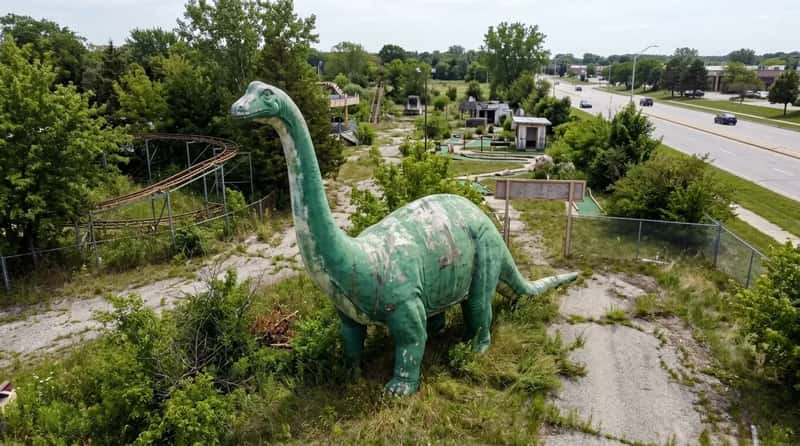
Milwaukee had its own backyard amusement complex that served as the de facto summer escape for the city’s working-class families for three straight decades. Johnson’s Park packed a waterslide, go-karts, mini golf, and carnival rides onto a relatively small footprint – and somehow it felt like the most complete place in the world if you were ten years old. The park started in the 1960s and ran as a summer staple until the 1990s, when it finally closed.
Most of the park stood until 2007, when it was demolished – except for a giant fiberglass dinosaur that had anchored the park’s identity for years. That dinosaur outlasted everything around it, still visible from the road like a sentinel guarding an empty lot, eventually becoming a folk art landmark that attracted more visitors after the park was gone than it had when the gates were open. The 1970s version of the park, before the long decline set in, was the real thing. The people who were there know exactly what that means.
#14 – Fort Dobbs, Abilene, Texas
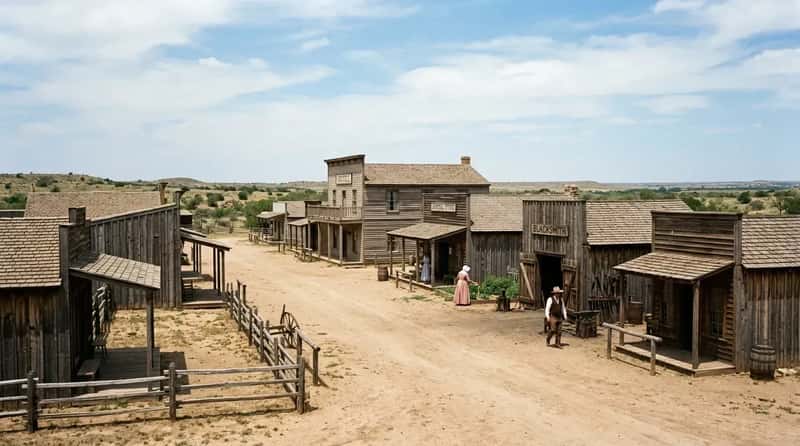
Frontier-themed parks were everywhere in 1970s Texas, but Fort Dobbs tried to take the concept seriously – a full Western town experience with working crafts, period costumes, and staged historical events that went well beyond the usual shoot-’em-up formula. It drew on the genuine frontier history of the Abilene area and presented it as immersive theater rather than simple spectacle. The kind of place that made history feel accessible to a nine-year-old in a way no textbook ever could.
Like so many of its peers, Fort Dobbs was caught between two worlds – too elaborate and labor-intensive to compete on price, too modest to compete with the scale of major theme parks spreading across the South and Midwest. The park quietly closed as the decade wound down. The buildings were dismantled. The costumed interpreters went home. The land that had been a living frontier town became a field again, which is a sentence that could be written about hundreds of places from that era and would always carry the same weight.
#13 – Frontiertown, Ocean City, Maryland
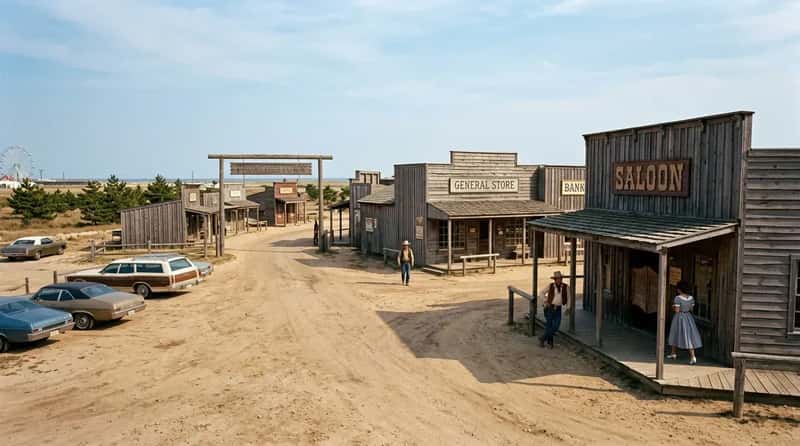
The Maryland shore had its own Wild West – and for decades, it coexisted improbably with the boardwalk and the Atlantic Ocean. Frontiertown near Ocean City was a full-scale Western town that drew beach vacationers inland with horseback riding, canoe trips, and staged cowboy shows. The combination of saltwater tourism and dusty frontier theater shouldn’t have worked. It absolutely did, and families built annual rituals around the combination for years.
The attraction operated from the 1950s through various configurations into the 1970s and beyond, but the classic roadside version – unbranded, independently run, staffed by people who genuinely seemed to enjoy the work – belonged to that decade. As corporate beach resort development accelerated along the Delaware and Maryland coasts, the economics of a Western theme attraction became increasingly difficult to justify. What’s left of the Frontiertown name has been absorbed into a campground complex. The spirit of the original vanished along with the generation that made it profitable.
#12 – Buccaneer Bay at Weeki Wachee, Florida
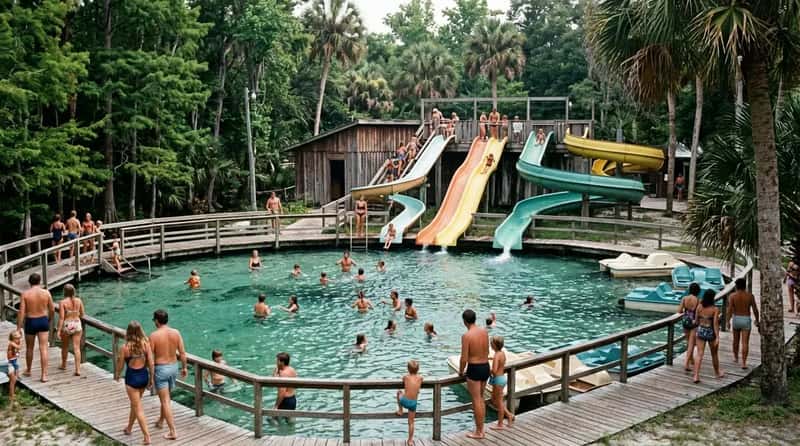
Weeki Wachee Springs and its famous underwater mermaid shows survived into the modern era – but the sprawling roadside complex that surrounded the attraction in the 1970s quietly evaporated. At its peak, Weeki Wachee wasn’t just a mermaid show. It was an entire roadside resort ecosystem with a water park, animal exhibits, and boat tours that made it a full-day destination. The mermaids were the headline act, but the supporting cast was just as important to why families planned their entire Florida route around this single stop.
Today Weeki Wachee survives under state management, but in a very different form. The Buccaneer Bay water park built directly over the natural spring system – the lazy river, the waterslides, the sprawling complex that made the 1970s version feel like its own small world – has been scaled back dramatically. The attraction that exists today bears little resemblance to what those road trip families remember. The springs are still there. Everything built around them is mostly a memory.
#11 – Lookout Mountain’s Independent Attractions, Tennessee
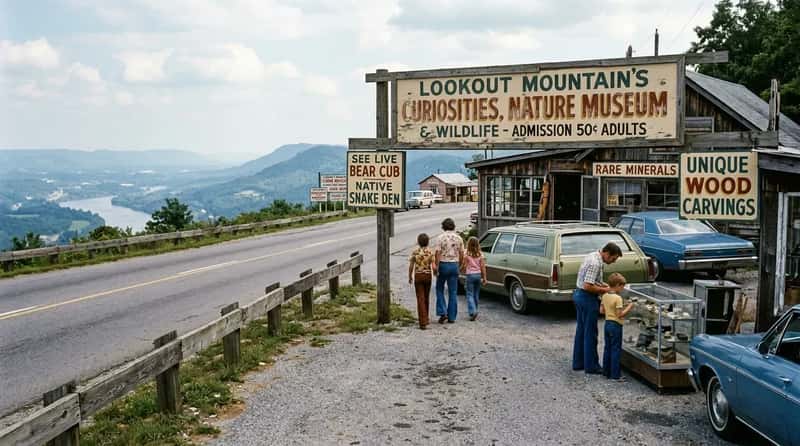
Lookout Mountain above Chattanooga was once ringed with roadside attractions that turned a single scenic overlook into an all-day excursion. Small operators set up curated wildlife exhibits and nature experiences along the switchback roads, each competing for the same family stopping to stretch their legs on the way to Chattanooga. The underlying idea was simple and American: that nature itself, properly framed, was enough of a spectacle to charge admission for.
Rock City survived and became an institution, but most of the smaller independently operated nature exhibits and overlook attractions that clustered around it in the 1970s did not. The late-’70s energy crisis hit travel-dependent roadside businesses especially hard – when families started cutting road trips short to save on gas, the marginal attraction two exits past the major landmark was always the first to go. The mountain roads that once felt lined with discovery now connect a handful of surviving names surrounded by long stretches of ordinary highway.
#10 – Glenrio Ghost Town, Texas/New Mexico Border
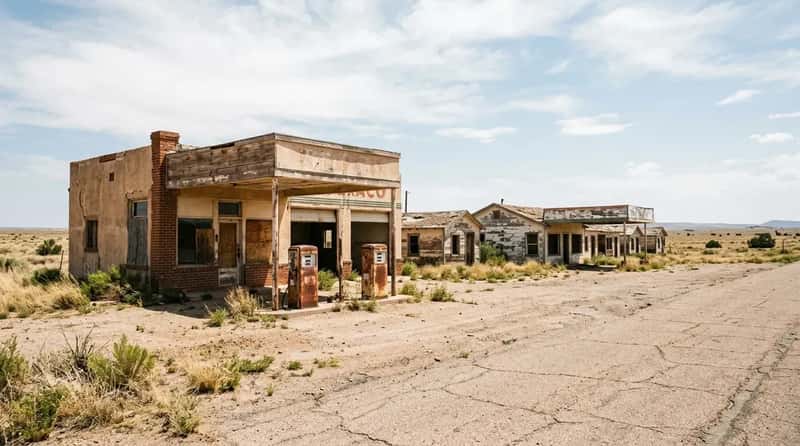
Glenrio wasn’t a created attraction – it was a real town that Route 66 made famous, and then an interstate highway killed. By the 1970s, Glenrio had become one of the most perfectly preserved examples of roadside Americana in the country: gas stations, motels, and diners sitting intact along the old alignment, abandoned but not yet collapsed, looking exactly like a Hollywood backlot recreation of the American West. Travelers went out of their way to see it.
Interstate 40 was built in 1975, bypassing the town entirely. Glenrio became another roadside casualty along Route 66 and is now listed on the U.S. National Register of Historic Places – which kept it from being demolished but didn’t bring anyone back to live there. What you see at Glenrio today is essentially what 1970s travelers saw: a frozen snapshot of the moment American highway culture abandoned an entire way of life and didn’t look back once.
#9 – Santa Cruz Boardwalk’s Lost Surrounding Attractions, California
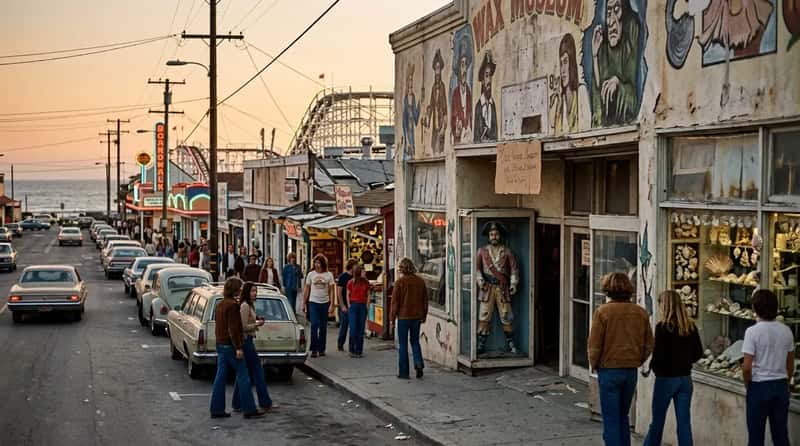
The Santa Cruz Beach Boardwalk itself survived, but the sprawling collection of independent roadside oddities that once clustered around it – animal shows, wax museums, boardwalk-adjacent curiosity shops – faded one by one through the 1970s and ’80s. The boardwalk environment in its 1970s form was a genuinely different experience than what visitors find today: looser, stranger, and full of operators willing to try anything once without anyone’s approval.
The wax museum near the boardwalk entrance drew steady traffic throughout the decade before succumbing to changing tastes and rising property values. Sideshow operators and funhouse managers who had worked the California coast for decades aged out of the business without successors. What replaced them was cleaner, safer, and more profitable – and about a third as interesting. The modern boardwalk is a well-run entertainment complex. The 1970s version was something messier and harder to define, and that’s exactly what the people who experienced it can’t stop talking about.
#8 – Hanna-Barbera Land, Kings Island, Ohio
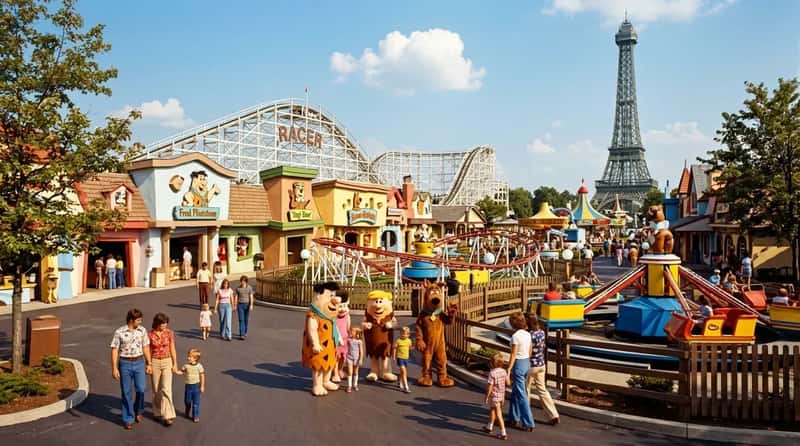
Hanna-Barbera Land inside Kings Island was the specific zone that an entire generation of Ohio and Midwest kids identified as the most magical place they had ever been. The Flintstones, Scooby-Doo, and Yogi Bear roaming a dedicated themed section of one of America’s best regional parks was, for 1970s children, genuinely overwhelming in the best possible way. Kings Island opened in 1972 and immediately established Hanna-Barbera Land as its emotional centerpiece for young visitors.
The zone survived for years but was eventually rebranded, rethemed, and dissolved as the Hanna-Barbera license aged out of cultural relevance. The rides remain – the Racer roller coaster that anchored the park in 1972 still runs today – but the specific world of cartoon characters wandering that specifically 1970s-feeling area is completely gone. Ask any Ohio native who visited as a child, and they’ll give you the exact year they noticed it had changed. That’s how specifically this kind of loss lives in the memory.
#7 – Reptile Gardens’ Original Format, Rapid City, South Dakota
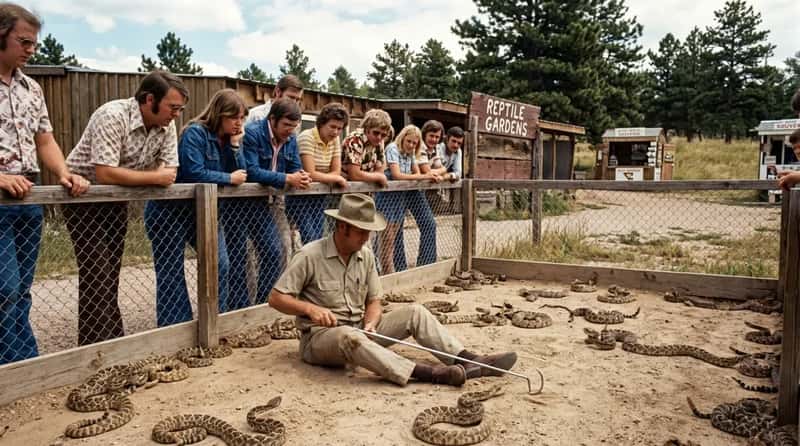
Reptile Gardens near Rapid City survived long enough to become a legitimate roadside institution – but the version that existed in the 1970s was a rawer, stranger, more genuinely dangerous-feeling experience than anything that exists today. The original format let visitors get closer to alligators, rattlesnakes, and Komodo dragons than any modern liability lawyer would ever permit. A handler in a khaki shirt would sit inside a pit of rattlesnakes while visitors leaned over a low fence. That proximity was the entire point. You were supposed to feel a little afraid.
The park ultimately cleaned itself up, expanded responsibly, and is still in operation – which makes it a genuine survivor in a field full of casualties. But the specific 1970s flavor, where the danger was real and the experience was calibrated around that reality, has been methodically replaced by safer, more managed encounters. The thrill was real precisely because the danger was real. That version of Reptile Gardens belongs entirely to the decade that produced it and the parents brave enough to bring their kids.
#6 – Magic Mountain’s Original Incarnation, Golden, Colorado
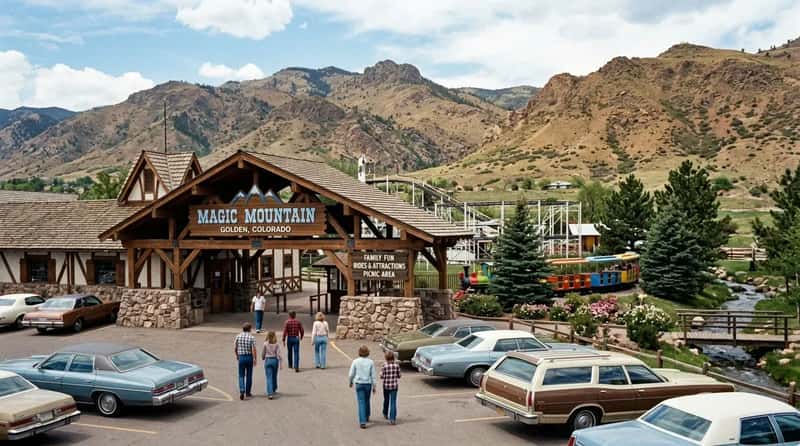
Before Magic Mountain became the brand synonymous with California thrills and record-breaking coasters, there was an entirely separate Magic Mountain in Golden, Colorado – a modest, mountain-setting family park that drew visitors with alpine charm and small-scale rides. It represented the regional park ideal at its most sincere: a locally owned attraction that didn’t need a single recognizable IP to sell tickets, set against a backdrop that California’s version could never replicate.
The Colorado park operated through the 1970s before closing, another casualty of competition from larger regional parks and the difficulty of maintaining a mountain-access attraction against rising operational costs. It’s a near-perfect example of how the same name can mean completely different things. Generations of California coaster fans have no idea that a gentler, more pastoral Magic Mountain once existed in the Rockies – drawing families who’d never set foot on a loop-the-loop and didn’t want to. That version of the name, and the experience attached to it, is gone entirely.
#5 – Cheyenne Frontier Days’ Midway Attractions, Wyoming
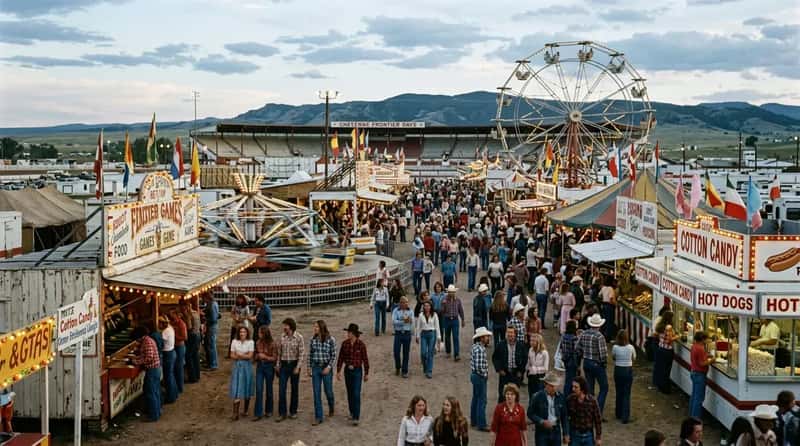
Cheyenne Frontier Days itself is still very much alive – but the sprawling carnival midway and independently operated roadside attractions that clustered around the event grounds in the 1970s operated under a completely different set of rules than anything permitted today. The 1970s midway was a place where you could actually get hurt, where the games were genuinely rigged, and where the food was prepared by people who had been following the carnival circuit since before you were born. That was not a bug. That was the feature.
The traveling operators who set up around the edges of major Western events like Frontier Days were a specific American subculture that largely ceased to exist by the 1990s. Tighter regulation, insurance requirements, and changing public expectations squeezed out the independent carny operators one by one. What replaced them are sanitized, corporate-managed midways that are objectively safer and subjectively about one-tenth as memorable. The peculiar danger and authenticity of the 1970s version wasn’t incidental to the experience – it was the experience, and that specific flavor of American weirdness has no modern equivalent.
#4 – The Original Wonder World Cave, San Marcos, Texas
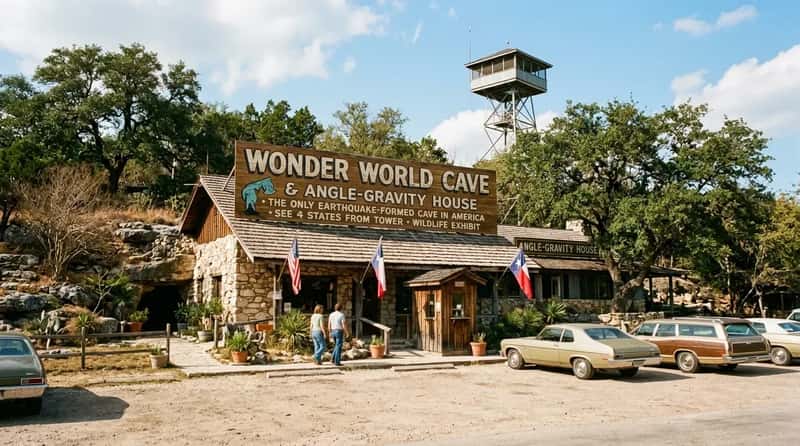
Natural cave attractions were a genuine roadside staple in 1970s Texas, and Wonder World Cave in San Marcos was among the strangest – built around an earthquake fault line and marketed with an audacity that only the pre-internet era could support. Wonder World claimed to be the only cave in the United States formed entirely by an earthquake. For 1970s travelers, that was exactly the kind of specific, unverifiable claim that made you pull off the highway without a second thought.
The cave itself is real and still exists in a modified form, but the original roadside-attraction wrapper – the anti-gravity house, the Texas Wildlife Exhibit, and the tower that claimed to let you see four states on a clear day – operated with a 1970s showmanship that has been gradually professionalized out of existence. The gap between what the signs promised and what you actually found inside was part of the charm. Modern attractions are careful never to oversell. That’s precisely why they’re less memorable. Wonder World in its original form oversold brilliantly, and the families who drove up that long driveway in 1973 still tell the story.
#3 – The Muffler Men Circuit, Various U.S. Highways
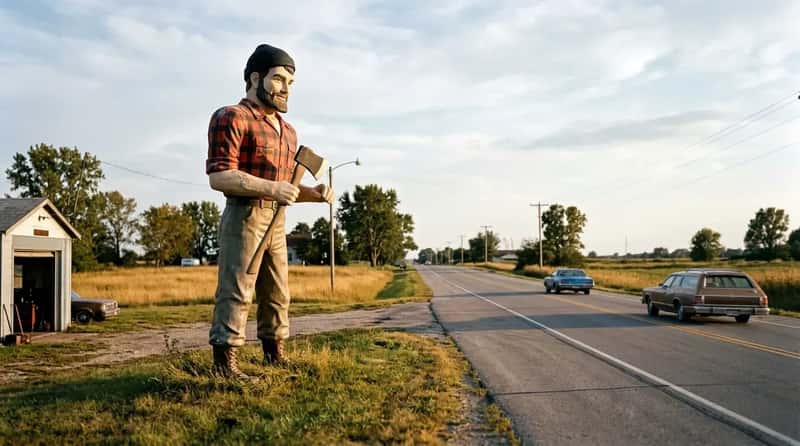
Scattered along American highways in the 1970s, Muffler Men were the unofficial mascots of independent roadside business – giant fiberglass figures, originally manufactured as advertising statues, that businesses adapted into cowboys, Paul Bunyans, lumberjacks, and alien figures standing 20 feet tall beside the road. At their 1970s peak, hundreds of these figures stood along U.S. highways, each one a kind of analog signal that something worth stopping for existed nearby. When photographer John Margolies began his decades-long road trip documentation in the early 1970s, he started with these figures, driven by fear they’d soon disappear.
He wasn’t wrong. The ones that survived did so by accident – businesses closed but nobody bothered to knock the statues down, or a local preservationist intervened at the last moment. The network of them that made 1970s highway driving feel like a continuous scavenger hunt is gone, replaced by exit signs for chains that look identical from Maine to California. What Margolies photographed wasn’t just statues. It was an entire visual language of American commerce that spoke in fiberglass and hand-painted lettering and is now completely silent.
#2 – The Original Stuckey’s Pecan Shoppes, Southern U.S.
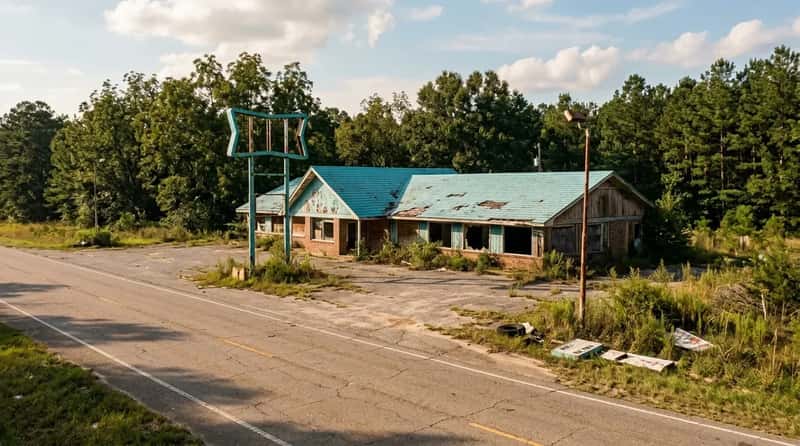
Stuckey’s technically still exists, but the original network of roadside pecan shops that defined American road trip culture in the 1970s is a fundamentally different thing from the branded remnants that survive today. At its peak, Stuckey’s operated more than 350 locations, and stopping for a pecan log roll was as much a part of the American road trip ritual as filling the gas tank. The turquoise roofs were visible from the highway a quarter-mile before the exit, and children in back seats watched for them like landmarks on a treasure map.
The company went through multiple ownership changes, closures, and contractions after the 1970s oil crisis upended the economics of highway travel. The brand is now being revived under new ownership with genuine enthusiasm, but the specific network of 1970s locations – each staffed by people who recognized your family because you stopped every summer – is as gone as the decade itself. Nostalgia can bring back the candy. It can’t bring back the context that made the candy matter.
#1 – Route 66’s Complete Roadside Ecosystem
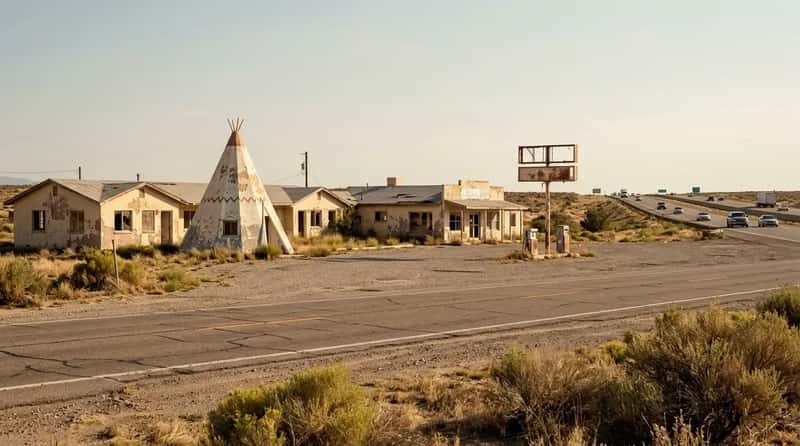
No single attraction defines lost 1970s roadside America more completely than Route 66 taken as a whole – not just a road but an entire economy, culture, and way of being in America that was systematically dismantled by the interstate highway system. By the mid-1970s, Route 66 was being bypassed mile by mile, and the attractions that had grown up along it – trading posts, wigwam motels, dinosaur parks, drive-in theaters – were dying in real time, often without anyone in the wider world noticing. Route 66 stretched nearly two-thirds of the continent through eight states; by 1984, it was officially decommissioned.
When John Margolies began documenting these structures in the early 1970s out of fear they’d soon disappear, he was describing exactly what was already happening. The specific ecosystem of independent operators, family-run motels, and hand-painted signs that made Route 66 famous in its prime was gone before most Americans realized it was going. Preserved neon signs, revived diners, and restored motels keep the road’s quirky traditions technically alive today. But the people who drove it in 1971 – when the gas was cheap and the motels were eight dollars a night and the trading post owner actually lived in the back – they know the difference between preservation and the living thing.
These 31 attractions represent something bigger than nostalgia: a complete mode of American travel that existed for roughly thirty years and then was gone. The interstate system didn’t just reroute traffic – it made the entire concept of the roadside detour culturally irrelevant. When you can get anywhere faster by staying on the highway, there’s no reason to exit for a 20-foot fiberglass cowboy or a hillbilly-themed trout park. The 1970s was the last decade when that exit still made complete sense – when the strange and the handmade and the locally dreamed were still economically viable forms of entertainment. What’s your most vivid memory of a roadside attraction that no longer exists? The places that never made any list are the ones people remember most fiercely, and the people who remember them are the only record we have left.