

Most people assume a welcoming home is about expensive furniture, perfect paint colors, or a spotless floor. Turns out, they’re almost entirely wrong. The details that make guests feel genuinely at ease – the kind where they exhale, sink into the couch, and never want to leave – have almost nothing to do with budget or square footage. They’re small, specific, and surprisingly easy to overlook, even by the people who live there every single day.
Some of these you’ll recognize instantly because you’ve felt their absence in someone else’s home without ever being able to name it. Others will quietly surprise you – not because they’re complicated, but because they’re so obvious once you see them. A few of the most powerful ones are near the bottom of this list, and they have nothing to do with decor at all.
#33 – A Front Door That Looks Like Someone Lives There
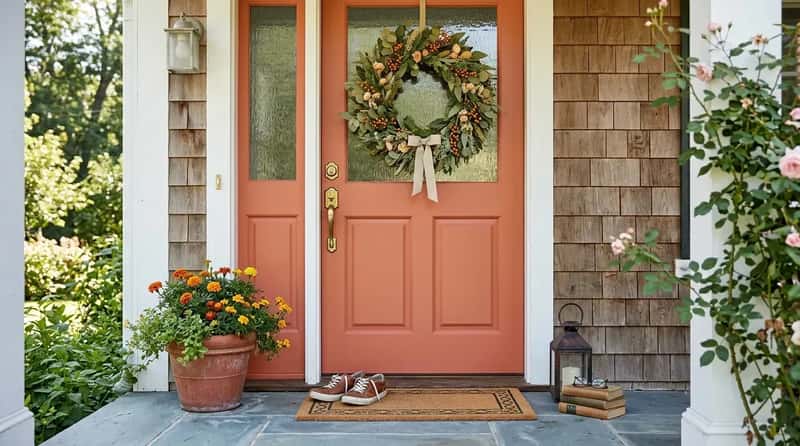
The front door is the handshake before the handshake. A faded, dirty, or neglected door tells guests the whole story before they’ve even knocked. A freshly painted door – even in a bold, specific color – signals that someone inside actually cares about the experience of arriving. It’s the single most impactful exterior detail per dollar spent in the entire home.
A warm coral, a confident red, or a muted powder blue reads as deliberate rather than default. Add a lush, well-maintained wreath and you’ve created a first impression that almost no amount of interior decorating can override. Guests decide whether they feel welcome before they step inside – and the door is Exhibit A.
Fast Facts
- A freshly painted front door is consistently ranked among the highest-ROI exterior upgrades a homeowner can make.
- Bold door colors – red, navy, black, deep green – read as deliberate and confident rather than accidental.
- A wreath signals active maintenance; a bare door signals a home that has stopped noticing itself.
- First impressions at the door form within seconds and are extremely difficult to override once set.
#32 – Plants Near the Entrance That Are Actually Alive

Dead or artificial plants near the front door are arguably worse than no plants at all. They signal neglect – the decorative equivalent of a broken promise. Living plants near the entrance don’t just look good; in many cases they smell extraordinary. There’s a reason real estate stagers and garden centers both reach for greenery first – it works on an almost primal level.
Whether it’s a few small succulents on a window ledge or a larger potted statement plant flanking the door, greenery signals that someone tends to this place with intention. Research published in the journal Frontiers in Psychology found that fragrant flowering plants in indoor spaces produced measurable reductions in stress, while studies reviewing 50 separate trials on indoor plants found the most significant effect was that they simply made people feel happier. Lavender or climbing jasmine on either side of a door creates a welcoming scent that greets visitors before the door even opens – and that sensory welcome is something no doormat or door knocker can replicate.
#31 – A Clear, Unobstructed Entryway

The entryway sets the emotional tone before guests have seen a single room. Their brain decides how to feel about the space within seconds of crossing the threshold. A cramped or cluttered entry creates a subtle but real tension – the brain reads blocked passages as mild threat and open paths as safety. This is psychology, not preference.
Guests immediately notice if they have to navigate around shoes, bags, or coats just to get inside. The lighting in this space can make the difference between a warm welcome and an awkward fumble in the shadows. A clear path with intentional, good lighting tells visitors that someone thought about the experience of arriving here – which is exactly the message a welcoming home wants to send.
#30 – A Spot Specifically for Guests’ Belongings
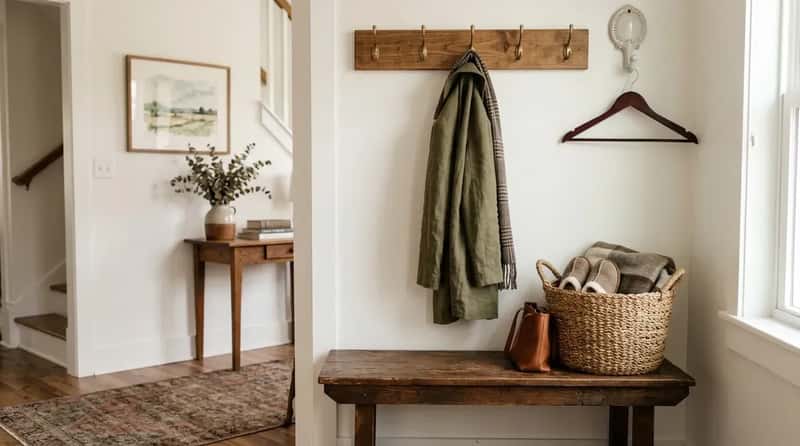
This is one of those details so specific that only genuinely hospitable homes have it. A hook, a basket, a small bench – something that says: “I expected you and I made room for you.” Most homes force guests to either hold their coat for the entire visit or awkwardly pile it somewhere uninvited. Both situations create a low-grade discomfort that colors the whole experience.
When there’s a hook with open space on it and a small surface at the right height, guests relax immediately. That seat near the door – the one meant for removing shoes or setting down bags – does more emotional work than almost any piece of furniture in the house. It’s hospitality made physical. Proof that you thought about them before they walked in.
#29 – Lighting That Doesn’t Feel Like a Doctor’s Office
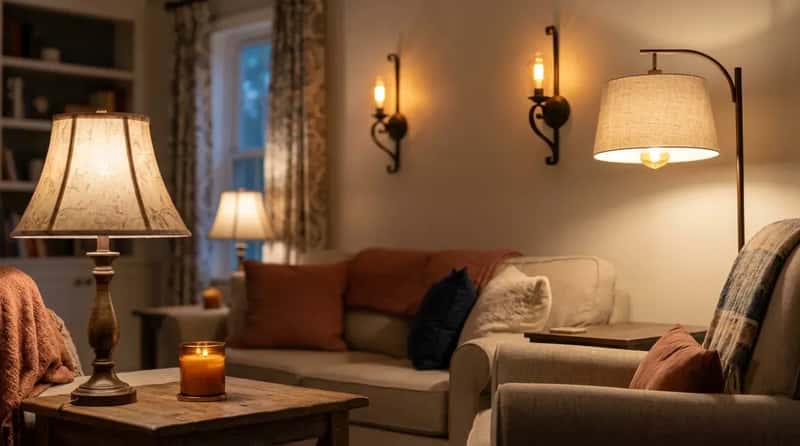
Overhead lighting at full blast is one of the most underrated ways a home accidentally repels people. A single bare overhead bulb at maximum brightness communicates nothing so much as an interrogation room – technically lit, but hostile to comfort. Warm colors and soft light are what separate a welcoming room from a harsh one, and the quality of the light matters just as much as the color temperature.
The fix is simple but meaningful: lamps at multiple heights, warm-toned bulbs, and a dimmer switch where possible. Natural light uplifts and energizes; warm, layered evening light comforts and calms. Replacing harsh overheads with floor lamps, sconces, and candles creates an atmosphere that guests feel within seconds of entering – even if they’d never think to mention it.
At a Glance: Lighting That Actually Welcomes
- Bulb color temperature: 2700K–3000K (warm white) for living spaces; avoid cool 5000K+ bulbs in social rooms.
- Layer the sources: Overhead + floor lamp + table lamp creates depth; a single overhead creates flatness.
- Dimmer switches: One of the cheapest, highest-impact upgrades in any room guests gather in.
- Candles: Deliver both warm light and scent simultaneously – a rare sensory double-play.
#28 – Natural Light That’s Actually Let In

Heavy drapes kept permanently shut are one of the quiet hospitality killers that most homeowners stop noticing. Natural light improves mood, regulates circadian rhythm, and makes spaces feel larger and more generous. Guests feel this even if they can’t articulate why – rooms with real daylight simply feel more alive. Rooms without it feel slightly closed off, like a space that’s keeping a secret.
Truly welcoming homes treat natural light as a resource to be maximized, not a problem to be blocked. Sheer curtains, pulled-back blinds, and clean windows are unglamorous details – but they’re among the most powerful ones in the house. The difference between a room that feels alive and one that feels stale is often just a pair of open curtains and five minutes of effort.
#27 – A Home That Smells Like Something Good (Not Just Neutralized)

Here’s the uncomfortable truth about your home’s scent: you’ve almost certainly stopped noticing it. That lingering cooking odor, pet smell, or faint mustiness hits guests the moment they walk in – and scent is the sense most directly tied to memory and emotion. This is why guests can smell things owners genuinely cannot. The adaptation is total and invisible to the person living there.
The goal isn’t to saturate the house with synthetic fragrance – that can be just as off-putting as the problem it’s covering. Research consistently shows that general satisfaction with a scented environment is actually higher with a subtly fragrant source than an intensely fragrant one. The goal is a genuinely fresh baseline with one warm note layered on top. Candles, fresh flowers, or the smell of something recently baked signal a curated atmosphere of care – and unpleasant underlying odors from pets or dampness create a subconscious negative impression that no beautiful sofa can undo.
#26 – Furniture Arranged for Conversation, Not Just the TV

Walk into most American living rooms and every seat faces the television. It’s a subtle but real message: the screen is the point, not the people. Truly welcoming homes position at least some seating so that guests face each other. The arrangement of furniture is a silent social contract – it tells visitors whether they’re expected to watch something or actually talk to someone.
If guests have to awkwardly maneuver around furniture just to find a seat, they notice. Rooms that allow easy movement and natural eye contact feel more welcoming almost immediately. The most hospitable rooms usually do both – they accommodate the TV and the conversation – but they always make face-to-face connection feel effortless rather than like a deliberate choice someone had to make.
#25 – Throw Blankets That Are Actually Accessible
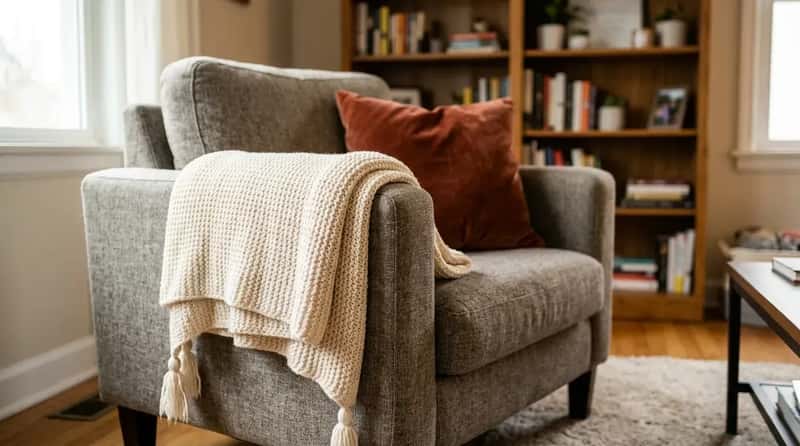
A throw blanket folded casually over a couch arm is one of the most universally understood signals of comfort in the American home. But there’s a version of this that backfires: the decorative throw arranged so perfectly it looks like a museum exhibit. Guests won’t touch it. Draping a blanket only works as a hospitality signal when it actually looks usable – not display-only.
Bare walls and a total absence of textiles make a home feel cold and institutional in a way that’s hard to pin down but easy to feel. Cushions and throws add texture, softness, and visual warmth simultaneously. The best versions of this detail are slightly imperfect – casually draped rather than architectural. A blanket that looks like it was used this morning is more welcoming than one that’s never been touched. Lived-in beats pristine every single time.
#24 – A Rug That Anchors the Room
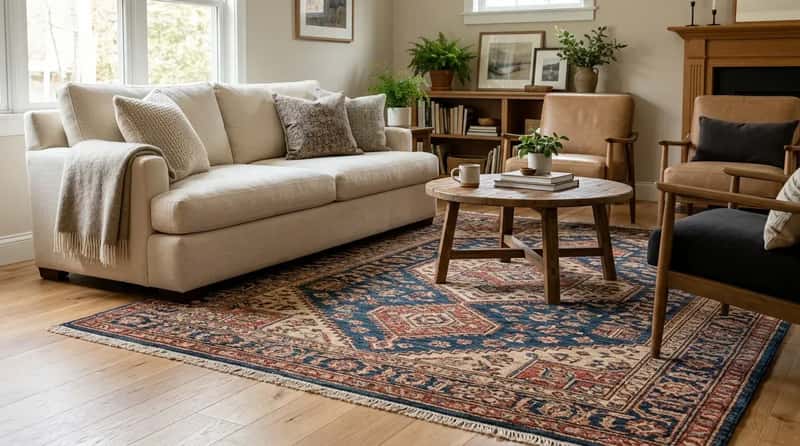
Rooms without rugs feel like waiting rooms – technically furnished but missing something fundamental. A rug does several things at once: it defines the seating area, softens footstep sounds, adds warmth underfoot, and visually signals that this space was intentionally designed for people to be comfortable in it. Even a flat-weave rug accomplishes more than most people expect until they remove one and suddenly feel the absence.
The right rug is felt before it’s consciously noticed – which is exactly how the best hospitality details work. Think about how an outdoor rug pulls a patio together and you’ll understand the significance. Visual appeal draws the eye, but texture invites emotion. Soft velvets, thick pile, brushed fibers – they all translate into a sensory experience that tells guests: this space was designed for actual human comfort, not just photographs.
#23 – Soft Background Sound (Not Silence, Not Noise)
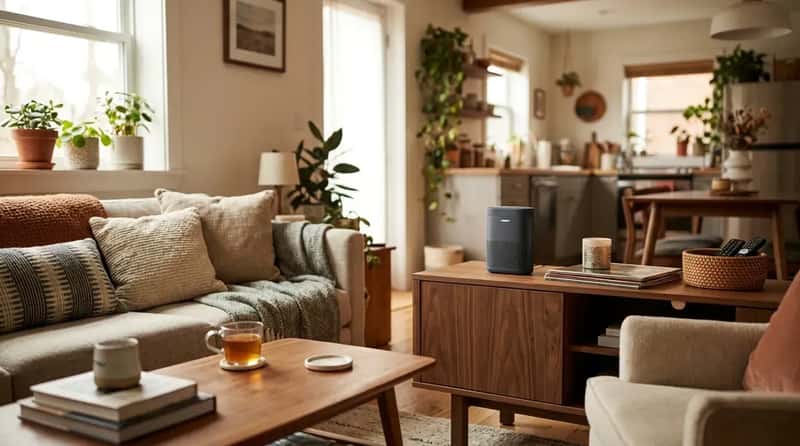
Dead silence in a home makes guests hyperaware of themselves in a way that’s genuinely uncomfortable. Every cough, every sip of water, every shifted seat feels amplified and performed. Most people don’t realize how much quiet affects them until they’re in it – and most hosts never think about it at all, which is exactly why it keeps catching guests off guard.
A light, unobtrusive playlist adds warmth without dominating the atmosphere. Something instrumental, something ambient, something that no one feels the need to comment on – that’s the target. The right background sound makes a room feel alive without demanding attention. The best hosts have this dialed in without anyone ever mentioning it, which is precisely the point. Music in a welcoming home is felt, not heard.
Quick Compare: Background Sound Done Right vs. Wrong
- Right: Soft instrumental, low jazz, or ambient playlists at conversational volume (50–60 dB range).
- Wrong: Complete silence – amplifies every small social noise and creates subtle self-consciousness.
- Wrong: TV left on in the background – demands attention and competes with conversation.
- Right: Music nobody has to comment on or turn down – invisible warmth is the goal.
#22 – Framed Personal Photos Displayed With Intention
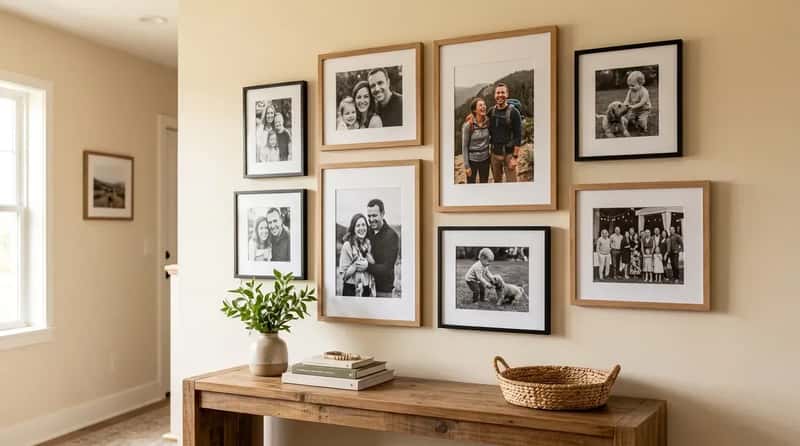
Generic art prints aren’t bad, but they don’t do what framed personal photos do: tell guests that real, specific people live here and genuinely love each other. Guests don’t just see the photos – they feel the evidence of a life being lived and a family being celebrated. That warmth is something no throw pillow or carefully chosen paint color can manufacture from scratch.
In the digital age, most photos are taken and never seen again. Printing a curated selection and framing them is one of the highest-return things a homeowner can do for the emotional feel of a space. The key word is “intention” – a wall of 40 mismatched frames feels chaotic, not personal. A grouping of six to ten in cohesive frames tells a story guests actually want to read, and quietly makes them feel like they already know you a little.
#21 – Surfaces That Have Breathing Room
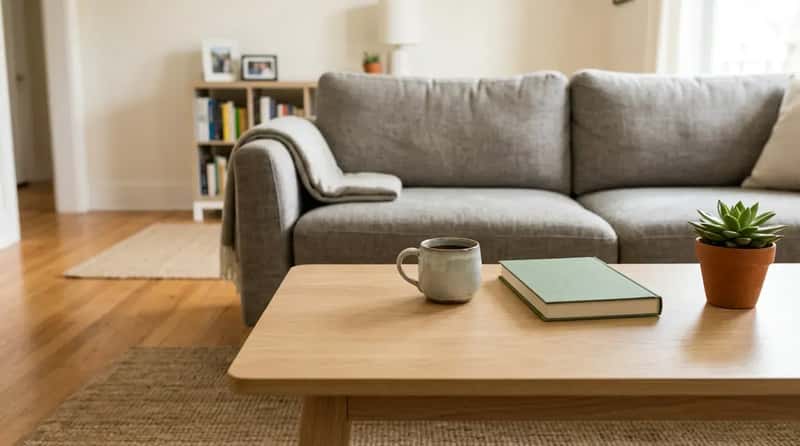
Cluttered surfaces are one of the fastest ways a home signals stress rather than comfort – and most homeowners genuinely stop seeing the clutter after months of living with it. Before guests even register the furniture or the paint color, their brain is already processing how crowded or open the space feels. Clutter reads as chaos. Breathing room reads as calm.
Nothing undermines a welcoming atmosphere quite like guests having to move things just to set down their drink. The homes that feel most instantly comfortable typically have surfaces that are roughly 70 percent clear – enough to feel lived in but with enough open space that there’s room for another person’s presence. That visual breathing room is one of the most underrated sources of ease in any interior, and one of the easiest to fix.
#20 – A Bowl of Real Fruit or Snacks on the Counter
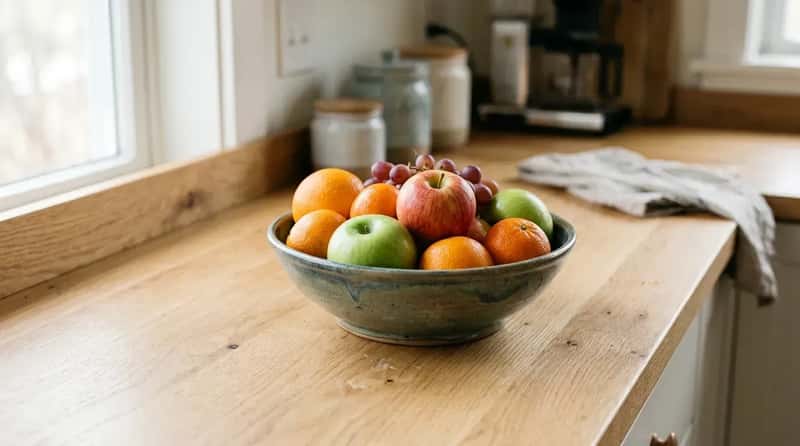
A simple bowl of apples, oranges, or wrapped chocolates on the kitchen counter signals hospitality in a way that’s completely casual but actually deliberate. It says: I thought about whether you might be hungry before you even thought to mention it. That quality – anticipating a need rather than waiting to be asked – is specific, rare, and immediately felt by the people it’s meant for.
The psychology behind it is straightforward: food offered freely, without being asked for, communicates abundance and genuine care. Fresh-baked anything takes it to another level entirely – the smell alone does hospitality work that no candle has ever matched. But even a clean bowl of fruit on an uncluttered counter sends a message that most homes, despite their best intentions, never bother to send at all.
#19 – A Kitchen That Looks Maintained, Not Sterile
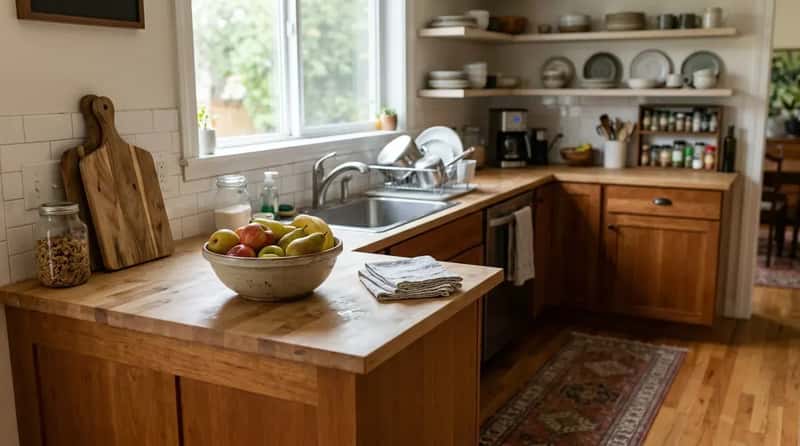
Guests glance at the kitchen almost involuntarily, especially if they end up gathering there during a visit. Sticky spots, crumbs, or a sink full of dishes catch attention faster than people expect. Kitchens are uniquely charged spaces – guests instinctively associate a clean kitchen with a safe, cared-for home. It’s not rational, but it’s consistent.
Note that “inviting” is meaningfully different from “showroom.” A kitchen that looks like it’s never been cooked in is actually slightly unsettling – it feels staged rather than lived in. The sweet spot is a space that looks clean, used with care, and ready for something good to happen in it. A bowl of fresh fruit, a pretty cutting board, or a set of good dish towels laid flat can get you there faster than a full renovation. Hospitality-ready is not the same as untouched.
#18 – A Self-Serve Drink Station
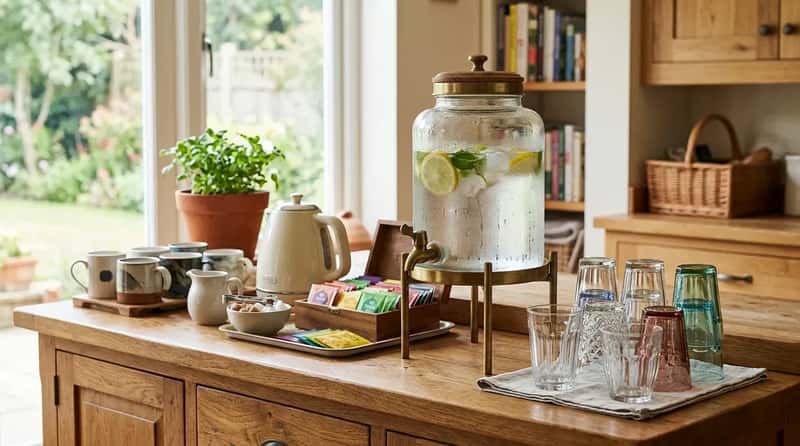
This is one of the details that instantly separates a truly welcoming home from a politely welcoming one. When guests have to ask every time they want something, there’s a subtle but real social friction – they feel like supplicants rather than welcome visitors. When they can help themselves, there’s an immediate sense of belonging. It says: you don’t have to perform being a guest here.
It doesn’t need to be elaborate. A coffee maker with mugs nearby, a small basket of tea options, or a carafe of water with glasses on a counter all send the same message. The detail that makes it work is visibility and accessibility – if guests have to ask where the cups are, the effect is completely lost. The best drink stations are the ones guests find without needing directions. That level of anticipation is the signature of a host who thought about their visitors before they arrived.
Worth Knowing: What a Self-Serve Station Actually Needs
- Mugs or glasses visible and within easy reach – no cabinet-hunting required.
- At least one hot option (coffee or tea) and one cold option (water or a pitcher of something).
- A small tray or designated surface that visually says “this area is for you.”
- Accessibility matters more than aesthetics – a beautiful setup guests can’t figure out defeats the purpose entirely.
#17 – Fresh Flowers or a Single Stem in a Vase
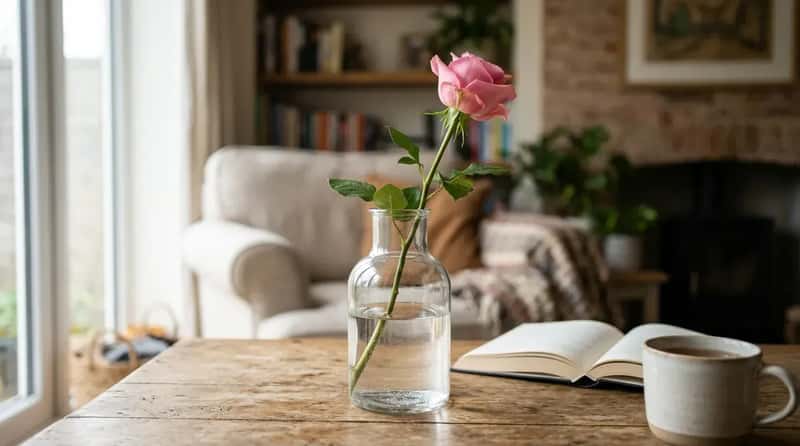
Fresh flowers carry a specific emotional weight that artificial ones simply cannot replicate: they’re alive, they’re temporary, and someone chose to bring them in for right now. That transience is part of the message – this home is actively tended, not just set up and left. The visual beauty combined with a natural scent is one of the few sensory double-plays available to a homeowner at almost zero cost.
The bar here is lower than most people think. A single grocery store stem in a clean glass vase beats an elaborate silk arrangement every single time. Research on indoor plant fragrances shows that flowers like jasmine and rose can evoke measurable feelings of happiness and relaxation in the people around them. It’s the kind of detail guests comment on and hosts quietly love being credited for – which is its own small form of hospitality success.
#16 – Candles That Have Actually Been Burned
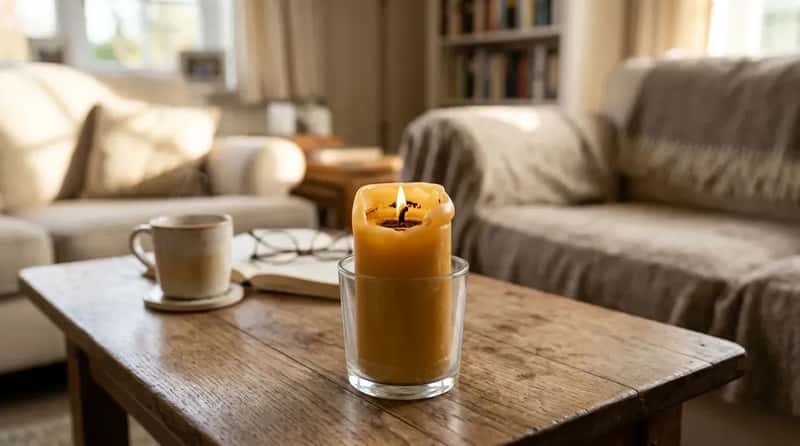
A wick that’s never been lit is a decoration. A wick with a burn mark on it is a signal that someone in this house lights candles for themselves – which means they’ll light them for you, too. New, unlit candles displayed everywhere say “staging.” Used candles say “living.” That distinction is subtle but guests register it on some level, even if they’d struggle to explain why one version feels warmer than the other.
Candles deliver scent and light simultaneously, which is why they punch above their weight in welcoming spaces. A single lit candle can transform the emotional register of an entire room in a way that even expensive lighting fixtures cannot fully replicate. Universally pleasant fragrances – vanilla, sandalwood, fresh linen – tend to work across the widest range of guests. It’s one of the oldest hospitality signals in human history, and it still works because it still means the same thing it always has.
#15 – Cohesive Decor That Feels Personal, Not Generic
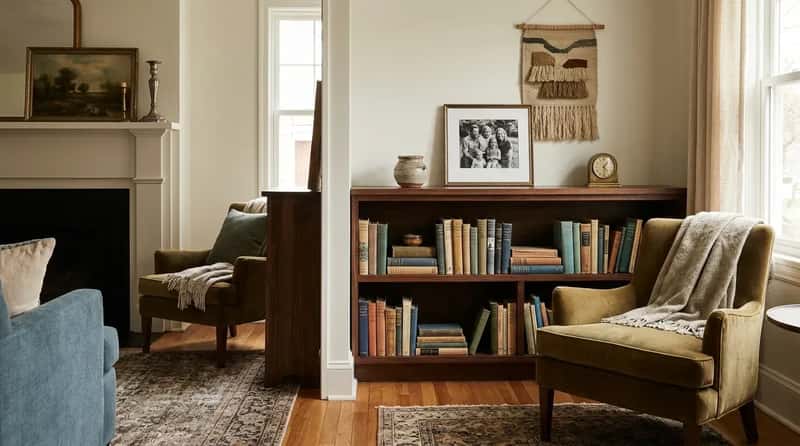
People naturally scan the room when they enter. Art, colors, textures, and small decorative details tell them something about who lives here. Decor doesn’t need to be expensive, but it should feel cohesive rather than random – a few intentional touches almost always land better than many scattered ones. When a home’s decor tells a legible story about the people inside it, guests feel like they’re being let in on something real.
The homes that feel cold and impersonal aren’t necessarily minimalist – they just look like no one specific lives there. Incorporating unique personal details – a piece of art from a trip, a shelf of actual books with broken spines, a family heirloom on the mantle – transforms an interior into something that has a personality. The goal isn’t maximalism; it’s legibility. Can a stranger spend ten minutes in your living room and understand something true about you? In a welcoming home, the answer is always yes.
#14 – A Guest Bathroom That Was Thought About
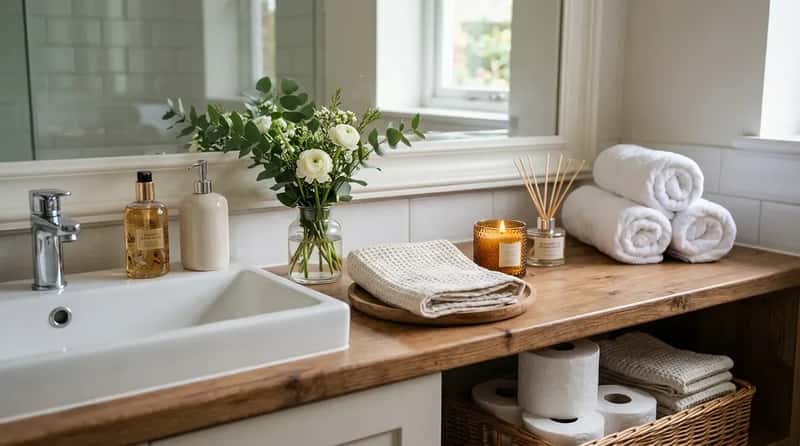
You’d be surprised how much a bathroom says about a home. Guests will definitely notice if it’s clean, stocked with essentials, and has a fresh hand towel ready. The guest bathroom is where hospitality becomes either quietly confirmed or quietly devastating – and it happens without anyone saying a word about it. It’s the one room guests enter alone, which is exactly why it carries disproportionate weight.
A guest bathroom should never feel like an afterthought. Extra toilet paper in plain sight, a full soap dispenser, fresh towels, and perhaps a small vase or a luxury hand wash – these are not luxuries, they’re the minimum for a space that’s actually been prepared. A scented candle or reed diffuser adds a touch of warmth without effort. These small touches make guests feel comfortable and, more importantly, they show that you thought about their experience when you weren’t in the room with them.
#13 – Soap That Isn’t Almost Empty

This one stings a little because almost everyone has done it. A nearly empty pump bottle or a worn-down sliver of bar soap can feel unexpectedly unwelcoming – and slightly unsanitary – in a space where guests are washing their hands. It’s a small touchpoint that communicates something much larger about how carefully a home is maintained for the people visiting it.
The bar is genuinely low here. A full dispenser of decent hand soap costs under five dollars and lasts for weeks. But a watery, almost-gone bottle communicates carelessness in the one room guests occupy completely alone. What you put in that bathroom is what you put there knowing no one is watching you do it – which is exactly why it reveals so much about a host’s actual relationship with hospitality rather than just their performed version of it.
#12 – Fresh, Dry Hand Towels
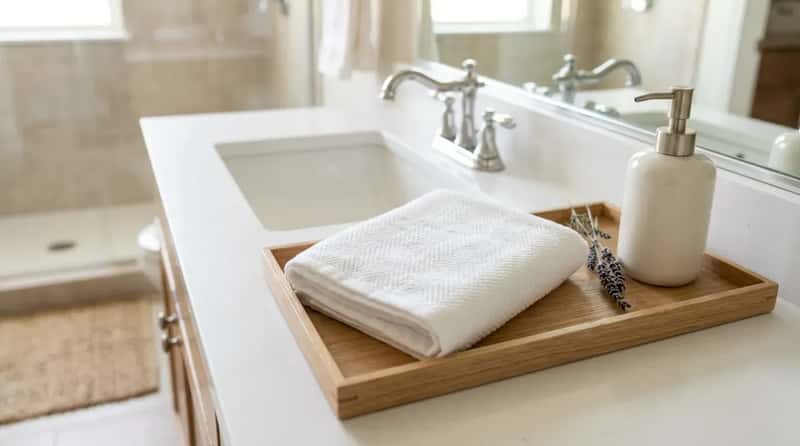
Reaching for a damp or stained towel is an unpleasant experience for any visitor – and it’s one of those details that’s hard to shake for the rest of a visit. A crisp, dry towel laid out specifically for guests indicates that the bathroom was prepared for this particular occasion, not just passively maintained. The texture and smell of clean linen during the simple act of drying your hands is more noticed than hosts ever realize.
Decorative towels that look too precious to use create their own awkward problem: guests who can’t figure out which towel they’re allowed to touch are left with a small but genuine anxiety that colors the moment. The solution is simple – one clean, clearly usable towel laid out specifically for the visit. That specificity is the message. Not “we’re clean people” but “we prepared for you.” There’s a meaningful difference, and guests feel it immediately.
#11 – Floors That Are Actually Clean
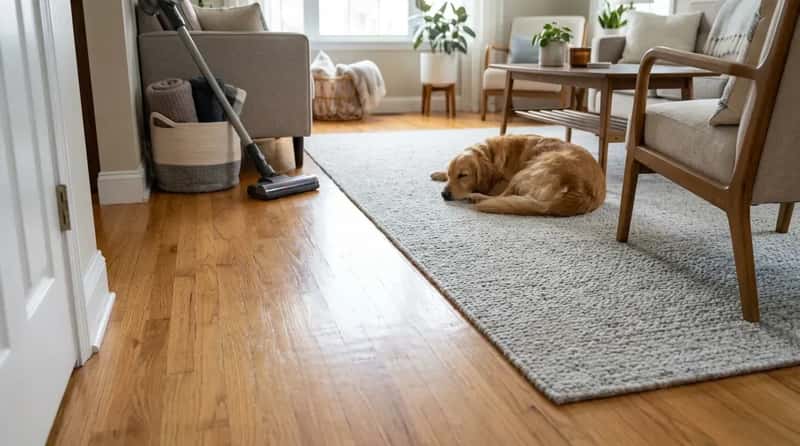
Floors are the one surface guests have direct physical contact with from the moment they enter – and they register the condition of floors far more than walls or ceilings. Dust, pet hair, or visible debris can quietly undermine an otherwise put-together space. Well-maintained floors create a sense of order that guests absorb without consciously identifying it.
Homes with pets face a specific version of this challenge. Pet hair on furniture and carpets can make a room feel less tidy even when everything else is clean – and guests who don’t have pets often pick up on it immediately. Regular vacuuming and good ventilation are unglamorous but essential. Clean floors don’t just signal cleanliness; they signal that this home is maintained for the people in it, not just lived in by habit.
#10 – A Temperature That Doesn’t Require Negotiation

This detail gets almost no attention in hospitality writing, and it absolutely should. A home that’s too cold makes guests spend the entire visit subtly tense and reluctant to take off their jacket. A home that’s sweltering makes them quietly desperate for an exit. Neither condition is conducive to the kind of relaxed, extended visit that welcoming homes are built for – and guests almost never say anything, they just feel vaguely eager to leave.
Truly welcoming homes are kept at a temperature that requires no negotiation or comment. Most people find an indoor temperature between 68 and 72 degrees Fahrenheit comfortable for social settings, and experts suggest that during winter hosting, a daytime range of 68°F to 72°F works well for most guests. The ones that get it right also keep a throw blanket accessible for guests who run cold, and ask early whether anyone needs adjustment. Temperature is one of the few physical comfort factors a host has direct, immediate control over – and most hosts never even think about it until someone finally, awkwardly, mentions it.
#9 – A Properly Made Guest Space (Even If It’s a Couch)

Many people put serious time and effort into decorating their home – and then totally neglect the guest room. Bare-bones furniture, mismatched linens, and a mattress that clearly belongs to nobody in particular communicate one thing above all: this room wasn’t prepared for you. The guest space is the room that most directly reveals whether someone actually wanted you to come – or is merely tolerating the visit. The difference shows instantly.
Even a couch made up properly – fresh blanket, real pillow, good lighting nearby – signals thought and care. Choose soft, comfortable bedding and make sure it smells freshly washed. “Freshly washed” is the operative phrase. Bedding that smells like it’s been sitting in a closet for six months is not a small thing. It’s the last sensory impression of the night, and it’s the one guests carry home with them the next morning.
Why It Stands Out: The Guest Space Checklist
- Freshly laundered bedding – the smell of clean linen is one of the most comforting sensory signals in any home.
- A real pillow, not a decorative one – guests notice the difference within five minutes.
- A lamp or accessible light source nearby – fumbling for light at midnight is memorable for the wrong reason.
- Empty drawer or hook space – even a single open hook says “I made room for you.”
- A phone charger on the nightstand – anticipating this need before it’s asked is pure hospitality.
#8 – Layered, Touchable Textiles Everywhere

The homes that feel immediately cozy almost always have more textile variety than you initially notice. Freshly laundered sheets, layered blankets, a mix of cushion textures – faux fur alongside linen, knitted throws next to velvet – create a tactile landscape that guests experience through touch as much as sight. This is the detail interior designers call “layering” and that everyone else calls “cozy without knowing exactly why.”
Visual appeal draws the eye, but texture invites emotion. Soft velvets, brushed leathers, chunky knits – all translate into a sensory experience that communicates warmth, authenticity, and depth before a single word is spoken. Touch is arguably the sense most responsible for the physical feeling of safety, and textiles are how homes speak to it directly. It’s the difference between a room that looks comfortable in photographs and one that actually feels comfortable when you sit down in it.
#7 – Rooms That Smell Like a Home, Not a Product
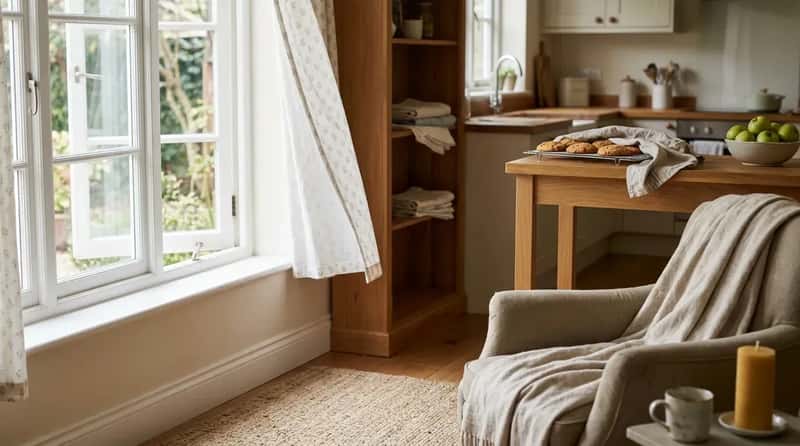
Every home develops a unique scent signature that residents eventually stop noticing entirely due to sensory adaptation. Guests entering with fresh senses pick up on those underlying smells within seconds. The condition of the air tells a story about habits, hygiene, and how seriously someone takes the experience of being in their own space. A welcoming home smells warm but not overwhelming – like people who bake occasionally, open windows regularly, and wash their linens.
The real secret is that the base layer – the neutral, clean smell of the home itself – matters more than whatever is burned or diffused on top of it. Even beautifully decorated homes can harbor hidden odors in carpets, curtains, and upholstery. Candles and diffusers add a pleasant note, but they can’t fully mask a compromised base. The goal is fresh air underneath and something gently lovely on top. That combination is immediately felt and almost never consciously identified – which means when it’s right, it works invisibly.
#6 – Evidence of an Actual Life Being Lived
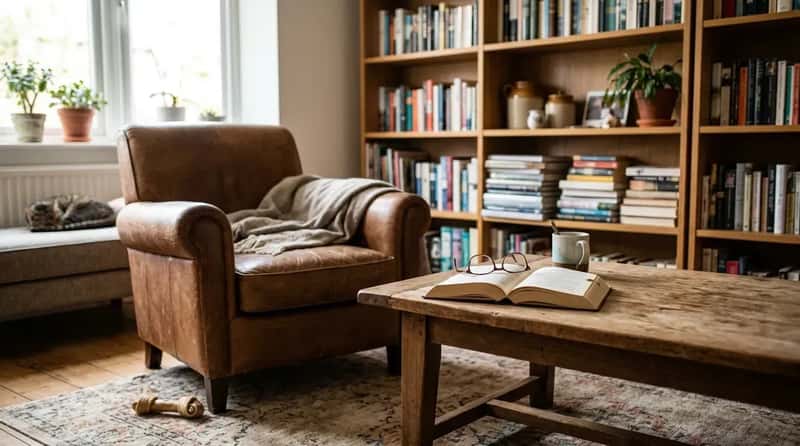
A welcoming environment feels relaxed, genuinely inhabited, and at ease with itself – not like a showroom where people seem afraid to touch anything. The homes that feel most inviting aren’t spotless. They have a book left open on the coffee table, a half-finished puzzle, a dog-eared magazine on the side table. These are quiet signals that a real human being occupies this space and is comfortable enough to leave a trace of themselves in it.
Perfection, it turns out, reads as unwelcoming. When a home looks like no one has ever actually sat in it, guests feel like they shouldn’t be the first. Some spaces give off an effortless comfort while others feel cold or uninviting despite looking beautiful – and the difference almost always comes down to this. The most hospitable spaces look like they’ve been genuinely loved: a little worn at the edges, unmistakably inhabited, and completely at ease with themselves.
#5 – A Genuinely Comfortable Place to Sit
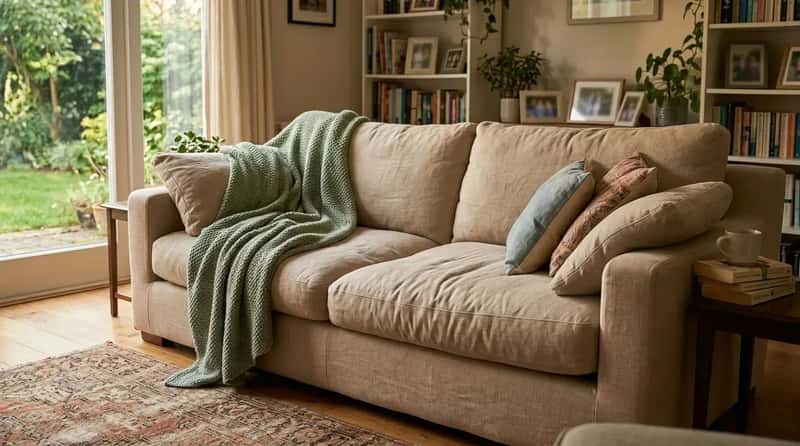
There are beautiful sofas and there are sofas you actually want to spend three hours on. Only one of those belongs in a welcoming home. Firm, low sofas designed for editorial photography feel terrible after twenty minutes in real life. A guest who sinks into the sofa and doesn’t want to get up is a guest who stays longer, talks more, and leaves happier – and that outcome starts with the furniture choice, not the host’s charm.
Down-filled cushions, the right seat depth, and the right height all matter more than the fabric color. Soothing throws nearby are the icing on the cake. The right proportions matter too – a massive sofa in a small room creates imbalance; human-scale furniture matches the way people actually live, not just how rooms look in magazines. The best hospitality-minded furniture is always the piece guests instinctively move toward, not the one that photographs best.
#4 – Small Gestures That Anticipate Needs
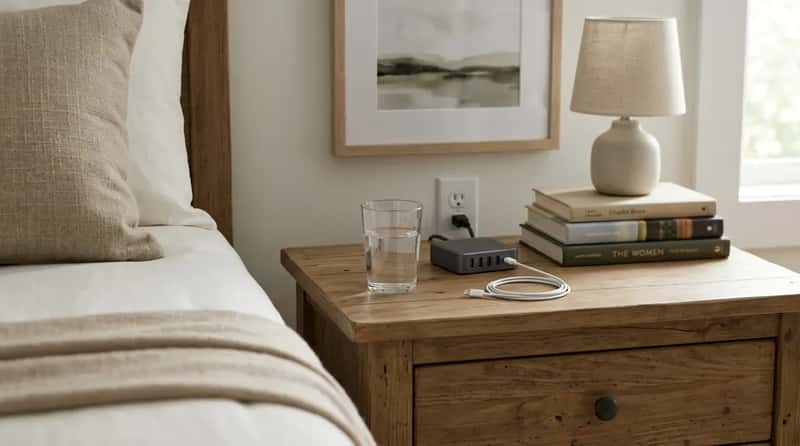
Small gestures of hospitality – offering a drink, making sure guests are comfortable – make a real impact. But the version of this that only truly welcoming homes get right is the anticipatory version: doing it before anyone has to ask. A glass of water already poured when a guest arrives. A phone charger left on the nightstand. An umbrella near the door on a cloudy day. These details are invisible when they’re present and glaring when they’re absent.
Great hospitality is about reading human needs before they’re spoken and shaping spaces that answer them quietly. When you design a home with that kind of empathy, every detail becomes a small conversation – a whisper of comfort, a gesture of welcome, a memory in the making. The details themselves are almost beside the point. What matters, and what guests carry with them long after they’ve left, is the intention behind them.
#3 – A Home That Feels the Same With Guests or Without Them
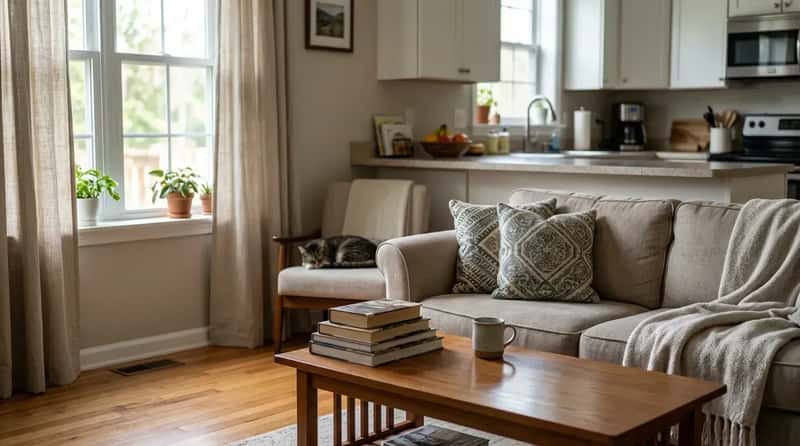
There’s a version of hospitality that’s purely performative – the house that gets frantically cleaned, staged, and scented only when company is coming, then returns to chaos the moment they leave. Guests sense this. They can feel the strain of a space that’s being held together for the occasion. The most welcoming homes are maintained for the people who live in them – which means they’re always in a reasonable state for the people who visit, too.
Simple habits – regular tidying, thoughtful organization, surfaces that stay mostly clear – go a long way toward maintaining a home that’s genuinely welcoming rather than periodically performed. When guests enter a space that’s clearly kept with care as a matter of course, they feel the difference without being able to articulate it. The best hosts aren’t performing hospitality. They’re just living it – and their home shows it every day of the week, not only on the days someone’s coming over.
#2 – The Feeling That You Were Expected and Wanted
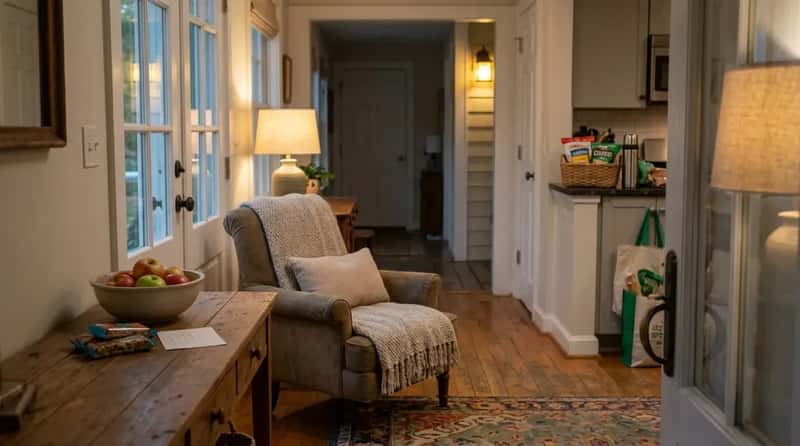
This is the detail that can’t be bought or styled – it can only be meant. The home where someone cleared a drawer for you, put your favorite snack in the kitchen, and left the porch light on before you arrived. First impressions are formed within seconds of stepping through a front door, and they rely on sensory details rather than white-glove inspections. Guests unconsciously absorb the atmosphere through lighting, scent, and texture before they ever look at the baseboards.
When a home is genuinely warm and welcoming, you feel it the instant you walk through the door. You exhale a breath you didn’t even know you were holding. That exhale is the goal. Everything else on this list is just the infrastructure that makes it possible. The feeling of being expected and wanted is the single most powerful hospitality signal in any home – and it’s communicated not by one big gesture, but by a hundred small ones that together say: I thought about you before you got here.
#1 – The Host Who Makes It All Feel Effortless

After all the details – the lighting, the scent, the soap, the throw blankets, the perfectly placed hand towel – it all comes back to this: the person who lives there. The essence of a welcoming home ultimately lives in the behavior and warmth of its residents. Genuine kindness, real attention, and small gestures of care make a significant impact. No amount of interior design substitutes for a host who is genuinely glad you’re there.
The homes that live rent-free in your memory years later aren’t always the most beautiful or carefully curated ones. They’re the ones where the host made everything feel easy – where you never felt like a burden, never felt like an inconvenience, never felt like a guest. The home is the stage. But the host – their warmth, their attention, their genuine pleasure in your company – is the reason you want to come back.
The ornament of a house is the friends who frequent it.
Ralph Waldo Emerson
Chances are, the homes you remember most fondly didn’t have everything on this list. They had enough of it, delivered by someone who meant it. That’s the part no checklist can fully capture – but it’s worth chasing anyway. Which one of these details did you notice missing from a home you’ve visited? Drop it in the comments.