There’s a particular kind of daydream that involves cobblestone lanes, half-timbered buildings, and a bakery smell drifting down the street. Most people assume that feeling only exists somewhere across the Atlantic, reachable only after a long flight and a much longer credit card statement. Yet scattered across the American map are small towns built, quite literally, by immigrants who wanted to bring a piece of home with them, and many of these places still carry that architecture and spirit today.
What makes them worth a second look isn’t just the charm. It’s the math. Switzerland, Germany, and the Netherlands routinely rank among the priciest places to live in the world, while the small-town American versions of those cultures often sit at or below the national cost-of-living average. Here are five towns where the European atmosphere is real, and the price tag is refreshingly down to earth.
1. New Glarus, Wisconsin
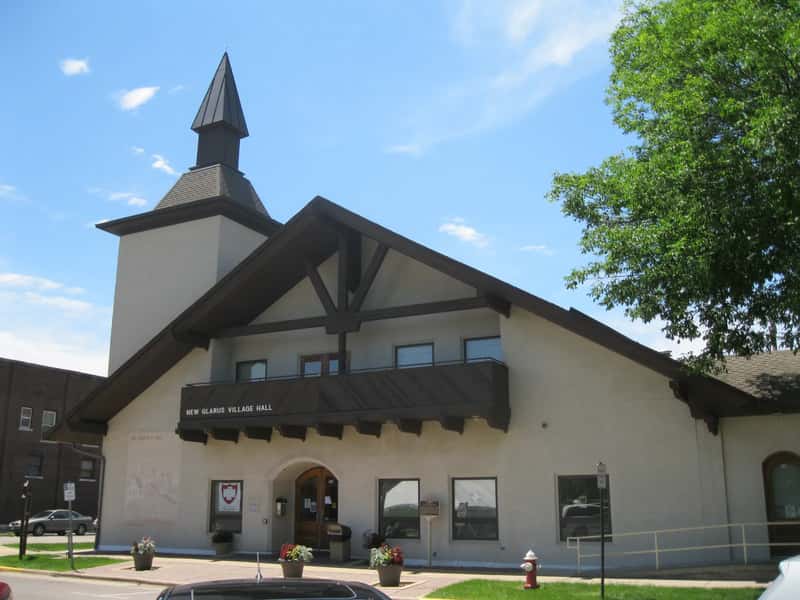
Nicknamed America’s Little Switzerland, this Green County village was founded in 1845 by Swiss immigrants, and the Alpine influence is still visible in the chalet-style rooflines and balconies that line its streets. The town features architecture reminiscent of Switzerland, especially when snow covers the roofs and balconies, and many streets still bear the names of villages from the settlers’ homeland.[1] It’s the kind of detail that makes a short drive from Madison feel like a much longer trip.
The affordability holds up under scrutiny too. New Glarus had a cost of living index of 86.7 in December 2024, which is less than the U.S. average of 100.[2] Renters get an even better deal, since the typical renter in New Glarus spends $747 a month on housing, less than the $1,023 national median monthly rent.[3] Add in an annual cost of living that, according to one analysis, runs $33,820 a year for a single adult, less than the national figure of $38,433[3], and the Swiss fantasy starts looking a lot more attainable.
2. Frankenmuth, Michigan
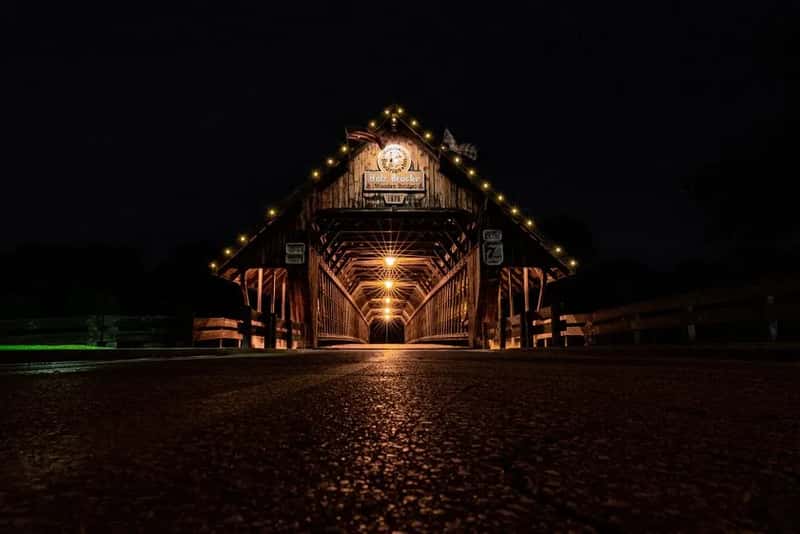
Frankenmuth leans hard into its Bavarian roots, and it shows in everything from the half-timbered storefronts to the annual festivals built around German food and beer. Founded by Franconian settlers in the 1840s, the town in Saginaw County has turned its heritage into both a tourist draw and a genuine architectural identity, not just a theme.
Despite the crowds that show up for its famous Christmas store and chicken dinners, everyday living costs stay reasonable. The cost of living index in Frankenmuth is 97, with 100 being the average, making it roughly one times lower than the national average.[4] Housing is where the savings really show up, since the median home value sits at $300,500 against a national figure of $332,700, and median rent runs $851 compared to a national $1,413.[5] That’s a Bavarian village experience without a Bavarian-sized mortgage.
3. Pella, Iowa
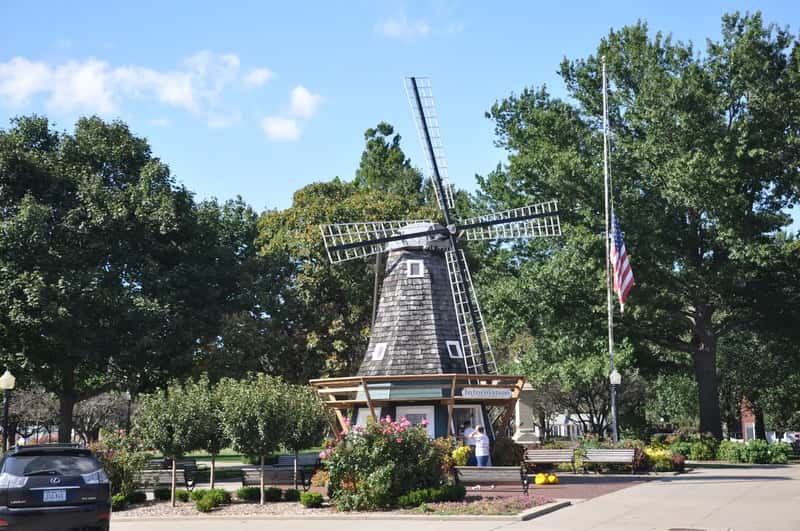
Pella was settled by Dutch immigrants in 1847, and the town still honors that with windmills, tulip gardens, and a downtown square built to resemble a Netherlands village center. The annual Tulip Time festival draws visitors from well outside Marion County, but the town functions as a normal, working community the rest of the year, anchored by manufacturers like Pella Corporation and Vermeer.
Cost-wise, Pella benefits from sitting in one of the more budget-friendly states in the country. Iowa ranked as the seventh most affordable U.S. state in 2025[6], and Pella’s own numbers reflect that regional advantage. Home ownership costs in Pella are moderate, and housing prices are manageable, with the overall cost of living lower than national averages.[7] Renters do particularly well here, since the average rent in Pella runs around $1,220, compared to a national average closer to $2,000.[7]
4. Helen, Georgia
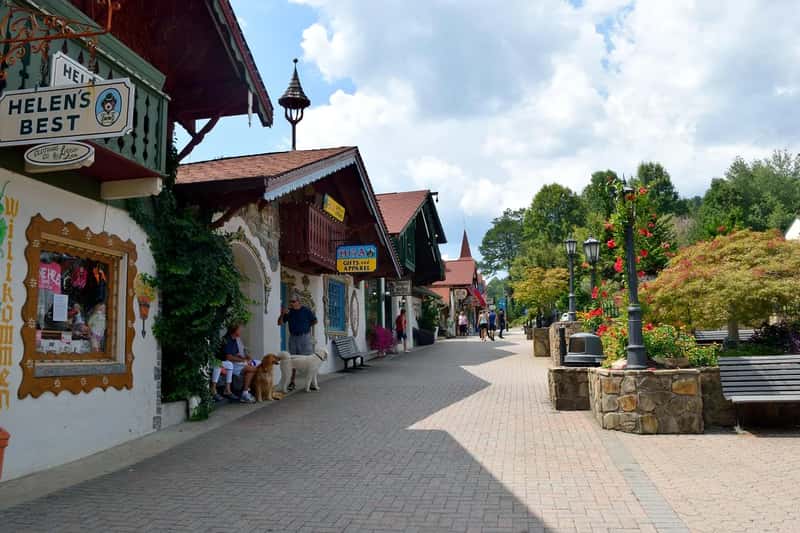
Helen is a slightly different case among these towns, since it wasn’t founded by German settlers at all. Local business owners redesigned the entire downtown into an Alpine Bavarian village in the late 1960s, after the original logging economy collapsed, and the transformation stuck. Walk through today and you’ll find gingerbread trim, cobblestone alleys, and a rushing mountain river that genuinely does evoke a Black Forest town.
Tucked into the North Georgia mountains in White County, Helen benefits from the region’s generally lower cost of living compared to Atlanta or the coasts. Rural Appalachian Georgia has long carried housing and grocery costs well under national benchmarks, and Helen’s small permanent population keeps day-to-day expenses modest even as tourist dollars flow through its shops each weekend. It’s proof that the European feel doesn’t require actual European settlers, just a community willing to commit to the bit.
5. Lindsborg, Kansas
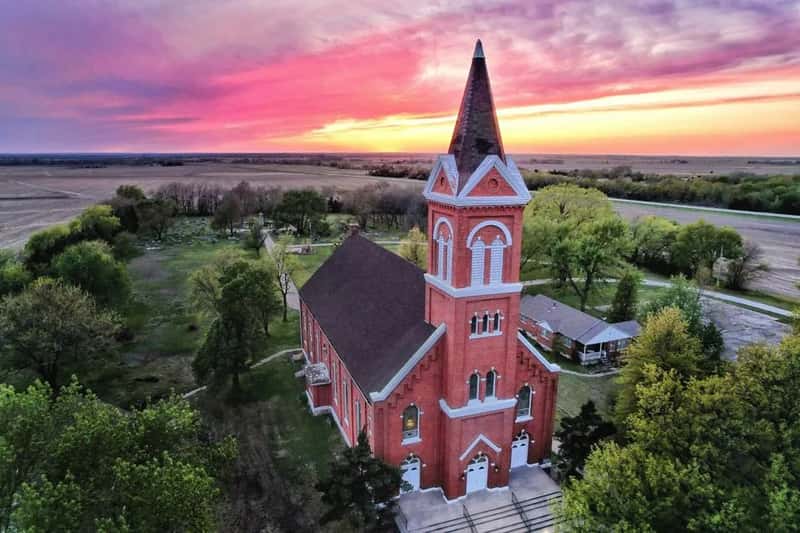
Known locally and nationally as Little Sweden USA, Lindsborg was founded by Swedish immigrants in 1869 and has kept its Scandinavian identity remarkably intact. Dala horses painted in bright folk-art colors sit on porches and storefronts throughout McPherson County, and the town’s Bethany College hosts a Handel’s Messiah performance tradition that dates back to the 1880s.
Like much of rural Kansas, Lindsborg carries a cost of living meaningfully below coastal and metro benchmarks, with housing in particular priced well under national medians common to small Midwestern towns of its size. That combination of deep cultural roots and low overhead is part of why the town has managed to sustain its Swedish identity for over 150 years instead of it fading into a generic Main Street. For anyone chasing a Scandinavian atmosphere without a Scandinavian cost of living, it’s a rare match.
None of these towns are recreations built for Instagram. Each one grew out of real immigrant communities who wanted their new home to feel a little like the one they left behind, and generations later that intention still shapes the architecture, the festivals, and the general pace of life. The savings compared to an actual move to Switzerland, Germany, the Netherlands, or Sweden are substantial, since those countries consistently rank among the most expensive in the world for housing and daily expenses.
What you get instead is a version of that European atmosphere anchored in ordinary American small-town economics, where median rents and home values often sit at or below the national average rather than pushing far past it. It’s not a substitute for an actual European vacation, but for a weekend trip or a quieter place to settle down, these five towns offer a surprisingly convincing alternative.