The United States is a country of staggering natural diversity, and honestly, that’s an understatement. Within a single road trip you can go from desert canyons to alpine glaciers to tropical sea cliffs, all without ever leaving the same national borders. These five destinations represent some of the most visually striking landscapes the country has to offer, and each one draws millions of travelers every year who come simply to stand still and take it all in.
What follows isn’t a ranking so much as a gallery of places that consistently leave visitors speechless. Some are massive national parks with decades of visitation data behind them, while others are more remote and harder to reach, which is part of what makes them so special. Either way, these spots earn their reputation for beauty through sheer geological drama.
1. Grand Canyon National Park, Arizona
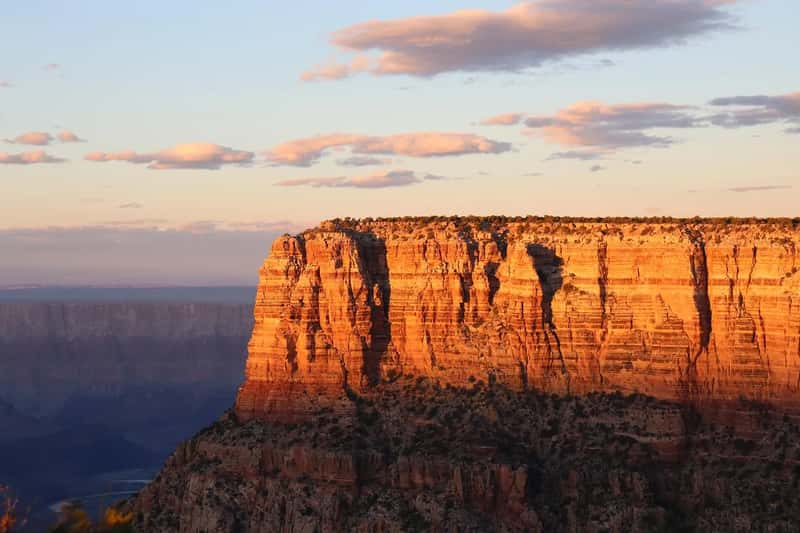
There’s a reason the Grand Canyon shows up on nearly every list of America’s most beautiful places, and it’s not just hype. The canyon itself stretches for an incredible distance, with the park boasting access to an impressive river canyon that totals 277 miles in length, with widths of up to 18 miles. Carved by the Colorado River over millions of years, the canyon reveals layer after layer of exposed rock, and geologists note that the Grand Canyon features nearly 40 major sedimentary rock layers, which provide a rich geological record allowing scientists to study the Earth’s history, including ancient environments like seas and deserts.
The numbers back up its popularity too. In 2024, the park saw recreational visitors reach a total of 4.92 million, though 2025 brought a slight dip, with more than 4.4 million people visiting according to the National Park Service, ranking Grand Canyon fourth in visitor numbers behind Great Smoky Mountains, Zion and Yellowstone. Part of that decline has been attributed to damage from wildfire, since experts attribute some of the decline to last summer’s Dragon Bravo Fire on the North Rim, which destroyed the historic Grand Canyon Lodge, infrastructure and guest lodging and forced months of closures. Even with that setback, the South Rim remains open year-round and continues to draw crowds eager for sunrise views over one of the planet’s great natural wonders.
2. Yosemite National Park, California
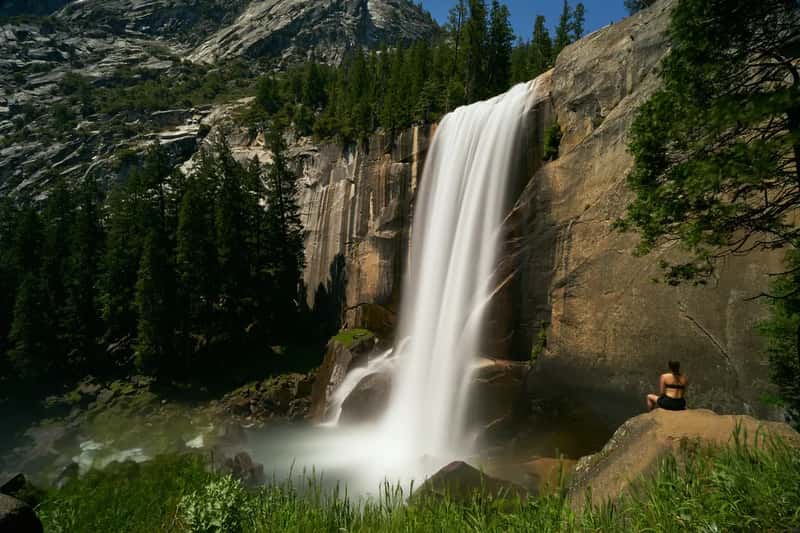
Tucked into California’s Sierra Nevada mountains, Yosemite is the kind of place that photographs simply cannot do justice. The park spans roughly 748,000 acres and is internationally celebrated for its towering granite cliffs, cascading waterfalls, ancient sequoia groves, and deep biological diversity. Nearly the entire park remains untouched by development, as over 94% of the landscape is officially designated as wilderness, with stretches of the Tuolumne and Merced Rivers protected as Wild and Scenic Rivers.
Yosemite Valley is where most visitors head first, home to icons like El Capitan and Half Dome. The park’s popularity has only grown recently, with Yosemite National Park welcoming a total of 4.1 million visitors in 2024, an increase from the previous year’s 3.9 million. Its UNESCO status only adds to the prestige, since Yosemite was among the first parks to receive international recognition, earning UNESCO World Heritage status in 1984 for its profound geological and ecological significance. Spring is arguably the best time to visit, when snowmelt sends waterfalls thundering at full force.
3. Glacier National Park, Montana
Nicknamed the Crown of the Continent, Glacier National Park sits along the Canadian border in northwest Montana and offers some of the most dramatic mountain scenery in the Lower 48. The park’s landscape was shaped over eons, as it takes its name from the rivers of ice and glacial forces that shaped its rugged topography over two million years, renowned for massive U-shaped valleys and hulking granite peaks carved by long-ago ice flows. Unfortunately, the glaciers that gave the park its name are vanishing fast, with current counts showing the park home to 26 glaciers, down from approximately 150 in 1850, a number expected to continue declining rapidly as climate change shrinks their size.
Despite its remote location, Glacier pulls in serious crowds each summer. The park attracts over 3 million visitors a year, roughly three times the population of its home state of Montana, making it one of the most visited national parks in the U.S.. The famous Going-to-the-Sun Road is the centerpiece of most trips, cutting through alpine meadows and past glacial lakes that seem almost too blue to be real. Visitors lucky enough to time it right can even catch the Milky Way overhead, since the park holds official Dark Sky status.
4. Na Pali Coast, Kauai, Hawaii
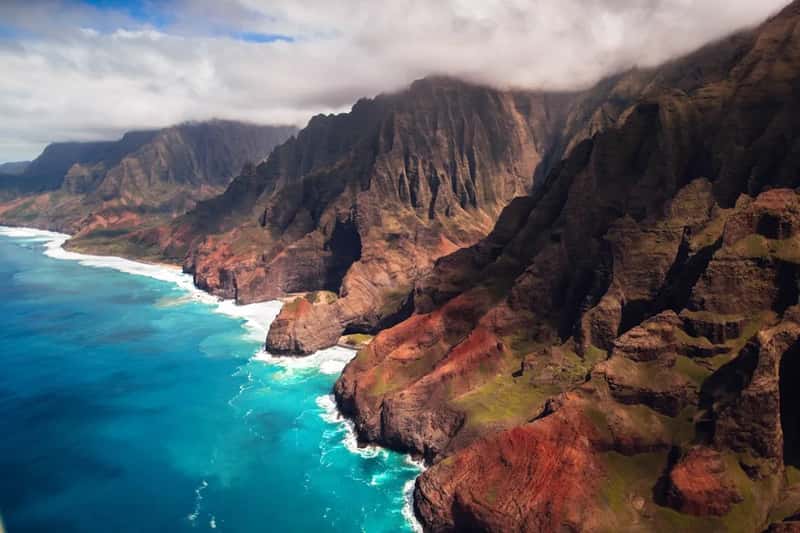
If you want proof that America’s beauty extends far beyond the mainland, the Na Pali Coast on Kauai is it. This remote stretch of shoreline is defined by towering sea cliffs, and true to its name, “Na Pali” translates to “the cliffs” in Hawaiian, a fitting label considering the terrain. These cliffs are genuinely massive, with soaring heights from sea level to over 4,000 feet, about three Empire State Buildings stacked one on top of another.
What makes Na Pali so distinct is how inaccessible it remains, which has helped preserve its wild character. There are simply no roads along the Na Pali Coast, mainly due to the extreme terrain, meaning the only ways in are by boat, helicopter, or the demanding Kalalau Trail. The coastline stretches roughly seventeen miles, and its dramatic valleys were carved by centuries of erosion flowing down from nearby Mount Waialeale, one of the wettest spots on the planet. Seeing it from a boat or helicopter is often described as one of the most unforgettable views in the country.
5. Great Smoky Mountains National Park, Tennessee and North Carolina

Straddling the border of Tennessee and North Carolina, the Great Smoky Mountains hold the title of America’s most visited national park by a wide margin. The park earned that distinction again in 2025, when it led the rankings with 11.5 million visitors, followed closely by Zion and Yellowstone National Parks. That kind of consistent popularity speaks to the park’s easy accessibility from major East Coast population centers combined with genuinely stunning scenery.
The park’s name comes from the smoky blue haze that often blankets its ridgelines, a natural fog created by humidity and plant life across its ancient, densely forested peaks. Rolling mountains, wildflower-covered meadows, and some of the most biodiverse forests in the temperate world make it a favorite for hikers, leaf-peepers in autumn, and wildlife watchers hoping to spot black bears or elk. Unlike many Western parks, the Smokies charge no entrance fee, which only adds to their appeal for families and casual day-trippers alike.
Taken together, these five destinations show just how much range America’s landscapes really have. From the layered red rock of the Grand Canyon to the emerald cliffs of Kauai, each place offers a completely different kind of beauty, yet all of them share that rare quality of feeling almost unreal in person. Visitation numbers may rise and fall from year to year, influenced by wildfires, government shutdowns, or shifting travel trends, but the pull of these places never really fades. Anyone building a bucket list of American scenery would do well to start here.