There’s a widely held assumption that money buys happiness. Wealthy nations invest billions in healthcare, infrastructure, and social programs, and yet some of the most content people on the planet live in countries where income is modest, resources are stretched thin, and GDP per capita is a fraction of what you’d find in Western Europe or North America. The global data is starting to tell a more nuanced story – one where community, culture, freedom, and a sense of belonging can outweigh material wealth when it comes to how people evaluate their own lives. Researchers analyzing comprehensive Gallup polling data from 143 countries specifically monitor six categories: GDP per capita, social support, healthy life expectancy, freedom to make your own life choices, generosity, and perceptions of corruption. The results, especially from the 2024 and 2025 World Happiness Reports, reveal some genuinely surprising outliers.
1. Costa Rica – Happiness Without a Military Budget

Two countries from Latin America, Costa Rica and Mexico, have entered the top 10 of the happiness rankings for the first time, with Costa Rica jumping six spots. About 5 million people living on this thin stretch of land between Nicaragua and Panama are among the happiest on earth. That’s a remarkable achievement for a country that, by global income standards, is far from wealthy. Although roughly one in five citizens is estimated to live below the poverty line, all Costa Ricans have what is often missing in wealthier countries: a good welfare system that includes universal access to healthcare, primary and secondary education, and relatively high pension benefits.
Costa Rica abolished its military in 1949 and has since invested those savings in its people. Along with the presence of strong family ties, beautiful landscapes, and perfect weather, it is no wonder that Costa Ricans are quite content with their way of living. By 2025, the country had climbed even further up the global charts. Costa Rica rose from #12 to #6, marking the highest ranking ever for a Latin American nation and positioning it as the strongest-performing non-European country in that year’s report. A poor country by many metrics – but a deeply fulfilled one.
2. Bhutan – The Nation That Invented Its Own Happiness Metric

Bhutan is one of the most striking examples on earth of a country that deliberately chose wellbeing over wealth. The term ‘Gross National Happiness’ (GNH) was coined by Bhutan’s 4th King, Jigme Singye Wangchuck, in the late 1970s, who asserted that ‘Gross National Happiness is more important than Gross Domestic Product.’ This philosophy has shaped national policy ever since. The UN High Level Meeting on Wellbeing and Happiness in 2012 was attended by Bhutan’s prime minister, a nation that adopted Gross National Happiness instead of Gross Domestic Product as their main development indicator.
The GNH Index framework comprises nine integral domains, encompassing psychological wellbeing, health, balanced time use, education, cultural diversity and resilience, good governance, community vitality, ecological diversity and resilience, and living standards. This is a far more holistic picture of what it means to thrive. Since its inception, the idea of GNH has not only shaped Bhutan’s development policy but has also resonated globally. By introducing the Gross National Happiness Index, Bhutan created a practical measurement tool for policymaking – one that serves as an incentive for the government, NGOs, and businesses to enhance societal wellbeing. For a small Himalayan kingdom with limited natural resources, that kind of institutional commitment to human flourishing is extraordinary.
3. Congo (Brazzaville) – Africa’s Unexpected Happiness Climber
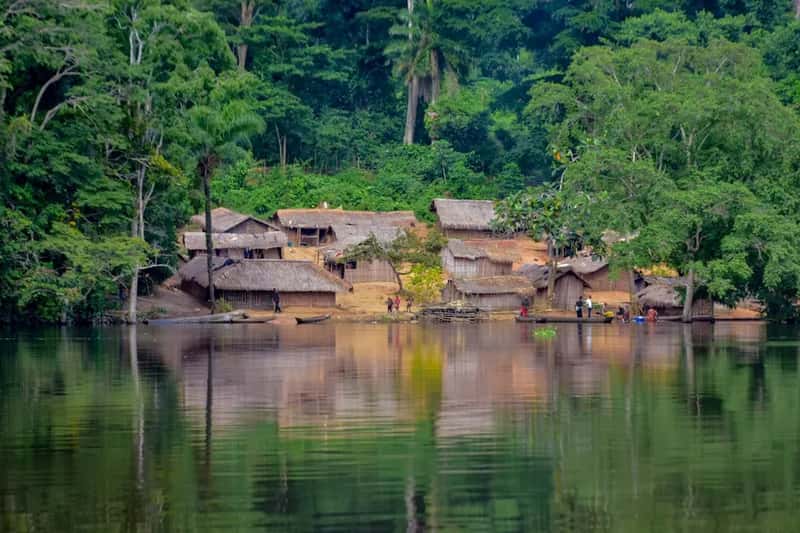
Congo (Brazzaville), officially the Republic of the Congo, is not a country most people associate with high wellbeing. It is classified as a lower-middle-income country with persistent poverty and inequality. Yet the data from the World Happiness Report 2024 tells a genuinely remarkable story. Congo (Brazzaville) ranked 89th in 2024, with a rank increase of 40 places between 2013 and 2024 – one of the largest jumps of any country in the world over that decade. That kind of sustained upward movement in how citizens evaluate their own lives is difficult to explain through economics alone.
Interdisciplinary experts from the fields of economics, psychology, sociology and beyond attempt to explain the variations across countries and over time using factors such as GDP, life expectancy, having someone to count on, a sense of freedom, generosity, and perceptions of corruption. In Congo (Brazzaville)’s case, researchers point to improvements in social cohesion and community-level trust rather than dramatic economic gains. Caring and sharing reduce wellbeing inequality by being more valuable to those facing less fortunate life circumstances. In communities where formal wealth is scarce, the informal social fabric – neighbors, extended family, communal support – often fills that gap in ways that money cannot easily replicate.
4. Laos – A Modest Economy With a Moderate Smile

Laos is one of Southeast Asia’s least economically developed nations, yet it consistently shows up in happiness data at a level that defies its per capita income. The happiness score for Laos in 2024 is 5.14 out of 10, which is a moderate level of happiness. Economic factors with emerging inflation remain the main reason for negatively affecting Laos’s happiness ranking. Despite these pressures, a score of 5.14 places Laos comfortably above the global midpoint, and well above countries with similar or even higher income levels. That gap between economic rank and happiness rank is exactly what makes Laos so interesting to researchers.
Much of what sustains wellbeing in Laos is deeply cultural. Buddhist values – emphasizing acceptance, community, and simplicity – permeate daily life in ways that buffer against the anxiety and dissatisfaction often associated with consumerism. The World Happiness Report’s 2025 edition presents new evidence on the role of sharing meals as an understudied indicator of social connection. Unlike many social measures, meal sharing can be tracked across countries, cultures, individuals and time – and in some countries, nearly every meal is shared. Laos is one such country, where communal eating and extended family structures remain central to everyday life. People who dine alone have the lowest life evaluation rating globally (4.9) compared to those who regularly share a meal (5.5 to 5.6).
5. Nicaragua – Latin America’s Poorest, Yet Persistently Resilient
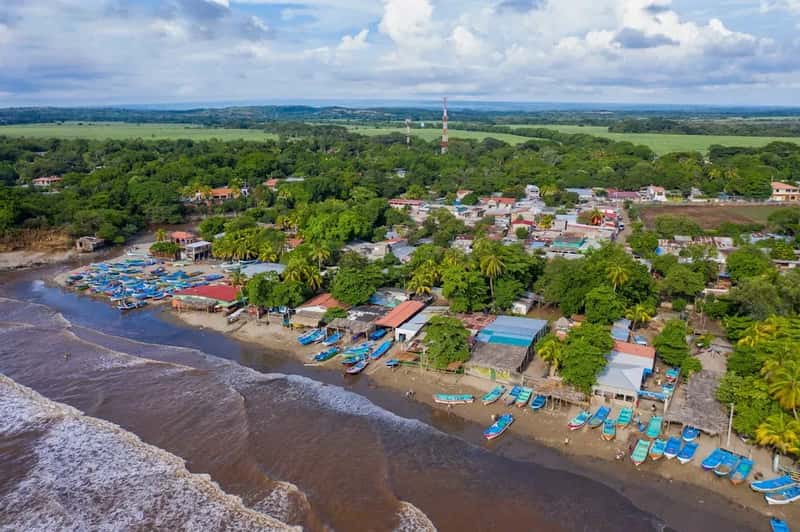
Nicaragua holds the unfortunate distinction of being the poorest country in Central America. According to the World Bank, approximately 12.5% of the population lived below the international poverty line of $3.65 per day in 2023. About 73% of the rural population depends on agriculture, where work is seasonal and wages are low. These are tough realities, and they are not glossed over by the data. However, what the happiness research also captures is a resilience and cultural depth that raw economic statistics miss entirely.
Nicaragua has consistently appeared in alternative happiness indices, particularly those that account for community connection and environmental sustainability alongside material wellbeing. The Happy Planet Index was introduced to take life expectancy, experienced wellbeing, inequality of outcomes, and ecological footprint into account – and here, Costa Rica’s neighbor region regularly performs above expectation. Strong family networks, vibrant community culture, and a deep connection to the natural landscape all contribute to a sense of meaning and belonging among Nicaraguans that transcends income levels. The rankings themselves are based only on the answers people give when asked to rate their own lives – and when Nicaraguans do so, their responses reflect something that economists alone cannot account for.
What the Data Really Tells Us

The World Happiness Report is a publication that contains articles and rankings of national happiness, based on respondent ratings of their own lives, which the report also correlates with various quality of life factors. The consistent pattern across all five countries featured here is that social bonds, cultural identity, and community trust function as powerful substitutes for material wealth. Past reports have shown that wellbeing inequality itself lowers national average happiness, while living in countries with high social and institutional trust is of significantly greater value for those afflicted by ill health, unemployment, unsafe streets, and difficult family circumstances.
The World Happiness Report 2024 underscores the complex interplay of age, regional differences, and societal factors in shaping happiness levels worldwide. For Costa Rica, Bhutan, Congo (Brazzaville), Laos, and Nicaragua, the lesson is consistent: happiness is not simply purchased. It is built – through relationships, culture, governance priorities, and the daily act of living alongside people you trust. What does it even mean to be a happy country in a world rattled by war, inequality, and political divisions? It is often said that even in the worst of times there is joy to be found – and the World Happiness Report rankings back this adage with plenty of data.