Florida has spent decades selling itself as the ultimate retirement destination, and it’s easy to see why the pitch works. Sunshine, no state income tax, endless golf courses, and a culture built around leisurely afternoons all sound like a dream. But talk to people who’ve actually made the move in the last couple of years, and the picture gets more complicated than the brochures suggest.
Behind the marketing, there are a handful of assumptions that keep getting repeated as fact even though the numbers tell a different story. Some of these myths were true a decade ago and have simply aged out. Others were never quite accurate to begin with. Here’s a closer look at five of the most persistent ones.
1. Florida is a completely tax-free place to retire
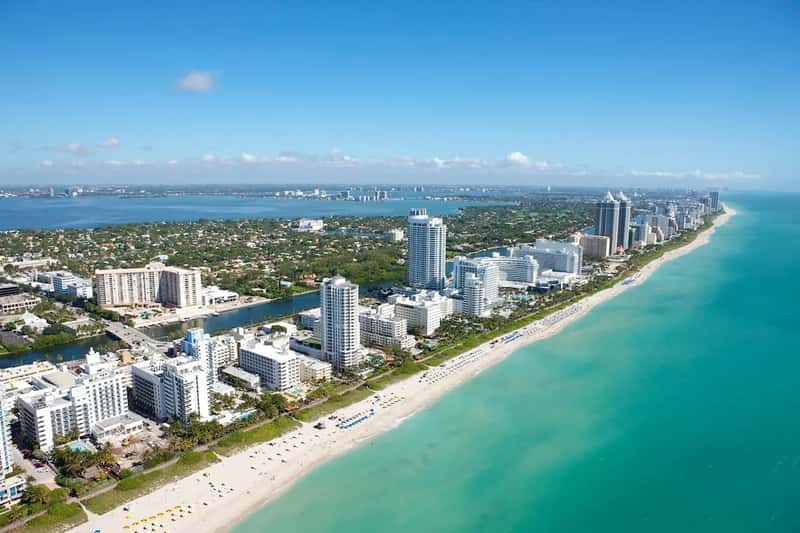
It’s true that Florida doesn’t tax personal income, and that’s a real advantage compared to states with steep withdrawal taxes on pensions or IRAs. Florida’s no-income-tax status draws retirees every year, and U.S. migration data show the state has recently attracted the largest net inflow of residents age 60 and older. That said, “no income tax” doesn’t mean “no taxes,” and a lot of new residents learn this the hard way once they see their full financial picture.
Savings from having no personal income tax don’t tell the whole story about the cost of Florida retirement. Property taxes, sales tax on nearly everything you buy, and rising insurance premiums quietly eat into the savings that the income tax break provides. On top of that, a retiree with $22,000 in Social Security benefits, $35,000 in pension income, and $13,000 in IRA withdrawals can have a combined income that puts them well above the Social Security taxation threshold at the federal level, meaning federal taxes still apply even in a state with zero income tax of its own.
2. Homeowners insurance is a minor line item, not a real budget concern

This is probably the myth that catches new Florida retirees most off guard. Many people move down expecting insurance costs similar to what they paid up north, and the reality is nowhere close. Annual homeowner’s insurance premiums in many Florida counties now run between roughly three thousand and eight thousand dollars or more for a typical single-family home, meaning a retiree who budgeted fifteen hundred dollars a year based on what they paid in their previous state may end up paying several thousand dollars more annually, working out to a few hundred extra dollars a month on a fixed income.
The good news, and it’s a genuine shift worth noting, is that the trend has started to bend in a better direction. As of May 2026, Florida’s Office of Insurance Regulation reported more than 190 residential rate filings for decreases or zero increases, with recent average homeowners filings running around a 1.2 percent decrease. Still, even with that relief, Insurify’s 2026 report puts Florida’s average annual premium at $8,292, which remains the highest average in the country. The takeaway isn’t that insurance is cheap now, it’s that the years of relentless double-digit increases finally seem to be easing.
3. Everyone is still flooding into Florida to retire

The image of Florida as a retirement magnet where the population of seniors only grows year after year no longer matches what’s actually happening on the ground. Plenty of people are still arriving, but plenty are also packing up and leaving, and the net gain has shrunk dramatically compared to the boom years. While Florida had the most inbound moves of adults 65 and older in 2025, at 45,696, the state also had 44,881 outbound moves of that age group, meaning it only saw a net gain of 815 people.
That’s a striking contrast to states now pulling ahead in the retirement migration race. An analysis using moving company data found that in 2025, South Carolina had the highest net gain in adults 65 and older. Cost pressures appear to be a real driver behind this shift, since a 2025 survey from Florida Atlantic University found that roughly four out of five Floridian respondents said they were concerned about housing affordability, and nearly half said they had considered moving out of the state due to cost of living. Florida is still popular, but “everyone is moving there and nobody leaves” simply isn’t an accurate description anymore.
4. Housing is affordable pretty much everywhere in the state

People often picture Florida as a place where a modest budget stretches a long way on housing, and in some pockets that’s still fair. But the statewide picture is far more uneven than that assumption suggests, and the gap between markets can be enormous. Miami’s median home price currently sits around $655,000, while a smaller city like Ocala offers median home prices closer to $275,000, which is a difference big enough to completely change a retirement budget depending on where someone settles.
Beyond the purchase price itself, many retirees underestimate the added costs that come bundled with Florida living, particularly in the communities built specifically for seniors. Many retirees face homeowners’ association fees on top of mortgage payments, particularly in Florida’s numerous gated communities and retirement developments, and in 2025 those fees averaged between $400 and $600 per month in luxury or resort-style communities. There’s a bit of relief on the horizon too, since home prices in Florida are projected to dip around 2 percent in 2026, with some Gulf Coast communities potentially seeing declines near 10 percent. Even so, location matters more in Florida than the “cheap housing state” reputation implies.
5. The overall cost of living is low across the board

Florida’s reputation for affordability tends to lean heavily on the income tax angle while glossing over everything else that shows up on a monthly bill. Utilities are one of the clearest examples, since the state’s climate makes air conditioning close to mandatory for most of the year. Florida’s warm climate results in heavy reliance on air conditioning, pushing electricity bills higher than the national average, with retirees needing to budget for estimated monthly utility costs that hovered around $639.25 in 2025.
Add in groceries, transportation, and the insurance costs already mentioned, and the “cheap state” label starts to feel more like a partial truth than a complete one. While the overall cost of retirement in Florida remains manageable and close to the national average, certain expenses like housing, insurance, and healthcare require careful planning. None of this means Florida is unaffordable, but it does mean that treating the whole state as uniformly cheap leads to budgets that fall apart within the first year or two.
None of these five points are meant to argue that Florida is a bad place to retire. Millions of people live comfortable, happy retirements there every year, and the fundamentals that made the state attractive in the first place, the climate, the lack of income tax, the sheer number of communities built around retirees, haven’t disappeared. What has changed is the margin for error. The retirees who do well tend to be the ones who research their specific county rather than the state as a whole, budget for insurance and HOA fees as seriously as they budget for housing, and treat Florida’s tax advantages as one piece of the puzzle rather than the whole picture.