Airports feel official. The uniforms, the signage, the security checkpoints – everything is designed to project order and authority. That sense of structure is exactly what scammers exploit. Between April 2024 and April 2025, Americans lost a whopping $2.6 million to reported travel scams, and many cases go unreported because victims never realize they’ve been conned until it’s too late. The numbers only tell part of the story. The Federal Trade Commission reports Americans still lost over $274 million to travel-related scams last year, with the average victim losing nearly $1,000. What makes airport scams so effective is timing – you’re tired, disoriented, and operating on autopilot. That’s not a coincidence. That’s the trap.
1. The Fake Taxi Driver Waiting at Arrivals
You’ve just landed, your luggage is heavy, and someone with a confident smile walks toward you and offers a ride. It feels like a convenience. It rarely is. Unlicensed drivers approach travelers in the airport and often cost victims far more than legitimate services. These scammers prey on jet-lagged passengers who don’t know local taxi rates or haven’t researched transportation options. The scam is global and well-documented. At airports, train stations, or popular tourist hubs, fake taxi drivers approach travelers directly, often with convincing IDs or uniforms. They either demand inflated fares mid-ride or take deliberately long routes.
The price difference can be staggering. One traveler arriving at Paris Charles de Gaulle Airport was shown a fake meter app reading 360 euros for the trip. She fought back – by then she knew the official taxi ride should only cost a flat rate of 55 to 60 euros. Prague has an equally persistent problem. Travelers report being charged up to three times the expected fare, sometimes with invented surcharges, cash-only demands, and receipts that appear to be fictitious. The same pattern repeats itself at JFK in New York, where there is a long-running problem with illegal taxi drivers milling around the exit doors, and these days they’ve upped their game so things are even more sketchy. Always pre-book your ride or use an official taxi stand, and never step into a vehicle that approached you first.
2. The Evil Twin Wi-Fi Network That Steals Your Login
Free airport Wi-Fi is one of those small comforts that feels harmless. Travelers connect automatically, often without a second thought. That habit has become a serious vulnerability. When people connect to fake Wi-Fi networks, they are taken to a fake webpage requiring them to sign in using email or social media logins, and those details are then saved to the attacker’s devices. Once they have your credentials, scammers can access bank accounts, social media, and even book fraudulent flights using your loyalty points.
This is not a theoretical threat. It resulted in a real conviction in late 2025. A West Australian man who created “evil twin” Wi-Fi networks to capture personal data was sentenced to seven years and four months’ imprisonment. The man was caught launching evil twin attacks against individuals who wanted to connect to Wi-Fi networks at airports in Perth, Melbourne, and Adelaide, as well as on some domestic flights. Investigators found the operation chilling in its simplicity. The man used a Wi-Fi Pineapple, a device designed for conducting wireless network pentesting. The hacking device passively monitored for requests initiated by users looking for free Wi-Fi networks. When such a request was detected, the device created a rogue access point with the name of the targeted network, which resulted in the victim connecting to the attacker’s network. The AFP’s advice is clear: “To connect to a free Wi-Fi network, you shouldn’t have to enter any personal details – such as logging in through an email or social media account.”
3. Baggage Handler Theft You Never See Coming
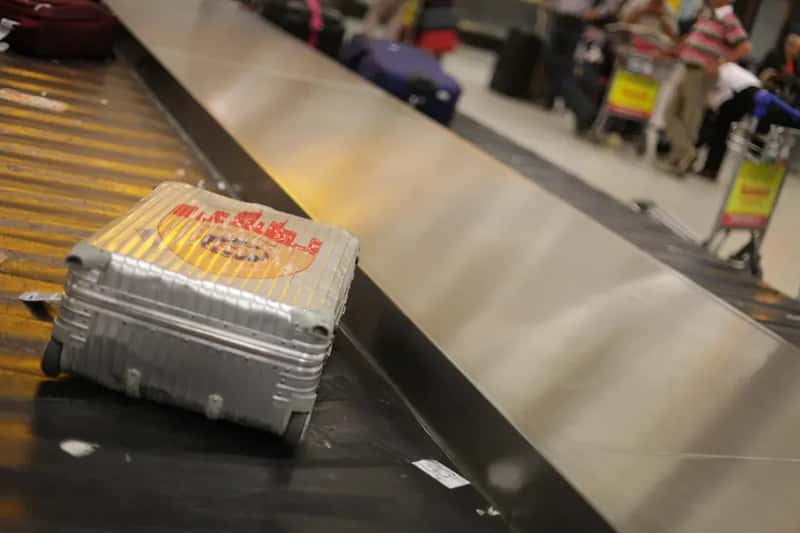
Once your suitcase disappears behind the check-in counter, you have almost no control over what happens to it. Most of the time, that’s fine. Sometimes, it isn’t. In 2024, airlines and airports mishandled around 33.4 million bags worldwide, costing the industry an estimated 5 billion dollars in recovery, compensation, and logistics. Lost or stolen bags made up about 8 percent of those mishandled cases, while damaged or pilfered luggage climbed to 18 percent – a sign that opportunistic theft and “sticky fingers” behind the scenes are becoming a bigger slice of the problem. The human element behind these numbers is troubling. Although airline baggage handlers do not have a reason to open checked baggage, they have a brief but uninterrupted opportunity to rifle through baggage during aircraft loading. TSA officials believe that airline employees are responsible for a large percentage of thefts.
At Fort Lauderdale-Hollywood Airport, one traveler proved just how deep this problem runs. He used an AirTag to trace his “missing” bag straight to an airport employee’s home. Similar incidents have been reported in Spain and the Philippines. There is also a far more disturbing variation of this scam. In a sophisticated scheme, baggage handlers swap drug-filled luggage for checked bags, even switching luggage tags – and two tourists in Germany were victims in 2023 and spent 24 hours in prison. According to AirAdvisor’s global study, London Heathrow ranks number one for the most lawless baggage claim worldwide. Never pack valuables or irreplaceable items in checked luggage, and consider placing a GPS tracker inside your bag before you travel.
4. The Discarded Luggage Tag Fraud
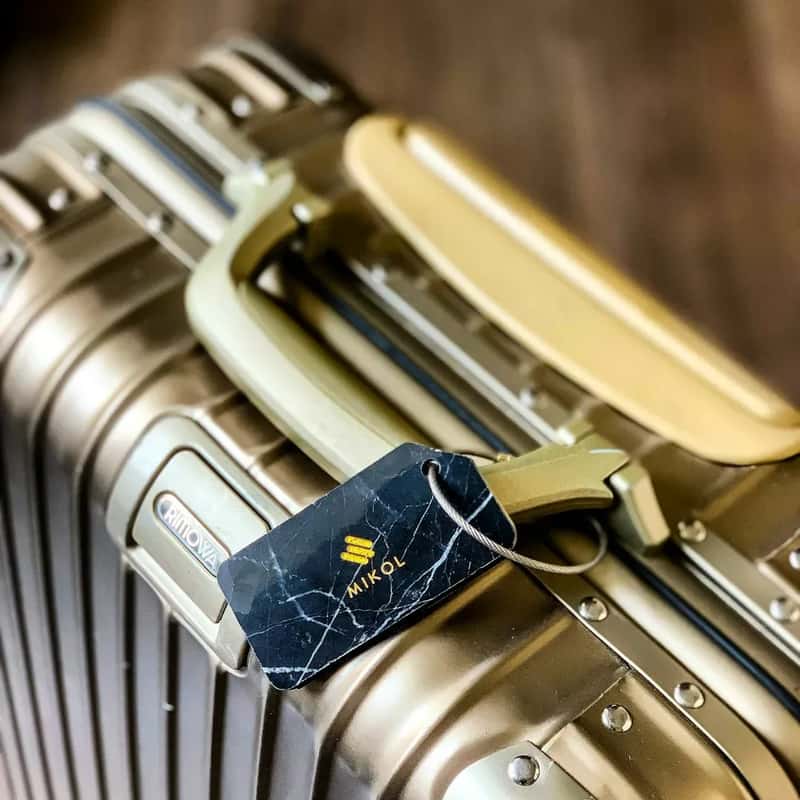
Here is a scam that almost nobody talks about, which is precisely why it works so well. Most travelers grab their bag from the carousel, rip off the airline tag, and toss it in the nearest bin. That tiny strip of paper is worth more than you realize. That little adhesive tag you rip off and toss in the nearest trash bin contains your name, flight number, destination, and sometimes even your frequent flyer details. To a scammer, that’s gold.
A Delta Air Lines baggage claims manager sounded the alarm about this on Reddit, and the warning spread quickly. Scammers carefully observe passengers who remove and discard their luggage tags in baggage claim areas. They then use this discarded information to submit reimbursement claims to airlines. The fallout hits honest travelers too. The growing trend is creating difficulties for baggage claim departments trying to distinguish between legitimate and fraudulent claims. The problem has even gone international. Airports in Japan have installed “secured bag tag disposal receptacles near the secured exit of baggage claim,” suggesting this isn’t just a U.S. problem. The fix is simple: keep your luggage tag attached until you get home, then shred it like any other document with your personal information on it.
5. Frequent Flyer Miles Hijacking

Loyalty points have become a serious target for professional fraudsters. Many travelers still think of their miles as a minor perk – something they redeem for the occasional upgrade. Criminals see it very differently. Airline loyalty programs, frequent-flyer miles and points, have become prime targets for fraud. These programs are effectively digital currencies, and loyalty databases often lack some of the stringent anti-fraud measures seen in banking systems. Attackers can hijack frequent-flyer accounts using stolen usernames and passwords or by exploiting software weaknesses.
The scale of the problem is significant. The International Air Transport Association (IATA) estimates that airlines lose at least one billion dollars annually to payment fraud. The threat is not only external. A 2024 investigation found two contractors for Qantas Airways abused access to divert frequent-flyer points from about 800 customer accounts into their own. The scheme, which involved unauthorized changes to bookings, highlights internal vulnerabilities. Qantas responded swiftly, apologizing and restoring points, but the incident underscores that even trusted partners can exploit systemic gaps. Industry research adds more context: airline account takeovers rose roughly 30 to 40 percent recently amid a surge in bot attacks. Enable two-factor authentication on your frequent flyer accounts and never use the same password across multiple travel platforms.
6. Fake Booking Confirmations and Travel Phishing Links
Travel fraud has evolved well beyond the obvious. Today’s scammers don’t just steal your wallet – they steal your plans, your identity, and your payment details through channels that look completely official. The travel industry is one of the sectors most susceptible to fraud, with scams rising 18 percent during the summer peak season and 28 percent in the winter peak season in 2024, according to a report from the Mastercard Economics Institute. Trip planning fraud is a significant part of that problem. Trip planning fraud rose more than 12 percent last year, be it via doctored photographs, malicious “confirmation” links that expose banking details, or other forms of trickery.
One of the most alarming newer tactics involves compromised booking platforms. Scammers gain access to official hotel accounts on platforms like Booking.com and contact travelers through the actual booking platform, making the conversation look entirely legitimate. They typically claim something like, “Your hotel booking didn’t go through, the credit card details weren’t right and you need to reconfirm the details right now or you’ll lose the booking.” Then, when you enter the details through a new link, they take your payment details and run. The financial damage is real and growing. According to the Federal Trade Commission, U.S. travelers lost an estimated $330 million to travel-related fraud in 2024, a 20 percent increase from 2022. The average loss per victim was $1,200. Never click links in unsolicited messages about your travel bookings – always verify directly through the official website or app, even if the message appears to come from a known platform.