Most people don’t think twice about how they book a flight. You open an app, punch in some dates, and grab whatever fare shows up first. The trouble is that a handful of ordinary habits, the kind almost everyone has picked up somewhere along the way, quietly push ticket prices higher without anyone noticing until the credit card bill arrives.
Airfare pricing has gotten more complicated in the past couple of years, not less. Between shifting fuel costs, algorithm-driven pricing, and a wave of outdated advice still circulating online, it’s easy to fall into patterns that cost real money. Here are seven of the most common ones.
1. Waiting for a last-minute deal that almost never shows up

There’s a persistent belief that airlines dump unsold seats at bargain prices right before departure. It made sense decades ago, but it doesn’t hold up anymore. Travelers still romanticize the idea of cheap last-minute airfare, but airlines have become much better at predicting demand, and in 2026, waiting until the final week before departure is usually expensive, especially on leisure routes.[1]
The logic behind this shift is straightforward once you think about it. Airlines know business travelers, family emergencies, and urgent trips create demand close to departure dates, which means remaining seats are often priced aggressively.[1] Occasional exceptions exist, mostly on new or underperforming routes, but building a strategy around them is a gamble more than a plan.
2. Clinging to the outdated “book on Tuesday” rule

For years this was treated as gospel, and plenty of travelers still repeat it without checking whether it’s true anymore. It isn’t, at least not in the way people remember it. Airfare advice has always come with an industry adage that booking at the right moment on the right day unlocks the lowest fares, and for years the tip was to book on Tuesday, but according to Expedia’s 2026 Air Hacks Report, Friday is now the cheapest day to book flights.[2]
Different data sets don’t fully agree on the exact day, which is part of the problem with treating any single day as a magic formula. A 2024 data study by Upgraded Points found that the best day to purchase airline tickets is Monday or Tuesday, with Friday and Saturday being the most expensive.[3] The safer takeaway is that the day you book barely matters compared to other factors, and the day you buy barely moves the needle[4] when set against timing and route flexibility.
3. Locking in exact travel dates without checking nearby days

Rigid dates are one of the fastest ways to overpay, especially for anyone who assumes weekends are automatically convenient. Tuesday, Wednesday, and Saturday departures are consistently the cheapest, since business and leisure travelers cluster around the weekend, and that demand drives those fares up.[4] A one or two day shift in either direction can sometimes trim a noticeable chunk off the total.
The gap between the cheapest and most expensive travel day isn’t small either. Average air ticket prices are 26 percent more affordable on a Friday than on a Sunday.[5] Anyone booking a trip with even a little wiggle room should run the flexible date search before settling on anything.
4. Ignoring nearby airports entirely

Searching only from the closest airport feels convenient, but it often means paying a premium for that convenience without realizing it. Nearby airports often offer fares up to 50 percent lower than the primary hub for a region.[6] That’s a wide enough gap that it’s worth at least a quick comparison before locking anything in.
Of course, the savings aren’t automatic once ground transportation enters the picture. Ignoring alternative airports is a common mistake since nearby airports often offer fares up to 50 percent lower, though travelers need to factor in transportation costs to see if the savings are worth it.[6] Still, for a lot of routes, especially in cities with multiple regional airports, the math tends to favor checking.
5. Picking the cheapest fare class without reading what it includes

Basic economy fares look appealing on the search results page, but they’re built to look cheap first and cost more later. Basic economy tickets look irresistible on screen, but these fares typically come with severe restrictions including no seat selection until check-in, no flight changes, and often no carry-on bag included.[7] By the time someone adds a bag, picks a seat, or needs to change plans, the “deal” often disappears entirely.
The scale of this business model is bigger than most travelers assume. Airlines collected roughly 148 billion dollars in ancillary revenue worldwide in 2024, according to industry tallies cited by the International Air Transport Association, and these fees cover seat selection, baggage, boarding priority, and a growing list of extras that rarely appear in the first price you see.[8] Reading the fare rules before booking, not after, is the only real defense.
6. Booking without setting a single price alert
Checking a route once, seeing a number, and either buying immediately or giving up is a common pattern, and it usually means missing better pricing entirely. A common mistake is checking one date, seeing a high price, and assuming flights are expensive now, rather than watching the route over time.[8] Prices on the same route can shift meaningfully within days depending on demand and seat availability.
There’s also a documented pattern in how new fares get released. Fare tracking analyses show that airlines often price flights high when they first appear, capturing travelers who must commit early, then adjust downward once real demand becomes clear, with a rough sweet spot of one to three months for domestic routes and two to eight months for many international trips.[8] Letting a tracking tool watch a route for a week or two, instead of buying on the first look, often pays off.
7. Sticking to round-trip searches out of habit

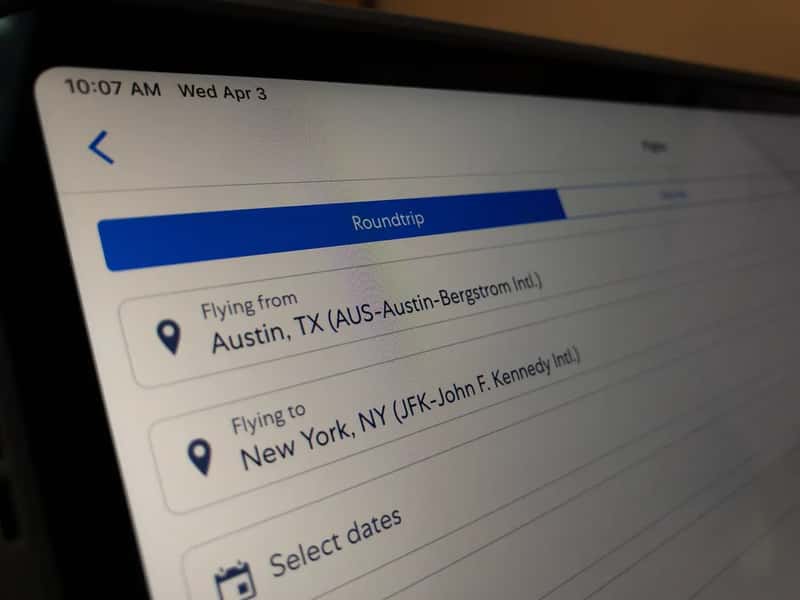
Most booking engines default to round-trip search, and most people never think to change it. That’s a missed opportunity more often than people expect. Selecting multi-city instead of roundtrip in flight search engines is a booking tip many travelers never check.[9] Sometimes two separate one-way tickets, or a multi-city search, undercuts a standard round-trip fare by a meaningful margin, particularly on routes served by different airlines in each direction.
This habit ties into a broader shift in how fares get priced today. Airlines now use dynamic pricing, AI-driven fare adjustments, bundled fees, and loyalty targeting that make old booking hacks less reliable than they were a decade ago.[1] Comparing a round-trip search against a multi-city or split one-way search takes an extra few minutes, but it’s one of the few habits that consistently pays for itself.
Small booking habits add up over a year of travel more than most people realize. None of these seven require insider knowledge or special access, just a willingness to double-check assumptions that may have been true once but no longer hold. The routes and prices will keep shifting, but flexibility, comparison, and reading the fine print remain the parts of the process that never really go out of date.