
For most people in wealthy nations, a monthly internet bill is barely a passing thought. It slides out of a checking account automatically, and streaming, remote work, and video calls happen without a second glance at the cost. Yet in a surprising number of countries, getting online is treated more like a rare indulgence than a basic utility, something reserved for government officials, business elites, and the occasional lucky household with a foreign income stream.
The reasons vary from place to place. Some nations struggle with geographic isolation and thin submarine cable connections, while others suffer from state monopolies that keep prices artificially high or governments that treat connectivity as a tool of control rather than a public good. Whatever the cause, the effect is the same: a digital divide so steep that ordinary citizens are priced out of a service the rest of the world takes for granted.
1. Eritrea
Eritrea consistently tops global rankings as the place where getting online is least attainable for ordinary citizens. Researchers have found that in Eritrea, just 1GB of data can cost $338, making internet access unaffordable and inaccessible to the vast majority of the population. That single figure puts the country in a category of its own, since a single gigabyte there costs more than many households across Sub-Saharan Africa earn in a month.
The consequences of that pricing show up in the numbers of people who actually use the internet. Analysts note that this is a country where internet access and broadband data are privileges of the elite, with data from the ITU and other sources suggesting that as little as 1% to 2% of the population has regular access to the internet. Separate research puts the burden in even starker terms, estimating that Eritrea is the country where the internet is least affordable, with a yearly subscription equivalent to almost fifty years’ worth of an average salary. In practical terms, that means a full working lifetime would not cover a single year of connectivity for a typical Eritrean.
2. Turkmenistan

Turkmenistan combines eye-watering prices with one of the most tightly controlled internet environments on the planet, which together push everyday citizens to the margins of digital life. According to recent reporting, the average monthly salary in Turkmenistan is around $435, yet to get VPN services and internet access, one must pay around $50 to $70 at least to obtain a slow-speed and partial service. That means a meaningful chunk of a typical paycheck disappears just to access an unfiltered version of the web, and even then the connection remains sluggish and heavily monitored.
The country’s telecom sector is dominated by a single state-run operator, and that lack of competition keeps prices high while access stays narrow. Analysis of the situation describes an environment where only the political elite and their associates can enjoy accessing uncensored internet, while ordinary citizens face technological isolation and lack of freedom of speech. On top of the cost, Turkmenistan still ranks among the priciest markets globally for mobile data, with one recent report noting the country has the 7th most expensive mobile data in the world, a startling statistic given how little the average household can spare for it.
3. Yemen

Years of conflict have devastated Yemen’s economy, and that collapse has turned even modest internet plans into an unreachable expense for most families. One affordability study points out that Yemen’s extreme poverty is severe, and it is no surprise that a broadband deal costs nearly 30 times the average monthly income. Multiplying a person’s entire monthly earnings by thirty just to cover a broadband subscription illustrates how disconnected pricing has become from what residents can realistically pay.
Yemen regularly appears on lists of nations with the world’s priciest internet, alongside other war-affected and infrastructure-poor countries. Reporting on global broadband costs groups Yemen with a handful of other struggling states, noting that South Sudan, Tokelau, Yemen, and Turkmenistan also face high internet rates due to resource limitations and state monopolies. For a country already grappling with a humanitarian crisis, the added burden of unaffordable connectivity cuts off access to remote work, online education, and even communication with family members abroad.
4. South Sudan

South Sudan’s young infrastructure and ongoing instability have left it with some of the highest per-megabit prices anywhere in the world. Global pricing comparisons found that while Singapore offers lightning-fast connections at just $0.03 per Mbps, South Sudan residents pay an astronomical $4.24 per Mbps, a difference of more than 140 times. That gap is one of the widest recorded anywhere, and it reflects just how far South Sudan’s telecom market still has to develop.
The country’s challenges go beyond simple pricing. Analysts describe an environment where structural challenges, weak infrastructure, limited competition, and unstable governance all drive up prices and limit access, with internet service in many parts of Africa depending on satellite or wireless links rather than terrestrial fiber. Without reliable fixed-line networks, most South Sudanese who do connect are forced onto costly mobile data plans, which keeps the internet firmly out of reach for anyone outside the country’s small professional and business class.
5. Malawi

For years, Malawi held the unfortunate distinction of having some of the priciest mobile data on the entire African continent. As recently as 2020, researchers found that a single gigabyte cost $27.41, around 60 per cent of the average monthly income, making Malawi the most expensive country in Africa for mobile data. That kind of pricing effectively meant an ordinary Malawian would need to spend more than half a month’s income just to download the equivalent of a couple of movies.
The fallout from those prices was significant, sparking public campaigns and turning connectivity into a political issue. Observers noted that in practice, high data prices turned the internet from a public utility into a luxury, deepening Malawi’s digital divide. The pressure eventually led to reform, including licensing Starlink and cutting regulatory costs, though the country’s history illustrates just how quickly a nation can slide into a situation where only the comfortable few can afford to stay online.
6. Marshall Islands
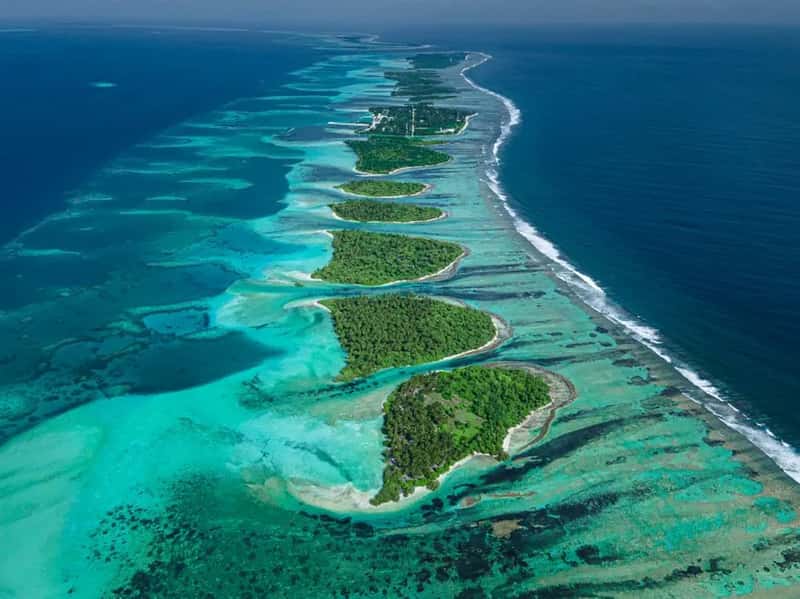
Remote Pacific island nations face a uniquely brutal combination of tiny populations and enormous infrastructure costs, and the Marshall Islands sits near the top of that painful list. Global affordability research highlighted that in the Marshall Islands, 1GB of data is ‘worth’ $142, a price that dwarfs what most residents can realistically set aside from a modest local income. With so few subscribers to spread the cost of undersea cables and satellite links across, providers have little choice but to charge steep rates just to keep the lights on financially.
This pattern is common across scattered island nations, where geography itself becomes the biggest obstacle to affordable connectivity. Researchers studying the wider trend have observed that many of the costliest broadband markets share a common trait, since geographic isolation stands out as a key pattern, with 18 of the world’s 25 most expensive broadband markets being island nations or territories. For everyday Marshallese families, that isolation translates directly into internet bills that only the wealthiest households or government offices can absorb without serious financial strain.
7. Suriname

Suriname stands out in South America as a place where a state monopoly over telecommunications has kept broadband prices painfully high relative to local wages. According to affordability research, the internet is least affordable in Suriname due to the state monopoly on fixed-line and broadband services, with the average bill reaching $90.06 for a 10Mbps package, or 43% of the average monthly wage. Spending nearly half of one’s paycheck on a single mid-tier broadband connection puts it firmly out of reach for most working households in the country.
The contrast with Suriname’s neighbors makes the situation even more striking. In nearby Uruguay, for example, a comparable connection costs a small fraction of the local wage, showing just how much market structure and competition can shape affordability even within the same region. Without meaningful competition to challenge the dominant provider, Surinamese consumers are left facing prices that place reliable home internet closer to a luxury purchase than a routine monthly expense.
Taken together, these seven nations tell a familiar story. Whenever a handful of providers control the market, whenever geography makes cables and satellites brutally expensive, or whenever governments treat connectivity as a political lever rather than a public good, ordinary citizens end up paying the price. International bodies have pushed for affordability targets for years, arguing that a basic connection should cost just a small fraction of the average income, yet the gap between that goal and reality remains wide in places like these.
Progress is not impossible, as Malawi’s recent reforms and satellite partnerships demonstrate. Still, for millions of people in Eritrea, Turkmenistan, Yemen, South Sudan, the Marshall Islands, and Suriname, logging on remains less a daily habit and more a rare privilege, one that too often depends on how much money sits in a person’s pocket rather than how much they need to be connected.