Picking a vacation spot used to come down to weather, budget, and maybe a good deal on flights. These days, the calculation is more complicated. Overtourism protests, shifting government advisories, evolving scam tactics, and disease outbreaks all factor into whether a destination will deliver the relaxing trip you’re picturing or a headache you didn’t budget for. None of this means you should stay home. It just means a little due diligence before you book can save you money, stress, and in some cases, your safety.
Below are seven warning signs worth checking before you commit to a destination in 2026. Some are about physical safety, others are about your wallet, and a few are simply about whether you’ll actually enjoy the trip once you arrive.
1. A Rising or Ambiguous Government Travel Advisory
The U.S. State Department rates every country on a four-tier scale, and knowing what those levels mean is the single most useful research step before booking. Level 1 means exercise normal precautions, Level 2 means exercise increased caution, Level 3 means reconsider travel, and Level 4 means do not travel.[1] As of mid-2026, the global picture is more fragmented than it’s been in years, with 83 countries at Level 1, 82 at Level 2, 27 at Reconsider Travel and 23 at Do Not Travel, with the whole Gulf now Level 3.[2] That’s a meaningful shift from prior years, and it means a destination that felt routine a few seasons ago might now carry real caveats.
What makes this trickier is that a single number rarely tells the whole story. Each country page carries one or more risk-indicator letters that explain why a country earns its level, with tags for crime, terrorism, civil unrest, kidnapping or hostage-taking, wrongful detention, health, natural disaster, and time-limited events.[2] Two countries can share the same level for completely different reasons. A Level 3 for a Caribbean island is usually a crime story, while a Level 3 for a Gulf state in 2026 is about the risk of a wider regional conflict.[2] Advisories also aren’t static; they get revised constantly as situations change, so checking a country’s status a week or two before departure, not months in advance, is worth the extra effort.
2. Signs of Overtourism, Protests, and Visitor Caps

If a destination has spent the past year in headlines about angry residents, new taxes, or capacity limits, that’s worth factoring into your planning even if the protests aren’t aimed at individual travelers. Demonstrations have been recorded across more than 40 Spanish cities in 2026, with backlash also building in Italy, France, Portugal and Greece.[3] The protests generally aren’t hostile toward visitors personally. Spain is experiencing a sustained wave of anti-overtourism demonstrations, concentrated in Barcelona, Palma de Mallorca, the Canary Islands, and other heavily visited cities, and they are not riots, and they are not aimed at hurting individual tourists.[4] Still, marches can disrupt transit routes and access to attractions, so it pays to check local news close to your travel dates.
Beyond protests, look at whether a destination has introduced hard caps, entry fees, or short-term rental crackdowns, since these are strong indicators that infrastructure is already strained. Venice, Barcelona, Mallorca, Kyoto, Mount Fuji, Santorini, Mykonos, and Amsterdam are among the destinations facing the most visible overtourism pressure, with governments in Spain, Italy, Greece, Japan, and Norway all introducing new fees or restrictions.[5] A useful data point here comes from industry research showing travelers themselves are noticing the strain: a 2026 travel trends report based on data from over 22,000 travelers found that nearly a third experienced negative effects from overtourism and roughly a third are now actively seeking quieter destinations.[6] If a place is visibly buckling under its own popularity, it might still be worth visiting, just with a different itinerary or season in mind.
3. Active Disease Outbreaks Without Clear Mitigation Guidance
The CDC issues Travel Health Notices for exactly this reason, and they range from routine precautions to outright avoidance recommendations. A notice can be posted for a disease outbreak with a higher number of expected cases, sporadic cases in an unusual location, natural or human-made disasters with severe environmental health risks, or mass gathering events that can lead to disease outbreaks.[7] In 2026, several notices have carried real weight. The CDC has recommended avoiding all travel to Ituri and Nord-Kivu provinces in the Democratic Republic of the Congo due to a Bundibugyo virus disease outbreak, unless traveling for humanitarian aid or emergency response.[8]
Not every health notice should scare you off a destination entirely, and most are far less severe. Travel notices are designed to inform rather than alarm, and in most situations guidance centers on prevention steps such as mosquito protection rather than advising travelers to avoid a destination altogether.[9] Even a case as widely reported as the Zika cases linked to Bali in 2026 falls into this lower-tier category, since cases of Zika have been reported in returning travelers from Bali, Indonesia, and all travelers to Bali should take steps to prevent mosquito bites and sexual transmission during and after travel.[8] The red flag isn’t the existence of a notice; it’s booking a trip without ever checking whether one exists for your destination.
4. Deals or Booking Offers That Feel Rushed or Too Good to Be True
Sometimes the red flag isn’t the destination itself but the way a trip there is being sold to you. Scammers thrive on urgency, and that pattern hasn’t changed heading into 2026. One of the biggest red flags is being pressured to act immediately, whether it’s a limited-time holiday deal, a message warning that your reservation will be canceled, or a seller asking you to pay outside a trusted booking platform.[10] Government watchdogs have flagged the same pattern. Offers that are intentionally vague or seem too good to be true are major red flags.[11]
Payment method is another giveaway worth remembering before you hand over any money. Any request to pay via wire transfer, Zelle, Venmo, or cryptocurrency outside the platform’s payment system is a scam, every time, no exceptions.[12] The financial toll of ignoring these signs isn’t trivial either. The Federal Trade Commission received more than 64,000 reports of fraud linked to travel, vacations and time-share plans in 2025 alone.[13] If a listing, agent, or “exclusive” fare is pushing you to skip your usual verification steps, treat that pressure itself as the warning sign.
5. No Licensed Transportation or Fixed Pricing at Your Destination
Once you land, the absence of official taxi stands, metered fares, or app-based rides with visible pricing is a practical red flag that’s easy to spot and easy to avoid if you know to look for it. Unofficial taxis and drivers who approach travelers in baggage claim rather than waiting at designated pickup points are one of the most reliable scams in travel, since prices are never displayed and fares are whatever the driver claims at the end.[12] This isn’t unique to any one country; it shows up in tourist hubs worldwide.
A related scheme worth watching for involves someone insisting your planned destination is closed. A friendly local person may tell you the attraction you’re heading to is closed today for a holiday or renovation but offer to take you somewhere else instead, when the attraction is never actually closed.[12] This particular con has staying power because it works almost anywhere tourists gather. It works in tourist-heavy areas of Paris, Rome, Cairo, Bangkok, and dozens of other cities, year after year.[12] Before you travel, check whether your destination has reliable, transparent transportation options at the airport, since a chaotic or unregulated arrival experience often mirrors the rest of the trip.
6. Natural Disaster Season Overlapping With Your Travel Window
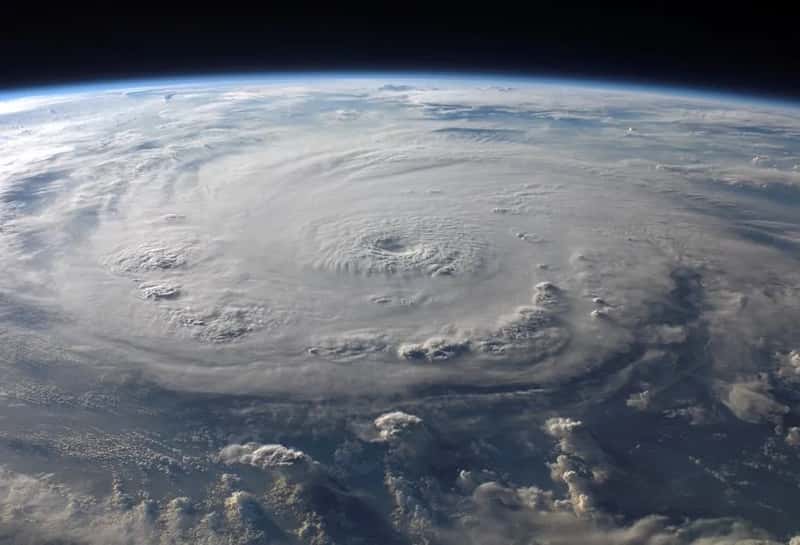
Advisories now regularly flag natural disaster risk as its own category, separate from crime or political instability, and for good reason. The main risk-indicator tags include one for natural disaster, alongside crime, terrorism, civil unrest, kidnapping, wrongful detention, health, and time-limited events.[2] Hurricane season, monsoon season, and wildfire season are predictable enough that checking a destination’s typical risk window takes only a few minutes, yet many travelers skip this step entirely and book based on price alone.
The practical concern isn’t just the weather event itself but what happens afterward, since damaged infrastructure can strand travelers or leave them without basic services for days. Advisories that carry a natural disaster indicator often reflect exactly this kind of aftermath risk rather than the storm alone. If a destination sits squarely inside its highest-risk season and you’re not flexible on dates, it’s worth weighing whether travel insurance with disaster-specific coverage makes sense before you book anything nonrefundable.
7. Weak Consular Support or an Unstable Political Situation
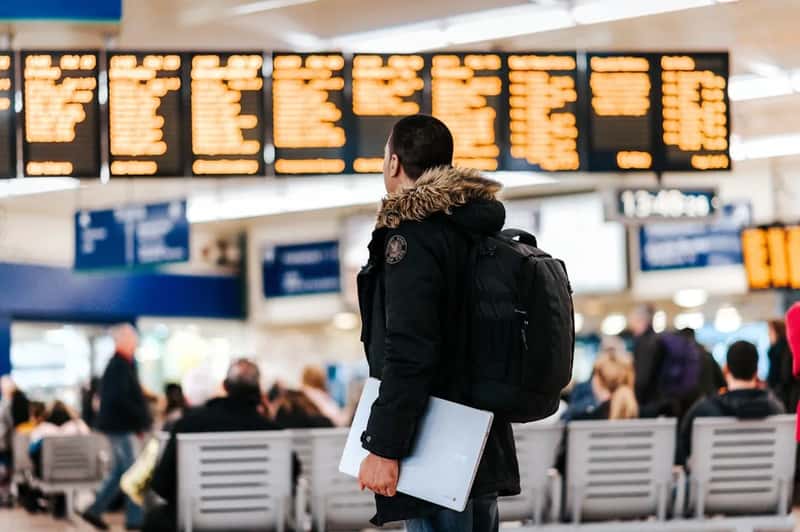
Some countries carry advisory levels not because of street crime but because their governments can’t guarantee reliable assistance to travelers if something goes wrong. A Level 4, Do Not Travel classification serves as a stark warning that conditions present extreme safety threats including armed conflict, terrorism, widespread violence, civil disorder, kidnapping, and limited or suspended U.S. consular support, and travelers already present are advised to depart if it can be done safely.[14] That last detail, about consular support specifically, is often the part travelers overlook, since it determines whether help is even available in an emergency.
It’s also worth remembering that advisories shift quickly and unpredictably, sometimes tied to fast-moving geopolitical events rather than gradual decline. Travel advisories are not fixed; they shift with elections, natural disasters, outbreaks and, as 2026 has shown, sudden geopolitical flare-ups.[2] Even sub-national warnings matter here, since risk can vary sharply within a single country. In locations such as Mexico, which overall holds a Level 2 advisory, specific states and provinces are flagged at the highest warning level due to localized crime and cartel violence, reflecting the advisory system’s flexibility in differentiating risk within a single nation.[14] Checking the specific region on your itinerary, not just the country name, can make the difference between an informed decision and an unpleasant surprise.
None of these seven red flags are meant to talk anyone out of traveling. Millions of trips happen every year to countries carrying elevated advisories, disease notices, or overtourism headlines, and the overwhelming majority go off without incident. What separates a smooth trip from a stressful one usually comes down to preparation: checking the actual advisory level and its risk indicators, glancing at recent CDC notices, confirming your transportation and accommodation bookings through verified platforms, and building in flexibility for weather or political shifts.
Destinations change year to year, sometimes month to month, and the traveler who checks these seven signals before booking is simply better positioned to enjoy the trip they’re paying for. A little skepticism at the planning stage tends to pay for itself many times over once you’re actually there.