Airport security lines have a rhythm to them, and regular flyers move through it almost without thinking. Watch closely, though, and you’ll notice a handful of habits that separate the seasoned traveler from someone who’s clearly not done this often. None of these mistakes are embarrassing exactly, but they do slow everyone down and mark a person as new to the process.
1. Waiting until the last second to take off your belt and jacket
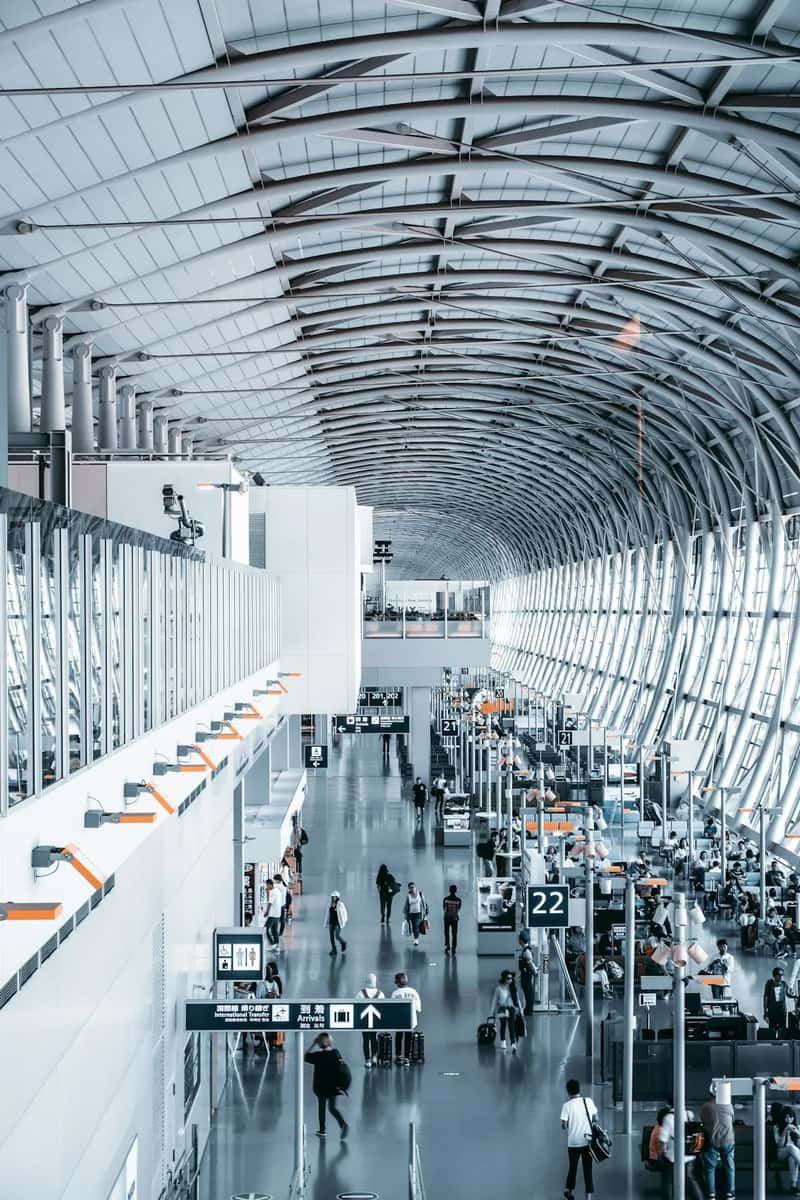
Nothing stalls a security line faster than someone reaching the bin area and only then realizing they’re wearing a belt with a metal buckle, a heavy jacket, or a watch that’s going to set off the metal detector. Experienced travelers start prepping two or three people back in line, pulling off layers and pocketing jewelry before it’s their turn. It sounds minor, but multiply that ten-second delay by a full queue and you get the kind of backup that makes everyone behind you sigh audibly.
The habit of prepping early isn’t just about speed either, it’s about avoiding the awkward shuffle of undressing in front of a TSA agent while a line stares at your back. Frequent flyers treat the walk to the bins like a countdown, not a surprise. By the time they reach the conveyor, they’re already down to socks and a mostly empty pocket.
2. Removing your shoes when you don’t have to anymore
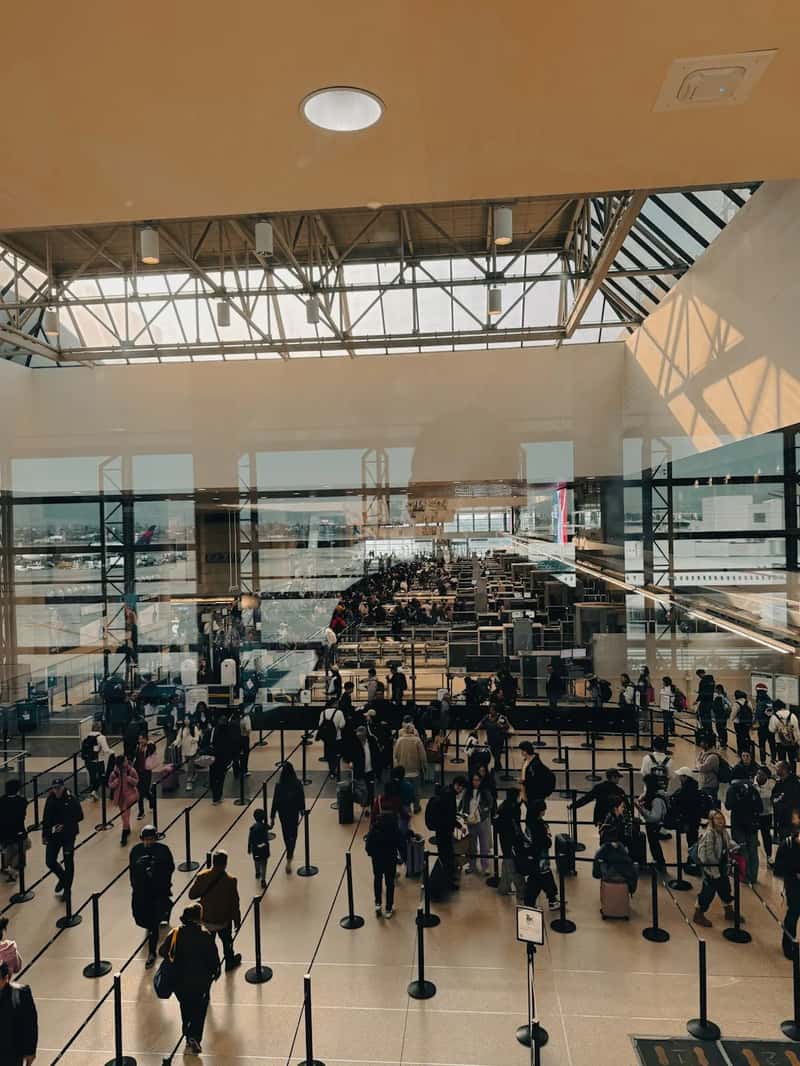
This one used to be universal advice, but it’s genuinely outdated now. The Transportation Security Administration ended its shoe removal mandate at U.S. airport security checkpoints on July 8, 2025, and now everyone can keep their shoes on, effective immediately, nationwide.[1] Travelers who still automatically bend down to unlace their sneakers are, ironically, doing something that hasn’t been required for well over a year.
Thanks to new technology, the TSA is now able to scan shoes while travelers wear them, meaning many people can walk right through without taking them off, as long as nothing unusual shows up.[2] There’s a small exception worth knowing though, since the only case where shoes still need to come off is for those who don’t have a REAL ID.[3] Anyone still yanking off their shoes reflexively is essentially advertising that they haven’t flown since the rule changed.
3. Digging through your bag to remove your laptop when it’s not needed
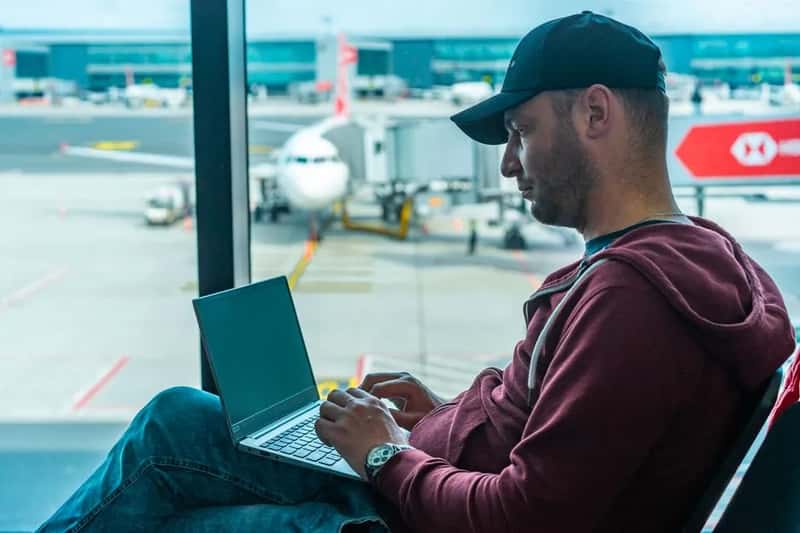
For years, pulling the laptop out and placing it flat in its own bin was gospel. That’s no longer true everywhere, and knowing the difference matters. At airports with computed tomography scanners, the laptop can stay in the bag, and travelers with TSA PreCheck don’t need to remove it either way.[4]
The catch is that this depends entirely on the checkpoint. This rule is only sometimes true now, since it depends on which airport and even which lane a traveler goes through, meaning it isn’t a golden standard.[4] Inexperienced flyers tend to follow the old ritual regardless, digging out their laptop even in a CT scanner lane where it isn’t necessary, or worse, forgetting to remove it in a lane that still requires it. Regular travelers glance at the signage or simply watch what the person ahead of them does.
4. Overpacking liquids into one bag without checking the limit

The classic three-ounce liquid rule hasn’t gone anywhere, despite all the buzz around new scanning technology. Despite new technology, the long-standing three-ounce liquid rule remains in place for most flights, and travelers still need to follow standard guidelines unless using lanes equipped with advanced scanners.[5] Someone who shows up with a gallon-size bag stuffed with full-size shampoo bottles and no quart bag at all is telling everyone in line they haven’t checked the rules in years.
Experienced travelers keep a dedicated toiletry bag pre-packed and ready, sized correctly, and easy to pull out without unpacking half their carry-on. It’s a small habit, but it’s one of the fastest tells. The person fumbling with oversized bottles at the bin, trying to decide what to sacrifice, is rarely a frequent flyer.
5. Not knowing which lane to choose
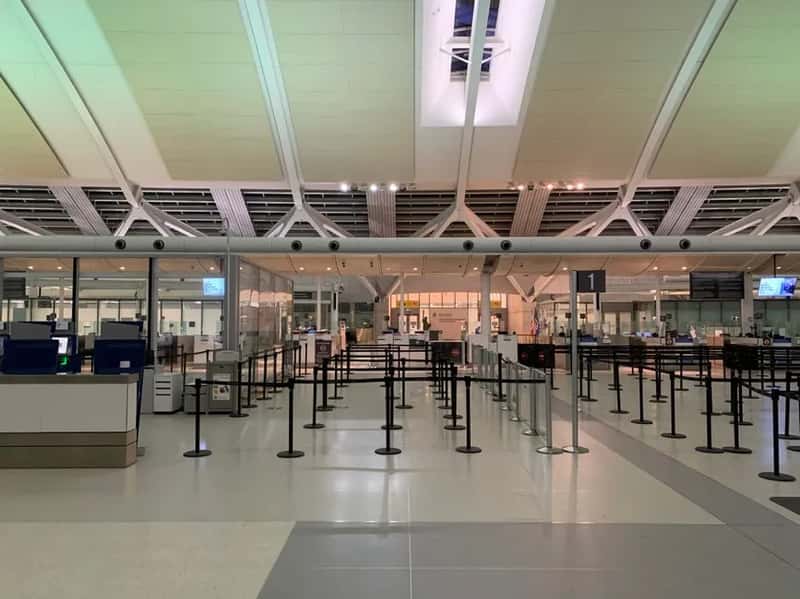
Standing at the entrance to security, visibly confused about whether to go left, right, or straight ahead, is a dead giveaway. Seasoned travelers know that PreCheck lanes, CLEAR lanes, and standard lanes all move at wildly different speeds, and they scope out the signage well before they’re standing in front of an agent checking boarding passes. Hesitating in the funnel area, blocking foot traffic while deciding, is one of the more obvious signs of inexperience.
It’s not just about speed, it’s about knowing your own documents too. Regular flyers have their boarding pass and ID ready before they even approach the queue, not fishing through a bag once they’re being waved forward. That split-second fumble at the front of the line tends to stand out precisely because everyone else has already moved past it.
6. Forgetting that laptops, tablets, and e-readers all count as electronics
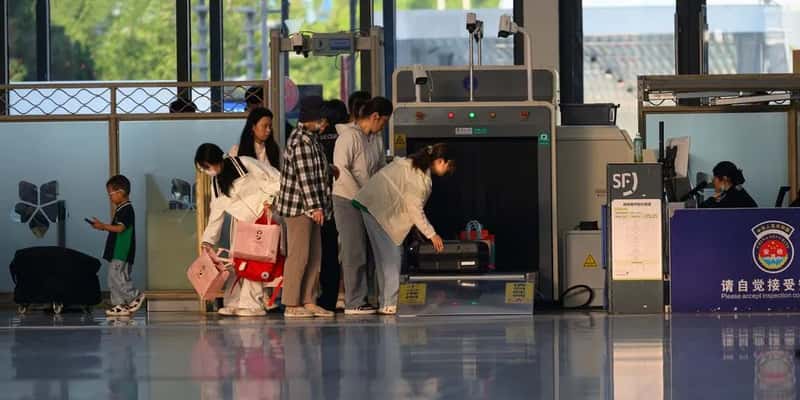
Even with CT scanners spreading across the country, older X-ray lanes are still common, and in those lanes every electronic larger than a phone typically needs its own bin. Laptops are allowed in carry-on bags with no limit on size, weight, or quantity, though whether one has to come out depends entirely on the scanner in use.[4] Inexperienced travelers often forget tablets and e-readers fall into that same category, tossing them into a bag alongside clothes and then looking surprised when an agent pulls the bag aside for a manual check.
The safer habit, especially in a lane without visible CT scanners, is to treat every electronic bigger than a phone as something that might need its own bin until proven otherwise. Following the direction of the TSA agents at the checkpoint is generally the simplest way to avoid confusion, since they’ll typically indicate what needs to come out.[4] Watching the agents rather than assuming last year’s rules still apply saves a surprising amount of time.
7. Blocking the bin area after your bag has cleared
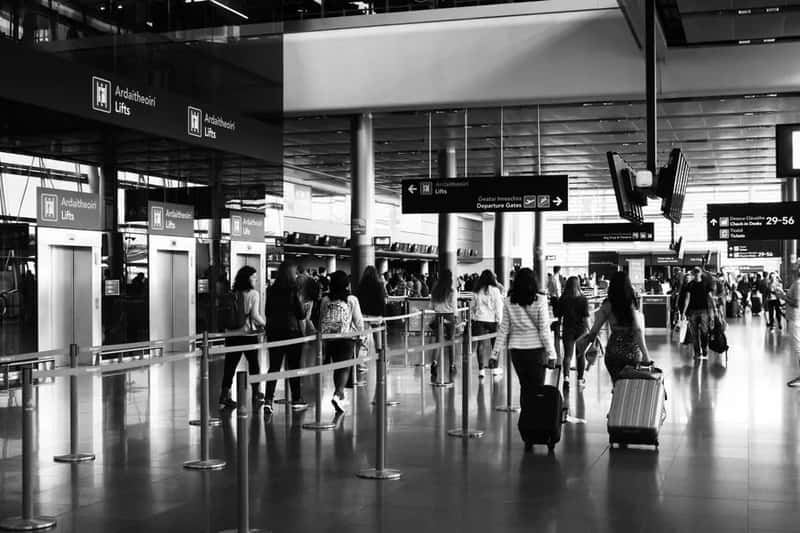
This is a subtle one, but it’s instantly recognizable to anyone who flies often. New travelers frequently linger right at the end of the belt, repacking their bag, tying their shoes, and generally reassembling their life while a growing pile of other people’s bins and belongings stacks up behind them. It creates a bottleneck that has nothing to do with the scanner and everything to do with etiquette.
The fix is simple and something experienced flyers do almost automatically: grab everything in one motion and move a few steps away before sorting anything out. There’s usually a bench or a stretch of open floor just past the checkpoint made for exactly that purpose. Standing still in the exit lane, phone in one hand and shoes in the other, is one of the clearest visual signs of an infrequent flyer.
8. Being caught off guard by REAL ID requirements
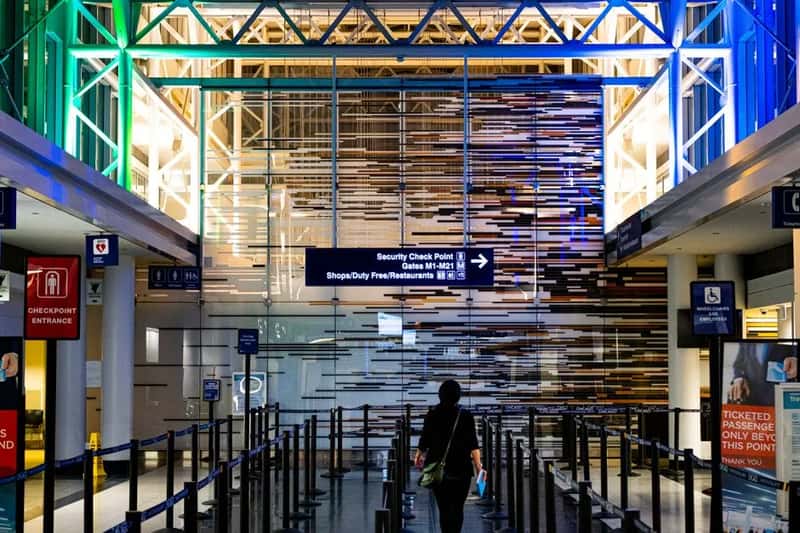
Since the shoe policy and REAL ID rules were rolled out around the same time, there’s some understandable confusion between the two, but the identification requirement is the one with real consequences. REAL ID is now required for all adult travelers on domestic flights, and this travel law started on May 7, 2025.[6] Someone showing up with a standard, non-compliant state ID and no passport is going to get pulled aside, and it’s one of the more time-consuming mistakes to make at a checkpoint.
Frequent travelers checked this once, updated their license or started carrying a passport, and haven’t thought about it since. People who are still surprised by it at the counter, asking what REAL ID even means, are revealing they haven’t paid attention to a change that’s now over a year old. It’s a minor administrative detail, but it can turn a five-minute security experience into a twenty-minute one.
9. Treating secondary screening like an emergency
Getting pulled for additional screening, whether it’s a random selection or something in a bag triggering a second look, is a completely normal part of flying and happens to frequent travelers too. The difference is in the reaction. Inexperienced travelers tend to visibly panic, apologize repeatedly, or ask a stream of anxious questions, which only slows the process down further.
Regular flyers know that secondary screening is procedural, not personal, and they simply follow instructions calmly. TSA agents make these selections based on data and internal criteria, not because something is necessarily wrong, and it doesn’t need to be treated as a crisis.[7] Staying relaxed, answering questions directly, and not over-explaining is usually the fastest way through it.
There’s no real trick to blending in at security, most of it comes down to paying attention to how the rules have shifted over the past couple of years and adjusting habits accordingly. The checkpoint experience has genuinely changed since the shoes-off era, and travelers who keep up with those changes tend to move through without a second thought. The ones who don’t usually aren’t doing anything wrong exactly, they’re just running on outdated information.