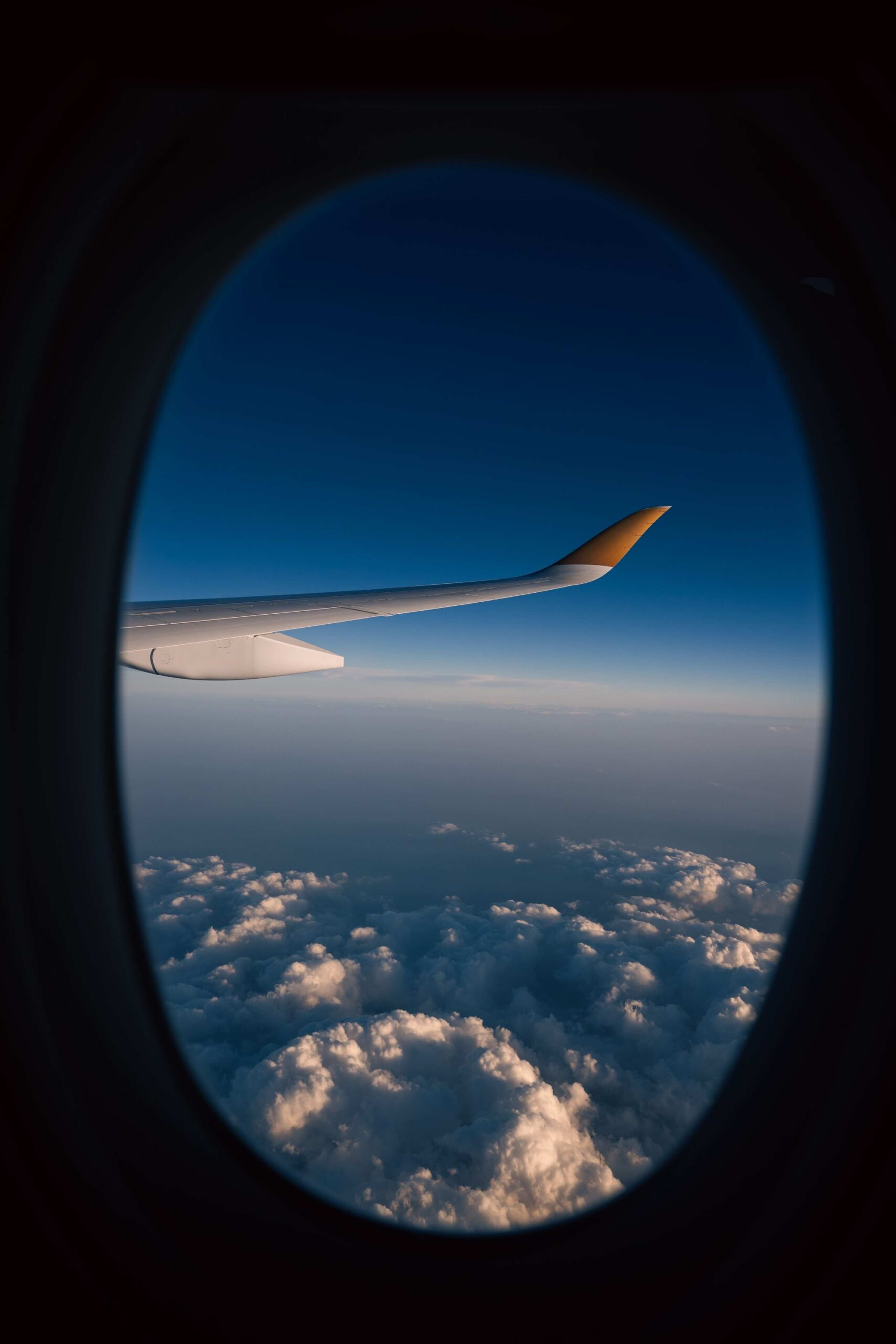
The terminal is loud at noon. You are not.
Everyone else is performing. You are watching.
Your bag is packed light. Your mind is packed heavy.
You have been called quiet. You have been called difficult. You have been called hard to read. And you have quietly filed each of these accusations away – studied them, turned them over, and moved on without saying a word.
There is a gap between who the world expects a traveler to be – restless, loud, social, hungry for group dinners and guided tours – and who you actually are when you step off a plane into a city where nobody knows your name. That gap is real. It is not a flaw. It is the exact space where your most powerful perception lives.
1. The Quiet Lens

Most travelers arrive at a destination and immediately begin narrating it – to a partner, to a group chat, to an Instagram story.
You do something different.
You look.
Introverts tend to be great observers and are always the first to notice anything from a new haircut or outfit to a shift in body language, facial expression, or tone of voice. Now transport that trait to a foreign city, a crowded market, a midnight train platform – and that observation becomes something close to art.
The waiter who is tired but pretending otherwise. The couple at the café who haven’t spoken in twenty minutes but aren’t uncomfortable about it. The child pressing her face against a shopfront glass.
Introverts utilize their exceptional skill to read and analyze the room to understand the different energies that others bring to shared space. This inherited quality helps them develop a heightened sense of their surroundings and the people within.
You don’t just visit a place. You absorb it at a frequency most people never access.
2. The Accurate Eye
There is research behind this. It is not soft science. It is measurable.
A 2018 study shows that introverts have high levels of observation – in the study, introverts made more accurate observations about human behavior than extroverts.
More accurate. Not slightly. Not marginally. More.
This is likely a nod to spending less time interacting and more time observing. When you are not performing your own presence, you are free to register everyone else’s. The introvert in the corner of the bar isn’t being antisocial. They are building a complete psychological portrait of every person in the room – noting the exits, the tensions, the unspoken agreements between strangers.
In travel, this skill becomes a survival mechanism. And a form of grace.
You read a city the way others read a headline. Fast. Deep. Without missing the subtext.
3. The Slow Arrival
The extroverted traveler hits the ground running. Day one is a sprint – check every box, photograph every ruin, exhaust every option.
You arrive differently.
You sit with a place first. You let it settle around you before you move through it.
Introverts prefer to concentrate on a single activity at a time and like to observe situations before they participate. In travel, this restraint – often mistaken for passivity – is actually a form of precision. You are calibrating. Reading the room before entering it fully.
The result is a different quality of experience. Not broader. Deeper.
Beyond the practical question of where to go, there’s a deeper question worth sitting with: what is solo travel actually doing for us when it works? Because for introverts, the best trips aren’t just pleasant. They’re clarifying.
Clarity. Not distraction. That is what you are actually searching for when you book the flight.
4. The Interior Map
Everyone else is following GPS. You are following something older.
Solo travel provides the ideal setting for introspection. Free from external social pressures, introverts can focus inward, exploring their thoughts and feelings on a deeper level. This dedicated self-reflection often leads to a better understanding of personal values, strengths, and areas for personal development.
The introvert traveler is not just mapping terrain. They are mapping themselves – cross-referencing the city outside with the architecture within. Every cathedral, every back alley, every rain-soaked plaza becomes a mirror.
This is not navel-gazing. This is cartography of the self.
And therapists recognize it as genuinely valuable psychological work – the kind that most people only arrive at after years on a couch. You do it on a train to nowhere in particular, watching the landscape change outside a smudged window.
That is not wasted time. That is the most productive time you will ever spend.
5. The Transit Hours
I remember sitting in a transit lounge in an airport I did not expect to like – harsh fluorescent light, a smell of recycled air and overpriced espresso. My flight had been delayed by three hours. My traveling companion from a previous trip would have been spiraling. I was not.
I had a notebook. I had the crowd. I had enough.
Introverts can use the solitude inherent in solo travel for psychological rejuvenation. A key benefit lies in the unstructured time spent in transit – train journeys, flights, or even delayed connections – which introverts often use for reading, journaling, or simply observing the world around them.
The delay that breaks the extrovert feeds the introvert. The gap in the itinerary is not a gap at all. It is the whole point.
You were built for the liminal. You live well in the in-between.
6. The Chameleon Advantage
You were never trying to stand out. That has always been your superpower.
Many introverts are not interested in being the centre of attention, and therefore are natural chameleons at blending into their surroundings and observing the life around them. This is a valuable skill for many reasons, but purely from a safety perspective, if you avoid sticking out like a sore thumb, you’re less likely to be the target of unwanted attention.
But it goes deeper than safety. When you blend into a neighborhood, people behave naturally around you. The butcher doesn’t perform. The grandmother on the bench doesn’t adjust her posture. The children don’t notice you watching them play.
You get the unfiltered version of every place you visit.
Introverts are also often keen observers. They tend to be acutely aware of their surroundings and pick up on subtle nuances which enrich their experience and understanding of places.
Subtle nuances. The phrase sounds small. What it means is everything.
7. The Self-Efficacy Engine
There is a particular kind of confidence that only grows in solitude.
Every time you navigate something alone – a border crossing in a language you don’t speak, a medical inconvenience in a city where you know no one, a single table at a restaurant where every other diner is coupled or grouped – you make a deposit into an internal account. The Self-Efficacy Accumulator is, perhaps quietly and without ceremony, building one of the most durable psychological resources a human being can possess.
Nobody is watching you do this. Nobody applauds it.
That is precisely why it holds.
Successfully managing unexpected challenges, from language barriers to missed connections, builds self-reliance and strengthens problem-solving skills. These small victories add up, resulting in a greater sense of competence and adaptability.
You do not collect stamps. You collect evidence that you are capable of more than you were told.
8. The Deliberate Connection
People assume introverted travelers are cold. Closed. Unavailable.
This is a spectacular misreading.
The ability to think deeply, listen fully, observe carefully, and act with intention may not always stand out in a loud world. However, these traits shape meaningful relationships, thoughtful decisions, and lasting impact.
When an introverted traveler chooses to speak to someone – a local, a fellow traveler, a stranger on a ferry – the conversation is not small talk. It never is. They have been observing this person for twelve minutes. They know which question will actually land.
Most of them do enjoy meeting new people, but they’re usually very selective about who they open up to, choosing to reserve the largest part of themselves for those who have earned their trust.
Selectivity is not rejection. It is respect. For their own energy. For the other person’s time. For the integrity of the exchange itself.
9. The Psychological Return
The group traveler comes home with photographs and a shared narrative.
You come home changed.
Psychological research published through PubMed Central has explored how solitude and self-reflection contribute to well-being, particularly for people who process experience internally. The findings align with what many introverts report anecdotally: time alone isn’t just comfortable, it’s functionally necessary for the kind of deep processing that keeps us psychologically healthy and creatively alive.
This is not a romantic notion. It is neurology.
Some popular psychologists have characterized introverts as people whose energy tends to expand through reflection and dwindle during interaction. Travel, for the introvert, is not about adding stimulation. It is about giving the reflective mind enough raw material to work with – and then the quiet to process it.
You come home and you are quieter than when you left. People think you are tired. You are not. You are full.
10. The Identity That Survives Transit
Here is what nobody tells you about being an introverted traveler.
When everything external is stripped away – the routine, the social role, the performance of belonging – what remains is not loneliness.
What remains is you.
This is why many solo travelers have a strong sense of self-awareness. When you’re on your own, you have the time and space to reflect on your thoughts, feelings, and reactions. You become more aware of your strengths and weaknesses, your likes and dislikes, and your comfort zones. This heightened self-awareness often leads to personal growth.
And this is the trait that therapists flag as genuinely remarkable – the ability to maintain a coherent internal identity across radically shifting external environments.
Most people dissolve a little when the familiar disappears. They reach for noise. For company. For the comfort of being seen and narrated back to themselves.
Introversion is not something that needs to be corrected. It is a different rhythm of living, one that carries its own kind of power. And in the context of travel – where identity is pressured, disrupted, renegotiated at every border – that rhythm becomes a steel thread. You hold yourself together not by gripping, but by going quiet enough to feel where the center is.
You know the center. You have always known it. You just need the motion of a train or the hum of an unfamiliar city at dawn to hear it clearly again.
The world calls this personality type reserved. It calls it introverted. It calls it solitary, sometimes even sad. It hands out these labels like customs declarations, as if knowing the category explains the contents. But what sits inside the introverted traveler is not absence. It is accumulated evidence – of streets walked alone, of silences that taught something, of the thousand tiny observations that never made it into anyone’s travel blog because they were never meant for anyone else.
They were just true.
And somewhere between the departure gate and wherever you are going, in the liminal hours that everyone else is trying to skip past, you are doing the quietest and most consequential kind of work a person can do: learning, without audience or applause, exactly who you are when no one is watching.
That knowledge does not fit in overhead storage. But it follows you home regardless.
You Might Also Like:
- People Who Can Navigate A Foreign City Alone Without Feeling Awkward Have Developed True Self-Sufficiency—But It Often Comes From Not Trusting Others To Lead
- Psychology Says The People Who Are Obsessed With “Bucket Lists” Often Grew Up Feeling Like Life Was Passing Them By, And These 10 Behaviors Are How They’re Trying To Catch Up