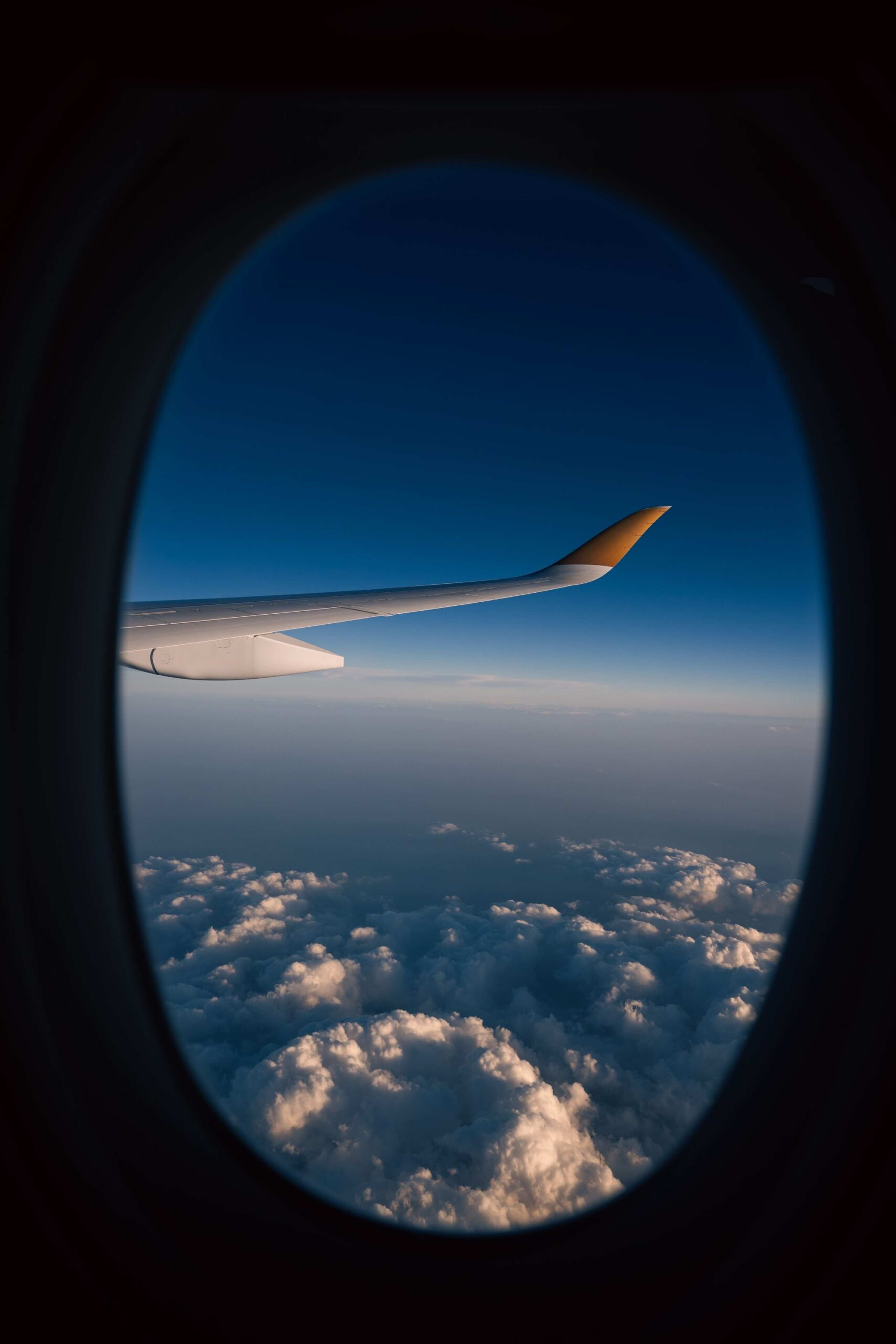
The cabin hum is the first thing you notice.
Then the altitude. Then the strange, quiet permission.
The notebook comes out. The ideas arrive like old friends who were never actually gone. You write for four hours without checking a single notification. You feel, against all logic, free.
And then you land. And the cage door swings shut.
There is a version of you that only exists above the clouds. A version that isn’t managed by obligation, surveilled by routine, or strangled by the performance of your own daily identity. That version doesn’t need better Wi-Fi or a standing desk. It needs distance – psychological, physical, existential – from the life it has been told to want.
This is the Identity Gap. The canyon between who you perform yourself to be on the ground and who you actually are when nothing around you is permanent. The gap is not a flaw. It is a signal. Most people never decode it. They just keep booking more flights and wondering why the clarity always evaporates on the drive home from the airport.
1. The Surveillance Self
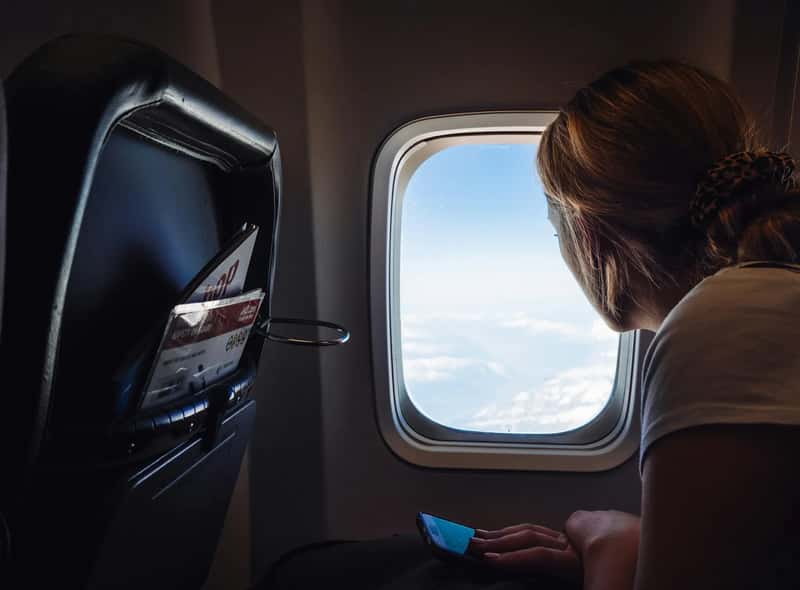
On the ground, you are watched. Not by cameras. By context.
Your neighbors know your car. Your colleagues know your coffee order. Your family knows every version of you that has ever failed or overreached or quietly retreated.
Stationary life is a hall of mirrors. Every room you enter is already furnished with other people’s expectations of who you are supposed to be inside it.
At 35,000 feet, none of that furniture exists.
Construal level theory in psychology tells us that the closer individuals are to things and problems – the more “up close” they are – the more concretely and unimaginatively they think. Getting distance, even perceptual distance, allows the mind to think more abstractly. The plane provides that distance in a single boarding pass.
When no one is watching the version of you they invented, the real one finally gets a moment alone. That’s not escapism. That’s archaeology.
The block isn’t a lack of talent. The block is the weight of being perpetually seen by people who stopped looking at you clearly years ago.
2. The Permission Problem
You don’t create at home because, somewhere deep in your wiring, you haven’t been given permission to.
Permission to make a mess. Permission to be wrong. Permission to spend three hours on something that produces nothing usable.
One of the most common causes of creative paralysis is fear of failure – many creators worry that their work will not be well-received, leading to a paralysis that stifles creativity entirely.
But on a flight, the social contract shifts. No one expects you to be productive. The tray table is not a professional surface. The seat pocket in front of you is not a filing cabinet. The entire environment communicates: nothing you do here counts. And that – that magnificent irrelevance – is exactly what creativity needs.
It is an innate characteristic of human psychology to desire certainty, but it’s the creative thinker who rejects the false comfort of clarity when it’s not truly appropriate. Ambiguity becomes a friend to the innovative mind – the fact that most people are uncomfortable exploring uncertainty actually gives the creative person an advantage.
In stationary life, you wait for permission that will never come. At altitude, the question becomes irrelevant. The seat is yours for ten hours. The canvas is blank. Permission has been suspended along with gravity.
3. The Shallow Work Trap
Your creative mind is starving. Not because it is broken. Because it is never, ever fed.
Every hour on the ground is colonized. Notifications arrive like small, insistent bureaucrats. Each one demands a response. Each response costs cognitive currency you will never get back.
Researchers have qualified the hours spent on long-haul flights as “idle time” – and knowledge workers, including writers, designers, developers, and project managers, are stuck in a “shallow work” pit where ideas don’t have time to grow, if they ever arrive at all, because they’re never given the time or attention they deserve.
Your best ideas don’t need inspiration. They need duration. They need the long, uninterrupted runway of time that modern stationary life has made structurally impossible.
The plane forces the feed. There is nothing else to do but think. And so, at last, you think.
The cage is not your house. The cage is your schedule.
4. The Frozen Identity
You became someone around age twenty-six. Maybe twenty-eight. And then – somewhere between the lease renewals and the LinkedIn updates – you just became more of that person.
Identity calcification is quiet. It doesn’t announce itself. It just slowly makes it harder to imagine yourself doing anything other than what you already do.
Having an open mind toward new experiences is a fundamental part of creativity – openness shows up as curiosity, imagination, and perception. Studies show that open-minded people tend to process information differently and may actually look at the world differently than those who are less open.
Transit dismantles the frozen self. At the airport, you are anonymous. In the air, you are undefined. The normal rules of selfhood don’t apply when you are, technically, between countries.
The temporary absence of your fixed identity is not a loss. It is the most accurate version of freedom you will feel this year. The creative block at home isn’t about talent. It’s about the rigidity of a self that has been lived in the same way for too long.
5. The Noise That Never Stops
I remember sitting at my desk once, staring at a blank document. The silence was deafening, but it wasn’t empty. It was full. Full of everything I hadn’t replied to yet. Full of the dish in the sink. Full of the low-grade static of a life that needed attending to.
I wrote nothing that day. Not a word.
Three weeks later, on a red-eye to Tokyo, I wrote twelve pages in five hours. The cabin was dark. The engine was loud. And paradoxically, it was the quietest my mind had been in months.
The noise that kills creativity isn’t decibels. It’s demand. It’s the psychological weight of every unfinished thing that exists within arm’s reach.
Sometimes when life happens, it takes up all the psychic space and energy you have for a while. You may need to process what you’re going through – or even finish going through it – before you’ll feel truly inspired again.
The flight removes the arms. It puts the unfinished things at a distance your nervous system can finally accept. And in that distance, the signal breaks through the static. The real work begins.
6. The Perfectionism Prison
At home, you know what good looks like. You’ve seen it. You’ve been measured against it. You live inside a personal mythology of your own previous successes and, more devastatingly, your previous standards.
That mythology is a prison with excellent lighting.
Perfectionism plays a significant role in creative blocks. The quest for unattainable perfection can prevent progress, causing creators to scrutinize their work excessively – and it is essential to understand that imperfection is, itself, part of creativity.
On a flight, the perfectionism softens. No one will read what you write over the next nine hours. The stakes are artificial. The pressure is zero. The work you do at 35,000 feet carries no résumé weight. And so you actually do it.
Creativity isn’t a gift that disappears. It’s a system that depends on regulation. And what the flight regulates – beautifully, accidentally – is the internal critic who has been appointed timekeeper of your creative output on the ground.
The perfectionism prison has no walls at altitude. Only the runway ahead, and the strange mercy of a temporary world where nothing counts yet.
7. The Routine That Became a Rut
There is nothing wrong with routine, until there is.
The coffee at the same time. The same route to the office. The same lunch. The same familiar friction of the same familiar life. Routine is efficiency. But efficiency, in the creative mind, is the opposite of discovery.
A change in surroundings acts as a cognitive reset – offering a fresh perspective and reinvigorating creative faculties that may have been stifled in a familiar or monotonous setting.
Neuroscience suggests that novel experiences can lead to the formation of new neural pathways. When we travel, we are constantly learning – and this learning enriches our neural networks, enhancing brain plasticity, which is closely associated with creativity.
The flight obliterates routine in a single announcement. There is no yesterday on a long-haul flight. There is no habitual context to fall back on. Every sensory input is different. Different light. Different altitude. Different air – pressurized, strange, borrowed.
Your brain wakes up. Not because the flight is comfortable. Because it is unfamiliar. And unfamiliarity, for a creative mind running on empty routine, is the most nourishing thing in the world.
8. The Emotional Backlog
You haven’t processed what happened last year. Or the year before that. Or, if you are honest, the decade before that.
You are creative, which means you are also a collector. You collect impressions, grief, unresolved conversations, the specific texture of moments that never quite closed. And all of that unprocessed material sits inside you, taking up the space where new work should be growing.
Creative blocks can serve as both a mirror and a magnifier of underlying mental health issues. The stress and anxiety stemming from an inability to produce work can exacerbate feelings of inadequacy, self-doubt, and impostor syndrome – tapping into deeper fears about personal and professional identity, value, and purpose.
Addressing what’s unresolved – fear, exhaustion, grief – doesn’t just restore creativity; it deepens it.
The flight gives the backlog somewhere to go. Suspended between two places, belonging to neither, the emotional material finally moves. You cry sometimes, watching a mediocre film at 38,000 feet. It isn’t the film. It’s everything the film accidentally unlocked. That release – unglamorous, mid-air, with a blanket from a plastic bag – is often the beginning of the best work you will ever make.
9. The Social Performance Exhaustion
Being a person is exhausting.
Not the private person – the one who makes tea at midnight and reads in the dark and thinks thoughts they would never say out loud. That person is fine. That person is doing beautifully.
It is the public person who is destroying your creative life.
Psychological restlessness, often viewed negatively, can actually be harnessed to enhance creative expression and personal growth – a finding that suggests the need for specialized therapeutic interventions tailored to creative individuals.
Every day on the ground requires a performance. Of competence. Of stability. Of having it together enough that people do not worry about you. That performance costs an enormous amount of the raw material that creativity requires. By evening, the tank is empty. The notebook stays closed. The cursor blinks in the dark.
But in a plane, no one needs you to perform. The stranger next to you doesn’t know your job title. The flight attendant doesn’t need you to be okay. The altitude strips the performance requirement down to nothing. And from that nothing – that blessed, anonymous nothing – the truest creative work emerges.
The altitude is a mirror, not a destination. What you see in it – that focused, unguarded, generative version of yourself – isn’t a person who only exists on airplanes. It is the person who has been there all along, waiting patiently for the noise to stop long enough to speak. The flight doesn’t create your creativity. It removes everything that has been quietly strangling it.
The work, then, is not to keep booking flights. The work is to look clearly at what the flight removes – the surveillance, the permission deficit, the perfectionism, the emotional weight – and begin, painstakingly and without romance, to remove those things from the ground-level life too. One hour at a time. One closed door at a time. One ignored notification at a time. It is slower than a boarding pass. It is harder than altitude. But it is the only runway that doesn’t have a return ticket.
The next time you feel that familiar surge of clarity as the wheels leave the tarmac, don’t mourn what you are leaving behind. Listen, instead, to what you are finally, briefly, free enough to hear.