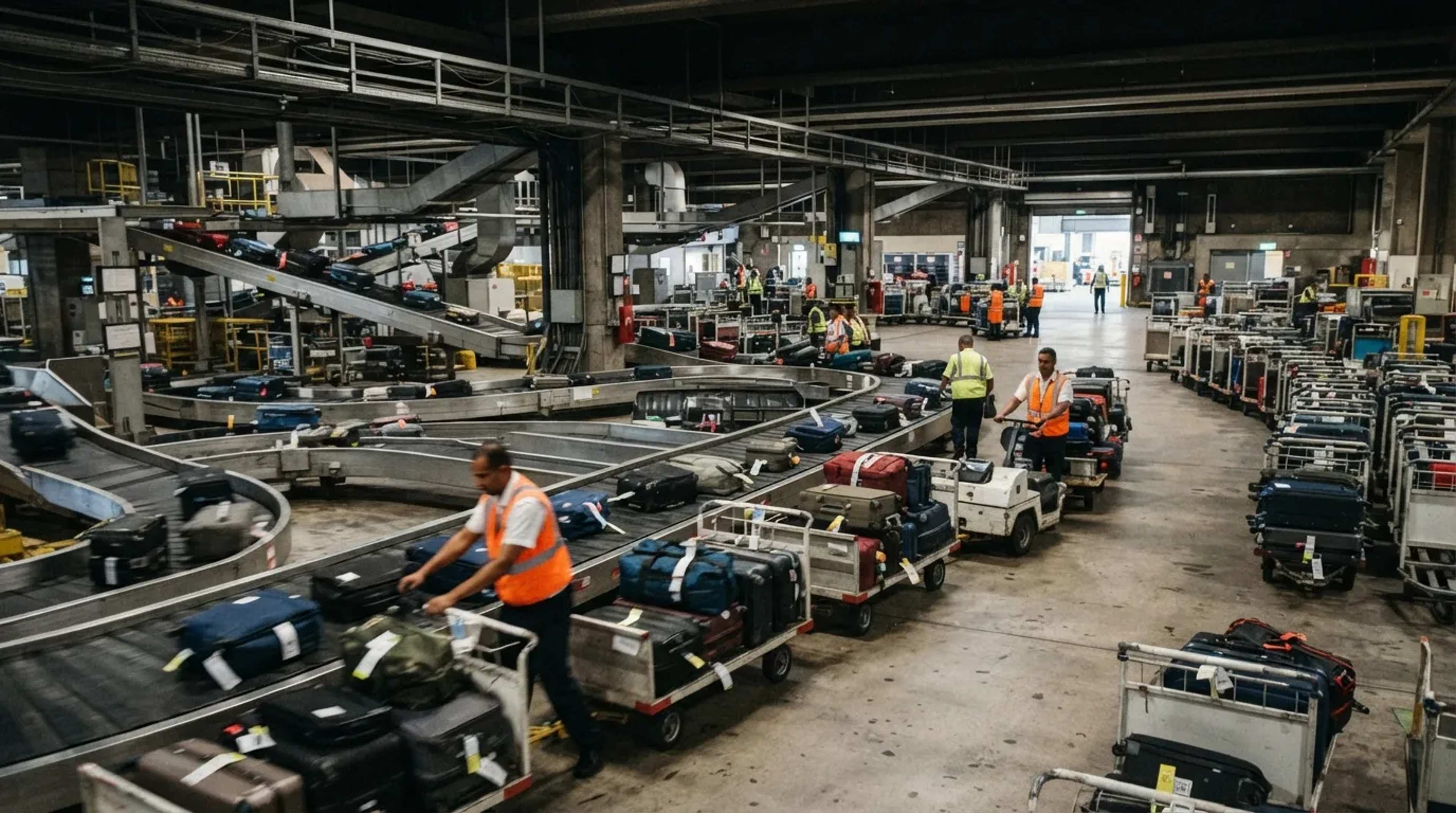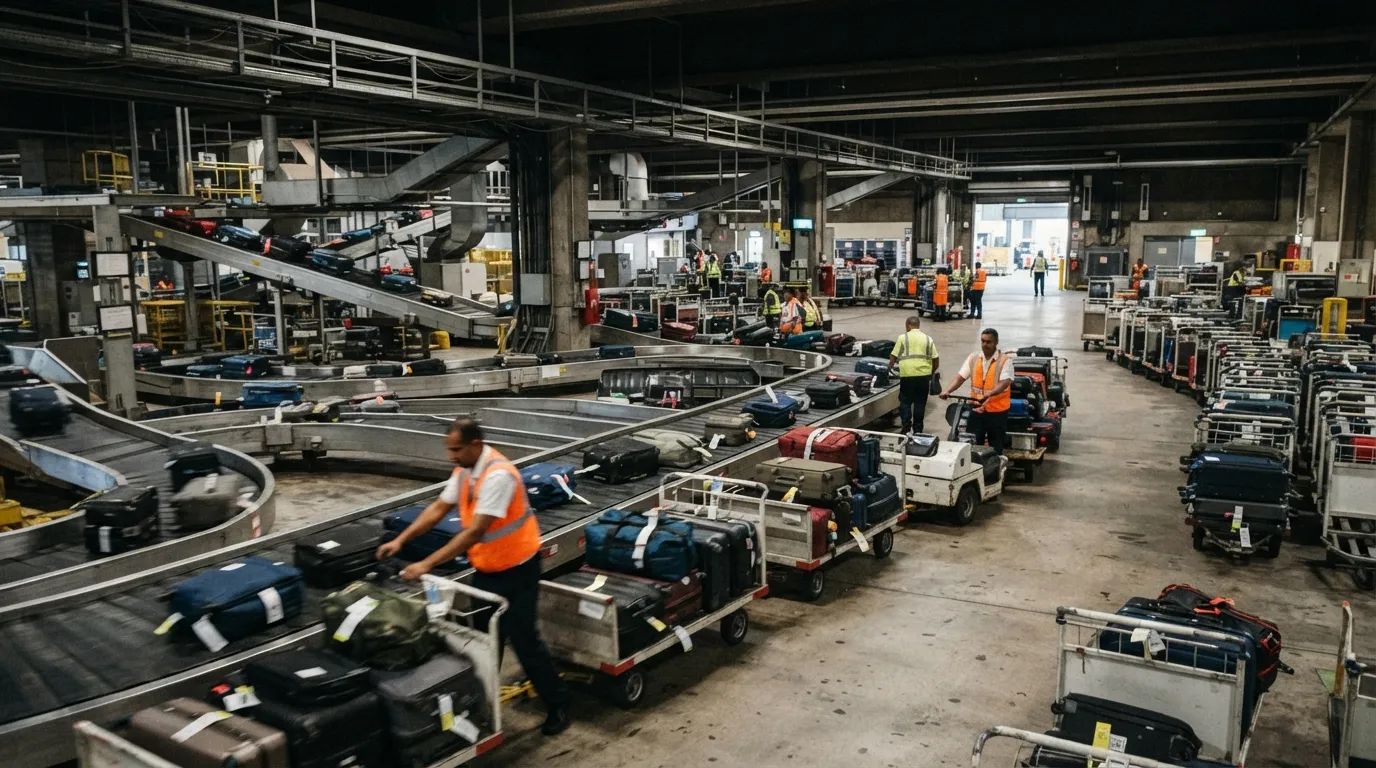
You board a plane thinking the flight begins when the engines spool up. By then, a crowd of people in reflective vests has already spent the better part of an hour putting out fires you never saw start. A bag was headed to the wrong city. A cabin couldn’t be touched until the aisle was clear. A bolt was lying on the pavement. The numbers behind that hidden scramble are wild: one mishandled bag costs an airline about $260, and with net profit averaging roughly $8 per passenger, a single one wipes out the profit from more than 30 seats.
Here’s the sneaky part. The biggest threat to your suitcase isn’t where most people think it is, and the whole operation runs on a clock that can be as short as 25 minutes. Start at #15 and work down to the one signal that has to happen before a plane can roll backward.
#15 – The Catering Truck Can’t Finish Until the Cleaners Clear the Aisle
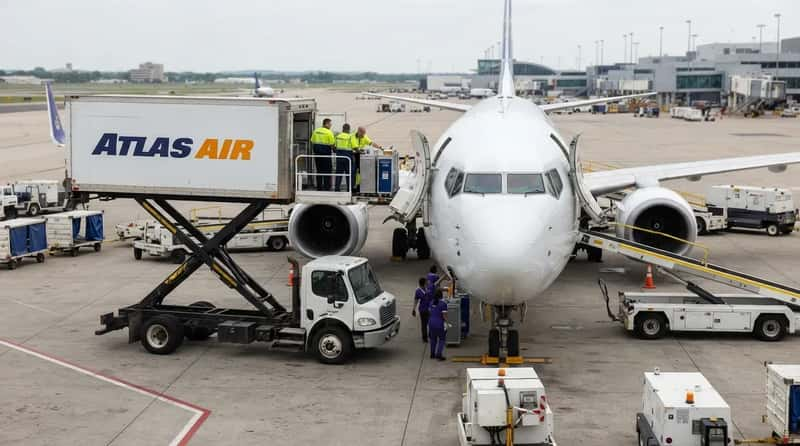
A catering truck backs up to the forward galley door, but it can’t just start swapping trolleys. Turnaround jobs have a strict order. Catering can’t finish loading the forward galley until the cleaning team has cleared the aisle. Boarding can’t start until arriving passengers have left and the cabin has been cleaned.
At a Glance
- Cleaners clear the aisle first, then catering finishes the forward galley.
- Boarding waits until arriving passengers are off and the cabin is clean.
- Whenever possible, jobs run side by side to save minutes.
- Low-cost carriers often target a 25 to 30 minute turn.
So the crew isn’t racing one task at a time. It’s untangling a chain of waiting. Whenever possible, teams run jobs side by side, and fuel is often being pumped into the wing tanks while the cabin is being cleaned. The choreography is less about speed than about who has to wait for whom. And the next two vehicles have the least glamorous jobs on the whole ramp…
#14 – The Lavatory and Water Trucks Quietly Reset the Whole Cabin
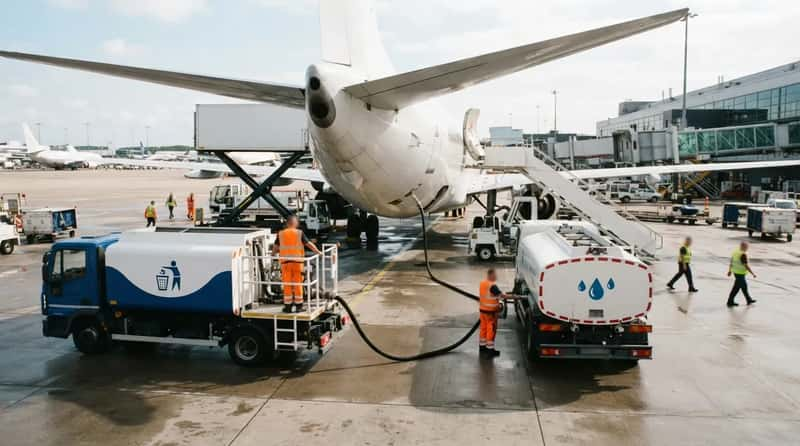
While you’re still deplaning from your last flight, two vehicles nobody photographs show up. A water truck and a lavatory truck pull around to the rear. The lavatory truck services the toilets, and the water truck refills the potable water tanks as fresh catering goes in. Skip this job and the next flight starts with a very different cabin.
Most people don’t realize how crowded it gets down there. A single aircraft can have about a dozen different handlers working around it. Flight crew, ground personnel, fuelers, de-icer trucks, baggage handlers and catering staff all converge on one parked jet. That crowd is exactly why the first thing on the ground is a set of orange cones.
#13 – Chocks and Cones Go Down Before Anything Else Moves
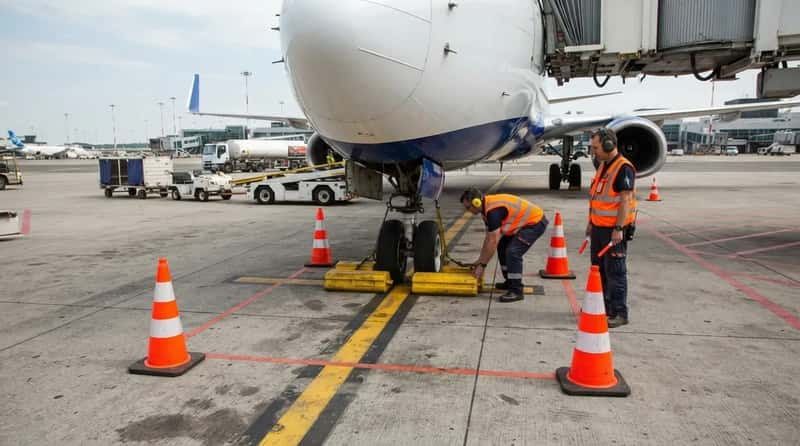
Before a door opens, someone has to park the plane safely. One crew member guides the aircraft into position using marshalling wands. Chocks and cones follow right away. Then others connect the jet bridge, begin offloading bags from the hold, and hook up the ground power unit.
Think of it as a safety reset. Within minutes, half a dozen vehicles can converge on the same parked aircraft from different directions. A baggage tug curves in under the cargo hold, while a catering truck and a fuel truck head for their own spots. Those first minutes are among the most crowded of the whole turn. And the next item is the plug nobody notices.
#12 – The Jet Gets Plugged In Like a Giant Appliance
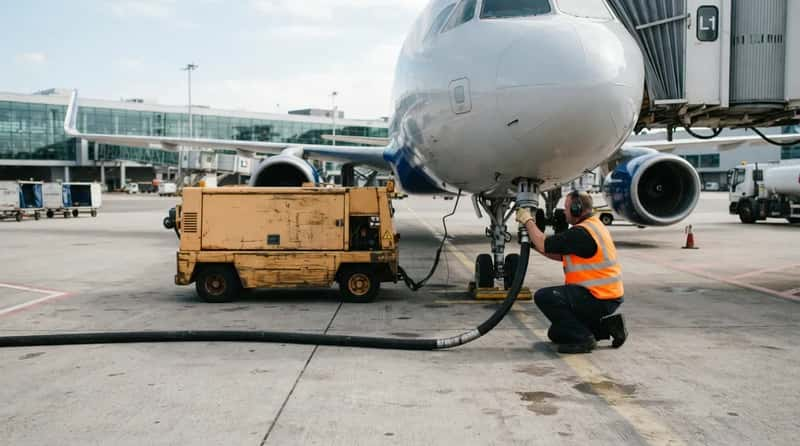
Ground power sounds boring until you realize what it replaces. Crews connect a ground power unit at the gate so the aircraft has electricity while it’s parked. Lights and systems stay on while the jet sits still, without burning jet fuel to make it happen.
Worth Knowing
- The plug-in happens at the gate, early in the turn.
- Fixed gate power can let the plane skip its own auxiliary power unit.
- That means less noise and fewer fumes where crews are working.
- It repeats on every single turn, so small savings add up.
It’s a small decision, but the payoff is a calmer ramp with fewer engines whining near the crew. But the next problem might be sitting inside your own suitcase…
#11 – Dangerous Goods Get Spotted and Separated Before Loading
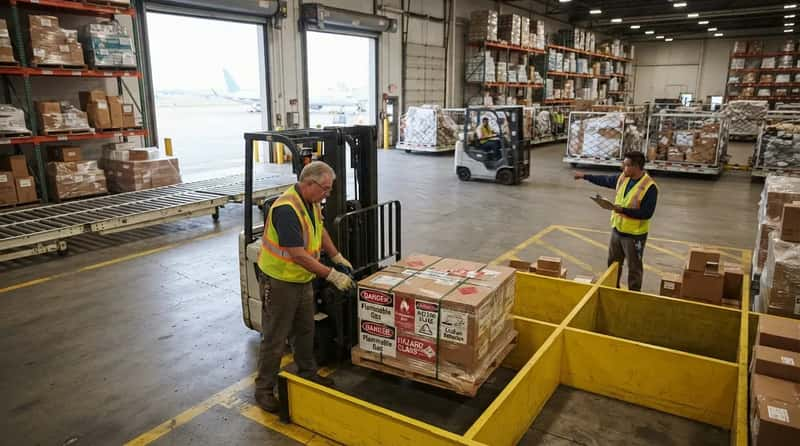
Not everything that travels by air can sit next to everything else. Ground services include identifying and separating dangerous goods in line with the ICAO Technical Instructions. Loaders and cargo staff are trained to recognize hazard labels and keep certain items apart. A mislabeled box can quietly become a safety problem long before takeoff.
The work stays mostly invisible because it’s meant to. Cargo gets built up, checked and separated while everyone else is thinking about boarding. When a handler pulls something aside, it’s usually a rule doing its job, not a hassle. Next up is a service most travelers only notice when it goes wrong.
#10 – Wheelchair Help Is Planned Logistics, Not a Favor
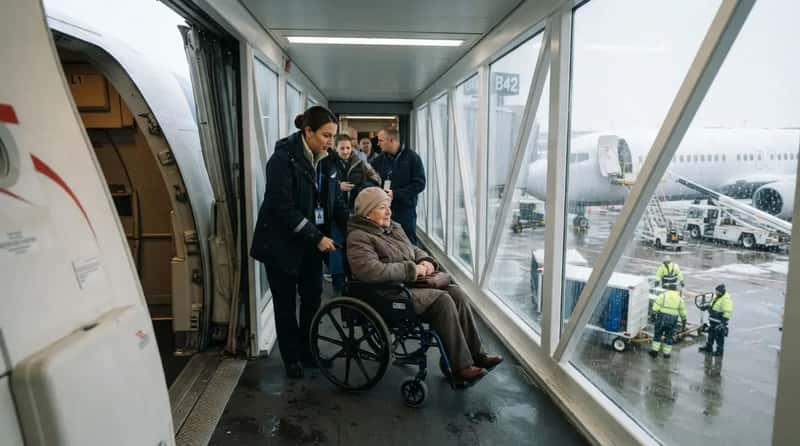
Many travelers assume assistance appears on the spot. In reality, it’s planned work. Passenger services cover check-in, boarding, and help for passengers with reduced mobility. Agents also manage gate assignments and handle lost or damaged luggage.
Someone has to be at the right door, with the right equipment, at the right minute. That job has to fit inside the same short window as everything else on the aircraft. Miss it, and a passenger waits while the clock keeps running. Winter adds another hurdle, and it’s ticking.
#9 – De-Icing Crews Race a Clock You Can’t See
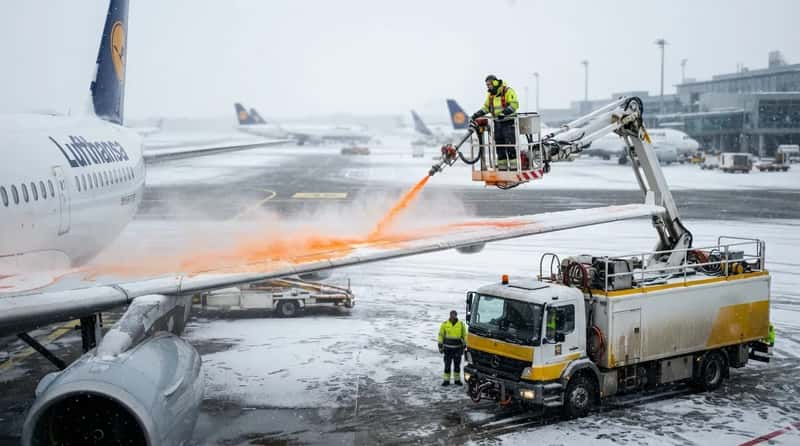
In cold weather, de-icer trucks join the crowd around the jet. The fluid doesn’t protect a plane forever, so timing matters. Crews coordinate with the flight so treatment happens close to departure. A perfectly clean wing can lose its protection while the plane waits in line.
That’s why a snow delay can feel illogical from your seat. The plane may look ready while the safe window is quietly shrinking. From a crew’s side, repeating a step beats guessing, and the extra wait is the system working as designed. Meanwhile, a tiny threat on the pavement costs the industry billions.
#8 – Someone Walks the Pavement Hunting for a Single Bolt
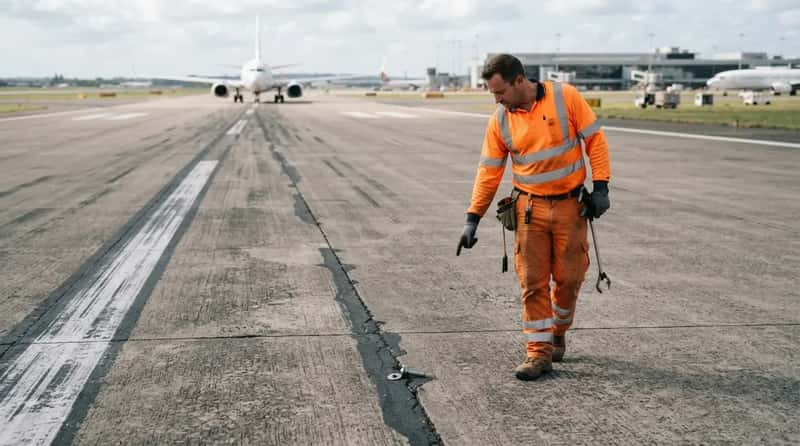
Foreign object debris, or FOD, sounds minor. It isn’t. Boeing has estimated that damage from foreign debris costs the aviation and aerospace sectors about $4 billion every year. The Concorde disaster of 2000 traced back to a single metal strip about 43 cm long lying on the runway.
The tricky part is time. The window to inspect a runway is usually just minutes, because flights are scheduled back to back. If crews find debris, runway operations may have to stop until it’s removed. And the hazard isn’t always metal. Sometimes it has feathers.
#7 – Wildlife Teams Face About 61 Reported Strikes a Day
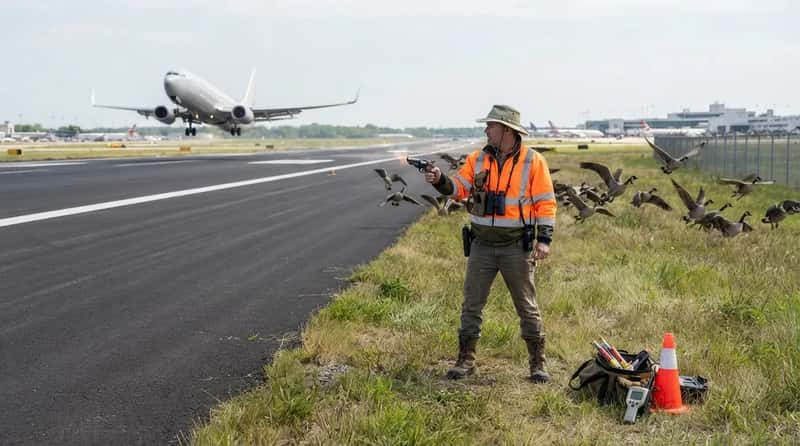
Birds are an airport problem long before they’re a flight problem. Across the U.S., the daily tally of reported wildlife strikes comes out to roughly 61. Airport wildlife staff work constantly to keep animals away from active runways.
Fast Facts
- The FAA logged 19,628 wildlife strikes in 2023.
- That rose to 22,372 in 2024, or roughly 61 reported strikes a day.
- From 1990 to 2025, 54% of bird strikes happened between July and October.
- Fall migration is the main reason for that late-summer-to-autumn spike.
Here’s the twist. Most strikes do little harm, and the share with reported damage from 1990 to 2024 averages about 7 percent. But the FAA ties the rising numbers to growing bird populations and quieter turbofan engines that birds can’t hear coming. Next, a problem that comes down to a number on a fuel gauge.
#6 – The Fuel Truck Must Deliver the Right Fuel, Then Disconnect Before Anyone Moves
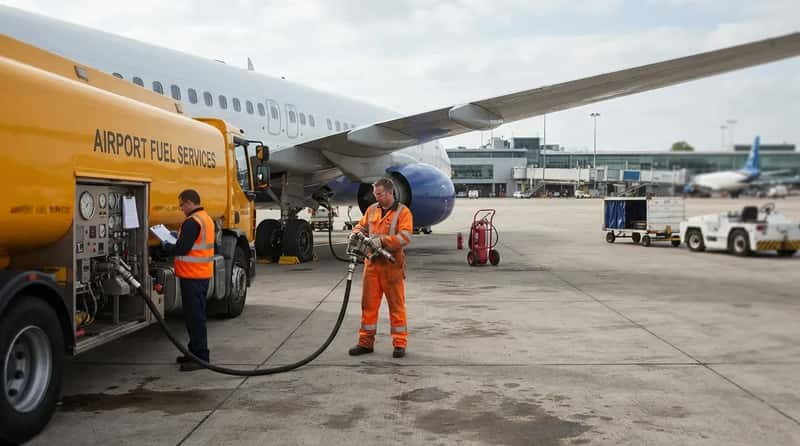
Fueling isn’t just “fill it up.” Handlers oversee refueling, making sure the correct type and quantity of fuel are delivered safely. They also perform fuel quality checks and manage the fueling equipment. The amount loaded becomes part of the aircraft’s final operating condition.
Meanwhile, the clock never stops. Ground personnel monitor the fuel operation, while load-control functions account for the resulting weight information. Pushback can’t happen until the fuel truck has disconnected. That one connection can hold up an entire departure. Next comes the loading puzzle under your feet.
#5 – Every Container Gets Cross-Checked Before It Goes Into the Hold
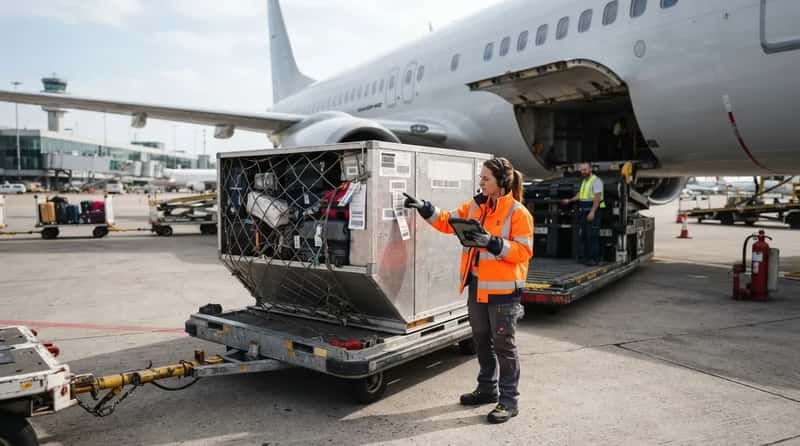
Down below, it’s a puzzle with rules. Ground personnel must work out where baggage and cargo belong, move it to the aircraft, and make sure the arrangement matches the loading instructions. IATA’s turnaround procedures call for cross-checking container weights, destination codes and other load details before loading begins.
Quick Compare
- Failure to load bags: 17 percent of delays in SITA’s 2024 breakdown.
- Loading errors: 8 percent of delays in the same breakdown.
- Together: a quarter of those delays, all from the last steps of loading.
Mistakes here are rarely dramatic, but they add up. One missed container or a single wrong cart can slow a whole departure. And the biggest culprit of all is hiding at #4.
#4 – The Connection Is Where Bags Actually Go Missing
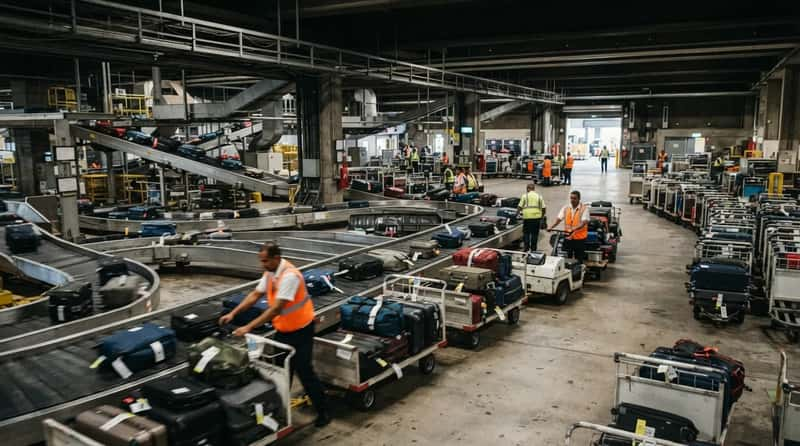
Most people blame the first airport. Turns out the connection is the real trouble spot. In 2025, transfers remained the leading cause of mishandling, responsible for 39 percent of cases. The year before, transfer mishandling was the biggest contributor at 41 percent.
Distance matters too. International flights see nearly six times the mishandling rate of domestic ones. Ground crews are racing a connection window you never see, often with bags that have to cross an entire airport. And what a lost bag costs the airline might shock you.
#3 – One Missing Bag Costs the Airline Roughly $260
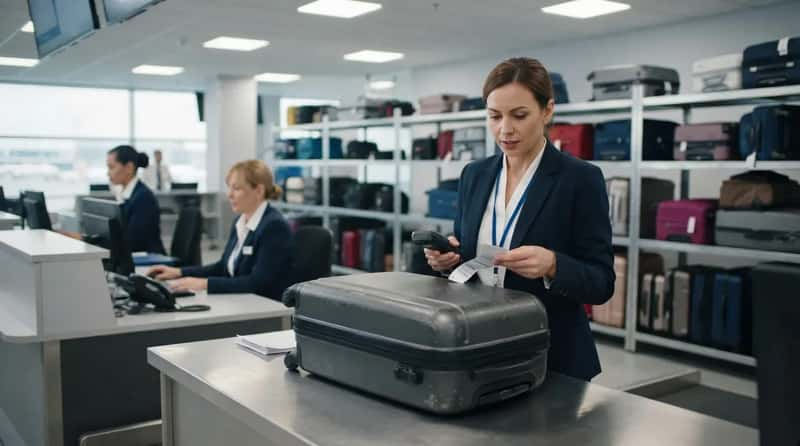
The scale is huge. In 2025, 5 billion passengers traveled globally, yet 24 million bags were still mishandled. SITA estimates the problem costs the industry $6.3 billion annually, an average of $260 per bag. That’s the price for the airline, not the passenger.
Here’s the part airlines care about. With net profit averaging just $8 per passenger, one mishandled bag wipes out the profit from more than 30 seats. Apple’s Find My integration with SITA’s WorldTracer cut permanently lost luggage by 90% in its first year, and it shortened delayed-bag recovery by 26%. Now for the clock that governs everything.
#2 – A 25-Minute Clock Doesn’t Forgive One Late Truck
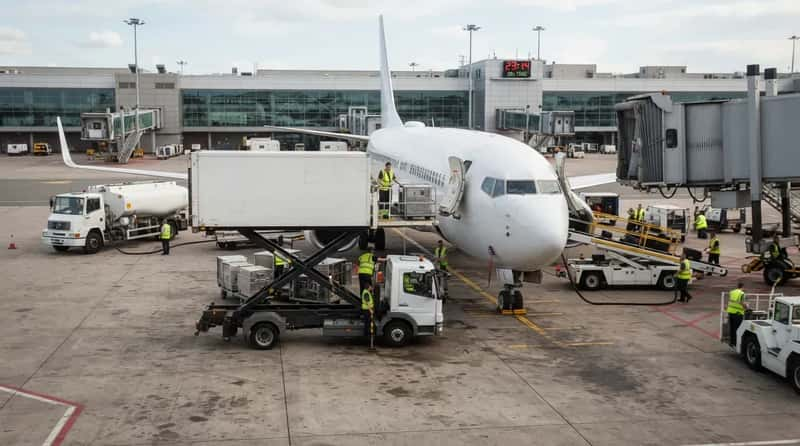
Every job above fits inside one window. A short-haul narrow-body for a legacy carrier is typically scheduled for around 45 to 60 minutes on the ground. A low-cost carrier flying the same route will often target 25 to 30 minutes, sometimes less.
The risk is that nothing is optional. A delay in any single task, such as fueling or loading, can delay the whole departure. That’s how one missing catering truck can hold up a full plane. And the final step is the one passengers see least.
#1 – The All-Clear That Has to Happen Before the Tug Moves
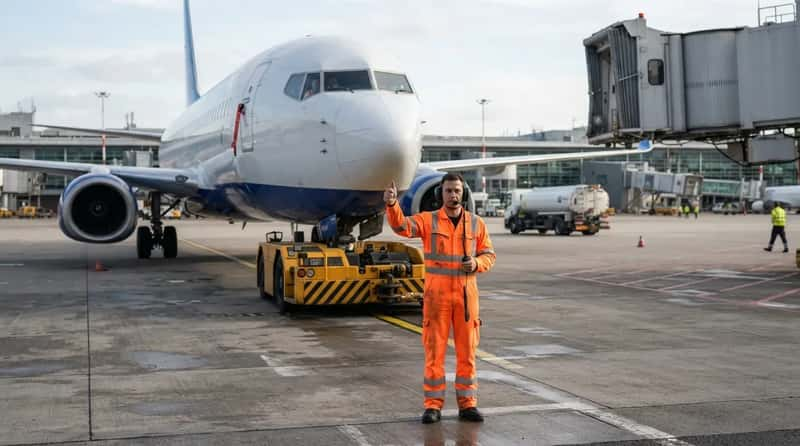
The last problem ground teams settle is the quietest. Before pushback, the doors must be armed and the jet bridge pulled back. The fuel truck has to be disconnected. Until all three are done, the plane isn’t going anywhere.
Typically, a ground crew member stays in contact with the flight deck during the push, confirming the area is clear. Every other job on this list has to finish before that signal can be given. You only notice it when the plane glides backward without a hiccup. That smooth moment is the sum of every step above.
Ground teams don’t solve one big problem. They solve fifteen small ones in a row, and most are invisible by design. The ones that cost real money are staggering: 24 million mishandled bags in 2025, billions lost to runway debris, and about 61 reported wildlife strikes a day in the U.S.
So next time your plane backs away from the gate without drama, remember that the hardest part of your flight may already be over.