There are many reasons to find yourself in Dubai. Maybe business brings you here, maybe it’s a convenient stopover on a longer journey, or maybe it’s a destination you’ve deliberately chosen. Whatever the case, once you land, it’s almost inevitable to feel drawn to what has made Dubai famous worldwide: futuristic skyscrapers, massive shopping malls, and iconic landmarks like the Burj Khalifa. All of this is part of the experience—and it deserves to be lived.
But to truly understand Dubai—and not just observe its most obvious side—there is another layer that, in my view, deserves real attention: its historic heart, understated, quiet, and surprisingly authentic. This is where the Al Fahidi Historical Neighborhood, aka Old Dubai, comes into play, overlooking the Dubai Creek. It is a place that tells the story of the city before oil, before records, before extreme verticality. For visitors coming from abroad, especially from the United States, exploring Al Fahidi means discovering a different Dubai, shaped by trade, cultural exchange, and adaptation to a harsh environment. And it is precisely this visit that adds depth and context to everything else the city has to offer.

Al Fahidi: the Original Face of Dubai
I was genuinely surprised to discover that the Al Fahidi district—marked on maps as Old Dubai and also known as Al Bastakiya—dates back to the late 19th century. It was during this period that merchants from Persia (especially from the Bastak region), India, and East Africa settled along the Creek, drawn by the commercial opportunities offered by this natural harbor.
Contrary to what I initially expected, this area hasn’t been reconstructed in a theatrical or artificial way. Instead, it has been carefully restored, with great respect for its original materials and proportions. Traditional houses are built from coral stone, gypsum, and palm wood, and are organized around inner courtyards designed to provide privacy and natural ventilation. Walking among these low-rise buildings, it becomes clear that human scale was central to the original design. Everything was conceived with the climate, the community, and a slower, shared daily life in mind—a powerful reminder of the ingenuity and foresight of past architecture, from a time that isn’t actually all that distant.
Wind Towers and Desert Architecture
One of the elements I found most fascinating in Al Fahidi are the wind towers, known as barjeel. These vertical structures, visible on the rooftops of many houses, represent an ingenious natural cooling system: they capture the wind and channel it into interior spaces, cooling them without the use of energy. It’s hard not to be struck by how intelligent and sustainable this traditional architecture is—especially when viewed against the backdrop of contemporary Dubai.
Walking Slowly: Museums, Courtyards, and Galleries
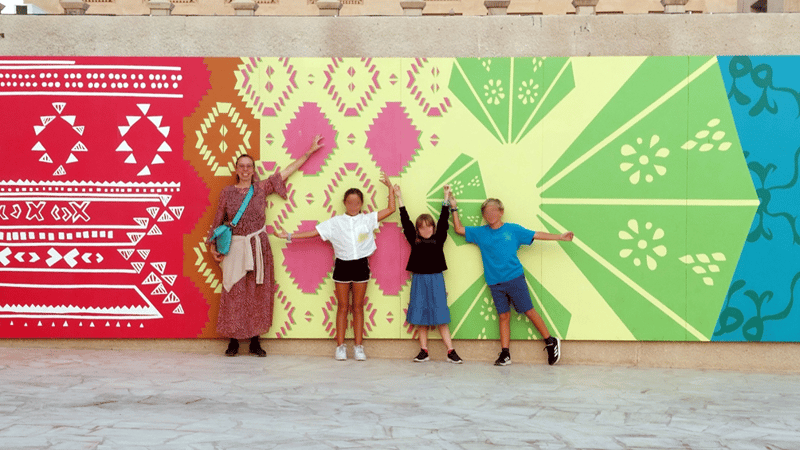
I explored Al Fahidi at a leisurely pace, without a fixed route, deliberately getting lost in the maze of narrow alleys, shaded squares, and hidden courtyards. Many of the historic houses now host museums, cultural centers, art galleries, and exhibition spaces, creating an interesting dialogue between past and present. One of the largest squares in Old Dubai is particularly striking for the way traditional architecture is paired with contemporary interventions featuring bold, vibrant colors.
Even without stepping inside every building, the atmosphere of the neighborhood is an experience in itself. That said, if I had to highlight a few must-see stops, I’d choose the Coffee Museum—which tells the story of coffee’s cultural role in the Arab world and beyond—and the Sheikh Mohammed Centre for Cultural Understanding, which organizes talks and activities designed to encourage intercultural dialogue.
How to Get There and How Much Time to Spend
Al Fahidi is easy to reach:
- By metro on the Green Line, getting off at Al Fahidi or Al Ghubaiba stations
- By taxi or ride-hailing services, which are convenient and affordable
- By abra, Dubai’s traditional wooden boat that crosses the Dubai Creek, if you’re coming from the Deira souks
To explore the neighborhood at a relaxed pace, plan to spend about 1–2 hours. It’s easy to stay longer if you decide to visit some of the museums or stop for a coffee along the way.
Dubai Creek and Deira Souk: The Commercial Heart of the City
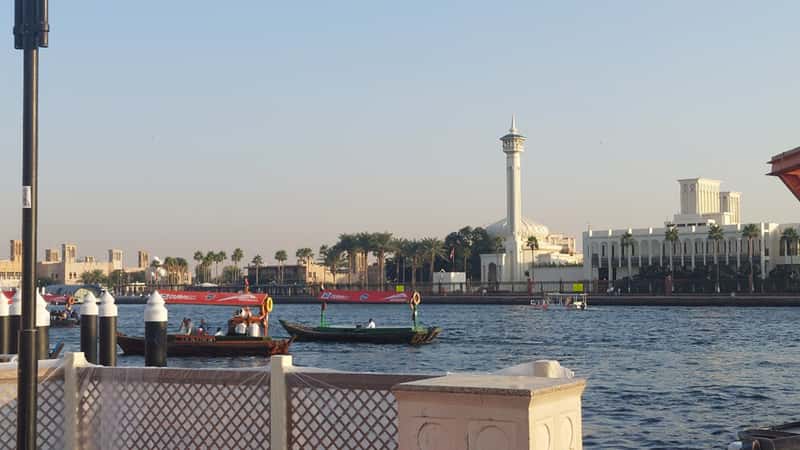
Lapping against Al Fahidi is Dubai Creek. Before the era of skyscrapers, everything revolved around this waterway: fishing, pearl trading, and exchanges with India and Africa. Even today, the Creek retains a special charm, especially at sunset. One of the best ways to experience it is by taking an abra, the traditional wooden boat that connects Bur Dubai and Deira. The crossing lasts only a few minutes and costs next to nothing, yet it is incredibly evocative—an experience within an experience—especially since waiting for you on the other side is the Deira souk, where everything goes except the quiet order of Old Dubai.
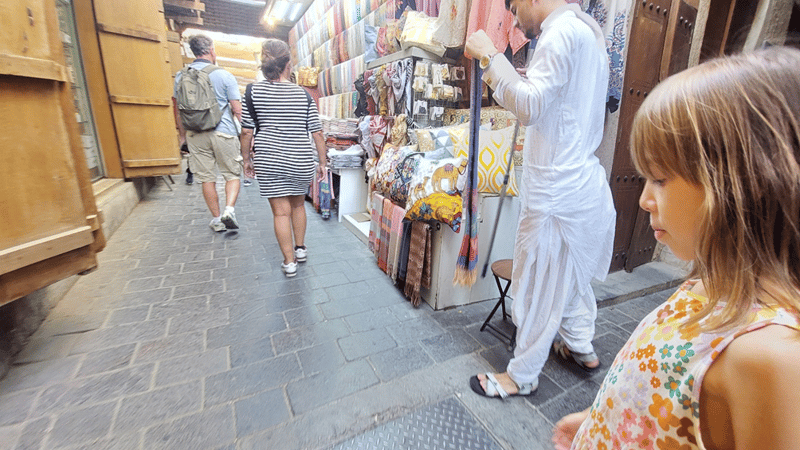
Here, Dubai shows yet another face: the Gold Souk dazzles with shop windows overflowing with gold crafted into every imaginable form, while the Spice Souk envelops you in the intense aromas of cardamom, saffron, incense, and cinnamon. Strolling through these alleys means immersing yourself in a Dubai that has been trading, bargaining, and exchanging ideas for centuries, where time has adapted to modernity without losing its soul. Even without buying anything, walking through the souks is essential to understanding the Creek’s historical role as the city’s commercial and cultural axis, a meeting point between Asia, Africa, and the Middle East.
Where to Eat or Drink
Within the Al Fahidi district and its immediate surroundings, there are some excellent options. XVA Café is one of the neighborhood’s most popular spots, located just steps from the Coffee Museum: light Middle Eastern cuisine, a peaceful atmosphere, and a courtyard that seems frozen in time. Along the Creek, you’ll find traditional restaurants as well as modern venues where you can enjoy local dishes or simply sip a cup of tea while watching the boats go by.
Why Al Fahidi Changes the Way You See Dubai
Visiting Al Fahidi adds depth to your trip. It reveals a lot about how Dubai became what it is today and—ideally—where it aspires to go: a city built on trade, cultural encounters, and an extraordinary capacity for adaptation. After wandering through these alleys, even the skyscrapers take on a different meaning. This isn’t a nostalgic visit, nor an alternative to the city’s iconic symbols. It’s a necessary complement, especially for those who want to return home not just with spectacular photos, but with a more authentic understanding of the place. Al Fahidi shows that behind Dubai’s hyper-modern image, an ancient heart still beats—and that is exactly where it’s worth going to find it.