There’s an experience that pairs surprisingly well with a week in Sharm El Sheikh spent between coral reefs, resorts, and a certain idea of effortless leisure: physically exhausting yourself and being emotionally challenged on a deeper level. It’s the kind of contrast that makes you return to the Red Sea with renewed appreciation for rest, comfort, and stillness. That’s exactly what I did.
The night ascent of Mount Sinai, also known as Jebel Musa, is one of those experiences that compress physical effort, history, and landscape into a single, continuous gesture. It’s demanding but accessible, highly organized yet deeply personal. You don’t need to be religious to feel that you’re stepping into a place where time hasn’t simply passed—it has accumulated.
The Night Ascent
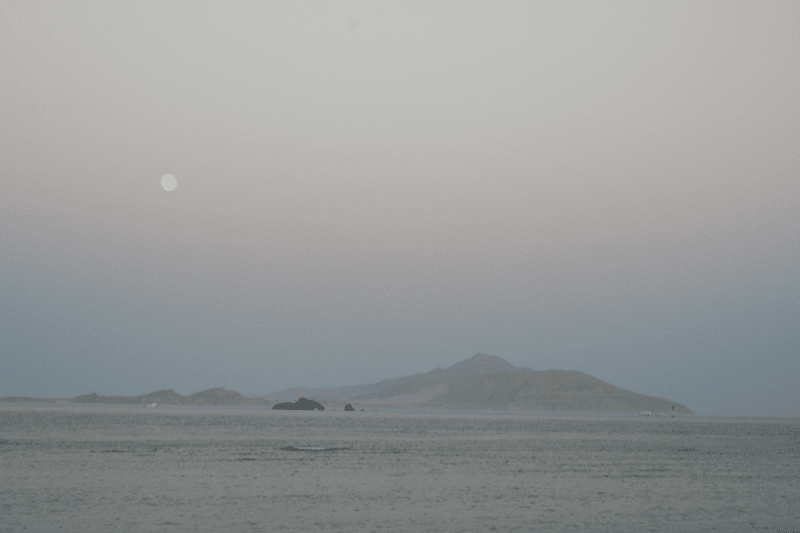
Leaving Sharm in the middle of the night felt immediately disorienting—and effective. A few hours after dinner, you’re on a bus crossing the Sinai Peninsula, trading beach lights for darkness, comfort for anticipation. By the time you reach the trailhead, the Red Sea already feels far away, both geographically and mentally.
I began the climb in complete darkness. Headlamps flickered, silhouettes moved slowly, and the temperature dropped far more than expected for a desert environment. The path was wide and well traced, used for centuries by pilgrims, traders, and monks. I walked at a steady pace, fueled by an unexpected mix of energy and curiosity, stopping occasionally at simple rest points where hot tea was sold and heavy blankets were offered. Bedouin guides set the rhythm—calm, unhurried, reassuring. The climb was long but not particularly technical, a test of endurance more than skill. Conversation faded quickly, replaced by a reflective, almost meditative state. With no visible landscape in the darkness, attention turned inward. It was a collective experience—enduring fatigue alongside others—but also deeply solitary. Everyone walked together, absorbed in their own thoughts. The ascent took several hours, but I doubt anyone was really keeping track of time.
Waiting for Sunrise at the Summit
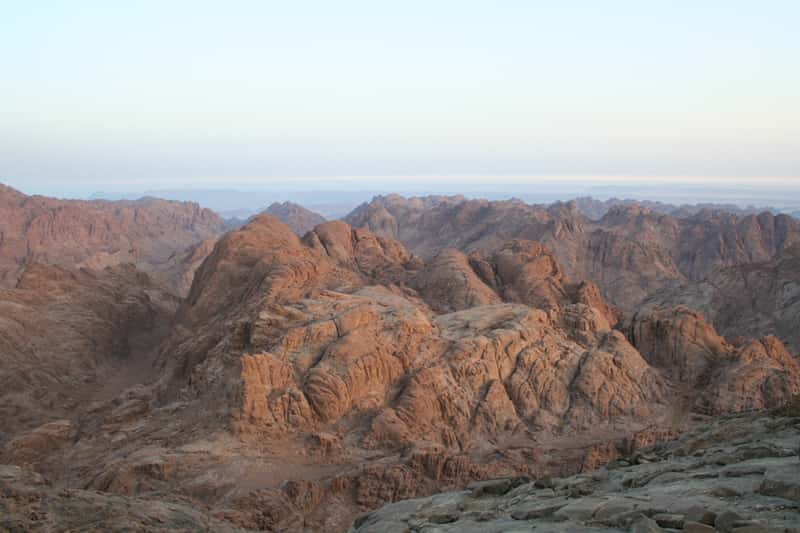
Reaching the summit before dawn felt anticlimactic in the best possible way. There was no immediate reward—just cold, silence, and a strong sense of anticipation. People sat on rocks, wrapped themselves in thick blankets, and faced east, waiting. Almost secondary to the landscape stood two small structures: a modest Greek Orthodox chapel dedicated to Saint Elijah and a simple, now-unused mosque. Neither dominates the summit. Their presence is quiet and understated, a reminder that this mountain has been sacred across traditions without ever being architecturally claimed.
When the sun finally rose, light moved slowly across layers of rock, revealing a vast, austere landscape. Everything was stripped down to essentials: stone, color, air, scale. At first, the experience felt purely geological. Then, gradually, its symbolic weight emerged. We’re used to sunsets; dawn is something else entirely. The moment became powerful, touching, and unexpectedly emotional.
The Descent and St. Catherine’s Monastery

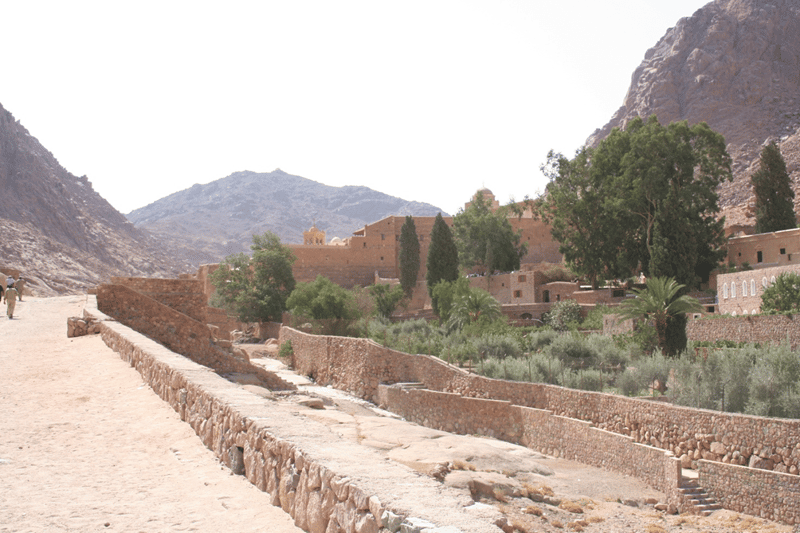
After absorbing the sunrise and the sense of a new day beginning, I started the descent. In daylight, the same path revealed an entirely different landscape: ridges, valleys, and the surprisingly complex geometry of the mountain. At the base lies St. Catherine’s Monastery, one of the oldest continuously functioning Christian monasteries in the world, founded in the 6th century under Emperor Justinian.
I visited the monastery in a state of near-total exhaustion, drained by the lack of sleep. The experience was physically demanding, but I still clearly perceived the beauty and mystery of the place—and the privilege of being there. Visiting the monastery after hours spent in open space and silence creates a sharp contrast. Inside, everything feels enclosed, layered, and dense with meaning. The monastery is still inhabited by Greek Orthodox monks and houses an extraordinary collection of manuscripts and icons. Its library is second in importance only to the Vatican’s. This is not a reconstructed site but a living institution, shaped by centuries of isolation and continuity.
After that, I remember nothing of the journey back to our beautiful hotel in Sharm El Sheikh. I slept deeply and without interruption.
Practical Information: Getting There and What to Expect
The climb of Mount Sinai is typically organized as a guided overnight excursion from Sharm El Sheikh or Dahab, both about three hours away by car. Expect a very long night with little sleep: departures are late in the evening, with return by mid-morning the following day. Physically, the ascent is manageable for most people in decent condition, but it’s not easy. Warm clothing is essential—temperatures at the summit can approach freezing, even when Sharm is warm.
Food options near the site are extremely limited. There are small stalls offering tea and simple snacks, but proper meals are best left for Sharm. This experience prioritizes movement, endurance, and presence over comfort.
Why Mount Sinai Stays With You
What makes the Mount Sinai ascent memorable isn’t a checklist of highlights, but the sequence itself: night, effort, waiting, light, descent, history. There are no shortcuts. You have to commit fully and give it your energy. Even though it’s organized and popular, it never feels casual.
Seen from Sharm, Mount Sinai feels like an anomaly. Seen from the summit, Sharm feels irrelevant. That temporary dislocation is part of the experience. You return to the Red Sea tired, slightly disoriented, but recalibrated. Not transformed, perhaps—but reminded that travel can still place you, very deliberately, at the edge of something far older than yourself.