


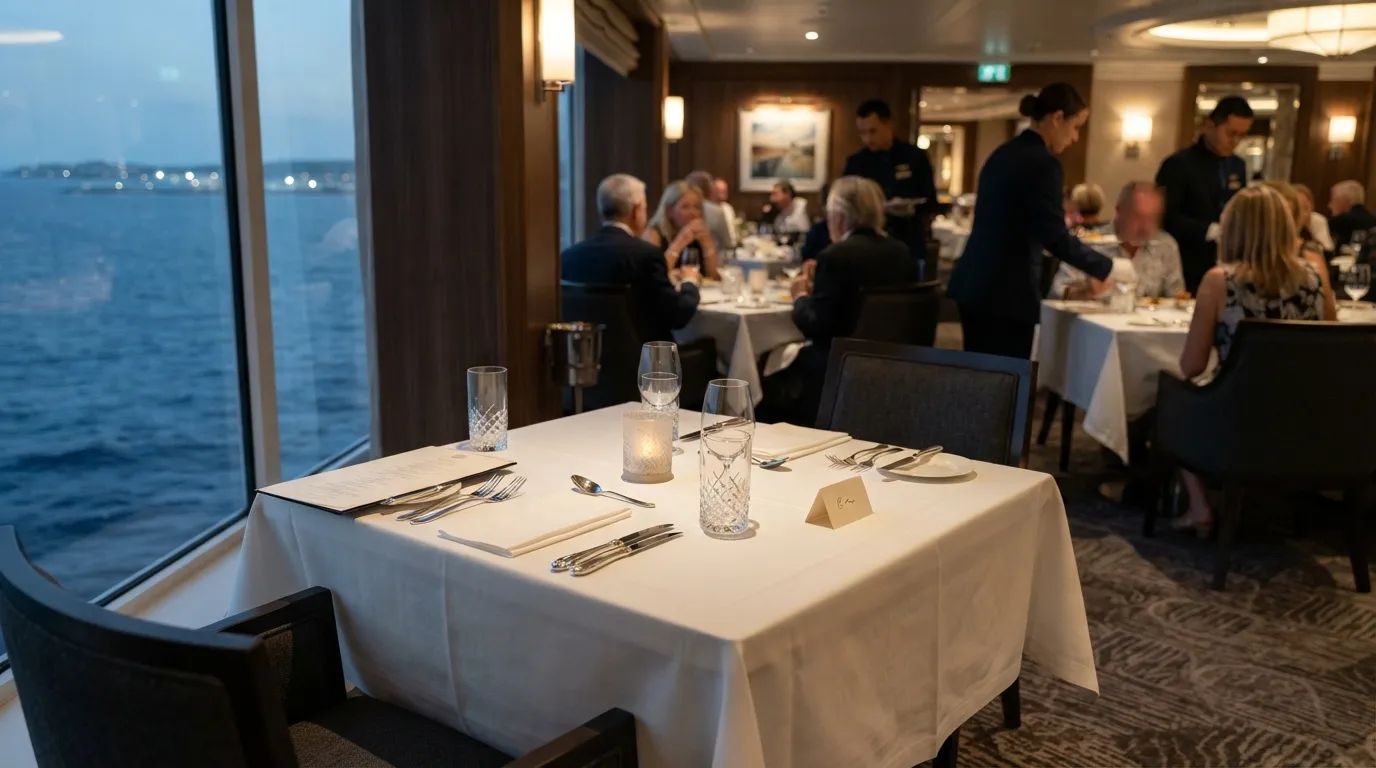
Every night, a cruise dining room turns hundreds of strangers into one big, fast-moving dinner party, and the same slips show up at table after table. Here are 17 of them, from a swimsuit at the door to a line on your bill most people never notice.
Some of these mistakes cost you a seating, and some cost $50 a head. One involves a food allergy, and its fix is a single email. First, though, comes the slip that happens before anyone sits down.
#17 – Swimwear and Bare Feet at the Dining Room Door
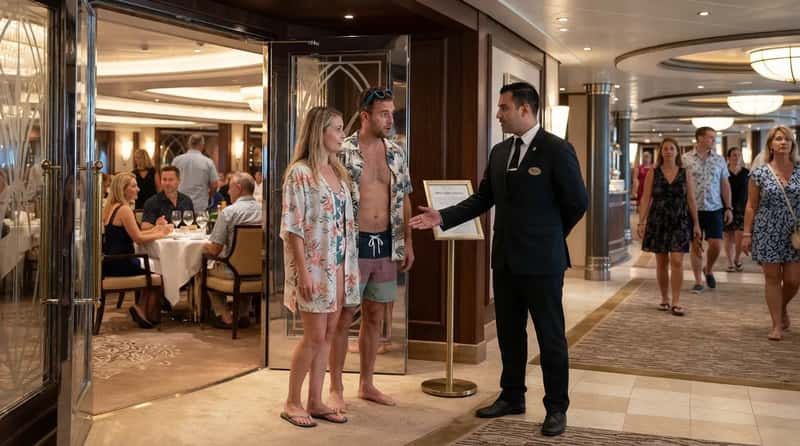
Where a cruise line has a dress code, it is enforced in the main dining room. Swimwear (even with a cover-up) and bare feet are typically banned at all times, according to Cruise Critic.1
Breakfast and lunch are looser, and casual clothing suited to the destination, shorts included, is acceptable. The slip is walking from the pool deck to a sit-down dinner in the same outfit, when the buffet would have taken you as you were.
The swimsuit rule is the easy one. The evening dress code changes by night and is posted where it is easy to overlook.
#16 – Guessing at Formal Night Instead of Checking the Daily Schedule
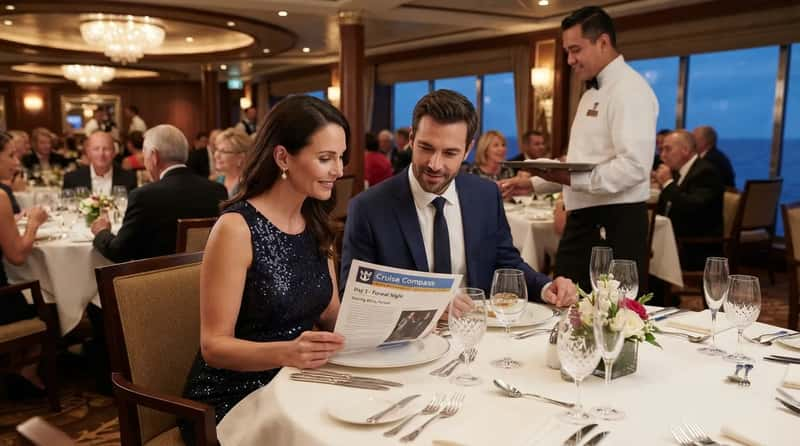
Royal Caribbean gives each night a theme and dress code, listed in its app and posted in the printed Cruise Compass. The same line describes its dress codes as “suggested attire.”
On most nights “dressy casual” is the norm, and many lines now allow jeans. Often there is a formal night or two when cocktail dresses, suits and tuxedos are encouraged.1
I would leave the tuxedo at home. A jacket or a nice dress covers formal night on lines that call their codes suggestions, and a quick check of the app after breakfast tells you which night is which.
#15 – Booking Without Knowing Which Dining System You Have
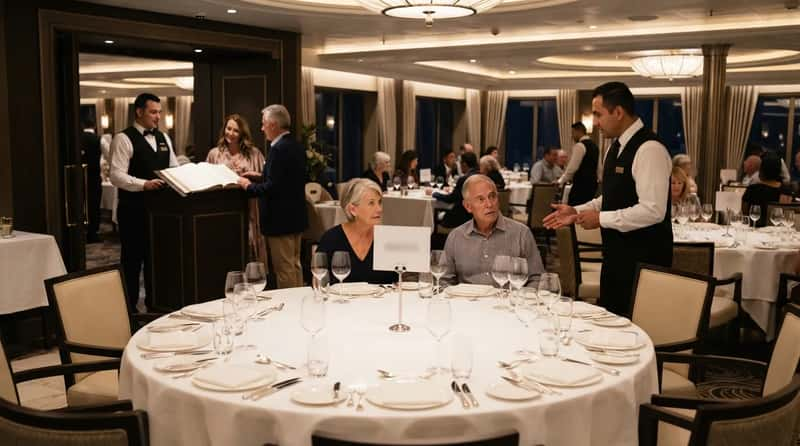
Cruise lines run main dining in two broad ways, and the lateness rules depend on which one you booked. Anytime dining removes the fixed seating time entirely, while traditional dining gives you an assigned time and often the same table each night.
Quick Compare
- Anytime dining: no fixed seating, and arriving right when the room opens gives you the shortest wait.
- Traditional dining: an assigned time and often the same table, so a late arrival affects your whole table.
- River and smaller ships: the dining room keeps set hours, and you can arrive without a reservation.
On river ships and smaller ocean-going ships, including luxury lines, the dining room is open at set hours and you can arrive without a reservation. If you chose anytime dining, arriving right when the room opens gives you the shortest wait.
Confirm which system your line uses before boarding, because the wrong assumption can cost you a seating. A fixed seating comes with a clock, and that clock is where a whole table can get into trouble.
#14 – Arriving Late to a Fixed Seating
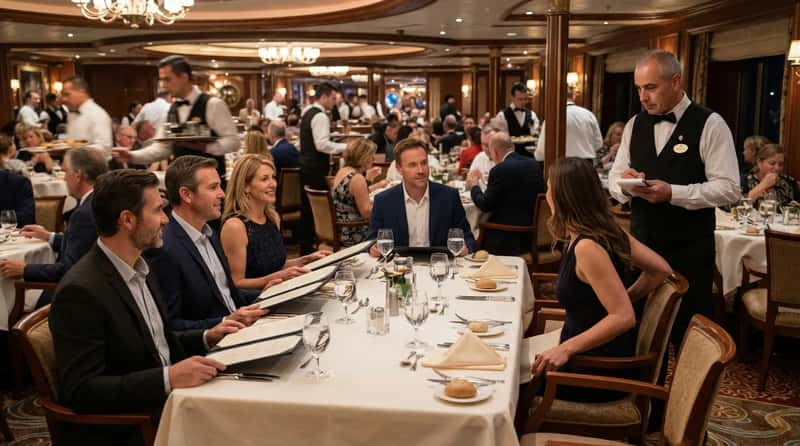
Waiters usually do not take dinner orders until everyone is in their seats. So one late guest holds up the whole table.
The waiters then have to rush to get the meal back on schedule so they can clear you out within the expected timeline. Anytime dining avoids this, since you only inconvenience yourself and wait for the next available table.
If you know you will be late, tell the dining room host in advance, or switch to a specialty restaurant or the buffet for that night.
Once everyone is seated, the opposite problem appears: the guest who has somewhere else to be.
#13 – Hurrying Dinner Without Telling Your Server
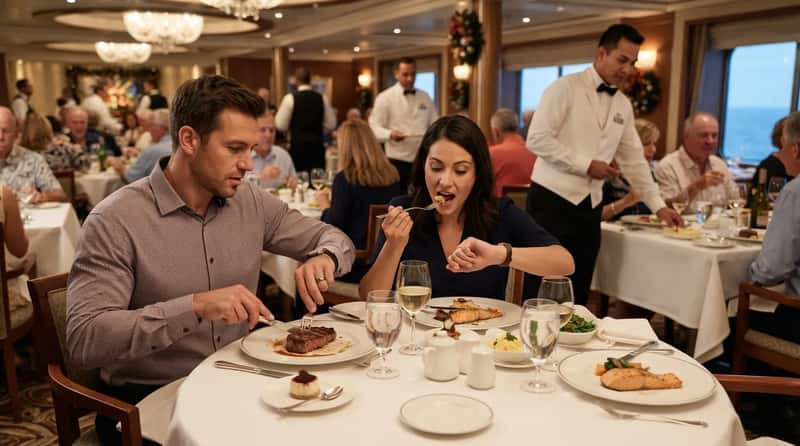
The main dining room expects a slower, multi-course pace. If you have a show to catch, say so when you sit down.
A server who knows you are short on time can speed up the service. Saying nothing and watching the clock from the second course leaves the waiter no room to adjust.
On a night when the schedule is truly tight, the buffet is the saner choice. Squeezing a multi-course dinner into forty minutes helps neither you nor the waiter.
#12 – Taking Whatever Table You Are Handed
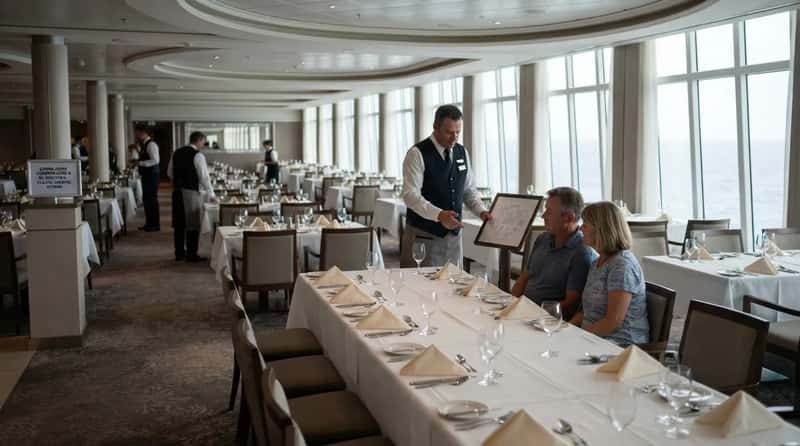
On many ships you can ask to be seated with just your party, or you can accept a large table with other cruisers. If you enjoy meeting people, traditional dining lets you sit with the same tablemates each evening.
Neither choice is better, but each is easier to get if you ask early. Visit the main dining room on your first day to confirm your table and make changes before the evening rush.
I would make the request on the first afternoon, not the first evening, because a full room leaves fewer tables to swap. Seating costs nothing to change, but the specialty restaurants run on their own booking clock.
#11 – Reaching a Specialty Table After the Hold Expires
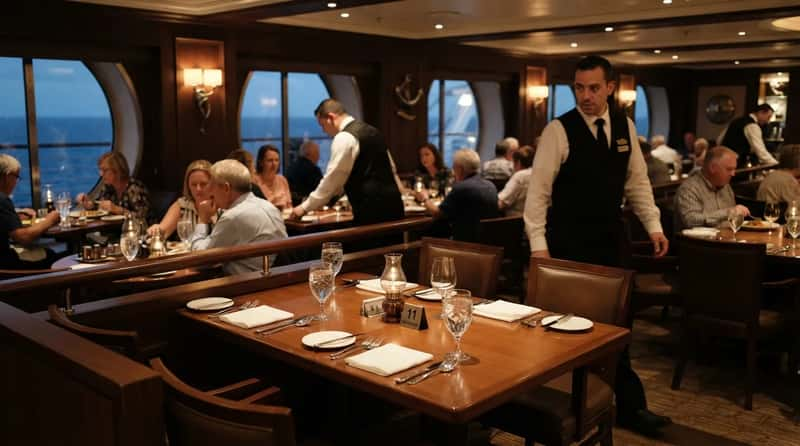
At Norwegian, specialty reservations are held for only 15 minutes past the scheduled time before tables may be released. The rule covers reservation-only venues such as Cagney’s Steakhouse and Le Bistro, while complimentary venues and main dining rooms are not affected.2
Guests who are merely late but claim their table within the grace period are not charged. Other lines set their own windows, so read your confirmation for the exact number.
Getting to the table is only the start. What the cover charge buys once you are sitting there is a separate matter.
#10 – Treating the Cover Charge as a Single Dish
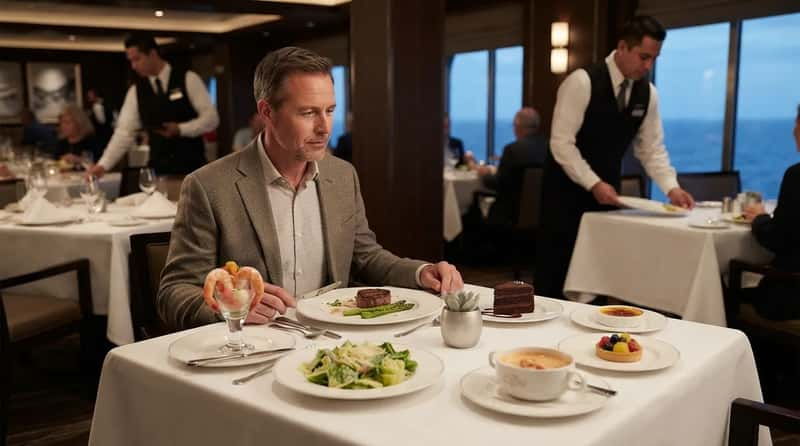
At Norwegian’s standard cover-charge restaurants such as Cagney’s Steakhouse, one meal credit covers one entrée, up to three appetizers and up to three desserts. Covers there range from $40 to $60 depending on the restaurant.3
Ordering a single plate when the cover allows more means paying for food you leave on the menu.
Worth Knowing
- One credit means one entrée, up to three appetizers and up to three desserts.
- Covers run $40 to $60, depending on the restaurant.
- Light eaters can compare a main dining room upcharge with the full cover.
- Those allowances are Norwegian’s, so check your own line’s cover.
The math can cut the other way for light eaters. At times you can order premium steaks at a main dining room table for a small upcharge that is still well under the full $60 cover, but check what your own line’s cover includes, since the allowances above are Norwegian’s.
#9 – Counting on a Dining Package to Excuse a No-Show
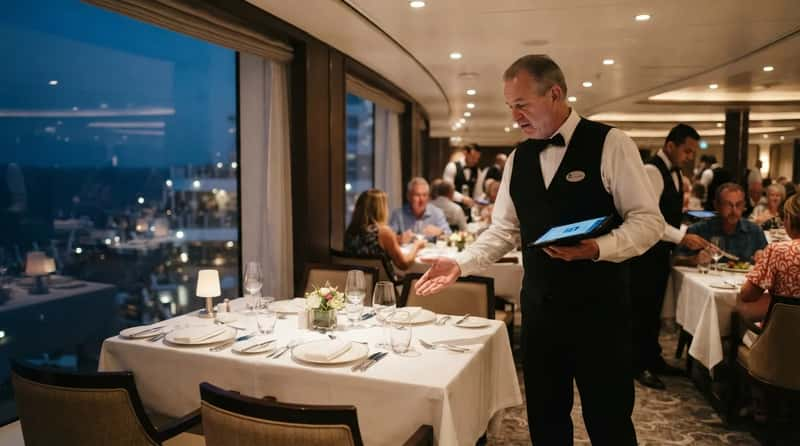
Norwegian put a fleetwide $10 per person no-show fee in place on September 5, 2025.3 It applies to guests who do not cancel or modify a reservation at least two hours before the dining time.
Even if the meal is part of a package, the $10 still applies, although package holders keep the meal and can rebook another seating.
Royal Caribbean works differently. It exempts Star Class suites and Dining Package reservations, but not meals pre-booked and prepaid online.4
#8 – Missing the Cancellation Window
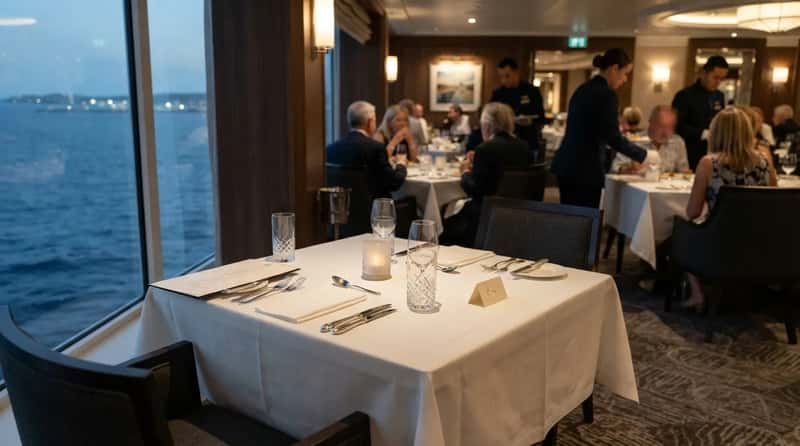
Windows differ by line. Royal Caribbean guests must cancel at least 24 hours ahead to avoid the fee.
The fee is $50 per person for Supper Clubs, Omakase, Royal Railway, Hibachi and Chef’s Table, and $25 per person at other venues. Celebrity guests who skip a reservation will likely face at least $20 per person.4 5
At a Glance
- Royal Caribbean: cancel 24 hours ahead, or pay $25 to $50 per person depending on the venue.
- Norwegian: cancel or modify at least two hours ahead, or pay $10 per person.
- Celebrity: expect at least $20 per person for a skipped reservation.
Norwegian’s two-hour window is far shorter than it used to be, because the earlier policy required cancelling up to 24 hours ahead or paying the cover charge. A habit formed on one line can cost you on another, so I would cancel the moment a plan changes instead of waiting to see how the day goes.
Those fees are the visible ones. The percentage added at specialty restaurants and bars sits in a separate line of the bill.
#7 – Assuming the Daily Gratuity Covers Drinks and Specialty Meals
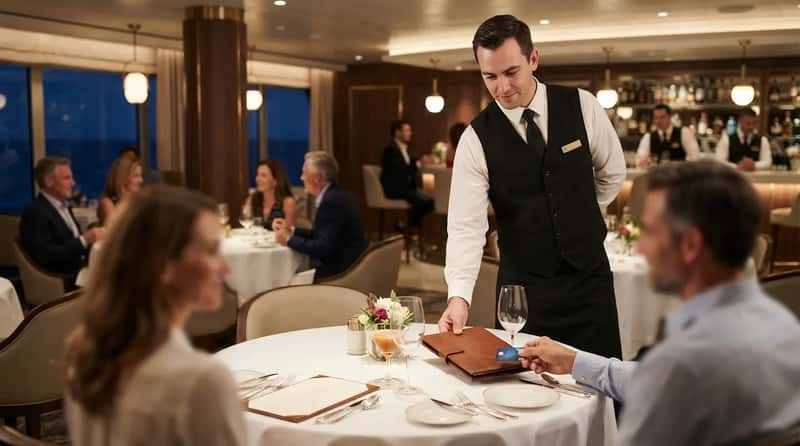
The flat daily gratuity is pooled across the stateroom steward, dining teams and behind-the-scenes crew. It applies whether you use the buffet, the specialty restaurants or never enter the main dining room.6
Specialty venues and bar drinks add their own service charge on top. Royal Caribbean charges 18 percent on beverages, beverage packages, specialty dining, room service and mini bar purchases, and Celebrity charges 20 percent.6
So the daily charge and the percentage are two separate amounts, and the bartender, the specialty server and the dining-room waiter are paid from different pots.
#6 – Stripping the Daily Gratuity Over Principle
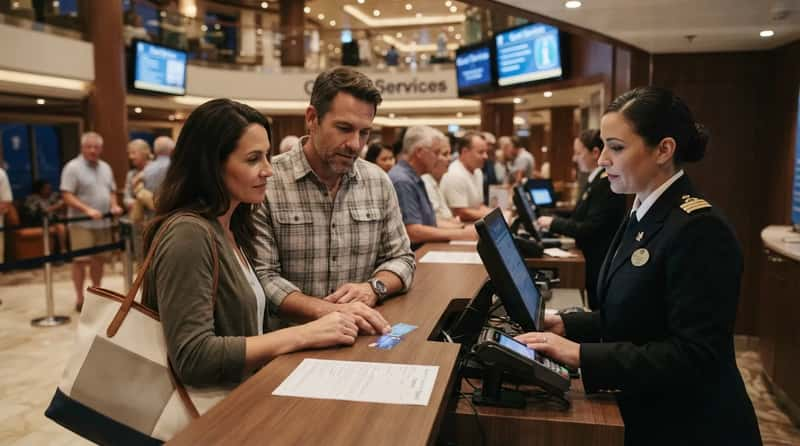
On mainstream lines the flat charge runs $16 to $22 per person per day, roughly $225 to $310 for a couple on a seven-night cruise. You can adjust or remove it at Guest Services before the last morning, but the percentage added to drinks, dining and spa stays.
Because the charge is pooled for the crew who looked after you all week, removing it lands on them after the work is already done. Unless service truly failed, I would leave it alone.
If you object to mandatory tipping on principle, book Virgin Voyages or a luxury line where service is in the fare.
Money questions end at Guest Services. A food allergy has a different weak spot: any place the dining team is not watching your plate.
#5 – Trusting the Buffet and the Beach With a Food Allergy
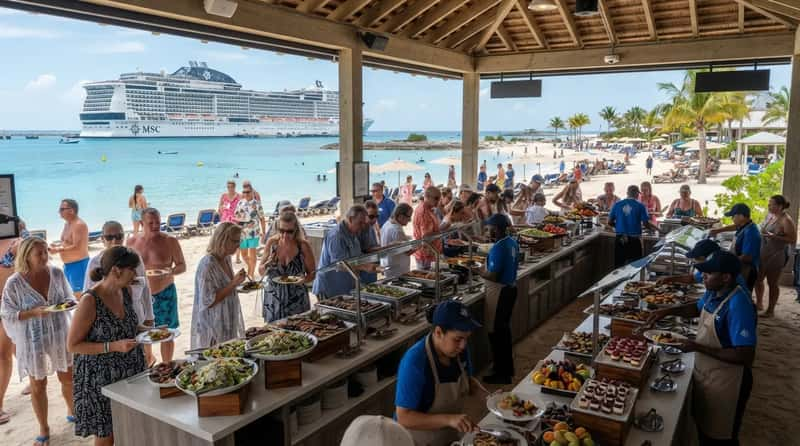
The broad pattern across the industry is to declare the allergy before travel, speak to the dining team onboard and accept that no shared galley can promise zero risk. MSC strongly recommends the main dining room and warns that allergy controls may be more limited on private islands and beaches.
The buffet and the beach are where the system is thinnest, because no one is tracking a single guest’s plate. If you have a serious allergy, I would make the main dining room your default and treat the buffet as the exception.
Even in the main dining room, protection depends on the person at your elbow. That person can change from night to night.
#4 – Expecting a New Server to Know Your Allergy
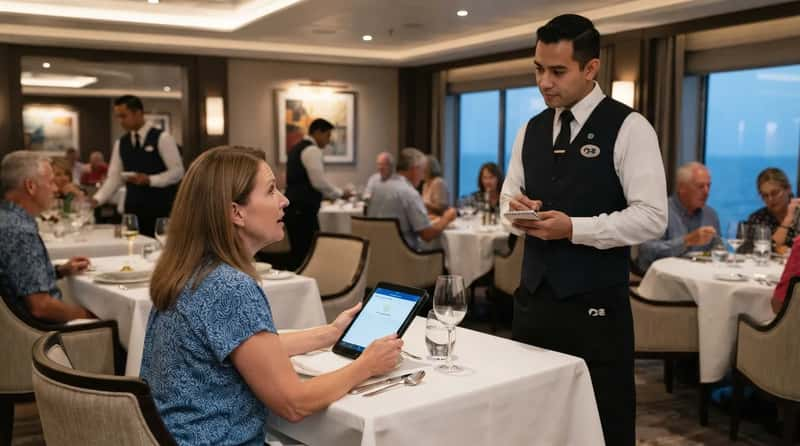
In open-seating dining you do not always see the same waiters twice, which is why guidance for dietary restrictions includes staying with the same dining room team. Some lines handle part of this in software.
Princess lets allergies be recorded through its app or dietary team, and says those details notify restaurants across the ship. At a specialty restaurant, tell your server the moment you sit down, even if you have mentioned it elsewhere, because a different kitchen and a different crew mean a new conversation.
Staying with one team helps. The most useful conversation, though, comes before the first dinner.
#3 – Skipping the First-Day Conversation With the Dining Team
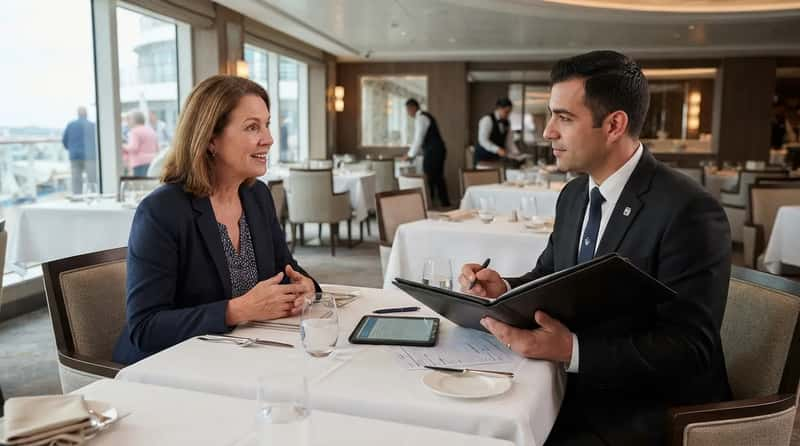
Dietary guidance for cruisers includes contacting the dining department on your first day aboard. MSC, for one, follows its advance notice with conversations with Guest Services and the maître d’hôtel.7
The form you filled in at home is just a piece of paper, and this conversation is how it reaches the people who cook. The meeting takes a few minutes on embarkation day, and it costs nothing.
#2 – Sending the Notice Late or to the Wrong Place
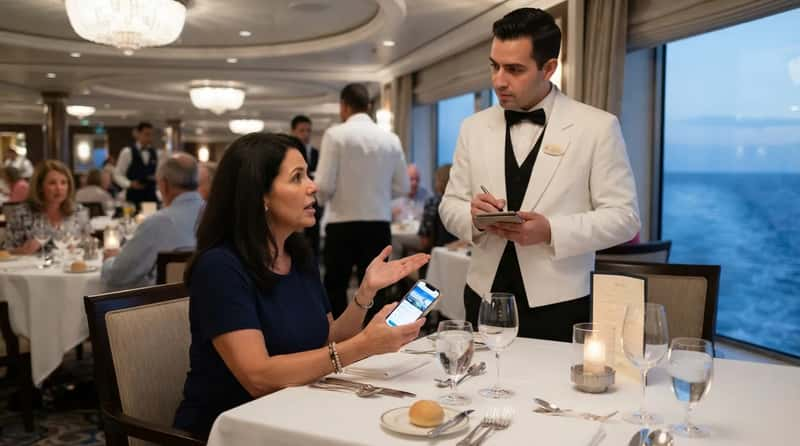
Deadlines differ. Cruise Collective lists P&O at 28 days before departure, MSC at 30 and Norwegian at 45, while Disney asks for additional allergy requirements through its Special Services form at least three days before embarkation.7
Cruise Critic advises notifying the line during booking and ideally 45 to 90 days before sailing, with kosher meals needing 90 days of notice. So the safe date on your calendar is the earliest, not the latest.
Fast Facts
- P&O: 28 days before departure.
- MSC: 30 days before departure.
- Norwegian: 45 days before departure.
- Disney: at least three days before embarkation, via its Special Services form.
- Kosher meals: about 90 days of notice, per Cruise Critic.
Set it the day you book, and confirm the current requirement with your own line, since policies change.
Every one of those deadlines assumes you took the first step: telling the cruise line at all.
#1 – Boarding Without Telling the Cruise Line About Your Allergy
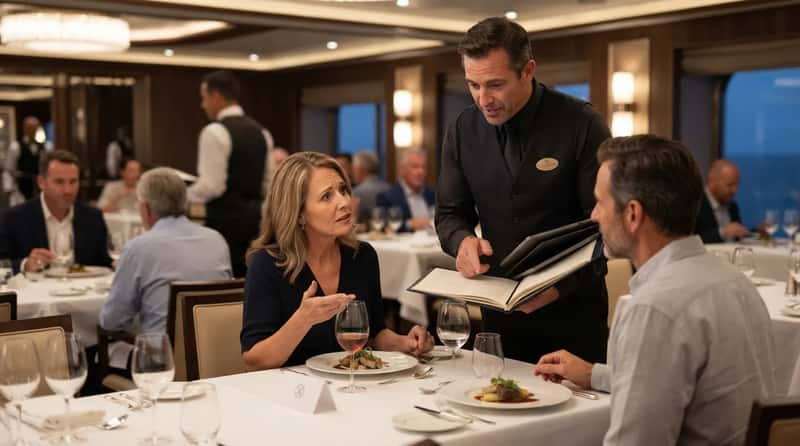
This mistake costs the least to fix: a form, an email or an app entry. Cruise lines can accommodate almost every dietary restriction, but they must know about them to help you.
Lateness, no-show fees and the gratuity charge cost dollars. An undisclosed allergy is the one item where the stakes are your health, and the email that prevents it is the cheapest fix on this list.
If your allergy is severe, talk with your doctor about your plan before you sail.
Most of what goes wrong at a cruise dinner was decided days earlier. A reservation was never cancelled, a dress code was never read, or an allergy never made it from your head to the ship’s records.
Treat the dining room like a flight, with a short check at booking, another on embarkation day and a last look at the app each morning. What is the one piece of trip paperwork, such as a reservation, a dietary note or a deadline, that you now do early because it once caught you out?
Sources
- What to Expect on a Cruise: The Main Dining Room, Cruise Critic
- 11 Tips for Cruising with a Dietary Restriction, Cruise Critic
- Cruising with a food allergy: what to arrange before you board, Cruise Collective
- 6 Unwritten rules for the Main Dining Room on Royal Caribbean ships, Royal Caribbean Blog
- Royal Caribbean to Charge Fee for Specialty Dining No-Shows, Travel Market Report
- NCL Introduces No-Show Fee for Specialty Restaurants, Cruise Critic
- Norwegian Cruise Line Adds No-Show Fee for Specialty Dining, Cruise Radio
- Cruise gratuities explained, CruiseClarify
- Cruise Gratuities Explained: 2026 Rates & How to Adjust, Passport Pro Travel
Bonus: The Insider Move Waiters Quietly Wish You Knew
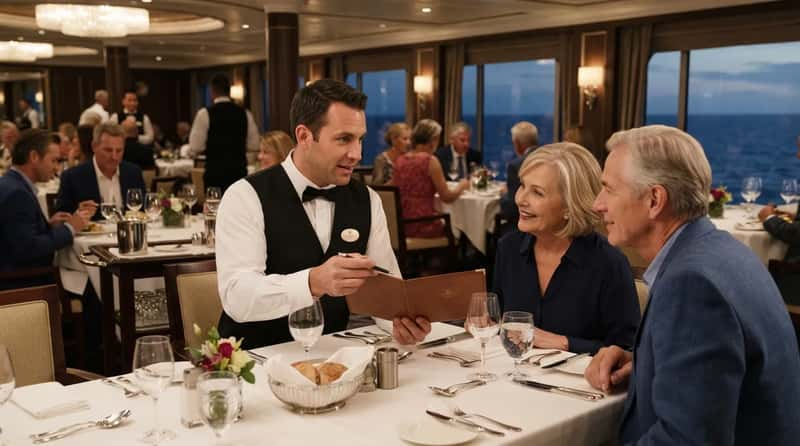
Ask your dining team to pre-order tomorrow’s dinner tonight. Many cruise lines offer this to guests with dietary restrictions, and it gives the galley time to prepare your meal separately instead of improvising during the rush.
It also helps guests without allergies, because a waiter who knows your order ahead of time can pace your courses around your evening plans.
- Step 1: On embarkation day, ask the maître d’ or dining host whether your line offers next-day menu pre-ordering, and ask which team handles it.
- Step 2: Each evening, check tomorrow’s menu in the app or at the dining room entrance, then place your order before you leave the table.
- Step 3: Mention your show time or your allergy again when you sit down, so the person serving you matches the order on file.
Not every line runs it the same way, so confirm the process aboard. Asking on night one is what makes it work for the rest of the week.
- Cruise Critic Main Dining Room: https://www.cruisecritic.com/articles/what-to-expect-on-a-cruise-the-main-dining-room?stay=1&posfrom=2
- Cruise Radio NCL No-Show Fee: https://cruiseradio.net/norwegian-cruise-line-adds-no-show-fee-for-specialty-dining/
- TheTravel NCL Specialty Dining: https://www.thetravel.com/norwegian-cruise-line-expands-free-at-sea-specialty-dining-perk/
- Travel Market Report RCL Fee: https://www.travelmarketreport.com/cruises/articles/royal-caribbean-to-charge-fee-for-specialty-dining-no-shows
- Yahoo Celebrity Dining Fee: https://www.yahoo.com/lifestyle/articles/does-royal-caribbean-dining-fee-202727647.html
- Royal Caribbean Gratuity Policy: https://www.royalcaribbean.com/faq/questions/onboard-service-gratuity-expense
- Cruise Collective Food Allergy Guide: https://www.cruise-collective.com/article/cruising-with-a-food-allergy-what-to-arrange-before-you-board
