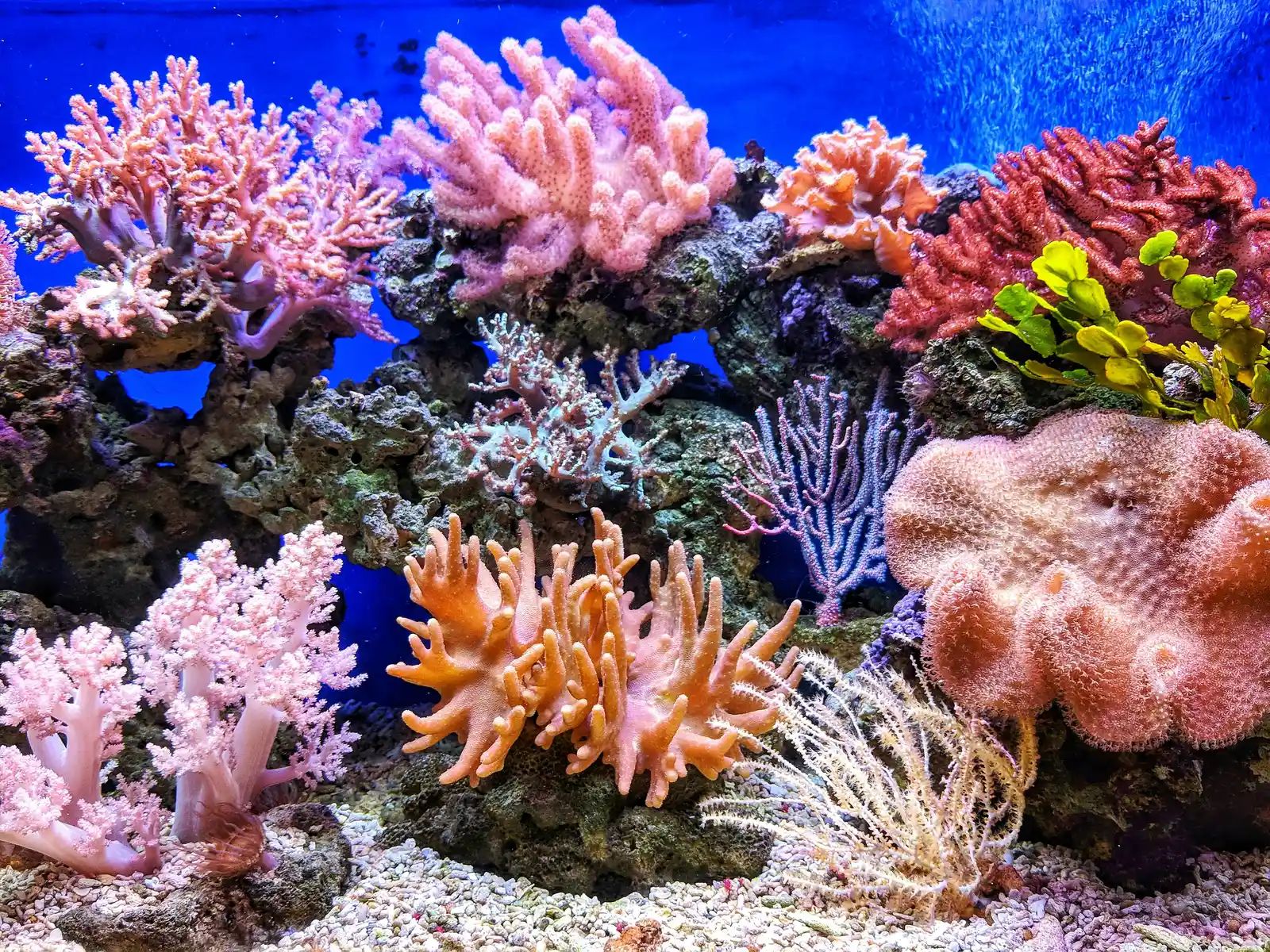
A new evaluation of shallow-water coral reefs worldwide has delivered a stark projection: 96 percent of these ecosystems could reach critically endangered status within the next 50 years if current climate trends hold. The finding comes from the inaugural coral reef assessment conducted under the IUCN Red List of Ecosystems, which drew on input from more than 250 experts examining conditions across 127 tropical and subtropical regions. One reef system, the Western Galapagos Islands, has already collapsed. The report, released October 22, underscores heat stress as the dominant driver pushing reefs toward irreversible change. ([1])
Scope of the Landmark Review
The assessment marks the first time coral reefs have been evaluated systematically through the IUCN Red List of Ecosystems framework. Experts reviewed conditions in every major shallow-water reef province, from the expansive Great Barrier Reef to the biodiverse Coral Triangle in Southeast Asia. Their work produced a baseline that accounts for both present-day degradation and future climate pressures. The effort spanned dozens of countries and incorporated decades of field observations alongside modeling of ocean warming. This breadth allows direct comparisons across regions that previously lacked a common standard. Twenty-four percent of reefs already qualify as critically endangered under current conditions. When scientists layered in expected heat stress, the share projected to reach that threshold climbed sharply to 96 percent by roughly 2075. The single confirmed collapse in the Western Galapagos provides a concrete example of what the upper end of the risk spectrum looks like.
Heat Stress as the Central Driver
Rising ocean temperatures trigger coral bleaching, in which corals expel the algae that supply most of their energy. Repeated or prolonged bleaching events leave colonies weakened and susceptible to disease, often resulting in widespread mortality. The assessment identified this mechanism as the most consistent threat across all 127 ecoregions studied. Other local pressures such as pollution and overfishing compound the damage, yet heat stress remains the factor that scales globally. Projections assume continued emissions trajectories that produce more frequent and intense marine heatwaves. Under those conditions, most reefs would experience repeated severe bleaching episodes. The result would be a shift from coral-dominated systems to algae- and turf-dominated ones with lower structural complexity and reduced habitat value for other species.
Ecological Importance and Human Stakes
Coral reefs occupy less than one percent of the ocean floor yet support roughly one-quarter of all marine species. Their loss would cascade through food webs, affecting fish populations that sustain both commercial fisheries and coastal communities. Many reefs also buffer shorelines against storms and provide the foundation for tourism economies built around diving and snorkeling. The assessment notes that even partial degradation alters these services. Reefs that survive in simplified form may still offer some protection and habitat, but they will not match the biodiversity or productivity of intact systems. Travelers and coastal residents who rely on these environments face the prospect of diminished experiences and economic impacts within a single generation.
Outlook and Remaining Uncertainties
The report emphasizes that outcomes depend heavily on the pace of global emissions reductions. Lower warming pathways could keep a larger share of reefs below the critical threshold, though some level of additional stress appears unavoidable. Local management actions such as reducing pollution and protecting herbivorous fish populations can improve resilience in the near term, yet they cannot fully offset the effects of ocean heating. Marcos Valderrábano, programme manager for the Red List of Ecosystems at IUCN, observed that repeated severe bleaching would likely produce less biodiverse reef communities dominated by algae rather than corals. The assessment leaves open questions about the speed of recovery in specific locations and the potential for assisted restoration techniques to alter trajectories. Continued monitoring through the same framework will track whether actual conditions align with or diverge from the modeled projections.