There’s a quiet trade-off at the heart of the Italian retirement dream, and it rarely makes the glossy brochures. Buy a stone farmhouse in the hills of Abruzzo or a whitewashed cottage in inland Puglia, and you’ll likely trade a chunk of your monthly bandwidth for a much smaller monthly budget. It’s not a dramatic sacrifice, but it’s a real one, and understanding it upfront makes the difference between a smooth relocation and a frustrating one.
The connection between a slower internet plan and a genuinely affordable retirement isn’t a coincidence. It reflects how Italy’s infrastructure, economy, and demographics have shaped the countryside for decades. Once you see how those pieces fit together, rural Italy stops looking like a compromise and starts looking like a reasonable financial strategy.
The real state of rural internet in Italy
Italy’s broadband story has genuinely improved in recent years, but the improvement hasn’t landed everywhere equally. Global network testing data from 2026 puts the national average fixed broadband download speed in Italy at around 150 to 180 Mbps, though this average is heavily skewed by gigabit speeds in major urban centers. Step outside those centers and the picture changes quickly.
If you are purchasing a rural farmhouse in Tuscany or moving to smaller towns in Southern Italy, your options plummet, and in many rural areas you might be stuck with standard ADSL maxing out at 20 Mbps or forced to rely on Fixed Wireless Access via radio antennas. Mobile networks fill some of the gap. Rural areas average 20 to 50 Mbps on 4G, with fiber reaching more towns each year through the national broadband plan. It’s workable for email, video calls, and streaming, just not the instant, gigabit experience city dwellers take for granted.
Property prices that make the trade worth it
Regions like Abruzzo offer some of the most budget-friendly real estate in Europe, and it’s not an isolated example. Inland Sicily, Molise, and parts of Basilicata routinely list village homes for a fraction of what a comparable property would cost near Florence or on the Amalfi Coast. Many of these houses need work, which is exactly why the asking price stays low.
Housing costs across the country range widely, from as little as €300 a month in Sicily to €1,400 a month for a rental in central Rome. Buying outright in a small inland town can cost even less than renting in a bigger city for a year. It’s a straightforward equation: the towns furthest from a fiber cabinet are usually the towns closest to a bargain.
Everyday costs once you’re settled

Monthly budgets shift dramatically depending on which part of the country you land in. A couple can live comfortably in Southern Italy for roughly 2,000 to 2,500 euros a month, in Central Italy for 2,500 to 3,000 euros, and in Northern Italy for 3,000 to 3,500 euros. Those figures already assume a modest, non-luxury lifestyle, not a bare-bones one.
Homeowners and those who embrace local living habits can reduce these figures further. Groceries, fresh produce, and a trattoria lunch remain cheap almost everywhere outside the tourist core. A full trattoria lunch runs about 10 to 15 euros, while groceries typically cost 200 to 350 euros a month per person. Skip a car and rely on regional trains, and the monthly total drops even more.
The visa that makes it possible
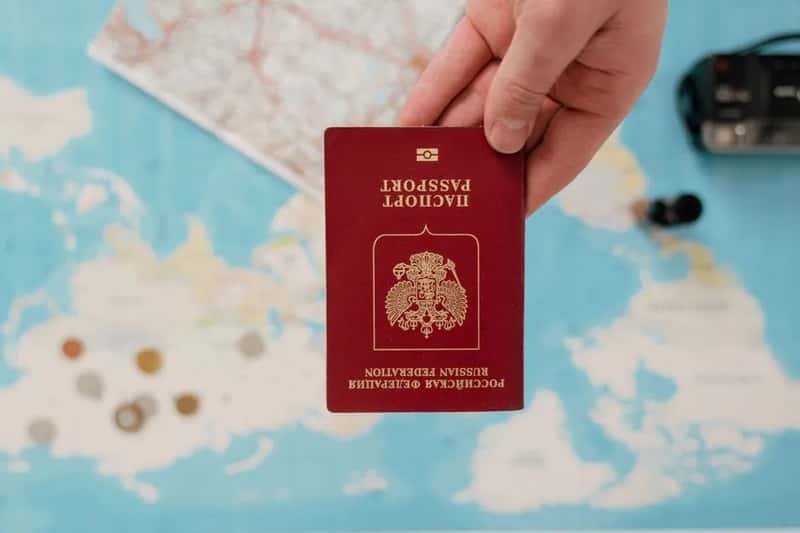
For retirees outside the European Union, the pathway into rural Italy usually runs through the Elective Residency Visa. Italy’s Elective Residency Visa is designed for non-EU retirees and financially independent people who can support themselves without working. Official consulate benchmarks commonly start at more than about 31,000 euros a year in passive income per applicant, drawn from pensions, annuities, investments, rental income, or similar non-employment sources.
Couples generally need more. The minimum income required sits around 31,000 euros a year for a single person and 38,000 euros a year for a couple, alongside proof of accommodation and health insurance. EU citizens have it easier still. If you’re an EU citizen retiring in Italy, you simply register your residence at the local comune, show proof of sufficient income, register for healthcare, and apply for your residency certificate.
A tax break built for pensioners

Italy sweetens rural retirement with a genuinely rare incentive. Italy introduced a 7 percent flat tax regime in 2019 to attract foreign pensioners to relocate to Southern Italy, letting qualifying retirees pay a flat 7 percent tax on all foreign-sourced income instead of Italy’s progressive income tax system, which ranges from 23 percent to over 43 percent. It’s a striking gap, and it applies for up to a decade.
The rules recently got more generous. As of April 7, 2026, the population threshold to qualify for Italy’s flat tax regime for foreign pensioners rose from 20,000 to 30,000 residents, unlocking 74 new municipalities across Southern Italy. These aren’t remote villages cut off from the world; they are functioning mid-sized towns with hospitals, schools, transport links, and a quality of urban life that smaller comuni often cannot offer. The catch remains the internet, since these towns still sit outside Italy’s densest fiber zones.
Healthcare without the city price tag

Healthcare costs stay manageable even for retirees who choose the countryside. Comprehensive private cover for someone over 65 can range from roughly 1,800 to 3,500 euros per year, depending on age and conditions. That’s a modest annual outlay compared to private insurance in many other countries.
Italy is generally regarded as a safe country for retirees, with a relatively low crime rate, and violent crime is extremely rare, particularly in rural areas and smaller towns. Emergency response hasn’t been forgotten either. If you need medical, police, or fire assistance in Italy, you simply dial 112. The trade-off in rural areas is distance rather than quality, since the nearest hospital may be a longer drive than in a city.
Getting around when you’re off the fiber grid

Cars matter more once you leave the cities behind. Many retirees in Italy find a car useful, especially in rural areas where public transportation is limited. Fuel and insurance stay reasonable by international standards. Total car ownership cost runs approximately 200 to 400 euros a month including fuel, insurance, road tax, and maintenance.
For longer trips, the train network compensates for local gaps. Italy’s high-speed train network connects major cities efficiently, with Rome to Florence taking 1.5 hours for 20 to 50 euros, while regional trains are even cheaper, connecting smaller towns at 5 to 15 euros per journey. It’s a reminder that Italy’s infrastructure gaps are uneven. Physical connectivity, in the form of roads and rail, often outpaces digital connectivity in the same towns.
Where retirees are actually settling
Certain regions have quietly become retiree favorites, and the reasons are consistent. Affordable property, strong food culture, and access to the Adriatic draw people to towns under 20,000 residents in Puglia and similar areas. Abruzzo shows up constantly in cost comparisons, too, largely because its mountain villages combine low prices with proximity to both the coast and Rome.
The calculation always comes back to lifestyle as much as money. Finding the best place to retire in Italy really depends on budget and lifestyle choices, and the decision often comes down to choosing between an expat bubble or joining Italians in the spots they pick for their own retirement. The towns Italians themselves retire to tend to be the ones with the weakest wifi and the strongest sense of community, which is either a downside or the whole point, depending on your outlook.
Closing the connectivity gap yourself

Retirees who need more reliable internet than the local cabinet provides increasingly turn to satellite. Starlink, launched in September 2021, covers essentially all of Italy by 2025, delivering typical download speeds of 50 to 200 Mbps and residential pricing around 40 euros a month. For anyone doing video calls with family back home, that’s often enough of a fix.
Public infrastructure is also catching up, slowly. Italy’s National Broadband Plan targets gigabit connectivity for essentially all households by 2026, funded in part by roughly 6.7 billion euros from the EU Recovery and Resilience Facility. Progress is real but uneven, so anyone settling in a rural comune today should plan around current conditions rather than promised upgrades. A backup hotspot or a satellite dish on the roof tends to be cheaper than waiting for the fiber crew to arrive.
Final thoughts

Rural Italy was never going to offer the fastest wifi in Europe, and for retirees chasing lower costs and a slower pace, that’s rarely the point. The math is simple once you accept it: cheaper property, lower monthly budgets, a friendlier tax regime, and genuinely good healthcare all cluster in the same places where fiber optic cable hasn’t quite caught up. Anyone willing to make that trade tends to find the rest of the deal more than makes up for a buffering video call now and then.