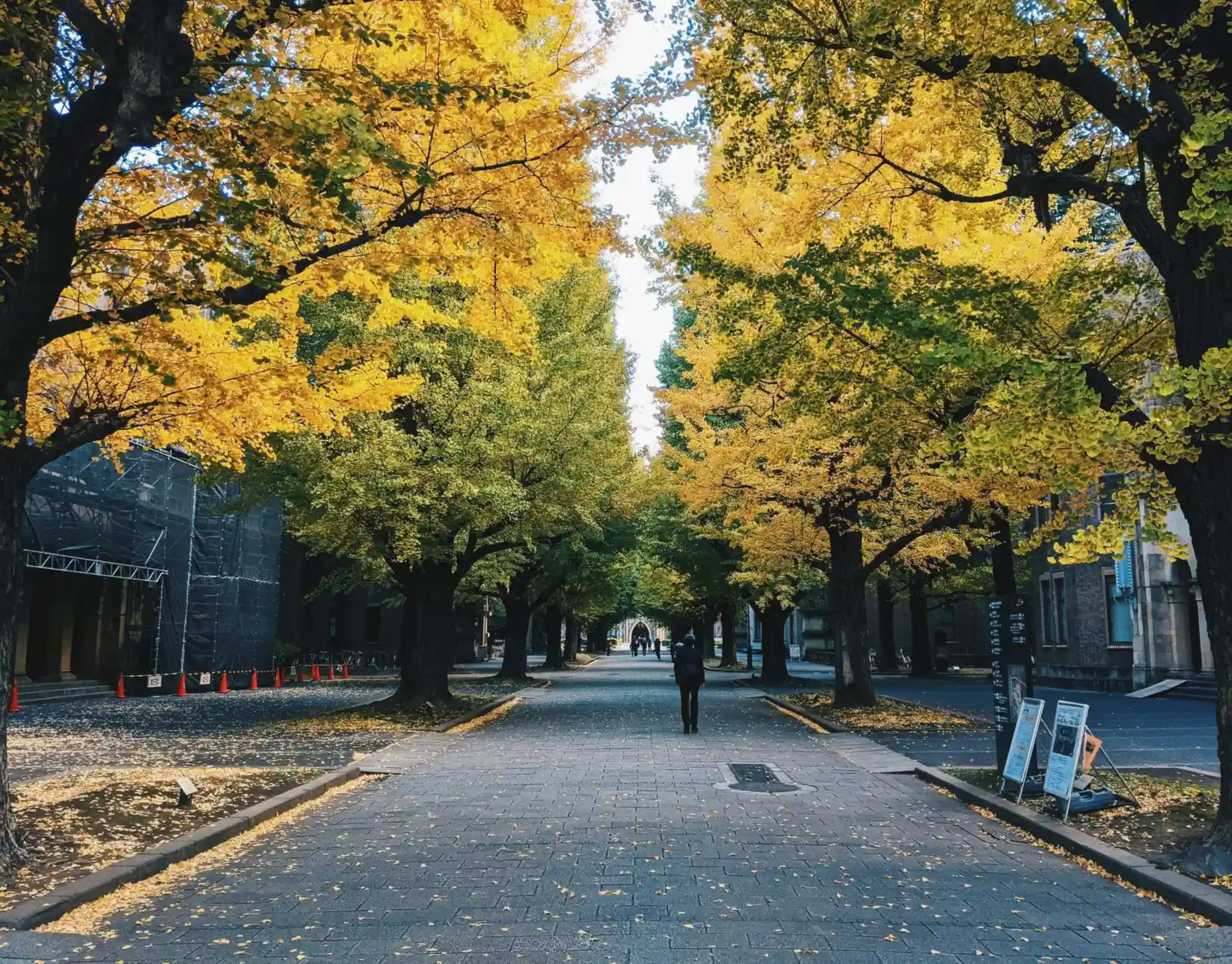
You are standing on a street corner in a city you don’t know.
The screen is spinning. The blue dot is lying.
Your jaw is tight.
And somewhere between the third wrong turn and the moment a local walks past without noticing you, something dark rises from your chest – not frustration, not confusion.
Rage.
That is the tell. That is the thing worth examining. Because the city didn’t do anything to you. The map didn’t betray you. The wrong turn is just asphalt and concrete, indifferent as always. But the anger – the kind that makes your fingers curl and your throat close – that belongs to something else entirely. Something much older. There is a version of you that was taught, very early on, that getting lost is not a navigation problem. It is a character flaw. That when you don’t know where you are, you aren’t just geographically displaced. You are failing. And failure, in that childhood home, was not an option.
1. The Wrong Turn That Isn’t About the Street

Here is the first thing to understand.
The anger arrives too fast.
It is disproportionate to the event. A wrong turn is a minor inconvenience. But for some of us, it registers as a catastrophe – a full-system threat response dressed up as mild irritation.
Perfectionism is marked by an extreme fear of uncertainty and an equally intense need for emotional security, and its anxiety can often manifest as anger – which looks like pushing away or extinguishing perceived threats to one’s self-image.
That is what is happening on the street corner.
The threat isn’t the wrong turn. The threat is what the wrong turn means to a nervous system that was wired in a house where mistakes had consequences. Where disorientation – spatial, emotional, social – was a signal that something was fundamentally wrong with you.
The street is just a street. But your body is reading it as a verdict.
And your body has been reading things this way for a very long time.
2. The Childhood Blueprint
Every home has a rule system.
Most of them are never written down. They don’t need to be. Children absorb them through tone of voice, through the specific silence that follows a bad grade, through the way a parent’s face changes when you spill something or go the wrong way or take too long to figure something out.
Perfectionism is especially prevalent in those who experienced childhood trauma, particularly if a child’s parents or caregivers withheld love or affection – and in those instances, children are likely to develop the belief that they must work hard by “proving themselves” to gain love and approval.
The blueprint was laid down quietly.
You don’t remember being told that failure was unacceptable. You just remember the feeling. The low-grade hum of anxiety that followed you from room to room, from school to home, from attempt to attempt.
That hum never left. It just moved with you. Into new cities. Into new streets.
Into that corner where the blue dot won’t stay still.
3. The Nervous System That Never Clocked Out
The body keeps a long ledger.
It records every moment you were punished for being wrong. Every time confusion was treated as stupidity. Every time asking for help was read as weakness. And it files all of it under one heading: danger.
If your childhood needs weren’t met, or your parents were critical or exceptionally hard on you, your nervous system may have protected you through perfectionism – an attempt to make yourself believe that you’re good enough and smart enough to stay safe, be regulated, and loved. Perfectionism is a trauma response that is all about protection and survival.
The nervous system doesn’t distinguish between 1994 and now.
It doesn’t know you are a grown adult with a working phone in a reasonably safe city in broad daylight.
It only knows the pattern: disorientation equals danger equals punishment equals shame.
So it fires the only response it learned.
It gets angry first, before you can feel afraid.
4. The Performance of Competence
Watch how you travel.
Notice the meticulous preparation. The obsessive pre-reading of maps. The rehearsed routes. The refusal to admit, even to a travel companion, that you are unsure of where you are going.
As people grow up, perfectionism shows up in life as control – controlling our environment and how people see us. That perfectionism becomes a debilitating loop while being applauded by society, which can be confusing and frustrating.
Traveling becomes a stage.
And you are the performer who is not allowed a single missed cue. Who must know the city before arriving. Who must orient in seconds. Who must seem, at all times, as though they have been here before.
Researchers have found that perfectionist self-presentation – defined as the need to appear perfect in front of others – is associated with key dimensions of perfectionism.
And when the performance cracks – when the map fails and the street refuses to cooperate – the curtain falls.
And what lives behind the curtain is the child who was never allowed to not know.
5. The Anecdote in the Rain
I will tell you about a rainy afternoon in Porto.
I had the app. I had downloaded the offline maps. I had read the neighborhood notes twice on the plane. I was prepared, in the way that people who were raised to fear being unprepared are always prepared.
And I still got lost. Completely, uselessly, cartographically abandoned in a narrow tiled street with no English signage and a battery at 11%.
The anger arrived before the problem did.
It was already there, coiled and waiting, the moment the street name didn’t match. I cursed the city. Then I cursed the app. Then I stood in the doorway of a closed bakery and, in the quiet that followed, recognized something that had nothing to do with Portugal.
It was the old feeling. The one from the kitchen table. The one from the math test. The one from every moment I had been expected to be right and wasn’t.
Most people feel some tension between wanting to go and wanting to stay, which is probably why departures are often filled with squabbling. Even if we are unaware of our ambivalence, the feelings emerge anyway, transformed into anxiety, anger, or even depression.
The city was just rain and cobblestones.
The fury was mine, and it was much older than the afternoon.
6. The All-Or-Nothing Geography
There is a specific cognitive distortion that perfectionism builds in us.
It is binary. It is absolute. It doesn’t do nuance.
It operates through all-or-nothing thinking: “If I’m not perfect, I must be a failure.”
Applied to navigation, this means there is no such thing as “slightly lost.” There is only found or failed. There is only oriented or catastrophically adrift. The city becomes a test with no partial credit.
The black-and-white, all-or-nothing world of the perfectionist is associated with a strong sensitivity to perceived slights, stubborn thinking, and difficulty with self-soothing.
This is why a wrong turn feels so total. So annihilating.
Not because you are weak. Not because you are broken. But because you were taught to grade yourself in extremes – and the grading system was installed long before you ever bought a plane ticket.
The map has gradients. Your internal judge does not.
7. The Control Mechanism Wearing a Backpack
Travel is supposed to be liberation. That is what we tell ourselves.
We pack light and leave the routine behind and call it freedom.
But watch the over-planner. Watch the traveler who researches every restaurant before landing, who has the emergency contact numbers saved, who panics quietly when the hotel lobby doesn’t match the photos.
In many cases, people exposed to prolonged trauma use perfectionism as a coping mechanism. Repeated exposure to trauma often involves a person living in an environment where their every action is monitored and scrutinized – thus, trauma survivors engage in perfectionism to take control over at least one element of their lives.
They are not over-prepared.
They are managing fear with logistics.
The itinerary is armor. The printed confirmation is a talisman. The pre-loaded map is a way of saying, quietly and desperately: I will not be caught not knowing. Not again.
The backpack is full. But so is the chest.
Feeling anxious doesn’t always mean you dislike travel itself – it might mean you’re nervous about the loss of control, the unknown, or the “what ifs” that come with leaving home.
8. The Identity Left Behind at Customs
Here is something travel does that we rarely talk about honestly.
It strips you of context.
At home, you are legible. You have your title, your history, your social shorthand. You are someone. But in a new city, the self you have performed so carefully – the competent, together, thoroughly oriented self – has no audience to perform for.
In many ways, we use travel to experiment with different aspects of our identity. We might try new activities, speak a different language, or find ourselves in a setting where we’re not defined by our usual roles.
For most people, this is exhilarating.
For the person raised not to fail, it is terrifying.
Because the roles were the scaffold. And now the scaffold is gone, and all that remains is the raw self – the one that doesn’t know the street names, doesn’t speak the language, and has a phone battery at 11%.
As researcher Paul Hewitt has described, “Perfectionism develops as a way to cope with that defective sense of self and a sense of not fitting in with others, not fitting in with the world, not having a place in the world.”
In a new city, that defective sense of self has nowhere left to hide.
9. The Shame Beneath the Anger
Anger is almost never the first feeling.
It is the second. It is what the psyche deploys when the first feeling – shame – is too dangerous to sit with.
Perfectionism often stems from inner shame, especially in the aftermath of childhood trauma. Survivors use perfection as a way to counteract or conceal their perceived flaws and vulnerabilities.
So when you lose your way on a foreign street, here is the actual sequence that happens in a fraction of a second:
You feel the disorientation.
The disorientation triggers the old signal: you are wrong, you are inadequate, something is fundamentally broken in you.
That signal generates shame.
And shame is unbearable. So the system converts it, almost instantaneously, into anger.
It is understandable how the intense demands of perfectionism can contribute to anger – as well as anxiety and depression – anger that may only exacerbate self-criticism.
The anger feels cleaner. More righteous. You are furious at the map, the city, the confusing signage, the unhelpful stranger.
But underneath all of it, very quiet and very old, is a child who was told that not knowing was the same as not being enough.
10. The Permission You Were Never Given
This is the heaviest point.
The thing that was taken from you wasn’t just the right to make mistakes. It was something deeper and more foundational than that. It was the permission to be in process. To be mid-figure-out. To stand on a corner without knowing which way to turn and feel nothing more alarming than mild curiosity.
Perfectionism often emerges as a coping mechanism in response to the shame that comes from childhood, as individuals strive to gain a sense of control and security in their environment. Rooted in fear of failure or abandonment, perfectionism becomes a way to avoid criticism, rejection, or further pain by striving for flawlessness in every aspect of life.
The child you were needed someone to model being lost gracefully. To demonstrate that not knowing the way was a temporary condition, not a permanent indictment.
That person was not in the room.
It becomes an unconscious negotiation with the world: if I am perfect, all this good stuff will happen, all these needs will be met – and difficult relationships will become easier.
And so you learned to never be lost. To always have the answer. To know the route before the route exists.
Learning to navigate a foreign city or adapt to new customs requires problem-solving and tolerance for uncertainty – an essential skill for emotional resilience. But tolerance for uncertainty is exactly what the perfectionistic childhood dismantled, brick by quiet brick. What travel asks for, that childhood revoked. And the gap between those two facts is where the anger lives – hot and righteous and entirely misaddressed.
There is a version of moving through the world that doesn’t require you to know where you are at every moment. A version that can hold a wrong turn loosely, the way you might hold a warm cup in both hands – without gripping, without fury, without the silent collapse of a self that needed the route to be correct.
That version of you isn’t lost. It isn’t broken. It is simply the self that was never given the room to not know – and is only now, years and time zones later, beginning to understand that disorientation is not a diagnosis. It is just a street. And streets, eventually, connect to other streets, and other streets, until you find yourself somewhere you didn’t expect, looking at something beautiful you never would have found if you’d stayed on the planned route.
The map was never the problem. The problem was the silence that followed every wrong turn, in a house that has since been left behind – but whose acoustics you have been carrying in your chest ever since, all the way to this corner, in this city, where nobody is watching, and nothing is actually at stake, and you are, quietly and without fanfare, entirely free to not know.