The wheels touch down.
The cabin lights flood back on.
Your stomach drops – and not from the altitude.
Something contracts inside you. Something quiet and specific. Not dread of the drive home, not anxiety about the inbox. Something older than that. Something that knows, before your mind catches up, that a version of you is about to be folded away like a map you’re not supposed to need anymore.
There is a gap between the person you perform at home and the person you quietly become when nobody who knows your name is watching. Between the role you hold – the title, the history, the family expectation, the neighborhood reputation – and the self that surfaces, blinking and alive, when you are nobody’s anything in a foreign city at noon. That gap has a weight. Most people never name it. They just feel it landing.
1. The Temporary Identity
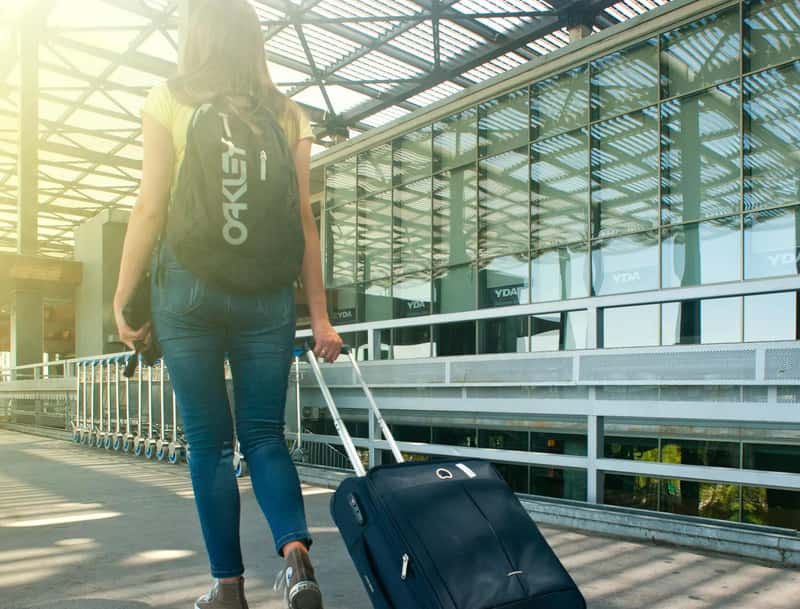
There is a version of you that only exists when everything is impermanent.
When you travel, the scaffolding of your everyday identity – your job title, your relationship role, your neighborhood reputation – quietly falls away. Sociologists describe this as a “liminal state,” a transitional phase between fixed social identities. In this state, individuals are temporarily outside the normal constraints of their home culture, allowing them to experiment with new behaviors and self-definitions.
This is not escapism. It is excavation.
The temporary version of you doesn’t have a mortgage hanging over it. Doesn’t have a decade of behavioral patterns that people in your life use to predict you. It has only the present tense. And in the present tense, you are surprisingly free.
Time spent abroad, away from familiar social cues, can increase confidence and clarity about who you are. That clarity is not an illusion. It is what you actually are – stripped of the roles that usually speak first.
The mourning begins because you know, somewhere under the jet lag and the duty-free receipts, that this temporary version of you is not temporary at all. It is the truest draft of yourself you’ve managed to write.
2. The Permission Structure
Nobody gave you permission to be different at home. That’s the whole problem.
Travel creates an invisible permission structure. The unfamiliarity of a place – the language you don’t fully speak, the streets you cannot navigate by muscle memory – forces you into a state of active, humble presence. Travel shifts how your brain operates while you are inside it. The environment demands attention, whether you are navigating unfamiliar streets or translating a menu in real time. Listening sharpens, small decisions carry weight, and your body moves more than it does at home.
You are granted permission to not know things. Permission to be slow. Permission to be a beginner.
At home, none of that permission exists. You are expected to be competent, consistent, and contained. The version of you that wandered a market in Lisbon asking strangers for directions with broken Portuguese and a full, open laugh – that version has no obvious place in Tuesday morning’s commute.
The sadness isn’t about missing the place. It’s about missing the permission.
3. The Neurology of Arrival
Your brain on travel is a different brain. This is not poetic license. This is biology.
When we step into unfamiliar territory, something remarkable happens inside our heads – a profound neural awakening that forms the foundation of travel transformation. Your brain loves novelty, and travel delivers it in abundance. Neuroplasticity – the brain’s ability to form new neural connections – flourishes during travel experiences.
Every new street, every unfamiliar sound, every meal you can’t identify on sight – your brain is building. Constructing new architecture. Growing.
Then the plane lands.
The dramatic learning curve associated with frequent world travel is gone and your brain is stimulated at a much slower rate. The grocery store smells exactly as it always has. The commute takes the same nineteen minutes. The neural construction site goes quiet.
What you feel as mourning is, in part, your brain grieving the withdrawal of its own most alive state. The sadness has a chemical address.
4. The Mirror of Home
Home is the most honest mirror you own. That’s precisely why it’s so hard to look at after travel.
Home did not change while you were gone. The cabinets are still in the same place. The commute takes the same time. The grocery store still plays the same music. Nothing shifted on the surface. But you did, and that difference can sit quietly under everything.
This is the specific cruelty of return. The world held still while you moved. And now you are expected to slot back into a space that was measured for an older version of your dimensions.
What many people call post-travel depression often overlaps with reverse culture shock. We expect culture shock when we land somewhere unfamiliar. We rarely expect it when we return to the place we thought we knew best.
The mirror of home shows you the gap. The distance between who you were when you left and who you are now, standing in the same hallway, under the same ceiling light, feeling faintly like a stranger in a room that has your name on the mailbox.
5. The Identity Gap (A Personal Dispatch)
I want to be honest with you here, because theory only gets us so far.
I remember standing in my own kitchen three hours after landing from six weeks abroad. The familiar weight of the mug in my hand. The refrigerator hum I had forgotten. Everything exactly where I’d left it.
And I felt, with a clarity that startled me, that I had left someone behind at the departure gate. Some easier, lighter version of me who had laughed without self-editing, who had sat in silence without checking a screen, who had eaten alone at restaurants without performing busyness. That person had walked through security and not boarded the plane.
I stood in my kitchen and grieved them quietly over cold coffee.
This is the identity gap – the chasm between the self that travel permits and the self that home demands. Travel can highlight the parts of life that feel heavy or stagnant. Sometimes, the sadness isn’t about leaving the specific destination; it can be about what you’re returning to. And the hardest part is that what you’re returning to is, technically, your life. A life you chose. A life you built. A life that simply never accounted for the version of you that was still forming.
6. The Social Contract of Being Known
People who love you are also people who have frozen you.
Not maliciously. Not consciously. But the people in your life hold a version of you in their minds – a composite built from every interaction, every pattern, every joke you’ve told twice. They love that version. They reference it. They expect it to show up.
You don’t just lose convenience when you return. You lose the environment that reinforced who you were. And that can feel disorienting.
Travel gave you anonymity. And anonymity, it turns out, is a form of freedom most of us are never offered at home. Nobody at that café in Bologna was holding a years-old version of you in their mind. You were simply the person in front of them, now, in this moment.
At home, you are always also who you were. The ten years ago version and the last-week version and the version from the argument nobody mentions anymore. You carry every iteration. The returned traveler feels all of that weight reassemble, piece by piece, as the days after landing accumulate.
7. The Grief Nobody Names
Nobody tells you that returning home requires mourning. That it is, technically, a loss.
Every trip ends. You leave a temporary world behind and release the version of yourself who lived there. Even joyful chapters require closure. The sadness that follows is often a quiet form of mourning. It is not dramatic. It is acknowledgment that something meaningful has finished.
Our culture does not give us language for this kind of grief. It is considered indulgent. Ungrateful, even. You went somewhere beautiful. You came back. What is there to mourn?
Everything, it turns out.
Psychologists describe post-travel depression as a form of situational grief, mourning an experience that brought joy but cannot be relived in the same way. The grief is not irrational. It is proportionate. You were, for a time, more yourself. And then that time ended.
Naming it as grief – not blues, not funk, not restlessness – changes the way you carry it. Grief is allowed to be heavy. Grief does not require a cure. Grief simply requires space.
8. The Dopamine Contract
Your brain made a deal with the road. And now it wants to renegotiate.
Psychologists recognize post-travel depression as a normal emotional response linked to dopamine changes, loss of novelty, and lifestyle contrast. Every new texture your eyes landed on abroad – every cobblestone, every unfamiliar font on a storefront, every sky that felt slightly different in its light – was a small dopamine transaction. Your brain was flush. It was trading in novelty like currency.
Home is a flat market. The dopamine transactions are smaller. Slower.
Most experts think transitioning from a holiday to everyday life can cause an adrenaline crash that accounts for the syndrome. But it goes deeper than adrenaline. It is the withdrawal of a state your nervous system had come to understand as its natural frequency. High-signal. High-resolution. Fully switched on.
The returned traveler is not being dramatic when they feel the grey of ordinary days more acutely. Their nervous system has a reference point now. And the reference point is devastating in its brightness.
9. The Self-Concept Clarity Paradox
Here is the paradox that nobody warns you about: travel makes you more certain of who you are, right before you return to a place that makes that certainty harder to hold.
Research shows that the duration of time spent abroad, rather than the number of countries visited, correlates with an increase in “self-concept clarity” – suggesting a dose-dependent relationship; the longer the brain is immersed in a novel predictive environment, the more it is forced to construct a more robust and well-defined model of the self.
You come home knowing yourself more precisely than when you left. The cruelty is that home was built around the less-precise version.
Once you’re thrown back into your “normal” life back home is when the reverse culture shock hits. You find that your old priorities, values, and worldview don’t always line up with your new views.
This misalignment is not a problem to be solved. It is a signal. It is your clearer self pressing against the older architecture of your life, testing the walls, looking for doors. The mourning you feel at landing is not weakness. It is your most accurate self refusing to quietly disappear back into a shape it has outgrown.
10. The Integration, Not the Return
The question has never really been how to stop feeling it. The question is what you do with the version of yourself who survived the trip.
Those who have experienced a deeper cultural identity shift while travelling or living elsewhere may have more challenges assimilating back into their home culture. An important factor in this process is the degree of psychological flexibility – the ability to navigate between different cultural mindsets without feeling entirely detached from either.
The traveler who returns and simply waits for the feelings to pass – who unpacks the bag and repacks the self – loses something irreplaceable.
Transformative learning within an international context is about integration and finding connection, but also about differentiation and reinventing oneself within a new context. The self that was allowed to breathe abroad is not meant to be left at the gate. It is meant to be carried through it, deliberately, with both hands, into the ordinary difficulty of a Tuesday.
You’re not losing yourself. You’re layering yourself. The version of you that moved freely through foreign light is not gone. It is waiting to be integrated – not performed, not performed for, but quietly woven into the texture of the life you are still building.
Integration is harder than departure. Departure is romantic. Integration is the real work.
There is a particular quality of light in the hours after you land back home. Everything is familiar and nothing quite fits. The mug. The commute. The conversations that pick up exactly where they left off, as if you hadn’t been somewhere else entirely, as if you hadn’t briefly been someone else entirely.
What you are feeling in those hours is not ingratitude. It is not restlessness. It is not a sign that you are difficult or romantic or addicted to escape. It is the sensation of a self that expanded – genuinely, measurably, neurologically expanded – pressing up against the walls of a life that was sized for a smaller version of you. That pressure is not a problem. It is information.
The version of you that finally breathed was not a vacation from your real self. It was a preview of the self that is still being built – in the gap between who you were told to be and who you are quietly becoming, one landing, one departure, one long and unresolved exhale at a time.