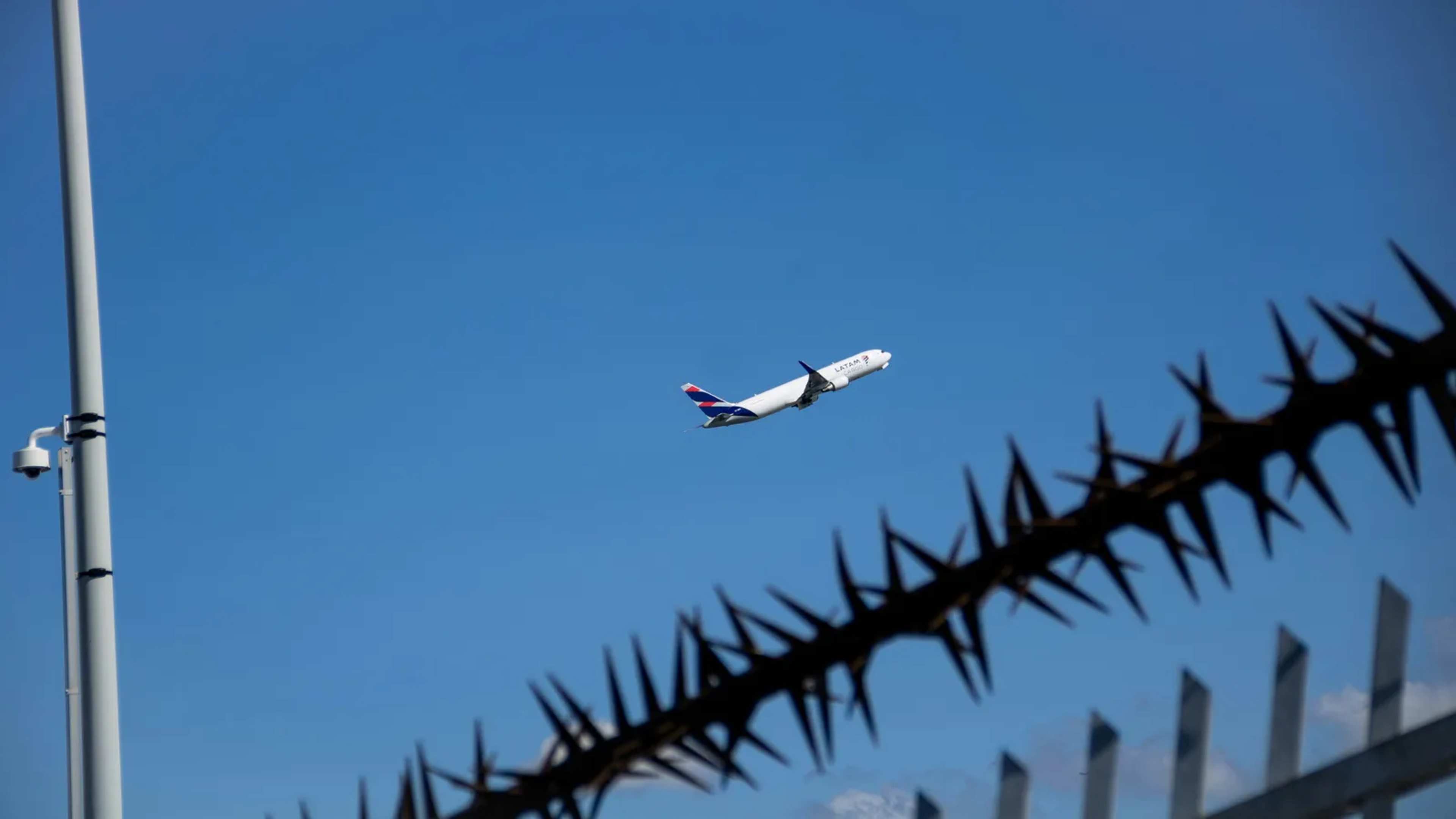
You walk through the doors.
Stone. Silence. Stained glass bleeding colour onto cold floors.
Beautiful. Enormous. Ancient.
And your eyes – before your mind has even formed a single thought – have already found the exit.
This is the gap. The identity gap. The distance between the person who bought the guidebook, who planned the itinerary, who wanted to be moved by something larger than themselves – and the person whose nervous system is already calculating escape routes from a cathedral that has stood for eight hundred years and has never once been a threat.
We pretend we are curious travellers. Open. Present. Transformed by movement. But the body keeps a different ledger. It remembers everything you have tried to forget. It runs its own algorithm, quietly, in every grand entrance hall, every crowded piazza, every hushed and sacred space.
1. The Alarm That Won’t Switch Off

Here is the clinical truth, stripped of softness.
Your nervous system essentially learns to expect danger and struggles to recalibrate to normal levels of alertness.
That is what is happening when you step into a grand, vaulted space and feel your chest tighten before the incense even reaches your nose.
It is not a character flaw. It is not evidence of ingratitude. It is not proof that you cannot appreciate beauty.
Imagine your body is like a smoke detector. It’s designed to keep you safe by warning you when there’s danger. But, sometimes, after trauma or chronic stress, that smoke detector becomes overly sensitive. It starts going off even when you’re just making toast.
The cathedral is the toast.
Your alarm has simply not been told the fire is out. It’s exhausting – and it makes sense. Your nervous system is trying to keep you safe. The problem is it’s working overtime on a threat level that may not actually match your current reality.
This is Point Zero. Everything else radiates from here.
2. The Exit Scan
Let’s describe exactly what happens in the body.
Flight creates restlessness and an urgent need to escape. Your legs may bounce or feel antsy, ready to carry you away. Your eyes start scanning the room, looking for exits or tracking movement around you. Breathing becomes shallow and quick, staying high in your chest. You might find yourself physically angling toward doorways or already planning your excuse to leave. The whole body says go even when you’re sitting still.
You are standing under a ceiling painted by a Renaissance master.
And your body is already at the door.
This is not metaphor. This is physiology. Adrenaline and cortisol trigger fast body changes like a quicker heart rate, faster breathing, sharper senses, and lower pain perception. All of it firing in a space designed specifically for stillness. For awe. For the dissolution of the self into something larger.
Your nervous system has decided: not today.
And here is the darkest irony of travel. The further you go to feel something, the more the body refuses to let you arrive.
3. The Safety Lag
There is a name for the disconnect between what the mind understands and what the body believes.
This disconnect has a name: the safety lag. It’s the gap between what your thinking brain understands and what your nervous system believes. Your mind can process facts, timelines, and logic. It can remind you that the past is over.
But the body does not read calendars.
The body reads architecture. It reads ceilings that are too high, crowds that are too dense, stone walls that press in from every side. It reads enclosure. It reads the unfamiliar echo of footsteps against marble and hears something that once meant danger in a language older than language itself.
Your brain’s alarm system, particularly the amygdala, becomes overactive and continues sending danger signals even when you’re logically aware you’re safe. This happens because trauma can disrupt the normal communication between different parts of your brain, making it difficult for the rational mind to override the emotional alarm system.
You know you are safe.
Your body disagrees.
The lag can last seconds. It can last years. For some travellers, it has lasted the entire length of a journey they thought would heal them.
4. The Permanent Tourist
The traveller who cannot stop moving is often not running toward something. They are running from the stillness.
Your nervous system is likely dysregulated if you experience a combination of these signs: feeling “wired and tired” simultaneously, difficulty sleeping despite exhaustion, digestive problems, getting sick frequently, chronic pain or tension, emotional instability or flatness, hypervigilance or constant anxiety, difficulty concentrating, and behavioral patterns like avoiding conflict or isolating from others.
Sound familiar? Sound like every long-haul trip you have ever taken?
Movement provides the perfect cover. There is always a reason to keep going. Another city. Another cathedral. Another border. The itinerary becomes a kind of armour.
When your sympathetic nervous system is chronically activated, your body stays in a heightened state of readiness even when there’s no immediate danger.
The Permanent Tourist carries this readiness like luggage. Overpacked. Non-negotiable. Never checked.
They collect passport stamps the way others collect evidence. Proof that they were somewhere. Proof that they were trying. Proof that they were, at minimum, in motion.
Motion and healing are not the same thing.
5. The First-Person Confession
I have stood in the Duomo in Florence. I stood under Brunelleschi’s dome – a feat of human engineering so audacious it still has no full explanation – and I spent approximately forty seconds looking up before I began identifying the closest exit.
Not consciously. Not voluntarily.
My eyes just went there. My chest just tightened. My breath just shallowed. And the magnificent ochre dome swam above me while some interior weather system I had never agreed to install ran its silent, urgent calculations.
I knew, cognitively, that I was safe. I knew the threat – whatever original event had wired this particular circuit – was years and an ocean away. But the body does not care about oceans.
Hypervigilance makes your brain prioritize survival over presence. Even when you’re physically safe, your body stays braced.
I was braced. Under the most beautiful ceiling in the world. Braced for something that was not coming.
That is the particular grief of the high-alert traveller. You go further than most people will ever go. And you arrive, every time, slightly too defended to let it in.
6. The Architecture of Threat
Grand cathedrals are, neurologically speaking, almost purpose-built to activate a dysregulated nervous system.
They are vast. They are unpredictable in their crowd patterns. They echo, which means sound comes from all directions simultaneously. The ceiling is impossibly high, removing the psychological comfort of enclosure. The exits are often narrow, far away, and partially obscured by centuries of accumulated stone.
People suffering from hypervigilance may become preoccupied with scanning their environment for possible threats. They might overreact to loud and unexpected noises, exhibit an overactive startle response or become agitated in highly crowded or noisy environments.
Every cathedral choir rehearsal. Every organ test note. Every tour group that shifts unpredictably through your peripheral vision.
All of it: data. All of it: processed by a system that has long since stopped distinguishing between relevant threat and irrelevant stimulus.
Sustained states of hypervigilance, lasting for a decade or more, may lead to higher sensitivity to disturbances in their local environment and an inability to tolerate large gatherings or groups.
The architecture is not the enemy. But the nervous system has not been informed of this. And no sign at the entrance says: Your history is not a guide to this building.
7. The Wiring Beneath the Wandering
Where does this come from?
Childhood adversity and developmental trauma create particularly strong foundations for hypervigilance. When threat becomes a regular part of early life, your nervous system adapts by maintaining constant vigilance.
This is the part that catches travellers off guard. They left home. They built a new life. They crossed hemispheres. They rebuilt their identity entirely around movement and curiosity and openness.
And then they stand in a cathedral in Seville or a temple complex in Kyoto and the body says: I remember. I am still here. You did not leave me behind.
When a child grows up in an environment where safety feels uncertain, the brain’s survival systems become highly sensitized. This means the fight, flight, freeze, or fawn responses can become the brain’s default way of coping, even long after the original danger has passed.
Travel does not reset the nervous system. It only changes the backdrop.
The wiring travels with you. Business class or economy. It does not matter. It always has the window seat.
8. The Exhaustion Nobody Names
There is a particular fatigue that belongs to the high-alert traveller.
It is not jet lag. It is not the honest tiredness of cobblestone miles walked in good shoes. It is the fatigue of constant vigilance. The fatigue of arriving everywhere and never quite landing.
Hypervigilance may bring about a state of increased anxiety which can cause exhaustion.
You collapse into the hotel bed and you are wired. Tired and wired simultaneously. You have been on high alert all day – in the taxi, in the museum, in the restaurant, in the cathedral – and your system has not found a single moment of genuine, unguarded rest.
Even if you’re “resting” physically, your body may still be in overdrive – exhaustion without relief.
You lie there in the dark of a foreign city, listening to traffic patterns you don’t recognise, and you think: I should feel something. I did something today.
But the system is still running. Still scanning. Still waiting for the threat that never arrives.
This is the exhaustion nobody names on travel blogs. Nobody photographs it. It doesn’t make it into the reel. But it is the most honest souvenir most travellers carry home.
9. The Difference Between Vigilance and Armour
There is a distinction that matters here, and it is one that most of the self-help lexicon quietly sidesteps.
Not all alertness is dysfunction. Hypervigilance itself isn’t a negative thing. Just like the stress response, hypervigilance can help you protect yourself against dangers or threats.
Healthy vigilance is the traveller who checks the emergency exits on an aeroplane. Reasonable. Practical. Briefly enacted and then released.
Armour is different. Armour is the traveller who cannot stop checking. Who checks the exit of the cathedral, and the restaurant, and the hotel lobby, and the train carriage, and the market square. Whose system never sends the all-clear signal. Whose baseline is a permanent mild emergency.
For many, hypervigilance is not a personality trait or a choice. It is a learned survival response, deeply rooted in the nervous system, often shaped by trauma, chronic stress, or prolonged exposure to unsafe environments.
The armour was built for good reasons. It served you once, in a context where it was absolutely necessary.
The work is not to destroy the armour. The work is to learn that in this cathedral, in this city, in this life you have built – you are allowed to take it off.
10. The Slow Return to the Body
This is the heaviest point. So it will be handled with care.
Healing hypervigilance is not about forcing yourself to calm down. It is about teaching the nervous system that safety is possible again.
Not commanding it. Not arguing with it. Teaching it.
The way you teach anything: slowly. With repetition. With extraordinary patience for the pace at which nervous tissue actually rewires itself.
Through neuroplasticity, the brain can learn new patterns of safety. Healing does not mean never feeling alert again – it means choice, flexibility, and rest return.
This is not a small thing. This is enormous. The return of choice. The return of flexibility. The idea that you could stand under a cathedral ceiling and stay – not because you forced yourself, not because you white-knuckled your way through the panic – but because the system finally received the message that the threat is over.
The work now is helping your body learn that it’s safe enough to rest – that calm doesn’t have to be earned through control.
This is the work beneath the travel. Beneath the miles. Beneath the accumulated beauty of every place you have stood in and not quite been able to enter.
It is interior work. It cannot be done from a moving vehicle.
There is a version of you that stands in the nave of a great cathedral and does not immediately count the exits. That person is not naive. They are not unguarded. They have simply received enough evidence – enough quiet, uninterrupted evidence – that the world, in this moment, in this specific light, is not ending.
That version of you exists. It is not a fantasy. It is what the nervous system looks like when it has been given enough time, enough safety, enough compassionate witness to finally, finally recalibrate.
The stone will still be cold under your feet. The light will still fall in long coloured columns from windows that are older than any story you carry. The ceiling will still be impossibly high. But one day – not through force, not through willpower, not through another stamp in another passport – you will look up. Really look up. And for a moment that belongs entirely to you, nothing will require an exit.