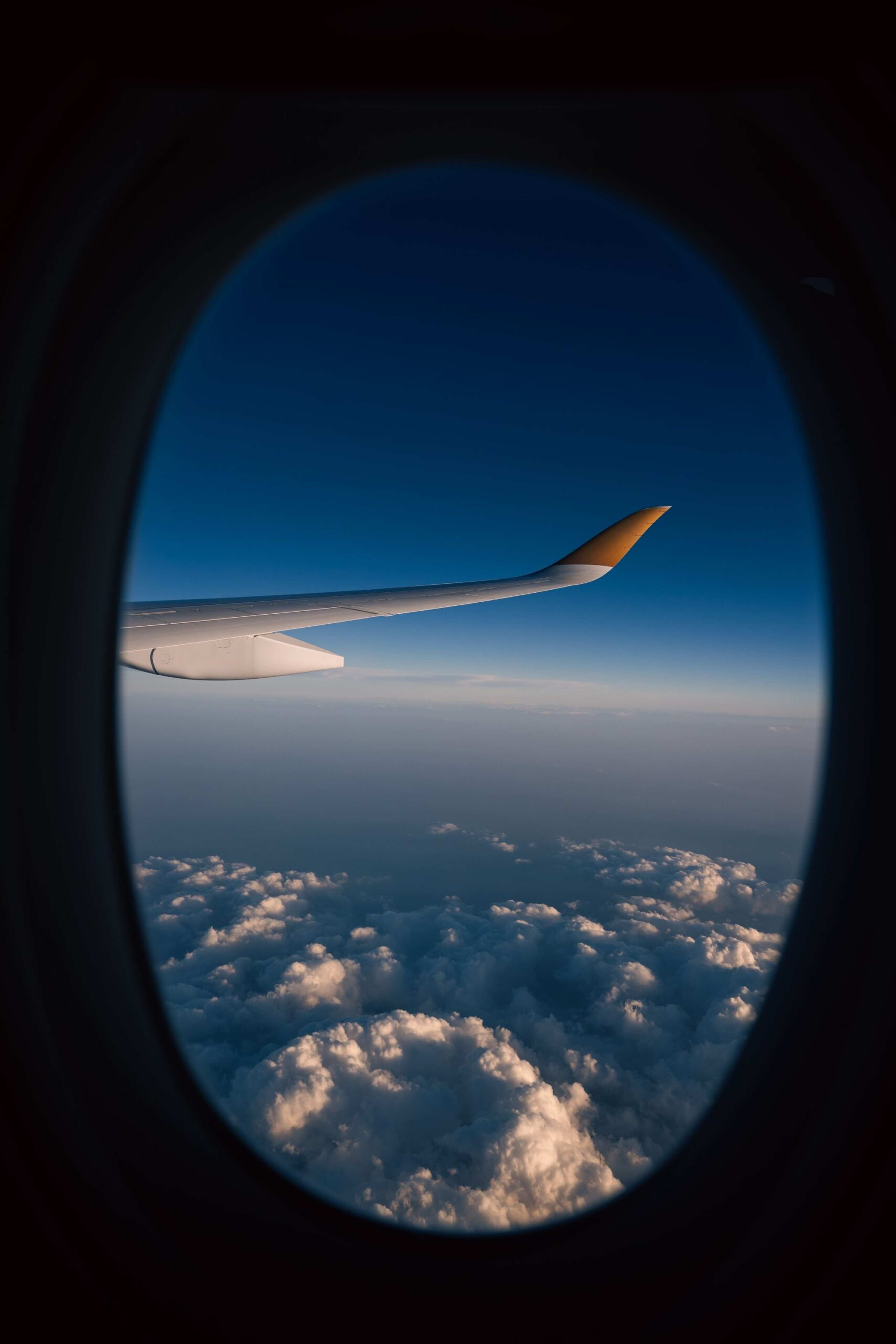
The gate opens at 6 AM.
They’re already smiling.
You’ve been awake since 3.
Your bag is packed in a precise, defensive architecture. Every zipper memorized. Every document triple-checked. You are not paranoid. You are prepared. There is a difference – and the fact that no one else seems to know that difference is the source of a very specific, very private rage.
The identity gap lives here. Between the traveler you were told you should be – spontaneous, open-palmed, leaning into the unknown – and the traveler you actually are: scanning, calculating, mapping the exits before you’ve even found your seat. You are not broken. You are not “bad at vacations.” You have simply learned, somewhere between your history and your nervous system, that the world does not hand out safety for free. And watching someone collect it effortlessly? That lands like a verdict.
The Wired Traveler
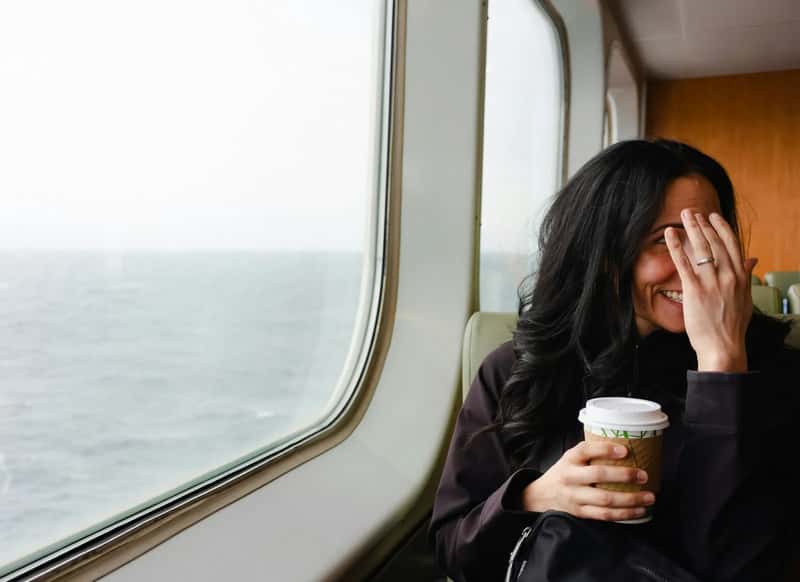
Hypervigilance is, at its core, a biological adaptation to stress – your brain’s method of trying to keep you out of harm’s way by being highly alert and aware of your surroundings. The wired traveler didn’t choose this operating mode. It was installed.
It was installed in the moments where safety wasn’t a given.
In the airports where something went wrong. In the cities where someone’s hand went somewhere it shouldn’t. In the accumulated weight of having learned, repeatedly, that comfort is a loan – not a gift.
You carry that education everywhere. Through security. Through customs. Through the lobby of every hotel where you unconsciously clock the exits before you clock the minibar. This is not neurosis. This is a neural archive. The traumatic memory “teaches” the brain to expect danger, so the alarm system remains triggered long after the trauma. Your guard never fully clocks out. And you’ve made peace with most of that – until you see someone who never had to build the system in the first place.
The Happy Traveler Problem
They arrive unencumbered.
No pre-downloaded offline maps. No color-coded emergency contacts. No practiced phrases for “I need a hospital” in four languages. They arrived at the airport twenty minutes before boarding with a carry-on that clearly doesn’t fit regulations, and somehow – somehow – it all worked out.
And you watched it work out. And something in you curdled.
The anger isn’t really about them. It never is. You tend to operate on a default setting of doubt. Trust is not freely given; it must be earned, and even then, it is often subject to re-evaluation. So when someone extends trust to the world automatically – to strangers, to systems, to the general benevolence of circumstance – it doesn’t look like freedom to you. It looks like a luxury. One you weren’t issued. One you have had to watch others spend without knowing its cost.
That is the wound. Not jealousy. Something older than jealousy.
The Architecture of Constant Readiness
Over time, that constant readiness becomes itself a stressor: it drains energy, fuels anxiety, and makes it hard to rest. You already know this. You feel it in your shoulders at the baggage carousel. You feel it in the way you can’t finish a meal at a restaurant table facing the wall.
Every trip is a negotiation between the self that wants to be present and the self that is perpetually on perimeter duty.
The architecture of constant readiness is meticulous. You know where your passport is at all times. You have a second copy in the cloud and a third in the hotel safe. You know the name of the nearest hospital. You have a charged power bank and a plan B and a quiet, grinding awareness that plan B may also fail.
The body stays in a state of “readiness,” even when there’s no real threat. That is the tax on the wired traveler. Not a single dramatic breakdown. Just a continuous, cellular expenditure. A life lived in low-grade armor. And the worst part? It often works. Your vigilance often protects you. Which makes it nearly impossible to put down.
The Feedback Loop
Here is where it gets precise. Here is the mechanism.
Research suggests that anxiety spurs selective attention in your brain. Then, it creates a feedback loop: you look for a specific threat and you get more anxious, which causes you to look for more threats. The loop is elegant in its cruelty. Each successful act of vigilance – each danger spotted, each disaster pre-empted – validates the system. The guard dog barks. Nothing bad happens. The guard dog concludes: I was right to bark.
The happy traveler doesn’t have this loop running. Or if they do, it’s quieter. Set to a lower frequency.
Watching them move through the world without the loop running doesn’t just look easy. It looks like proof of something you can’t quite name. Like they were handed a different map of the world. A map where roads are generally reliable and strangers are generally kind and systems generally hold. You weren’t given that map. You drew your own. In the dark. With a pen that kept running out of ink.
The Personal Anecdote You Weren’t Asked For
I remember a trip through a city I’d been warned about.
Three days in, a woman at a cafe – a stranger – leaned over and said, unprompted, “You look exhausted. Not from travel. From watching.” She wasn’t wrong. I had catalogued every person who’d come within two meters of my bag. I had noted the exits from every room. I had, without deciding to, run threat assessments on people who were almost certainly just eating lunch.
She looked at me with something I didn’t know how to receive. Not pity. Recognition.
“Some of us,” she said, “were never taught that things would be fine.”
She was a happy traveler, I think. But she had once been a wired one. She had done the slow, unglamorous work of teaching her nervous system a new language. Controlled and incremental exposure to travel-related situations allows the nervous system to relearn safety. Not forget the old dangers. Not pretend the world is safer than it is. But add a new vocabulary alongside the old one.
I ordered another coffee. I sat facing the door. But I stayed a little longer than I needed to.
The Insult of Ease
The anger has a specific texture. It isn’t hot. It’s compressed.
It is the feeling of having worked very hard for something – safety, composure, the ability to function in an unfamiliar environment – and then watching someone receive it for free. Common psychological responses to difficult travel experiences include hypervigilance, distrust, and anger – reactions that reflect disruption to core psychological needs for safety and control. When those needs have been chronically disrupted, the people who seem to have them chronically met become, inadvertently, a mirror of everything you’ve had to compensate for.
Their ease is not an accusation. But it feels like one.
It feels like the world is telling you that all that vigilance – all that careful, exhausting, never-quite-finished vigilance – was somehow a choice. A character flaw dressed up as a coping mechanism. That if you were just more relaxed, things would be fine. As if relaxed is something you can decide to be. As if the nervous system takes suggestions.
The Identity in the Gap
Travel strips away your context.
At home, you have choreography. You know the rhythms of your street, your grocery store, the particular creak of your building’s elevator at 2 AM. You are competent there. Legible. With culture shock, travelers lose their sense of mastery over their environment, and even routine tasks of everyday life become a challenge. And when that mastery is gone, what remains is the raw signal of who you are without it.
For the wired traveler, what remains is the sentry.
The self that watches. That calculates. That can’t quite let the beauty of the place land because it is still checking the perimeter. And there is grief in that – real, quiet grief. Not for the destination missed. For the version of yourself you imagined traveling as. The one who could sit on a terrace above a city at dusk and feel nothing but the warmth of it. Who didn’t have to earn the warmth with a prior sweep for threats.
That imagined self is real. She exists. She is just still in formation.
The Cost of the Armor
When hypervigilance sets in, it shows up across multiple domains – body, mind, and behavior. The experience varies from person to person. For the traveler, it shows up as a kind of double consciousness. You are simultaneously in the place and outside the place, watching yourself be in the place, checking whether being in the place is safe enough to actually be in.
The armor costs a specific kind of presence.
Muscle tension, headaches, and fatigue accompany ongoing tension from being on edge. A persistent, low-level dread – a sense that something bad might happen – becomes the baseline. And that baseline becomes so familiar that its absence feels suspicious. A quiet afternoon in a foreign city doesn’t feel peaceful. It feels like a setup. Like the calm before something you haven’t anticipated yet. You’ve learned to distrust peace itself.
That is the deepest cost. Not the missed adventures. Not the unchecked itineraries. The inability to trust your own ease.
What the Happy Traveler Actually Has
Here is the thing about the happy traveler. The one you’ve been watching with that compressed, specific anger.
They are not naive. Or at least, not all of them. Some of them have done the work. Some of them have arrived at their easy smile through years of difficult renegotiation with a nervous system that once looked a great deal like yours. Understanding that hypervigilance is often a learned response – a survival mechanism that has outlived its usefulness – can be a powerful catalyst for change. The journey toward a more secure and connected existence begins with acknowledging the shadow of hypervigilance and then consciously choosing to step toward trust and vulnerability.
Their trust is not ignorance. It is, sometimes, a discipline.
Not the absence of knowing that things go wrong. But the practiced, deliberate decision to extend the benefit of the doubt anyway. To let the moment be what it is before deciding what it threatens. That is not something they were born with. That is a skill. And like all skills, it was earned through repetition, through failure, through choosing, again and again, to put the armor down in small, low-stakes places, until the body started to believe it could.
The Slow Permission
No one is going to tell you to relax.
This is not that. Telling a hypervigilant nervous system to simply relax is the psychological equivalent of telling a broken leg to simply walk. Hypervigilant people know that they may be irrational but still find it difficult or impossible to relax. The knowledge and the body are not operating on the same channel. You can know, intellectually, that the cafe is safe. Your amygdala will continue to run its own analysis and submit its own report.
But there is something smaller and more possible than relaxing. There is the slow permission.
Permission to notice when the vigilance is working on your behalf – and when it is working instead of you. Permission to be angry at the happy traveler and then, eventually, to be curious about them. To ask, quietly, not what they were spared – but what they learned. An individual’s trust in the external environment can serve as a subjective positive perception, which enhances their sense of safety self-efficacy. Trust is not a personality trait you either have or don’t. It is a practiced perception. Trained, retrained, and capable of expansion.
The armor was built for good reasons. It protected something worth protecting. But it was always meant to be equipment – not identity.
The wired traveler and the easy traveler are not opposites. They are the same person at different points in a very long conversation with the world. One who learned early that the world required proof. One who, somewhere along the way, stopped asking for it – not because the proof arrived, but because the asking had become more exhausting than the risk.
You don’t have to put the armor down all at once. You don’t have to trust the world the way someone trusts it who was never given a reason not to. You just have to find one place – one table, one hour, one foreign city at dusk – where you let yourself stop checking, and see what the warmth feels like when it actually lands.
It will feel like something you already know.