You knew where the bodies were buried before you knew how to ride a bike.
Not literally. But close enough.
You learned early that information was currency. That knowing something nobody else knew made you essential. Safe, even.
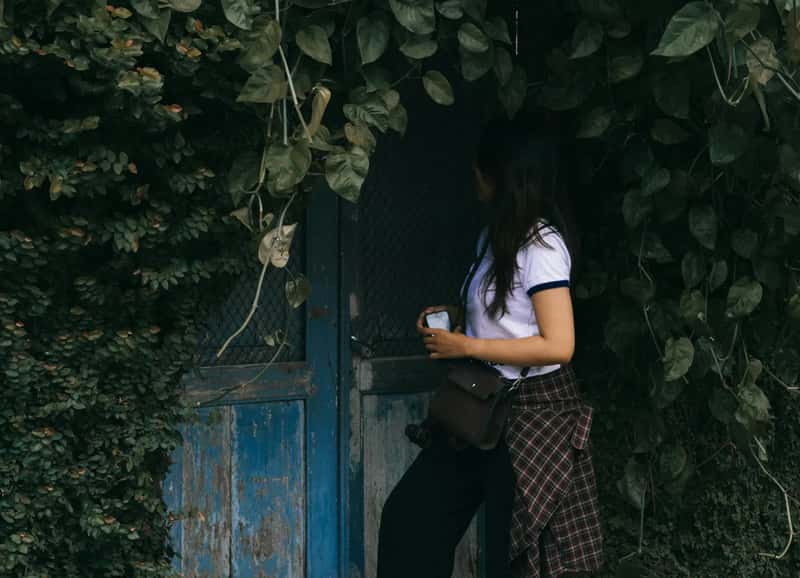
So now you’re an adult. And you’re standing in front of an unmarked door in a city you barely know, holding a password whispered to you by a stranger, feeling – for the first time all week – like yourself.
That feeling has a history. A long one. And it didn’t start with cocktail menus.
The Chosen Child
It started before you were old enough to name it.
You were recruited into the role of secret keeper, caretaker, or protector within your family – often in ways that were developmentally premature and, consequently, burdensome. As a child, you were expected to hold emotional space for adults or to manage family dynamics in ways you were not yet equipped to do.
You didn’t apply for the position.
You were drafted.
A defining feature of your childhood, these role reversals shaped your adult identity, your relational expectations, and your functioning in ways that followed you out the front door and into every room you’ve entered since.
The job title changed. The job description never did.
You were the one who knew. And knowing was the only power you had.
The Architecture of Concealment
The family home had invisible walls.
The act of keeping a secret – even one held collectively by the family – creates a boundary. That boundary dictates what is “safe” to discuss and what is off-limits.
You internalized those blueprints completely.
The fundamental impact wasn’t just about the content of the secret itself – it was about the process of concealment and its effect on relational patterns. When communication pathways are blocked or distorted by secrecy, it can hinder the development of healthy emotional expression and conflict resolution skills.
You became fluent in silence.
You learned to read the room before you learned to read the clock. You felt the temperature of a conversation shift three degrees before anyone else noticed the draft. That skill – the hypervigilant scan, the constant emotional inventory – felt like a superpower. It wasn’t. It was survival architecture dressed up as intuition.
And you built your whole social identity inside it.
The Hypervigilant Radar
Here is what nobody tells you about growing up the way you did.
The most emotionally attuned person in any room is often the one whose childhood demanded it as a condition of survival. We tend to celebrate people who can read a room – who sense tension before it arrives, who know exactly when to redirect a conversation. We call them emotionally intelligent.
We admire them.
We do not ask how they got that way.
Psychologists describe this pattern as an external locus of emotional attention. The person has learned to orient all their perceptual resources outward. They track other people’s micro-expressions, vocal shifts, body language, and energy with a precision that genuinely impresses therapists. But ask them what they want, what they feel, what they need – and you get a long pause.
That pause is not shyness. It is the cost of a childhood spent watching everyone else.
The Vault and the Visitor
Secrets have mass. Psychological weight.
Research suggests that keeping a secret activates the same brain regions as physical pain, which explains the heaviness that secret keepers describe as something almost physical. Children who carry family secrets experience this chronically.
You carried yours quietly. You got good at it.
The child absorbs the unspoken rule: we don’t talk about this. And then they build an entire personality around managing what can’t be said. The personality they build looks, from the outside, like remarkable social grace.
People think you’re charming. Discreet. Trustworthy.
They’re right. But the price tag on those qualities is invisible to everyone except you.
Concealing secrets leads to negative outcomes for the secret keeper, including greater psychological stress, decreased relational satisfaction, and increased secret rumination when the secret is perceived to be especially harmful to one’s identity.
You’ve been ruminating since the third grade. You just called it “thinking.”
The Hidden Door as Mirror
I want to tell you something personal here, because this is the point where theory becomes autobiography.
I was twelve the first time I understood that the story my family told the world and the story we lived inside the house were two entirely different documents. My job – never stated, always understood – was to maintain the public version. To smile at the neighbor. To say “everything’s fine” at school. To be the seamless surface over the crack.
Twenty years later, I found myself obsessively drawn to the kinds of places that required you to know something to get in. A particular knock. A name. A whispered phrase at the back of a bookshop. I told myself I was just adventurous. Curious. A connoisseur of atmosphere.
It took a therapist with a very steady gaze to help me see it differently. The hidden door wasn’t just a novelty. It was a mirror. Every time I stood in front of one, I was recreating the only love language I’d ever been fluent in: exclusive knowledge as the price of admission.
The Password as Love Language
Consider what a password actually does.
The term “speakeasy” comes from the practice of speaking quietly or “easily” about such places to avoid drawing attention. Entry often required passwords, secret knocks, or insider knowledge, creating an exclusive allure that only fueled their popularity.
Now consider what you do.
You don’t send people a plain address. You send them the alley entrance, the name to give at the door, the detail about the second booth on the left. You are not being helpful. You are offering the only intimacy you know how to extend.
The exclusivity and intimate atmosphere of speakeasy-style bars naturally lend themselves to word-of-mouth discovery. These hidden gems are often found through recommendations from friends or colleagues, adding to the allure of being part of an exclusive club.
For you, that recommendation is not casual. It is a covenant. It is the closest you know how to get to saying: I trust you. You are inside the perimeter. You are safe to know what I know.
That is intimacy filtered through the grammar of secrecy. It is the only grammar you were taught.
The Scarcity Economy of the Self
There’s a reason inaccessibility thrills you more than it thrills someone who had a transparent childhood.
One of the strongest psychological forces at play in hidden bars is the Scarcity Principle, coined by psychologist Robert Cialdini. The less accessible something is, the more desirable it becomes.
You didn’t need Cialdini to teach you that. You lived it.
Information held back was information with power. The unspoken word controlled the room. The secret was the leverage. You learned before adolescence that what was withheld was more valuable than what was freely given.
The effort required to secure a reservation at an exclusive bar – the hours spent, the waiting – is effort justification at work. It’s a cognitive bias where we rationalize that anything requiring effort must be valuable. This ties into cognitive dissonance reduction: when we invest time or energy into something, we subconsciously inflate its worth to align with our efforts.
But for the former secret keeper, the inflation is not cognitive. It is existential. Worth was always earned through difficulty. Love was always behind a locked door.
The Unmarked Door and the Identity Gap
Travel does something specific to the person who grew up too aware.
A new city doesn’t know your family story. It doesn’t know the version of you that held the weight. In transit, the burden has no address to be delivered to. You are, briefly, just a body moving through space.
Family secrets shape and scar in four main ways: they can divide family members; they can discourage individuals from sharing information with anyone outside the family, inhibiting the formation of intimate relationships; they can freeze development at crucial points in life; and they can lead to painful miscommunication within a family.
That second one. The one about inhibiting intimacy with outsiders. That one followed you onto every plane you’ve ever boarded.
So you find the hidden bar in the foreign city. You find the restaurant with no sign and a six-week waitlist. You find the gallery that requires a referral. And in the finding, you reconstruct a familiar architecture – the world divided into those who know and those who don’t – but this time, you are the one granting the access. You are no longer the child receiving the burden. You are the one holding the keys.
The power dynamic has finally, in this one small corner of the world, reversed.
The Speakeasy as Sanctuary
There is something genuinely healing about a room that requires a secret to enter. Not because the room is special. Because you already know how to live in that kind of room.
Modern speakeasies, hidden behind coffee shops and laundromats, replicate their Prohibition-era counterparts by offering something hard to find in today’s culture: privacy. As one bar manager described the appeal: it’s “that old-world mentality of being in an environment where you’re tucked away from anything going on in the outside world.”
You know tucked away. You have lived tucked away.
A speakeasy isn’t just a bar – it’s an immersive narrative wrapped in history and exclusivity. That’s why the drink tastes better. You’re not just sipping a cocktail; you’re sipping a story.
And your story – the real one, not the family-approved version – has always been underground. Has always required a password. Has always been worth the effort of finding.
In the dim light, surrounded by people who also chose to seek rather than be handed, you feel the particular relief of being understood without having to explain yourself. The room already speaks your language.
The Long Walk Out
Here is the heaviest thing I will say.
The speakeasy is not the problem. The hidden gem is not the wound. The instinct to seek exclusive knowledge as currency of connection is not a character flaw.
It is a scar that learned to walk upright.
The presence of family secrecy in childhood has significant implications for both the individual and their families – including the impact on psychological and emotional wellbeing, identity formation, family dynamics and conflicts, and issues with trust and communication.
You are walking around with all of that inside you. You are still doing the job you were assigned before you were old enough to refuse it. You are still converting knowledge into belonging, still building your worth out of what you alone know how to find.
The secret-keeping child grows up believing their value lies in what they can manage, prevent, and smooth over. That belief is the real secret they’re carrying – far more burdensome than whatever the family wouldn’t name.
The goal, slowly, carefully, without cruelty to yourself, is to begin to practice a different kind of connection. One that doesn’t require the password. One that lets people in through the front door, in plain daylight, without the performance of insider access.
Not because the speakeasy isn’t beautiful. It is.
But because you deserve to feel at home in rooms that anyone can walk into – and still feel like you belong there. Not because you found it first. Not because you know something they don’t. But simply because you are there, and that is enough, and you have always been enough, even when the house insisted otherwise.
Somewhere in a city you haven’t visited yet, there is a door with no sign and a low amber light behind it, and when you find it – and you will find it, because you always do – maybe this time you’ll notice that what you were really looking for was never behind the door at all.