The passport is new. The fear is not.
You’ve memorized the departure gate. The exchange rate. The emergency contacts.
And still. Something old and unnamed hums beneath your sternum the moment the skyline changes.
You call yourself a traveler. An adventurer. Someone who moves toward the unknown with open hands.
But there is a gap between that identity and the child who learned, quietly and completely, that the world beyond the front door required vigilance. That love and worry were the same thing. That safety was a room you could lock from the inside.
1. The Borrowed Map
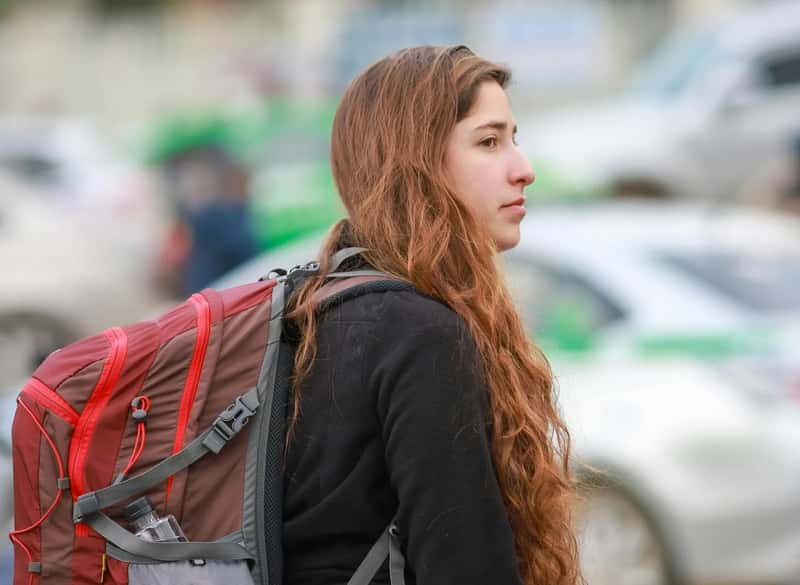
Before you ever held a real map, you held your parents’ mental one.
Research has shown that parent anxiety can be transmitted through modelling and verbal transmission of threat and avoidant information. It didn’t arrive as a lecture. It arrived as a raised eyebrow when a stranger approached. A tightened grip in a crowded market. A news story left on too loud before bedtime.
Your nervous system was paying attention the whole time.
Parents with social anxiety disorder have been found to attribute more negative features to the environment, labeling certain environments as highly threatening, which may increase vulnerability in the child and promote avoidance.
They weren’t wrong to be careful. They were loving you in the only language they knew.
But that language got lodged inside you. And now, decades later, you land in Lisbon or Lagos and feel a familiar frequency – a low, insistent signal that says: scan the room. Find the exit. Don’t get too comfortable.
You didn’t choose this map. You inherited it.
The work is learning that you’re allowed to draw your own.
2. The Safe Base Problem
Attachment theory tells us that children use their caregivers as a launching pad for exploration.
As children grow, they are thought to use attachment figures as a secure base from which to explore the world and to return to for comfort.
But what happens when that base is simultaneously warm and frightened?
What happens when the people who love you most are also the people most convinced the world will hurt you?
You learn a double message. Go explore. But also: be careful, be careful, be careful.
With the development of locomotion, the infant is expected to begin to use the caregiver as a “safe base” from which to explore. Infant exploration is expected to be greater when the caregiver is present because the infant’s attachment system will be relaxed, making it freer to explore.
When the base itself trembles, exploration feels dangerous. And foreign places – where the base is hours or time zones away – feel like exile.
You go anyway. That’s the bravery no one names.
3. The Overchecked Itinerary
You have a spreadsheet. Of course you do.
Hotel confirmations. Hospital locations. The address of the nearest embassy. A printed backup of your boarding pass because what if your phone dies and what if the Wi-Fi is down and what if –
Kids with anxiety thrive on predictability. Not knowing what’s coming next can trigger a cascade of “what ifs,” causing their minds to race and making them feel unsteady.
You grew up watching someone prepare for every possible disaster. You absorbed that as love. And it was love.
But now the disaster-preparedness follows you across time zones, stitched into every itinerary you write.
Over-planning is not discipline. It is the ghost of a child who learned that chaos was a moral failing.
The foreign city doesn’t need your spreadsheet. It needs your presence. And your presence – your real, undefended presence – is the one thing your itinerary cannot account for.
4. The Hypervigilant Tourist
Other travelers see a bustling souk. You see six potential exits and three ambiguous strangers.
Other travelers hear a street festival. You hear noise that’s too loud and too close and not quite readable.
From a child’s perspective, travel is full of changes the nervous system has to adjust to – disrupted routines, different bedtimes, unfamiliar foods, unpredictable schedules. Airports, hotels, and tourist spots are full of new sounds, lights, smells, and crowds.
You experienced all of that as a child. But the adult next to you – your anxious, loving parent – also experienced it. And their nervous system narrated everything as a potential threat.
Fearful temperament is characterized by displays of high levels of fear, wariness, or reticent responses to novel situations. Fearful temperament is a risk factor for the development of inhibited, hypervigilant behaviors that may then lead to social withdrawal.
Hypervigilance in a foreign city isn’t paranoia. It’s pattern recognition running on old data.
The challenge is learning to update the dataset. In real time. Without abandoning all caution entirely. It’s a narrow road. But it exists.
5. The Soft Architecture of Home
I remember standing in a train station in Budapest. It was 11 PM. The announcement board flickered between Hungarian and a language I didn’t recognize.
I had the right platform. The right ticket. And still – a wash of cold certainty that I was about to do something wrong. That someone, somewhere, was about to appear and tell me I didn’t belong here.
That feeling wasn’t about the train station.
It was about being six years old in a supermarket, watching my mother’s face tighten around a stranger’s question. It was the lesson she never meant to teach: unfamiliar places require a toll.
The development of an anxious or preoccupied attachment style is often associated with an inconsistent parenting pattern. Sometimes the warmth was total. Sometimes the fear was total. And you, caught between those two weathers, learned to read rooms the way a sailor reads clouds.
That’s what I was doing in Budapest. Reading clouds.
The train came. I got on. Nobody stopped me. But the feeling took another twenty minutes to dissolve, quiet and stubborn as smoke.
6. The Language Barrier as Mirror
There is something specific that happens when you don’t speak the language.
Suddenly, you are a child again. You cannot explain yourself. You cannot defend yourself. You cannot even ask where the bathroom is without a performance of vulnerability.
Insecurely attached children cannot count on the availability and responsiveness of attachment figures. Uncertainty about the availability of attachment figures increases the probability to respond with fear when experiencing alarming situations.
A foreign language strips away every adult competence you’ve built. And what it reveals is that small, watchful child who learned that being misunderstood was dangerous.
Anxious parents often communicated in subtext. You became fluent in what wasn’t said. You read silences. You translated sighs.
But in a country whose language you don’t speak, your superpower fails you.
This is disorienting. This is also extraordinary. Because it means the traveler in you must develop a different kind of fluency – one built not on vigilance, but on openness.
That is the real education. Not the landmarks. Not the cuisine. The willingness to be lost in translation and stay anyway.
7. The Emergency Rehearsal
You’ve imagined the worst-case scenario before you’ve even packed.
The illness abroad. The lost passport. The earthquake in a city where you don’t know the emergency number. The feeling of needing help and having no one to call.
Specific travel fears – planes, turbulence, or even just being in tight spaces – can create fear days before the trip even begins.
Anxious parents rehearsed emergencies. They ran the drills before the disaster. And you were there, in the living room, absorbing every scenario as a probable future.
Stressful experiences, physiological stress regulation, and attachment relationships are intrinsically linked, as the activation of the attachment system invariably follows the early stages of detecting and processing fear-related cues and anxiety states.
The emergency rehearsal was not cruelty. It was how they said I love you.
But love and threat prediction are not the same architecture. And when your body cannot tell the difference between an imagined catastrophe and a real one, every international departure feels like a small act of war against your own nervous system.
The bravest thing you do, some days, is board the plane anyway.
8. The Stranger Danger Inheritance
You are cautious with people you’ve just met. Especially in places where the rules are different. Especially when no one is watching.
This did not appear from nowhere.
Young infants showed increased fearfulness and avoidance of a stranger following exposure to a socially-anxious mother-stranger interaction, and the effect was stronger for children with an inhibited temperament.
The wariness of strangers begins early. It is modeled, not taught. It lives in the body before it lives in the mind.
Parents with social anxiety may express potential threat through parent-child conversations that include parental catastrophizing comments, infrequent display of confident behaviors in specific environments, and promotion of child avoidance and lower encouragement to approach social situations.
And so the traveler in you finds foreign strangers doubly foreign. Strange language, strange culture, and – underneath it all – the unspoken rule from childhood: unknown people carry unknown risks.
The cruelty of this inheritance is that it walls you off from the very encounters that make travel worth anything at all. The chance conversation with the woman at the café. The old man who shows you the unmarked shortcut. The stranger who becomes, briefly, the whole point of the journey.
9. The Return Anxiety No One Talks About
Here’s the one that surprises people. The anxiety doesn’t peak at departure.
It peaks at the return.
Because the traveler who left is not the traveler who comes home. Something has shifted. And the home that was once the safe room – the locked door, the familiar kitchen, the parents who worried so beautifully – no longer fits quite right.
Affect regulation strategies are mainly acquired in the interpersonal context of early attachment relationships and persist into adulthood, making them relevant for the understanding of the nature and development of anxiety disorders.
When you return from a journey that changed you, those old strategies feel like last season’s coat. Too small. Too familiar. Wrong for where you’ve been.
The anxious home of your childhood gave you a perimeter. Travel dissolves perimeters. And when you come back, you have to decide which version of yourself to inhabit.
That decision is the real journey. The passport is just paperwork.
10. The Long Walk Out of the Familiar
Here is what nobody tells you about growing up in a house made of anxious love.
You are not broken. You are exquisitely calibrated for a world that no longer exists.
Avoidance and wariness of unfamiliar peers causes disruption in peer interactions that then promotes social maladjustment, creating consistent reinforcement that novel situations should be approached cautiously or avoided altogether.
Your nervous system learned a lesson. The lesson made sense once. The world has moved on, but your body is still loyal to the original curriculum.
Securely attached children may develop more positive expectations about others and a greater sense of self-efficacy. Children who are more securely attached form more positive relationships with peers, cooperate more with adults, and regulate their emotions more effectively.
You did not get that foundation clean and uncomplicated. You got love with a side of fear. Warmth with a soundtrack of worry. Safety that came with conditions you never fully understood.
And now you travel – sometimes to prove something, sometimes to escape something, sometimes because you are trying to find the version of yourself that exists outside the original perimeter.
That long walk, from the anxious home to the foreign street corner, is the bravest commute you will ever take.
It doesn’t get easier. But it gets more familiar. And familiar, for someone like you, is almost enough.
There is a version of you that exists only in foreign places. Only when no one who knows you is watching. Only when the street signs are unreadable and the hours feel elastic and the person you were raised to be is temporarily, mercifully, out of signal range.
That version of you is not the real you, and it is not a fantasy. It is something between the two – a self that could not be born inside the anxious house, and so had to wait. Had to wait for the right departure gate. The right unfamiliar skyline. The right moment of beautiful, terrifying lostness.
Your parents loved you the best they knew how. The fear they handed you was not a wound. It was the only map they had.
The journey – the real one – is the slow, quiet work of drawing your own.
You Might Also Like:
- People Who Grew Up With Instability Often Become Adult Travelers Who Never Fully Believe Things Will Work Out Until They Are Actually Back Home
- People Who Are Unusually Good At Spotting Patterns In Foreign Cities Didn’t Just “Learn” It—Certain Childhood Conditions Actually Wired Their Brains To Be Hyper-Aware