The cathedral was magnificent. You know it was.
You have the photos to prove it.
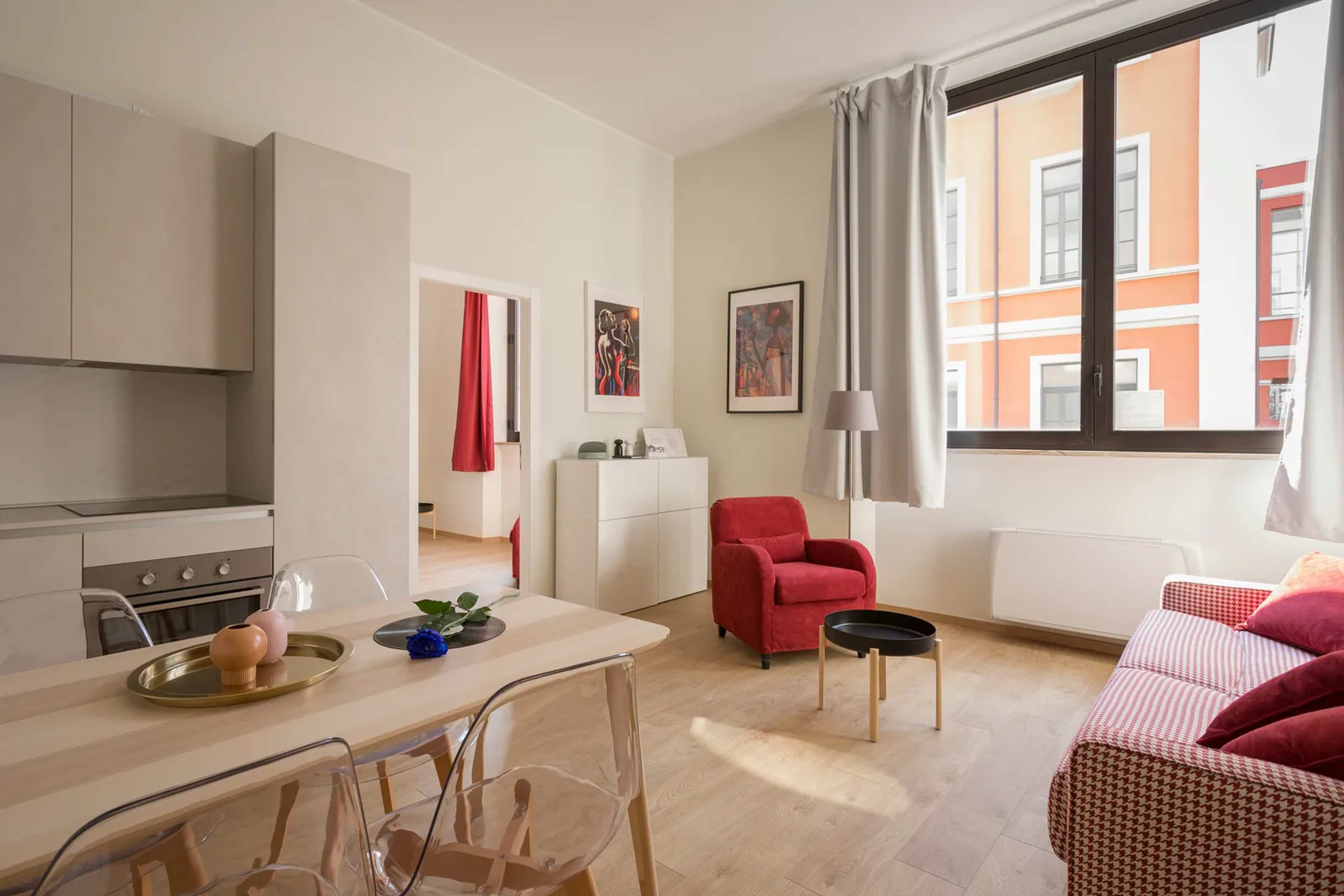
But right now, at 6 PM, with the city still roaring twelve floors below, the only thing that feels like oxygen is a locked door and absolute silence.
Everyone else on the tour is heading to dinner. You can hear them in the corridor – laughing, making plans, full of the day. You are full too. Full in a different way. Full the way a hard drive sounds right before it crashes.
This is the moment you need space. You need to sit alone in a dim room and simply stop. It isn’t a flaw in your character. It’s a seam in the architecture of who you are.
1. The Processing Price Tag
Every conversation has a cost.
Not a moral cost. A metabolic one.
When you’re in a social situation, your brain is working harder to process everything: conversations, body language, social cues, and environmental sounds – which naturally uses more mental energy. Now multiply that by a full day of sightseeing in an unfamiliar city. Every stranger who gave you directions. Every fellow tourist who asked where you were from. Every museum guide whose accent you strained to decode. Each exchange extracted a toll.
Introverts process stimulation – sounds, sights, emotions, and social cues – more deeply and slowly than extroverts. This depth of processing makes introverts great listeners, thinkers, and observers, but it also means that too much stimulation can quickly drain their mental energy.
The hotel room isn’t a retreat from the world. It’s where the receipt finally comes due.
You’re not antisocial. You’re settling a tab that’s been running all day.
2. The Cortical Overload
Here is the hard science beneath the soft exhaustion.
Your brain didn’t arrive at this city empty.
Introverts generally have higher baseline cortical arousal, meaning their brains are naturally more active even in calm conditions. Therefore, additional external stimulation can easily lead to overstimulation and fatigue. This explains why introverts often prefer quieter environments and need time alone to “recharge.”
Think about what that means when you land in a new city. You didn’t start at zero. You started at sixty. The cathedral, the crowded market, the metro at rush hour – these didn’t merely stimulate your brain. They pushed a system that was already running hot.
Noise, crowds, rapid context-switching, and high-stakes social performance all draw from the same reservoir, and introverts tend to have a smaller tank.
Sitting alone in your hotel room is not weakness. It is physics.
3. The Dopamine Mismatch
Extroverts chase the room. You watch it from the doorway.
That isn’t shyness. That is chemistry.
Research shows that extroverts have a more active dopamine reward system than introverts. Dopamine is a neurotransmitter that helps control the brain’s pleasure and reward centers. Having a more active dopamine reward system means that extroverts get more energized and excited by the possibility of reward than introverts. For introverts, social interactions don’t trigger the same reward response. This doesn’t mean you don’t enjoy socializing; it simply means your brain isn’t receiving the same energizing dopamine boost that extroverts typically experience.
For you, a rush of dopamine from a high-stimulation environment isn’t a reward. It’s a flood warning.
Because introverts are more sensitive to dopamine, what energises an extrovert can and probably will quickly overwhelm and drain us. Instead, we are more receptive and thrive on acetylcholine – a neurotransmitter that supports focus, calm, pleasure, and a sense of deep wellbeing.
The tour group is chasing dopamine. You need acetylcholine. The hotel room is where you find it.
4. The Social Hangover
It arrives without announcing itself.
One moment you’re fine. The next, every sound feels like it’s happening inside your skull.
When the brain hits its limit, introverts may experience what is called the “introvert hangover” – a feeling of exhaustion, foggy thinking, irritability, or even physical discomfort after extended social or sensory exposure.
A day of sightseeing isn’t just physically demanding. It is a sustained social performance. You navigated. You oriented. You smiled at strangers in confined spaces. Research estimates that social interactions extending over three hours can lead to post-socializing fatigue for some people. You were out for eight.
It can be an emotional and physical response to social overstimulation that leaves you feeling drained and exhausted. You might feel physically tired, stressed, angry, or irritable. Social exhaustion can feel like hitting a wall.
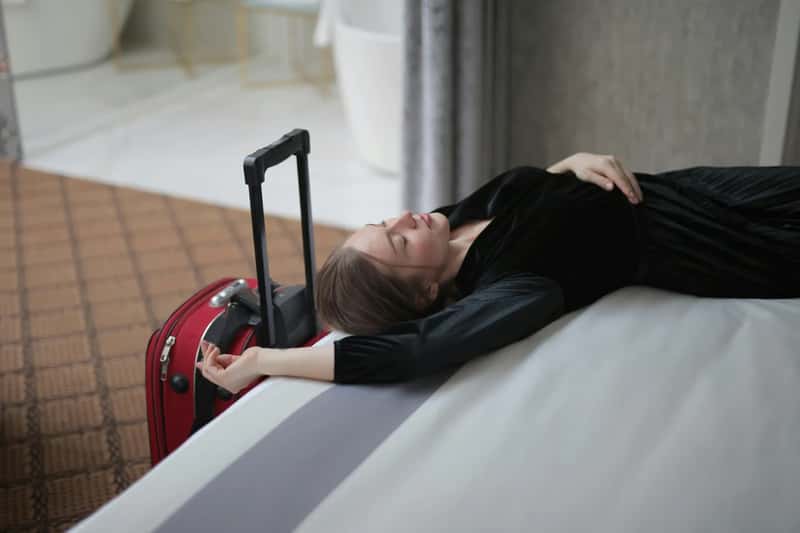
The wall is real. The science built it brick by brick. Lying on your hotel bed, staring at the ceiling – that is recovery, not failure.
5. The Scenic Route Through Your Own Brain
There is a moment I remember clearly.
Budapest. A beautiful city. Third day of a solo trip. I had done the thermal baths, the Parliament tour, the ruin bars. I had talked to a man from Ohio, a couple from Seoul, a student from Lisbon who was studying architecture. Good conversations. Genuinely good. And yet, by four in the afternoon, I sat on the edge of my narrow hotel bed and felt a specific kind of emptiness – not sadness, not loneliness. Just a complete, cellular need to stop processing other humans. I ordered room service. I watched a film in a language I don’t speak. And I woke up the next morning genuinely ready to fall in love with the city again.
What I didn’t understand then is that my brain had simply taken the long way around.
Incoming information – voices, emotions, noises, social cues, conversations – travels a longer, more scenic route through the introverted brain. Extroverts process stimulation quickly through dopamine pathways. Introverts process it slowly through acetylcholine pathways.
The hotel room isn’t where you hide from the trip. It is where the trip finally gets processed.
6. The Default Mode Activation
Your brain doesn’t go quiet when you close the door.
It goes to work.
The National Institutes of Health has published research on how the default mode network – the brain’s internal processing system – is more active in introverts during rest. That quiet time isn’t passive. It’s active neurological recovery.
The default mode network is the part of the brain that becomes most active when external demands fall away. It is where memory consolidation happens. Where meaning is made. Where the gargoyle on the cathedral gets filed next to the one your grandmother had on her bookshelf when you were seven.
When stimulation decreases, the brain finally has space to process thoughts and emotions that were accumulating during social interaction. Quiet environments allow the nervous system to settle down. Mental clarity slowly returns.
You aren’t doing nothing in that hotel room. You are doing the most important cognitive work of the entire day.
7. The Cortisol Clock
Somewhere between the third tourist attraction and the fourth forced conversation, a hormone starts running the show.
That hormone is cortisol. And it doesn’t care about your itinerary.
When we engage in social interaction, our anterior cingulate cortex – a brain region responsible for social monitoring – maintains heightened activity. This activation creates a state of elevated arousal in our nervous system. For introverts especially, this arousal can quickly become overwhelming because their baseline sensory processing is already more sensitive than average. Think of it like a glass that’s already half full – it takes less additional input to reach overflow.
As introverts may be subject to higher levels of stimulation, this can also increase their cortisol levels, leading to higher levels of experienced stress.
Silence is the only thing that turns the cortisol clock back.
The hotel room isn’t avoidance. It is the antidote.
8. The Transition Tax
Nobody talks about this one.
It’s not just the interactions that cost. It’s the shifting between them.
Introverts don’t just get tired from socializing. They get tired from the transitions – shifting from work mode to social mode, from alone time to group settings, from silence to noise.
A day of sightseeing is a relentless series of transitions. From the quiet of the morning coffee to the noise of the lobby. From the meditative awe inside a cathedral to the aggressive pitch of a street vendor outside it. From your private thoughts on a park bench to the sudden obligation of small talk with someone who recognized your accent.
Energy doesn’t deplete at a constant rate. Context matters enormously. A conversation with someone you trust deeply might cost almost nothing. An hour of small talk with strangers at a networking event might cost everything you had.
Each gear change is a micro-withdrawal from the account. By evening, you are overdrawn.
9. The Amygdala’s Long Memory
New cities are beautiful. They are also, neurologically speaking, slightly threatening.
Your brain doesn’t distinguish between novelty and danger as cleanly as you’d like.
New environments trigger the brain to switch out of autopilot. When you’re in a familiar setting, your brain takes shortcuts – it predicts, fills in gaps, and saves energy. But step into a new place, and suddenly everything matters. Your brain absorbs more detail in unfamiliar settings.
Research suggests that introverts may have a more reactive amygdala, making them more sensitive to emotional stimuli, especially negative or overwhelming ones. This heightened sensitivity can explain why large crowds or chaotic environments may feel exhausting for introverts.
Every unfamiliar street corner activated a small alarm. Every crowd required a micro-scan for danger.
By the time you reach your room, your amygdala has been working a double shift. Let it rest. You both earned it.
10. The Solitude That Builds You Back
This is the one that matters most.
The hotel room isn’t just where you recover. It is where you remember who you are.
Travel is the most aggressive identity challenge there is. Every day, you are no one and nowhere. You carry no context. Nobody there knows your history, your job, the version of yourself you’ve spent decades constructing. You are a social blank slate, which means every interaction requires a small act of self-construction from scratch.
You’re not just managing the social interaction. You’re simultaneously managing the gap between what you feel and what you’re showing. That gap requires energy.
Introvert fatigue is not avoidance, rejection, or being “antisocial.” It’s a natural response from a mind that processes deeply and a nervous system that absorbs more than others realize.
Solitude isn’t a preference for introverts. It’s a physiological requirement. In a hotel room in a foreign city, that requirement becomes undeniable. The performed self – the one who smiled at the tour guide and nodded enthusiastically at the local specialty dish – can finally clock out. And the real self, quiet and unperformed and perhaps slightly overwhelmed, can just exist for a while without explaining itself to anyone.
The world will tell you that the best travelers are the ones who never stop. Who stay out until midnight, who say yes to every invitation, who treat sleep as a failure of enthusiasm. That mythology is loud and it is everywhere, scrawled across travel blogs and group chat threads and the faces of people who seem, impossibly, to be energized by the same things that hollow you out.
But the brain keeps its own ledger. And the ledger is honest in a way that social performance never is. The entries are written in cortisol and acetylcholine, in the firing rate of an overworked amygdala, in the slow and necessary activation of a default mode network that has been waiting patiently all day for its turn. The hours you spend alone in that room are not hours stolen from the trip. They are the hours that make the rest of it possible.
Close your eyes. The city will still be there tomorrow. And so, quietly, will you.
Recommended Reads for You: