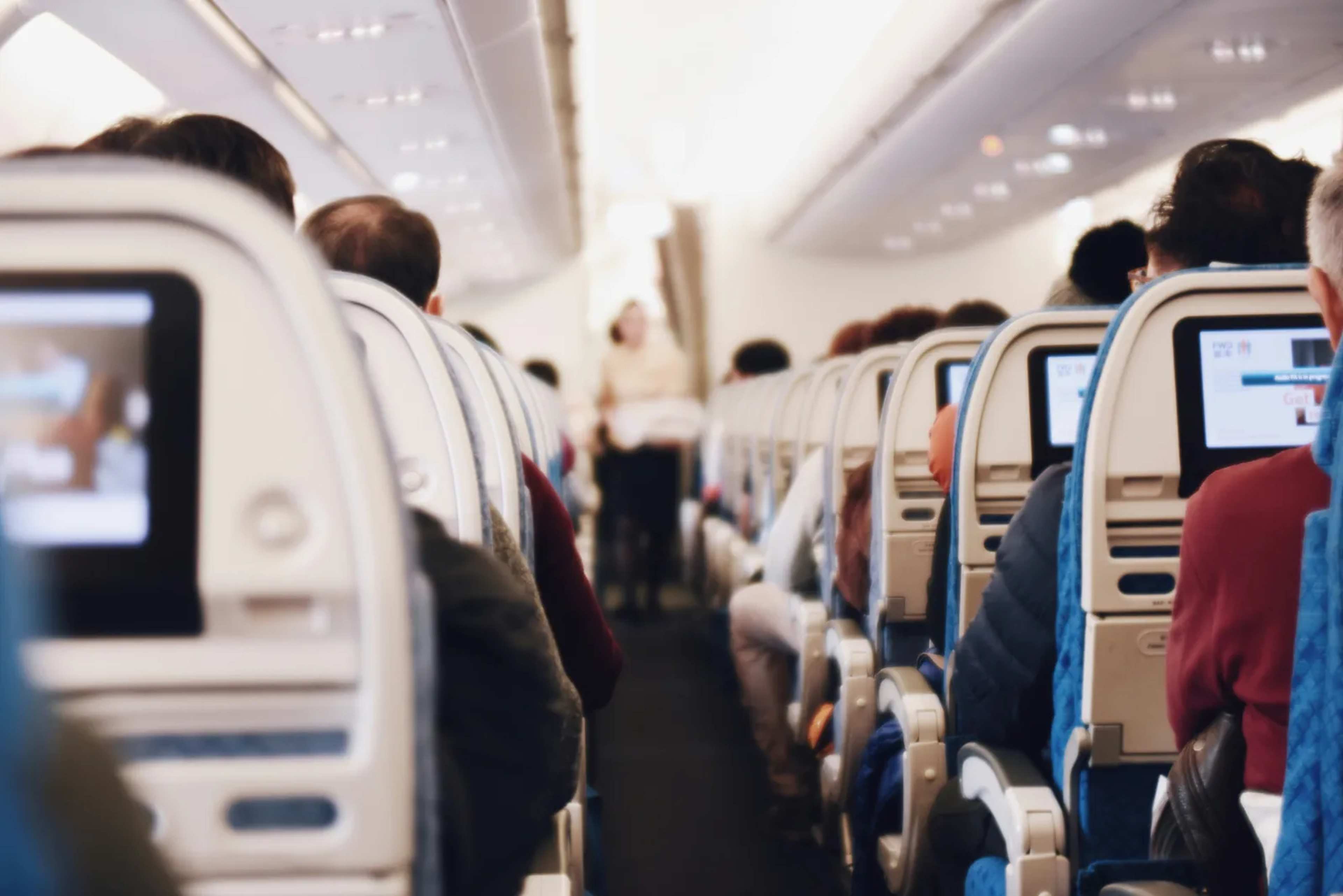
The airport is quiet at 3 AM.
You are not.
Your mind is already three cities ahead, running calculations, making calls, drafting the email you couldn’t write from your kitchen table.
You booked the ticket to think. Not to arrive.
The plane lifts. And something in you – finally – exhales.
There is a gap between the person you perform in your living room and the person who emerges somewhere over the Atlantic. One of them is waiting for something to go wrong. The other one is deciding things. Clearly. Quickly. Without apology. The identity that shows up in transit – decisive, lucid, unafraid – isn’t a different version of you. It’s the version of you that never learned how to feel that free while standing still.
1. The Wired Child

Hypervigilance is strongly linked to childhood trauma – and that connection has a lot to do with how the brain develops in direct response to its environment.
The child who grew up in a volatile home didn’t get to develop slowly.
They developed fast. Strategically. Defensively.
When a child lives in a constant state of high alert over long periods – such as in the event of childhood trauma – they become what we might call hypervigilant. That word is clinical. The lived experience is something else entirely. It is the sound of a key in a lock. The specific way silence changes quality before something bad happens. It is a child reading rooms the way other children read picture books.
That child grows up.
They don’t stop reading rooms. They just find bigger ones to read – terminals, train cars, departure gates – places where being in motion makes surveillance feel like strategy rather than sickness.
2. The Architecture of Stillness
Home was supposed to mean safety.
For some of us, it meant the opposite.
Children whose families and homes do not provide consistent safety, comfort, and protection may develop ways of coping that allow them to survive and function day to day – including becoming overly sensitive to the moods of others, always watching to figure out what the adults around them are feeling and how they will behave.
Stillness, in those homes, was exposure. To stay in one place was to be findable.
The hallway had acoustics you memorized. The creak of the third floorboard was a warning system. You understood the architecture of your house not as a home but as a threat map – exits noted, safe corners catalogued, emotional weather monitored at all times.
Now you are forty-two years old.
And your apartment makes you vaguely sick with dread if you sit in it too long.
3. The Flight Response, Rebranded
We call it wanderlust. We post about it with golden-hour photos and clever captions.
But some of it is not wanderlust. Some of it is the flight response wearing a linen shirt.
The flight response manifests as always being in motion, avoiding overwhelming situations, restlessness, and difficulty staying still – and it can overlap significantly with what looks like ADHD. Or ambition. Or a passion for experience. The rebranding is seamless.
We live in a culture that rewards productive motion. The person who is always traveling is dynamic, interesting, alive. Nobody asks why they can’t seem to stop.
Trauma creates changes in your brain that trigger the fight-or-flight response, and these responses can become so second-nature that stress hormones are released even without the stimulus of a threat in your environment.
So you keep moving. Because the chemical logic demands it. Because stillness, the body whispers, is where you get caught.
4. The Prefrontal Override
Here is the neurological part that nobody tells you at the departure gate.
Chronic early-life trauma exposure is known to damage the prefrontal cortex – which is in charge of rational thought and planning – and dysregulate the amygdala, the brain’s emotional warning system.
The prefrontal cortex is where decisions live. The considered ones. The ones that factor in consequence and nuance and the long game.
When you are stationary in a space that your nervous system has filed under “threat,” that cortex goes offline. Not metaphorically. Literally. The amygdala commandeers the operation, and suddenly you can’t decide what to make for dinner, let alone whether to change careers or leave a relationship.
But in transit? The threat cues are absent. The nervous system relaxes its grip, just enough. And the prefrontal cortex comes back online – humming, clear, capable.
Decisions pour out of you like water. And you call it inspiration. When really, it is just your brain finally operating without a gun to its head.
5. The Ritual of the Moving Confessional
I’ll tell you when I figured this out.
I was on a train somewhere between two cities that didn’t matter, watching the dark trees blur past the window, and I drafted the most honest letter I had ever written. About what I wanted. What I needed to stop doing. What I’d been too frightened to admit in any room that had four walls and a lock on the door.
I never sent it. That wasn’t the point.
The point was that the motion had created a kind of confessional booth – anonymous, temporary, moving away from everything fast enough that the truth felt survivable. I understood then that I had been using transit as therapy for years without ever naming it.
The Uber. The long walk to nowhere. The red-eye flight with the broken tray table.
All of them were rooms I could finally breathe in. Rooms I had unconsciously chosen because I could leave them.
6. The Exit Strategy as Love Language
You always know where the door is.
This is not paranoia. Or it is – but it is earned paranoia, the kind that was once a survival skill and never got the memo that the war ended.
Always wanting to make sure you have a way to escape – scanning the environment for the closest exits – is a recognizable pattern in those living with hypervigilance rooted in childhood trauma.
You sit near exits in restaurants. You park facing out. You keep your bag packed a little longer than necessary after a trip, because the packed bag means you could leave if you had to.
In relationships, this reads as emotional unavailability. In friendships, as flakiness. In your career, as a restlessness that looks like ambition but is actually a very sophisticated exit strategy dressed in executive clothing.
You don’t commit to things that don’t let you move. You are not afraid of love. You are afraid of being loved somewhere you cannot escape.
7. The Body That Cannot Stop Scanning
Your eyes move differently than other people’s eyes.
You notice the man two tables over before you sit down. You track the shift in your colleague’s vocal tone before they’ve finished the sentence. You felt the energy of the room change three seconds before anyone else registered it.
It is common for a person who is hypervigilant to watch the people around them diligently for slight changes in behavior, tone, cadence, body language, written communication, or even sentence structure.
This is not a gift. It is a tax.
Hypervigilance can be physically, mentally, and emotionally exhausting. The bill is paid in sleeplessness, in the low hum of anxiety that never quite reaches zero, in the exhaustion of being brilliant at reading danger in rooms that are not actually dangerous.
Transit offers a brief reprieve. Nobody expects you to read the cabin. The strangers around you make no claims on your threat-assessment system. And for a few hours, your eyes can rest.
8. The Identity That Lives in Departure Lounges
There is a version of you that only exists in motion.
Looser. Funnier. More willing to start a conversation with a stranger, try the thing on the menu you can’t pronounce, say yes to the invitation you’d normally decline. The departure lounge version of you makes decisions from desire rather than from damage-control.
The nervous system patterns that developed in childhood continue operating beneath the surface of even a highly functional life, shaping stress responses, relational patterns, the capacity for rest, and the sense of internal safety – often in ways that aren’t visible from the outside.
The departure lounge self isn’t more you. But it is a version that found a temporary workaround.
The problem is that workarounds aren’t solutions.
They are clever delays. And the gap between who you are in motion and who you are in stillness is not a geographical distance. It is the distance between the child who had to run and the adult who forgot they are allowed to stop.
9. The Relationship Between Chaos and Clarity
People who grew up in unpredictable homes often report that they think best under pressure.
Deadlines are comfortable. Emergencies produce focus. Crisis feels familiar – not because they are broken, but because their nervous system was calibrated to a register of sustained intensity.
Traumatic experiences can cause the mind and body to get stuck on “high alert,” even when you’re safe. So the body replicates the conditions of the original alarm – not out of self-destruction, but out of neurological habit. It performs best in the environment it was trained in.
Transit replicates that register just enough.
The sensory input – the noise, the movement, the mild impermanence of being between two points – creates a controlled chaos that feels like clarity. Your system recognizes the frequency. And it leans in.
The irony is catastrophic and beautiful: you feel most alive in the spaces designed for passing through.
10. The Permission to Land
This is the heaviest one. The one that costs something to say.
You have been in motion for so long that you have confused movement with safety. And safety, the real kind, the kind built from the inside rather than assembled from geography and exit routes, is something your body has never fully tasted.
Behaviors stemming from trauma are not personal failings – they are survival strategies. The need to keep moving was not weakness. It was architecture. You built a life around motion because motion, once, was the only protection you had.
The neuroplasticity research is encouraging: the brain and nervous system retain the capacity to form new patterns throughout the lifespan. The nervous system that learned to equate stillness with danger can be slowly, painstakingly taught that the ground beneath you – actual ground, not a runway, not a platform, not a tarmac – is not a threat.
But that teaching requires something movement cannot provide. It requires staying. It requires sitting in the discomfort of the room that has four walls and a lock on the door and not immediately reaching for your phone to check flights. It requires tolerating the silence long enough to discover it is just silence – not the silence before the storm, not the held breath before the door opens wrong. Just quiet. Just a room. Just you.
There are people who travel to find themselves. And there are people who travel to stay ahead of themselves – who have made an art form of the interval between departure and arrival because that interval asks nothing of them except to be in motion.
If you recognize yourself here, know this: the clarity you feel at 35,000 feet is real. The decisiveness that arrives in the back of a cab at midnight is real. None of that is false. But it is incomplete. Because a life lived entirely in transit is a life spent in the threshold – and thresholds are not rooms you can furnish. They are not places you can be known in. They are not where love gets to find you and stay.
The bravest thing a person shaped by motion can do is not book another flight. It is to sit in the particular silence of a Tuesday afternoon, in an ordinary room, with no departure pending – and practice, gently, the radical act of being somewhere.