

If you don’t like trying new foods, don’t come to Mexico City. On every street corner and tucked into every alleyway is a new food experience waiting to be had. After living here for 6 months, I have barely scratched the surface of restaurants, taco stands, or small hole-in-the-wall places to try. While Mexican food is known globally around the world, and it is hard to find a city that doesn’t have its own rendition of a taco bar, the food here is a reminder that most international Mexican cuisine is nothing like actual Mexican food.
Here, the dishes carry flavors and a history of traditions or specific regions. Whether it is mole sauces from Oaxaca or mariscos restaurants from Sinaloa, there is a blend of the entire nation’s cuisines, not to mention the thousands of international restaurants that stand out globally for their high-end dishes and flavor fusions.
1. Tacos Al Pastor – The Story of Migration
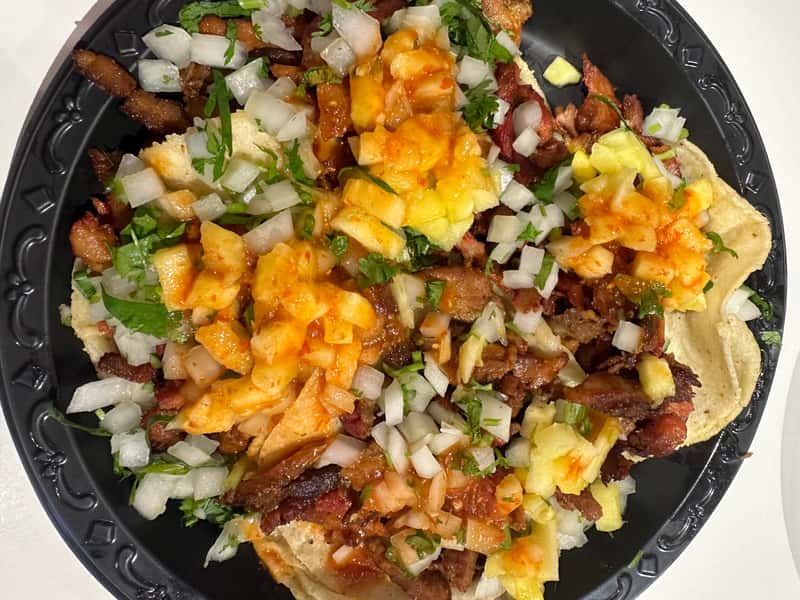
The first thing you notice about this dish is the array of colors on your plate. Bright orange meat, yellow pineapple, green cilantro. This dish is an artist’s color palette. Coming into a taqueria, it is also the first thing that you notice. I can remember the first time I came to the city, walking into a taqueria and noticing something that felt oddly out of place. A kebab-looking spit spun in the front, as if we were in the Middle East or the Mediterranean. As someone with Lebanese heritage, I was confused. What was this doing here?
The taquero gracefully sliced the meat off the spit, like a kebab vendor, slapping it into a yellow corn taco freshly made on the comal (flat stove) beside him. The tacos al pastor are a mix of Lebanese and Mexican heritage, drawing directly on the shawarma techniques they brought with them after immigrating to the Americas. This dish represents the two cultures combining into one delicious tradition, adapting over time to become distinctly Mexican. The flavor of the pork, marinated in the orange sauce, matches perfectly with the pineapple, yet the techniques are distinctly arab.
It was beautiful to see this fusion sitting in plain sight, as the world has truly been shaped by the movements and migrations of people over time. Standing on the street, watching the taquero masterfully create dozens of tacos a minute, I felt as though I was watching history unfold in real time.
2. Quesadillas – They Are Not What You Think
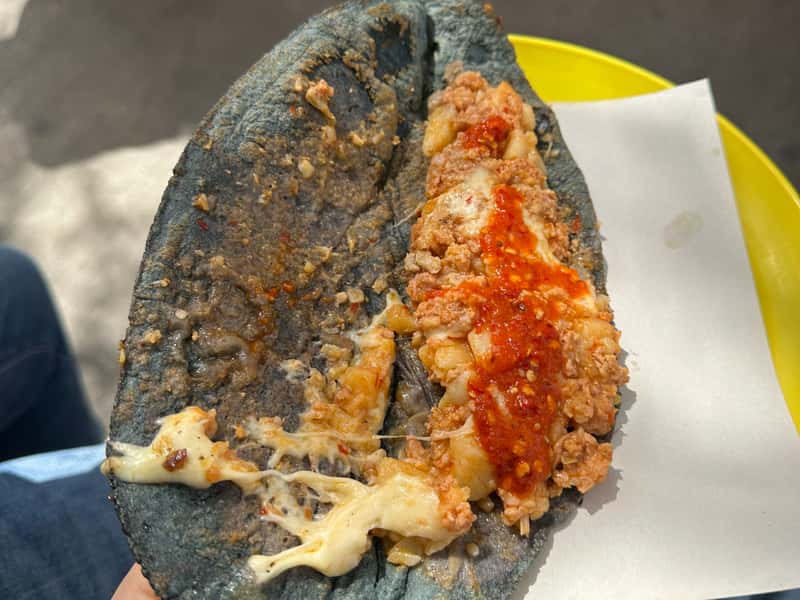
“Do you want your quesadilla with cheese?” A lady making fresh tortillas asked me as she patted the masa back and forth on the street corner. I was confused. Why would my quesadilla not have cheese? It is literally the point of the word. Yet here in Mexico City, just because it is called a quesadilla doesn’t mean it has cheese. Before spending time in the country, I had a very different image of what a quesadilla was. When most of us hear the word, we conjure an image of a large flour tortilla with cheese inside, maybe with some chicken or avocado.
Walking through the city, you can spot countless small stands selling quesadillas, some with the distinct deep blue corn. Each stand offers various toppings and options, from picadillo, which is ground beef seasoned with spices, to chicken tinga, chorizo, flor de calabaza (pumpkin flower), and huitlacoche (corn fungus). After deciding which toppings you want, they slap a new tortilla onto the comal and make it on the spot, even throwing on some queso Oaxaca (Oaxaca-style melty cheese) if you ask.
3. Pozole – The Soup Made From Humans (Not Anymore)
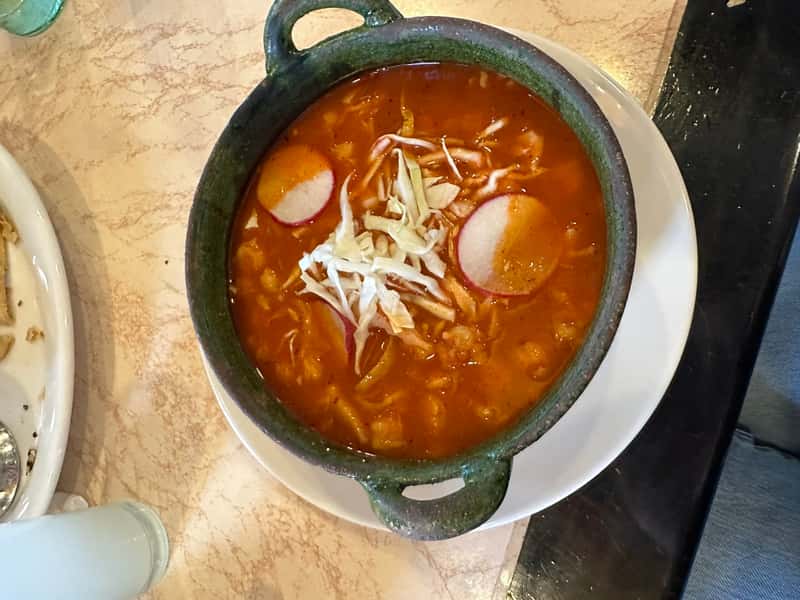
“This soup used to be made with…human flesh?” I read out loud, sitting on a rooftop in the small town of Tepoztlan, an hour outside of Mexico City. “In Aztec times, it was part of the sacrificial ritual. Today, it is eaten with chicken or pork.” I continued to read. I was surely ready to try the dish now that it carried such a fascinating history. Tepoztlan, a stormy colonial city with a pyramid located far in the distance on a hill, was bustling down below. From the terrace, we could see the whole main street, packed with families and people shopping for artisanal trinkets or warm desserts.
The soup arrived in a large ceramic steaming bowl, complete with various adornments of cilantro, lettuce, onions, radishes, and spices on a nearby plate. Building the bowl alone was great fun, creating the perfect ratio of spice to lime. What stood out to me the most, though, was the fluffy kernels of corn called cacahuazintle, which were at least 3 times the size of the corn I was used to eating. Sipping on the soup, I thought about how many versions of this same dish have been eaten in this valley before me, and how many more centuries will pass with people doing the same.
4. Chile En Nogada – The Celebration of Independence
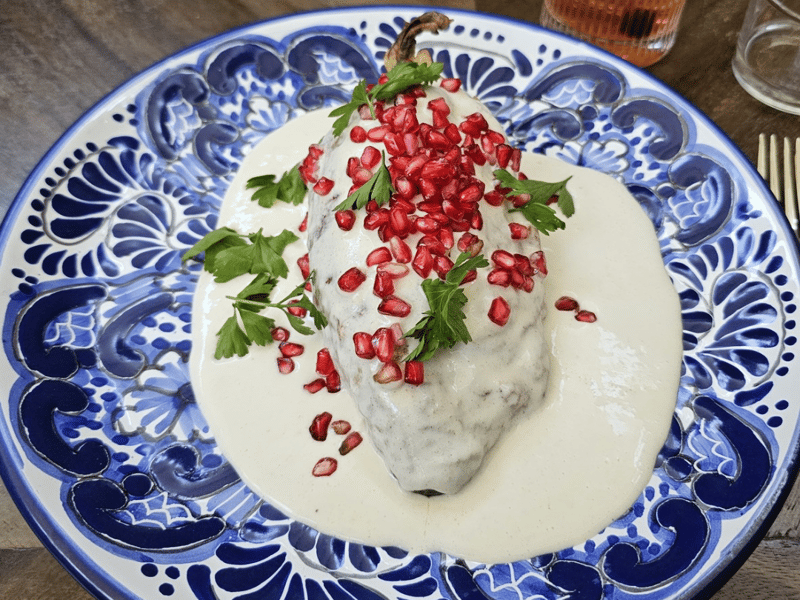
Visiting the city during September? You’re in luck! This is chile en nogada season, a traditional Puebla dish created in the 1800s that is now a fall staple in every restaurant. It was originally made to celebrate Mexican Independence Day, using ingredients that represent the colors of the Mexican flag: green chile, white walnut sauce, and red pomegranate seeds. Today, Mexican Independence is celebrated on the 15th of September, and this dish is popular nationwide.
The pepper under the sauce is stuffed with a delicious combination of ground beef and all sorts of nuts and dried fruits, giving the dish an almost sweet flavor. The first time I tried chiles en nogada was on Independence Day itself, in a fun cantina in the heart of the city. Each guest was given a sombrero with the flag on it, and a mariachi played Cielito Lindo, while the tall skyscrapers in the background displayed the flag across their surfaces.
Mexico Culinary Legacy
While these foods are only the beginning of unique delicacies in Mexico City, they are a perfect start to any culinary adventure.
The best part of Mexican food, beyond the flavors, of course, is the rich history that each dish brings, telling a new side of a story that has been unfolding for thousands of years. Each time we try something new here, we taste the legacy of countless generations who have perfected the combination of ingredients and traditions that make these dishes what they are today.