The shutter clicks.
Someone laughs. Someone leans in. Someone’s face catches the gold-hour light just right.
You see all of it.
Through a lens. Behind glass. At a careful, constructed distance.
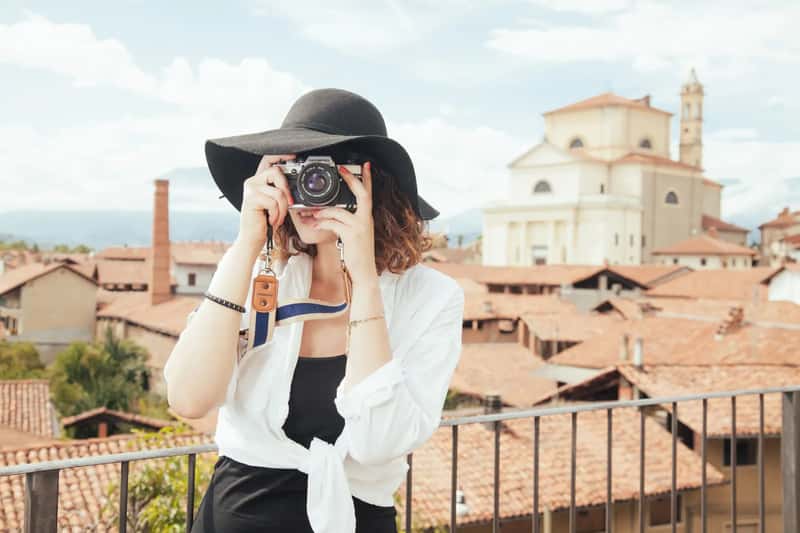
There is a particular kind of person who moves through the world this way – always watching, always framing, always preserving everyone else’s joy while quietly, systematically, erasing their own presence from the record. They are generous with their attention and ruthless with their absence. They will hand you a flawless memory of the night and leave no proof they were ever there. This is not a photography habit. This is an identity strategy.
The wound lives between the version of yourself you offer the world – warm, capable, present – and the version that flinches the moment someone turns the lens back around. That wound is wider than it looks. It is filled with old noise: a comment made once, a photo you hated, a moment where being seen felt less like joy and more like exposure.
The Viewfinder Identity
There is a role you have quietly accepted.
The documentarian. The keeper of memories. The one who makes sure everyone else is preserved.
It is a noble function. It is also a very effective disguise.
People who take photos for others often prefer to experience moments through documentation – they trust the external record over internal presence. But there is a shadow side to that logic. When you are always behind the camera, you never have to answer the question the camera asks of everyone else: Do I belong here? Do I take up space well? Does my face betray too much?
The viewfinder becomes a philosophical position.
You are the observer. Not the subject. The world is something that happens to other people, and you are here to faithfully record it.
The problem with that position is that it is a lie you’ve told yourself so many times it has calcified into identity.
The Control Mechanism
Here is something nobody says out loud at birthday parties.
Being photographed requires surrendering control over one’s image and how others will perceive, interpret, and judge that representation. This control loss triggers primitive psychological defense mechanisms that evolved to protect individuals from social rejection.
Read that again slowly.
Primitive. Defense. Mechanisms.
This is not vanity. This is not insecurity in the shallow sense. This is ancient wiring, firing in a modern context. Your nervous system does not distinguish between a saber-toothed tiger and your cousin pointing an iPhone at you across a dinner table. Both represent exposure. Both represent potential judgment. Both ask the same brutal question: are you acceptable?
So you pick up the camera instead.
You become the one who asks the question, never the one who answers it. That is control. That is armor. And it works – right up until the moment you scroll back through ten years of your life and realize you are not in a single frame.
The Permanent Record Problem
There is something specific about photographs that makes the avoidance feel rational.
The permanent nature of photography amplifies vulnerability. Unlike fleeting social interactions that fade from memory, photographs create lasting records that can be revisited, analyzed, and shared indefinitely.
A conversation disappears. A look across a room disappears. A photograph does not.
A photo can feel like a permanent grade. Even if nobody says a word, a picture can invite commentary in a way regular life doesn’t. Someone might zoom in, compare, post it, and tag you. Suddenly, your face is part of a public moment you didn’t fully agree to.
And so the camera stays pointed outward.
Because a photo of a sunset can never embarrass you. A photo of someone else laughing cannot be used against you. You curate the archive and remain beautifully, safely, devastatingly absent from it.
The digital permanence feels like the threat. But the real threat is something quieter: the possibility that you might look at a photo of yourself and feel, for one unguarded second, something like belonging.
The Performance Paradox
You know this feeling.
Someone swings the lens your way and something in your body just – locks.
The expectation to “look natural” while being consciously observed and documented creates a paradox that triggers performance anxiety in individuals who might be completely comfortable in other social situations.
Comfortable at the party. Locked at the lens.
People feel obligated to look happy, attractive, and engaged regardless of their actual emotional state or comfort level. This disconnect between authentic feeling and expected performance creates internal tension that manifests as visible discomfort.
And there it is. The trap closes on itself.
You don’t like photos of yourself because you look uncomfortable. You look uncomfortable because you’re terrified of photos. The terror generates the very evidence that seems to justify the terror. So you pick up the camera, again, and everyone else gets to look relaxed and luminous, and you become the ghost in your own story.
The Mirror Fallacy (A Personal Note)
I want to stop here for a moment.
I have been to a hundred group dinners, a hundred trips, a hundred moments where the light was golden and the laughter was real. And I have, in nearly all of them, been the one who offered to hold the phone. Not always because I wanted to. Often because the alternative – standing in the frame, exposed, unsure of what my face would do – felt like too much.
What I was really doing was negotiating with my own reflection.
Most of us are more used to seeing ourselves in the mirror than in photographs, which flips how we appear. This mismatch can feel strange. Plus, we tend to be our worst critics, noticing things no one else would.
The camera shows you as others see you. The mirror shows you the version you’ve curated. And when those two images don’t match, the instinct is to destroy the evidence – or better yet, prevent it from existing in the first place.
The camera doesn’t lie. But the story we tell about what it shows us – that is almost always fiction.
The Observer’s Advantage (And Its Cost)
There is something seductive about the observer position.
Photo avoidance often indicates excessive self-awareness rather than vanity. These individuals are acutely conscious of how they exist in space. They’ve learned that stepping back from the spotlight allows them to observe, understand, and connect more deeply.
You see things. You notice things.
You catch the half-smile someone gives their partner when they think nobody is watching. You capture the moment before the moment, the in-between exhale that no one else thought to preserve.
That is a genuine gift.
But gifts can be wielded defensively. The act of photographing changes the experience itself. And when you are always the one changing the experience for everyone else, you are quietly, consistently exempting yourself from having one.
The cost of the observer’s advantage is a life half-lived through glass.
The Spotlight That Never Lands
Here is a cruel irony.
The spotlight effect describes the feeling of being the focus of others’ attention. It has been linked to social anxiety, or the fear of negative social evaluation and scrutiny.
You feel watched. You feel magnified. You feel like every camera pointed at you is a tribunal.
But our brains were not designed to look at ourselves. Human beings have evolved to look at other people – to read faces, judge emotions. We were never wired to analyze our own faces.
Nobody is scrutinizing you the way you are scrutinizing yourself.
The spotlight you feel isn’t real. The people around that dinner table are thinking about their own double chin, their own awkward posture, their own quiet dread of the flash. They are not cataloguing your flaws. They are managing their own.
And yet the feeling persists. The spotlight burns. So you step behind the camera, where no spotlight can find you, and you photograph everyone else bathing in a light they don’t even notice.
The Erasure Architecture
There is something worth naming plainly.
When you remove yourself from the photographic record, you are not being humble. You are not being selfless. You are constructing your own erasure, brick by brick, with excellent composition and a steady hand.
Persistent camera avoidance may erode one’s sense of belonging in personal networks by excluding them from the photographic narratives that reinforce relational ties.
Think about that. Photographic narratives. The stories a family or a friend group tells about itself, in images, over years.
You are not in those stories. Not because you weren’t there. But because you made yourself invisible in plain sight.
It’s the ultimate form of image management: having no image at all.
And that is its own kind of statement. A statement about how safe it feels to be seen. A statement about what you believe you deserve to take up in this world. A statement that deserves, at minimum, your honest attention.
The Vulnerability Transaction
Being in a photograph is a transaction.
You offer your image. The world receives it. Something is exchanged that cannot be taken back.
Being photographed creates an instant evaluation moment. The camera transforms a natural interaction into a performance. Once a photo exists, you lose control over how it’s shared, edited, or contextualized. For people who value privacy and intentional sharing, this loss of control feels threatening.
And vulnerability, truly, is the engine of that threat.
Research suggests that passive observation – choosing to witness without sharing – is negatively associated with self-disclosure. This isn’t just about being private. It’s about a fundamental discomfort with vulnerability.
The camera asks you to be vulnerable on record. Permanently. In a JPEG file that will outlive the moment, possibly outlive you.
And so you offer everyone else that vulnerability instead. You point the lens outward. You make them the subject. You stay safe in the dark behind the glass.
But safety and presence are not the same thing. And you know, at some level, which one you’ve been choosing.
The Return to the Frame
This is the heaviest thing to sit with.
All those years of photographs – vacations, milestones, ordinary Tuesdays that turned out to matter – and you are a ghost moving through them. Your hands, maybe, at the edge of frame. A shadow. A reflection in a window. The person everyone knows was there, but cannot prove.
A dislike of photos often points to self-awareness, sensitivity, privacy, or a deep desire to be seen accurately. These are not flaws. These are deeply human instincts. The desire to be seen only on your own terms, only when you feel ready, only when the image might match the interior – that is a tender, exhausting ambition.
But here is what the camera-as-shield cannot protect you from: the knowledge that you were there. That you were alive in that room, in that light, in that specific unrepeatable arrangement of people who loved you. That the moment was real, and complete, and yours – whether or not any evidence of your presence survives.
Here is a question worth sitting with: what do you think you are protecting when you avoid the camera? Because the answer is almost never what you first think it is. It is rarely about the photograph itself. It is about the older, quieter wound – the one that decided, at some specific moment you probably can’t fully recall, that your face in the frame was a risk not worth taking.
Somewhere in your past, someone made you feel that being seen was dangerous. A careless comment. A photo you were shown with cruelty. A culture that told you your body, your face, your particular arrangement of features was not the kind that deserved to be documented.
And you believed it. You picked up the camera and you became the archivist of everyone else’s worthiness, and somewhere in that transaction you quietly filed yourself under insufficient evidence.
The photograph was never the point. The point is what you do with the rest of the room, in the moments before someone thinks to pull out a phone. Whether you lean into the laughter or watch it from the doorway. Whether you let someone’s arm come around your shoulder without immediately pivoting to here, let me take one of you instead.
You don’t have to love photographs. You don’t have to perform ease you don’t feel.
But you might, at least once, lower the camera – and simply be in the room.