Something has shifted. More Americans than ever before are trading their familiar zip codes for a Central American country that is smaller than South Carolina but punching far above its weight as a relocation destination. According to the Expat Insider survey – which measured over 10,000 expats representing 172 nationalities across 46 destinations – Panama ranked as the best place in the world for expats for a second consecutive year, placing in the top three in every single category evaluated. That kind of repeated dominance is hard to ignore, and Americans are paying attention. The comparison to Florida is not just a catchy headline – it reflects a genuine pattern of mass domestic-style migration, only this time across an international border.
The Numbers Behind the Migration Wave
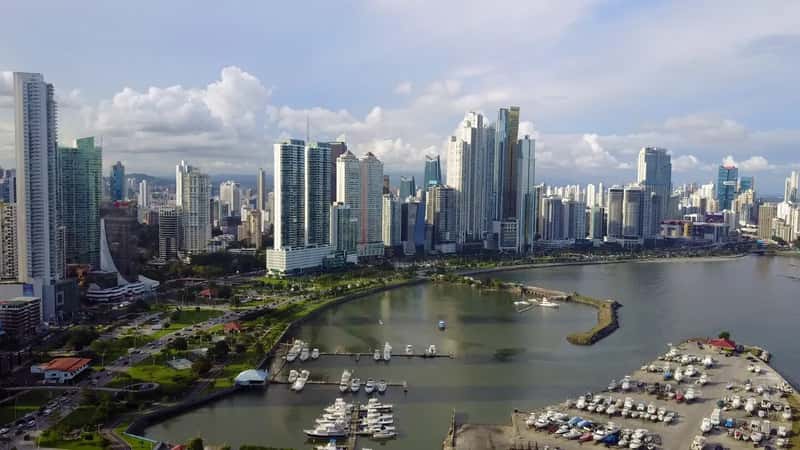
According to Panama’s Servicio Nacional de Migración, 2,549 residence permits were approved for U.S. citizens in 2024, with 1,936 permits approved in just the first seven months of 2025 alone – a pace that implies roughly 3,300 new American permanent residents by year’s end. These are official residency figures, and they represent only those who completed formal paperwork. The actual number of Americans living in Panama is considerably higher. Out of Panama’s population of roughly 4.4 million, an estimated 20,000 to 30,000 Americans are currently living across the country, though tracking exact figures is difficult since many people conceal their intended living situation for tax reasons from their home country.
Tourism in Panama surged in 2024, with visitor numbers up more than 10% compared to the previous year, totaling 2.7 million travelers. In 2025, U.S. arrivals specifically are up 11.8%, with Colombian arrivals rising a striking 25%. As of 2025, Panama has a total population of roughly 4.5 million, of whom approximately 185,072 are immigrants – making the foreign population about 4.39% of the total. This group is almost evenly split between men and women, and most are between 25 and 45 years old, showing that this is far from just a retiree phenomenon.
The Cost of Living Advantage That Changes Everything

The overall cost of living in Panama for a single person is 36.3% lower than in the United States, and some reports suggest that as little as $800 a month is enough to live comfortably. That figure sounds almost too good to be true for anyone used to paying rent in a major American city. The average cost of rent in New York City alone is $5,242 per month, according to RentCafe – a figure that makes Panama City’s monthly costs look like a rounding error. Rent in Panama is approximately 44% lower than in the United States overall, though the exact cost depends significantly on the type of accommodation and location chosen.
There are parts of Panama where one can live on $1,300 a month, covering rent, utilities, groceries, and outings. For retirees on fixed Social Security incomes, this alone is transformative. A retired couple can live comfortably on $1,200 to $3,000 per month, and Social Security payments averaging $1,827 per month are often sufficient for a comfortable lifestyle in Panama. Panama uses both the U.S. dollar and the balboa, which effectively insulates residents from the currency volatility that plagues many other expat destinations in Latin America.
The Pensionado Visa: A Retirement Program Built for Americans

The Panama Retiree and Pensioner Visa – known as the Pensionado Visa and established in the 1980s – was designed to promote residential tourism. It peaked in the last decade and continues to grow today, contributing significantly to Panama’s retirement options. The entry requirements are accessible by almost any standard. The Pensionado visa requirements include a minimum age of 18, a clean criminal record, good health, and guaranteed lifetime pension income of at least $1,000 per month – or $750 per month if the applicant purchases qualifying property.
Key Pensionado visa benefits include immediate permanent residency, family inclusion rights, extensive lifestyle discounts of up to 50% on entertainment and 25% on restaurants and utilities, tax-free import allowances, and citizenship eligibility after five years. During the first seven months of 2025 alone, according to the National Immigration Service, 1,240 applications from Americans looking to retire in Panama were approved under the Pensionado program. After five years of permanent residency through the Pensionado program, holders can apply for full Panamanian citizenship – and Panama recognizes dual citizenship, meaning Americans do not have to give up their U.S. passport.
Healthcare at a Fraction of the American Price

Panama offers high-quality healthcare at costs 60 to 80% lower than U.S. equivalents. The country has modern hospitals, well-trained doctors – many of whom received their education in the United States – and comprehensive insurance options, with English-speaking medical professionals widely available in popular expat areas. For many Americans, especially retirees, healthcare cost alone is enough to justify the move. Expats can choose between affordable public healthcare or private international insurance plans ranging from $50 to $900 per month.
Panama’s Pensionado Program is consistently ranked the world’s best retirement visa for two consecutive years, with benefits that include no age requirement, permanent residency with lifelong benefits, and healthcare costs up to 70% lower than in the United States. Panama offers access to some of the best healthcare in Latin America at a fraction of the cost found in North America, with top-notch medical facilities and well-trained doctors in Panama City ensuring that retirees have access to high-quality care. The combination of lower price and genuinely high quality is rare – and it is one of the clearest reasons Panama keeps outranking other destinations in expat satisfaction surveys.
The Real Estate Market Drawing American Buyers
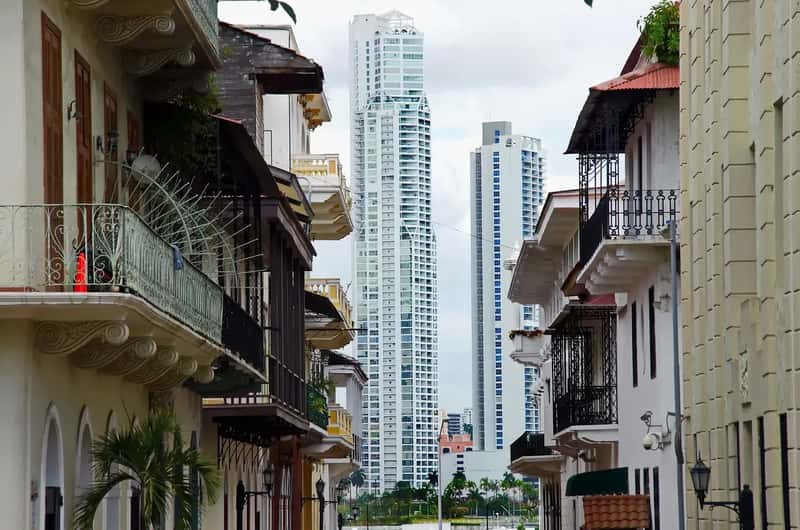
According to the Real Estate Survey of Latin America published by the Center for Financial Research at Torcuato Di Tella University, the average asking price for residential properties in Panama City reached USD 1,804 per square meter as of March 2025, reflecting a year-on-year increase of 2.38% and a cumulative rise of 7.38% from the market’s most recent low in September 2021. From internal data reported by The Agency, oceanfront luxury pricing in Panama still sits roughly 60% below comparable Miami properties, with stronger rental yields to boot. That gap is not lost on American buyers who are being priced out of Florida’s coastal markets.
Foreign buyer activity in Panama’s real estate market increased 25% over the past year, driven primarily by investor visa programs and retirement incentives. The Qualified Investor and Pensionado programs have been particularly effective, and foreign buyers now dominate the $300,000-plus market segment, showing preference for luxury condos, beach properties, and mountain homes in established expat communities like Boquete and Coronado. The rental market in Panama is particularly strong right now – rents are up 12% year-over-year in key areas of Panama City, and demand is outpacing supply in neighborhoods like Costa del Este and El Cangrejo.
The Tax System and Dollar Economy That Seal the Deal

Panama operates on a territorial tax system, meaning residents are only taxed on income earned within the country – foreign-sourced income is simply not subject to local tax. For Americans earning remotely, drawing pension income, or receiving investment returns from U.S. accounts, this is an enormous financial advantage. Most American retirees in Panama owe little or nothing in U.S. taxes. While they still need to file annual returns, the U.S. tax system includes powerful protections to prevent double taxation, and those still working in retirement can exclude up to $130,000 of foreign earned income from U.S. taxation for the 2025 tax year.
Panama uses the U.S. dollar as its official currency, eliminating exchange rate risks entirely for American expats. The country’s territorial tax system ensures foreign-sourced income is not taxed locally, and Panama’s proximity to North America – just 5.5 hours from Miami – makes it easy to maintain business and family connections back home. Panama’s economy is also forecast to grow by 4% in 2025, making it one of the fastest-growing countries in Latin America – providing real economic stability underneath the lifestyle appeal. A striking 94% of expats in Panama report being happy with their life abroad, a number that suggests the reality is living up to the expectation for the vast majority who make the move.