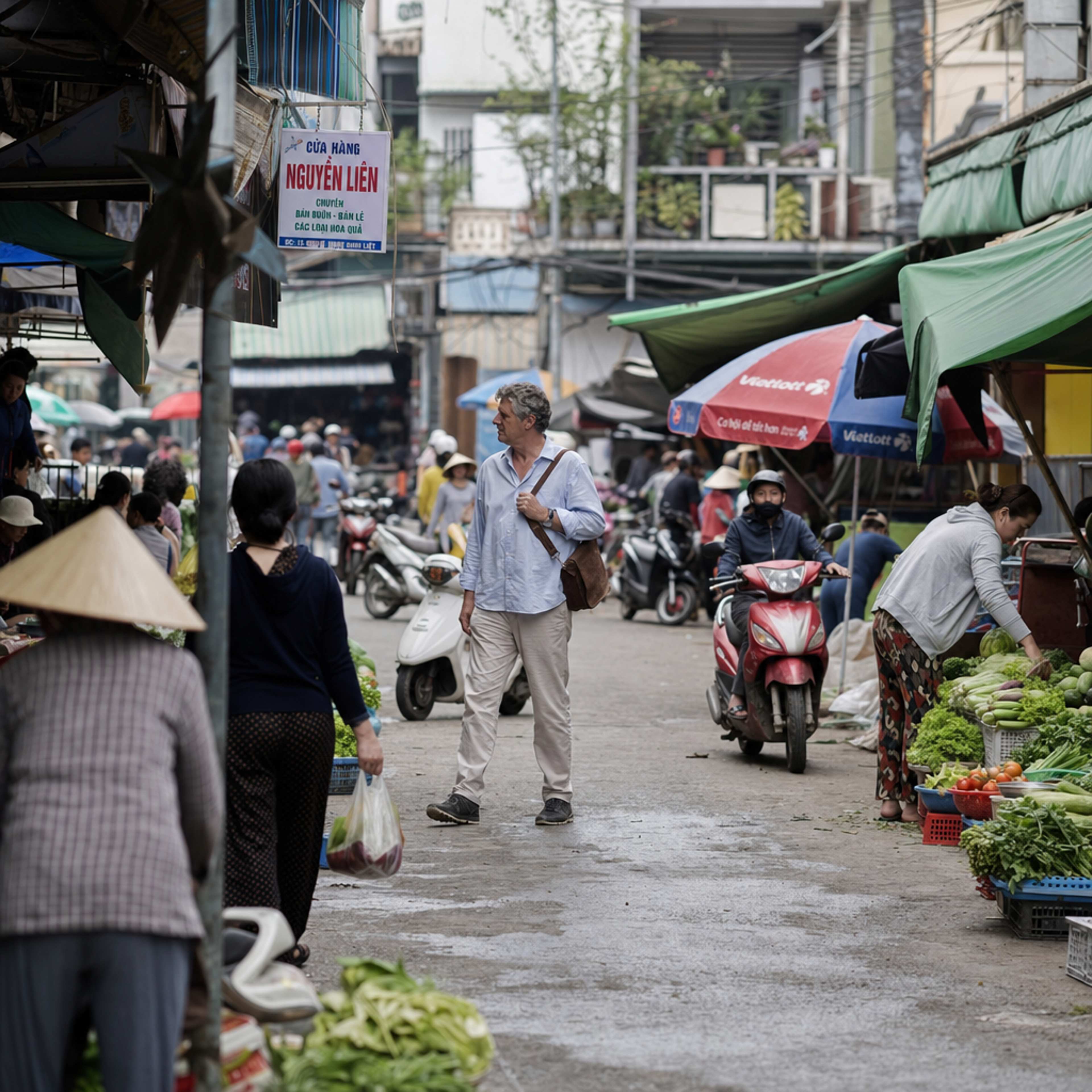

The Marble Mountains, known in Vietnamese as Ngũ Hành Sơn, are one of those rare tourist stops that actually live up to the postcards. Located about 20km north of Hoi An, they sit right on the edge of Da Nang, rising like jagged limestone teeth out of the flat coastal plains.
Though technically in Da Nang, a lot of people choose to visit them as a half-day trip from Hoi An when visiting other nearby locations such as Monkey Mountain (Sơn Trà). To get the most out of it without feeling like you’re just following a tour group, here is a grounded look at how to tackle the mountains.
The Five Elements: More Than Just Rocks

The name “Ngũ Hành Sơn” translates to “Five Elements Mountains.” Each of the five peaks is named after a fundamental element in Eastern philosophy: Kim (Metal), Mộc (Wood), Thủy (Water), Hỏa (Fire), and Thổ (Earth).
While there are five mountains, Thủy Sơn (Water Mountain) is the only one fully developed for visitors and is where you’ll spend 95% of your time, as it houses the most famous caves, pagodas, and viewpoints.
Getting There from Hoi An

The drive from Hoi An is extremely straightforward as it is a straight shot up the coastal road (Lạc Long Quân) that takes about 20–25 minutes. While I’d never recommend driving in any country without a licence or proper training, if you are going to do it because you want to try, this is possibly the best road to try it on. That said, you still need to get out of Hoi An, which can be overwhelming, and I’d highly recommend only going to the mountain and back and not entering Da Nang, whose traffic is more hectic.
If you’re going by Grab or Taxi, then expect to pay around 200,000 – 300,000 VND each way, but as always, be wary of being overcharged and ask for the price before setting off.
As stated earlier, the motorbike/scooter is an easy ride, but the parking situation is a bit obnoxious. The local shop owners will flag you down to park at their stalls and will hassle you to come back and buy something from them. Most of the stalls try to use the same technique of saying that all their merchandise is made by their father…. But so many of them say it that either they all share the same father, or it’s just a lie to guilt you into buying. Usually, if you buy a bottle of water or a small souvenir, parking is “free,” but it’s often easier to just head to the official gated parking lots.
And if you do buy something, always remember to check the prices in your local currency. The statues aren’t cheap, and are also fragile. I spent €500 thinking it was only about €200, and one of my statues broke in transit.
The Main Attractions on Thủy Sơn
1. Huyen Khong Cave: The Showstopper
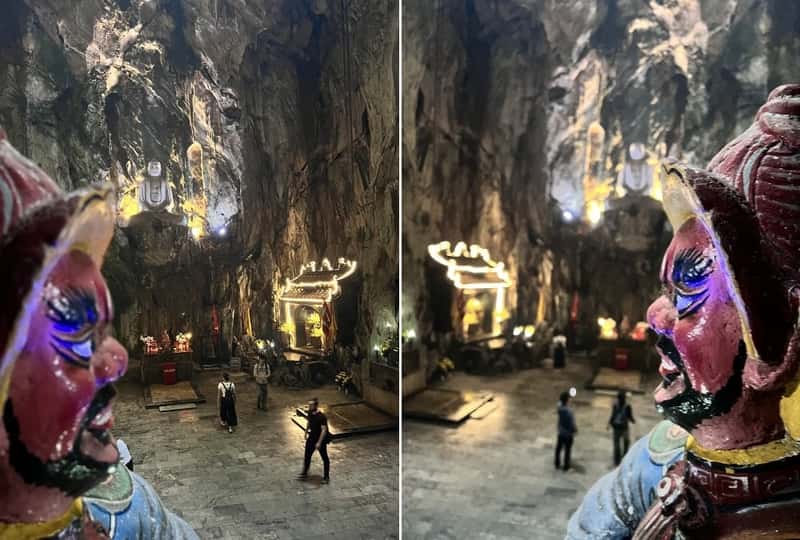
If you’ve ever seen a photo of the Marble Mountains, then it’s likely this cave. Huyen Khong Cave is a massive, cathedral-like chamber with holes in the ceiling that let in shafts of natural light.
- The Experience: When the sun is high (around 10:00 AM to 12:00 PM), the light beams hit the incense smoke and create a truly mystical atmosphere. It’s cool inside, a relief from the humidity, and houses a large stone Buddha carved directly into the cliff face.
- Pro Tip: Look for the small plaque dedicated to the Women’s Artillery Group. During the Vietnam War, this cave served as a secret field hospital and command post.
2. Am Phu Cave (The “Hell” Cave)

Located at the base of the mountain (and for some reason requiring a separate ticket of 20,000 VND), this cave is a dramatized walk-through of the Buddhist concept of the afterlife.
- The Experience: It’s dark, eerie, and filled with sculptures depicting various “punishments” for earthly sins. It eventually leads “upward” to a bright viewpoint representing heaven. It’s a bit kitschy, but the scale of the cave itself is impressive.
3. Linh Ung Pagoda and Xa Loi Tower
There are several pagodas on the mountain, but Linh Ung is the most prominent. It features a beautiful 7-story white tower (Xa Loi Tower) that overlooks the ocean. The courtyards are filled with bonsai trees and intricate stone carvings, offering a very peaceful spot to catch your breath.
Practical Advice: The Elevator vs. The Stairs
You have two choices to get to the main level of Thủy Sơn:
- The Stairs: There are 156 stone steps, which are steep, uneven, and can be very slippery if it has rained. So if you have health or mobility issues, take the elevator.
- The Elevator: It costs 15,000 VND per way.
The Strategy: Most people take the elevator up to save their energy for the other stairs on the mountain (because even after the elevator, there is plenty of climbing to do) and then walk the stairs down to see the smaller shrines along the way.
Costs at a Glance (2026 Prices)
- Entrance Fee (Water Mountain): 40,000 VND
- Am Phu Cave: 20,000 VND
- Elevator: 15,000 VND per trip
The Reality Check: What to Watch Out For
1. The “Marble” Hustle
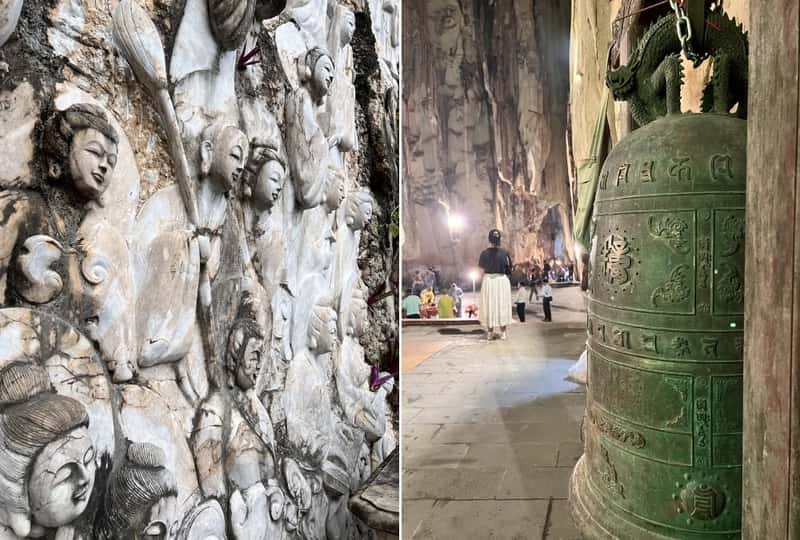
The village at the base of the mountain, Non Nuoc, is famous for its stone carving. While the craftsmanship is incredible, the sales pitching is intense and highly competitive. You will be approached by many people offering “cheap” marble statues. However, most “marble” souvenirs sold in the stalls today are actually made from crushed stone powder and resin, as quarrying from the actual Marble Mountains was banned years ago to protect the site. It’s an unfortunate blight on Vietnam, and you’ll experience many places across the country trying to sell you an imitation as authentic.
2. The Heat and Crowds
Because it’s a major stop for tour buses between Da Nang and Hoi An, it gets packed between 9:00 AM and 3:00 PM. Go early. If you arrive by 7:30 AM, you’ll have the caves almost to yourself and beat the worst of the midday heat. There are both indoor and outdoor stairways, so as with everywhere in Vietnam, suncream, water, umbrellas or whatever else you need to stay safe from the sun is a must.
Also, to reach the summit, the stairs seem to go on forever. Take your time, take plenty of rest where you can, and drink plenty. Every time you think you’re almost there…. You probably aren’t.
3. Footwear Matters
This is not the place for flip-flops (I speak from experience). The steps are made of—unsurprisingly—marble, which has been polished smooth by millions of feet over the years. They are incredibly slick. Wear shoes with a good grip.
The Marble Mountains offer a mix of everything that makes Central Vietnam interesting: deep history (from the Cham people to the Vietnam War), active spiritual sites, and naturally beautiful geology.
It’s not a “hidden gem”—you will definitely be sharing the view with others—but standing in the center of Huyen Khong Cave as the light hits the altar is an experience that stays with you.