Despite living in a world that endlessly celebrates progress on gender equality, millions of women remain legally bound to male authority in ways that are direct, codified, and enforced. These aren’t relics hiding in outdated constitutions nobody enforces. They are active laws, recently reaffirmed or even newly introduced between 2024 and 2026, that strip women of basic autonomy and place their decisions, movements, and bodies under the control of men. The scope of the problem is wide, and the details are sobering.
1. Saudi Arabia’s Male Guardianship System (Nizam Al-Wilayah)

Saudi Arabia’s longstanding male guardianship system, known as Nizam Al-Wilayah, has historically limited women’s legal autonomy. Entrenched in traditional conservative socio-cultural norms, this system vested male guardians with legal authority over the personal decisions of the women in their family. The structure is deceptively simple: in Saudi Arabia, every woman traditionally had a wali, a male guardian who makes decisions on her behalf, typically her father, and then her husband after marriage, although guardians can be brothers, sons, uncles, or even male judges. That description isn’t history. It describes a legally codified reality that persists today.
Saudi Arabia’s Personal Status Law codifies language that women must have a male guardian to marry. Articles 13 and 15 require a male guardian to contract a woman into marriage, irrespective of her age or former marital status. The situation also extends to marriage life itself. Women legally need the permission of a male guardian to marry or divorce, and married women are required by law to obey their husband “in a reasonable manner” or risk losing their right to financial support. On February 21, 2025, Saudi Arabia published new Implementing Regulations of the Personal Status Law, and while these new regulations aim at curtailing male guardianship regulations, restricting forced marriages, and strengthening women’s rights in divorce and custody, their practical impact remains to be assessed, as many provisions still rely on court discretion, raising questions about how they will be interpreted and implemented by the judiciary.
2. Afghanistan’s Taliban Morality Law and the Mahram Requirement
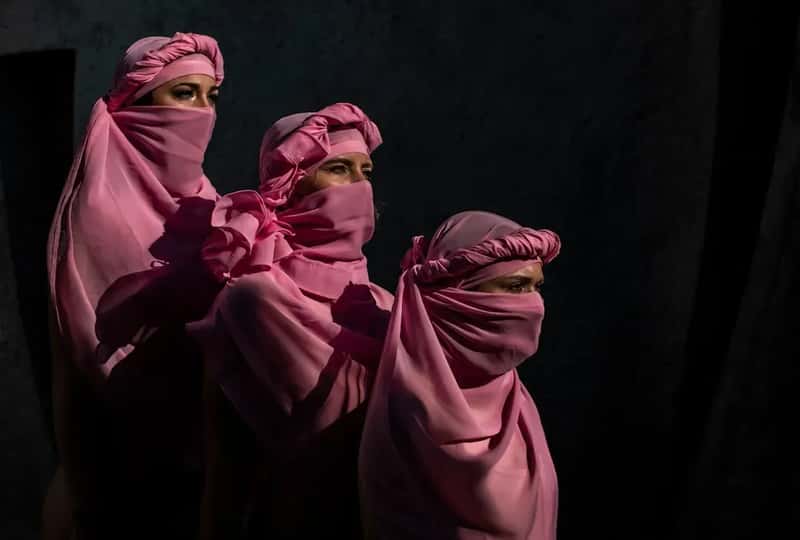
Strict hijab and mahram (male guardian) regulations have impeded women from traveling for work or to receive medical treatment. In August 2024, the Taliban announced a new law on promotion of virtue and prevention of vice, which prohibits women from traveling or using public transportation without a male guardian. This law didn’t emerge from nowhere. It reinforces and expands existing discriminatory policies, such as mandatory dress codes, the requirement for women to have a male guardian, and the segregation of men and women in public spaces. The UN special rapporteur on Afghanistan described what is happening as something far more alarming than discrimination alone.
The Taliban’s “institutionalized system of discrimination, segregation, disrespect for human dignity and exclusion is pervasive, methodical, and imposed through edicts, policies and enforcement … this system of gender oppression may amount to crimes against humanity, including gender persecution,” according to the UN’s own assessment from August 2024. The economic consequences are staggering. A U.S. official estimated in 2024 that the Taliban’s policies toward women cost Afghanistan’s economy over $1 billion a year. Even access to healthcare has collapsed under the mahram requirement. The Taliban prohibited male doctors from treating female patients unless they were accompanied by a mahram. Women could see female doctors, but it was difficult to find them.
3. Marital Rape Exemptions: When the Law Grants Husbands Sexual Authority

More than half of the world’s countries do not explicitly criminalize sexual assault in marriage. While sexual assault in general is criminalized in these countries, sexual assault perpetrated by a spouse is entirely legal. That is not a rounding error or an asterisk in legal history. It is an active grant of authority by the state, one that places a wife’s body legally under her husband’s control. In 18 Commonwealth countries, it is legal for a husband to rape his wife. This is the legacy of British colonial law, which treated women as property of their husbands.
India is one of the most striking examples of how this plays out in a modern democracy. In India, it is not considered rape if a man forces sex or sexual acts on his wife, as long as she is over 18, due to an exception in a British colonial-era law. In 2024, the Indian government doubled down on this position. Criminalizing marital rape would be “excessively harsh,” the Indian government said, in a blow to campaigners ahead of a long-awaited Supreme Court decision that will affect hundreds of millions of people. The latest criminal law overhaul only confirmed the pattern. In July 2024, Prime Minister Narendra Modi’s government overhauled the country’s 164-year-old penal code with new criminal laws, but the exemption for marital rape stayed on the books. Morocco took an even more pointed step backward. On October 10, 2024, the Tangiers Court of Cassation overturned the 2019 conviction of a man for raping his wife, which had been hailed as Morocco’s first ruling to explicitly criminalize marital rape.
4. Freedom of Movement Laws That Require Male Permission

Many Middle East and North Africa countries still prevent women from moving freely in their own country or traveling abroad without the permission of a male guardian. A Human Rights Watch report that examined 20 countries in the region found a consistent pattern. Researchers examined requirements in twenty MENA countries related to women’s mobility, including their ability to obtain a passport and travel abroad. In most countries, researchers found that women are often dependent on their fathers, brothers, and spouses for permission to move. The consequences for non-compliance can be severe. Not only can women be arrested, facing penal or social punishment, but in conflict-ridden countries, women have also been forced to leave their jobs due to a lack of approval. Restrictions extend to attending field trips, reserving hotels, and renting apartments without a male guardian’s permission.
Most MENA countries enforce male guardianship systems, which limit women’s legal and personal freedoms. Key concerns include marriage and divorce, where women often require male guardian approval to marry while men can divorce unilaterally, child custody, where fathers frequently receive legal preference in custody disputes, and inheritance laws, where many countries enforce gender-biased inheritance laws, granting women only half the share of their male relatives. The broader legal picture across the region adds another layer of restriction. While some progress has been made by women’s rights advocates, many nations in the area still enforce personal status or family laws that require women to “obey” their husbands, obtain their consent before leaving their marital homes, or even going to work. These restrictions “severely impair women’s equal participation and decision-making in political, economic and social affairs and the enjoyment of their human rights including the rights to freedom of movement, education, work, access to justice, privacy and family life,” according to UN experts.