The plaque is cold under your fingers.
You read every word. Twice.
The tour group has already moved on. You haven’t.
You are standing in front of a monument to someone else’s ancestors, and something inside you – something that has no clean name – is finally exhaling.
There’s a gap we don’t talk about enough. The space between the person who shows up at Sunday dinners and the person who books a solo flight to stand in front of a Civil War battlefield at dawn. The distance between who your family told you that you were, and who the stones and the plaques and the corroded bronze statues seem to confirm you could have been.
1. The Borrowed Inheritance
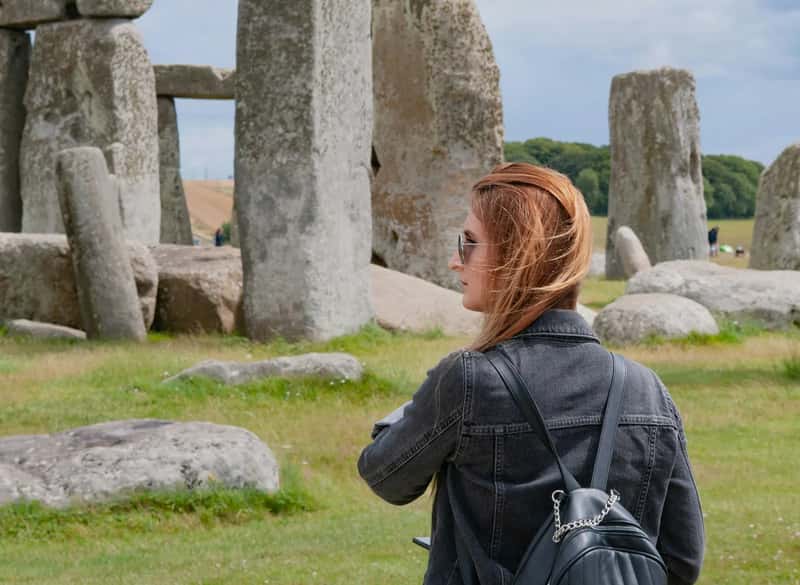
Here is a truth that nobody in the heritage tourism industry wants to say out loud: most people visiting historical landmarks are not there for the history.
They are there for a feeling of lineage.
We look because human beings are natural-born storytellers, and we want to know how our “once upon a time” fits into the narratives of our lives. And when your own family’s narrative is thin – riddled with silence, secrets, or deliberate omission – you borrow someone else’s. You stand at Gettysburg and let the weight of other people’s sacrifice fill the hollow place where your grandfather’s stories should have been.
This is not pathology. This is resourcefulness.
The mind finds a way to feel grounded, even when the ground beneath your own family tree has been salted.
You are not pretending their history is yours. You are practicing what continuity feels like – learning the muscle memory of belonging before you go searching for your own.
2. The Erased Childhood
Some families don’t tell stories. They manage them.
They curate. They redact. They decide – usually before you are old enough to ask the right questions – which parts of the past are fit for consumption and which parts get boxed up in a garage that nobody ever opens.
Many people search out of a sense of rootlessness. Time and assimilation have stripped their families of the customs, language, and foods of the past. That stripping doesn’t announce itself. It happens quietly, over decades, in the absence of certain conversations at the dinner table.
You grow up feeling vaguely incomplete.
Not broken. Just – missing a chapter.
The long-term effects of cultural erasure are a complex interplay of anthropological, psychological, and sociological factors, significantly impacting individual and collective identity formation. And when that erasure happens inside the family – not by colonizers or governments, but by the very people who were supposed to hand you your story – the impact is intimate and disorienting in ways that take decades to name.
3. The Stone Witness
A landmark doesn’t lie to you.
It doesn’t get tired of the past. It doesn’t change its version of events to protect someone’s feelings. It doesn’t go quiet when you ask the wrong question.
The awareness of being at a place where historic events took place is of great importance. From a psychological perspective, the impact of a given location on psychological processes not only depends on its current attributes, but also on the visitor’s awareness of its historical dimension.
That reliability is intoxicating when you grew up in a house where the past was a moving target.
The stone is still there. The date is still carved. Whatever happened, happened – and the landmark confirms it without flinching.
For the child who was told not to ask about grandfather, or about the country you left, or about why that branch of the family tree just stops – the unyielding permanence of a historical site is a form of emotional rescue.
The world, it turns out, keeps records. Even when your family didn’t.
4. The Restorative Hunger
Psychologists have a name for the drive that sends people backward in time.
Restorative nostalgia is described as a desire to “rebuild a lost home.” This type of nostalgia feels like a kind of homesickness for the past – but this strain of homesickness isn’t just aching for the past, it is also searching for a cure.
The landmark obsessive is almost always running a restorative program.
They are not sightseeing. They are reconstructing.
Each monument, each museum, each roped-off room where something significant once happened is another piece of a floor plan they are drawing for a house they never got to live in. A house with a full basement. A full archive. A full account of where they came from and why that should matter.
Restorative nostalgia is a more active and aggressive type of impulse. It’s usually the motivation for people to attempt to recreate or revitalize the past – because in their efforts to pay homage to the past, seekers are often resolving their individual memories, the history that exists in their own heads.
5. The Quiet Confession
I need to stop here for a moment.
I have stood in the middle of a battlefield museum in a country that is not the one I was born in, holding a pamphlet about a war that ended before my grandparents were born, and felt – and I am not exaggerating this – more emotionally located than I had felt in years. More rooted than I ever felt at any family reunion where no one mentioned the uncle who disappeared, the land that was sold, or the language we stopped speaking sometime between my grandmother’s childhood and mine.
The landmark gave me permission to feel historical. To feel like I came from somewhere.
That is the confession underneath the obsession. Not a love of history. A love of the feeling that history gives you when your own story has been quietly, efficiently, and thoroughly erased by the people who were supposed to be its keepers.
6. The Identity Archaeology
There is a reason the landmark obsessive always reads the plaques in full.
They are not studying. They are excavating.
In many ways, a historical building is like the self – layers of once-successful selves that are no longer the person with whom we identify. The landmark obsessive understands this viscerally. They walk through ruins and they feel the grammar of it – the way something can survive its own collapse, still legible, still worth reading.
The decisions faced by conservators are not so different from those encountered by psychologists helping patients reconstruct traumatic memories. Once a historical layer is removed, it is often lost forever. Similarly, once a person has reframed a past experience, it may be difficult to retrieve the original memory.
They know that something went missing. They just weren’t given a map to find it.
So they walk the earth looking for clues. They photograph every marker. They stay until the park closes.
7. The Family Secret Architecture
Every family that erases its own history does it for a reason.
Sometimes the reason is shame. Sometimes it is survival. Sometimes it is the belief – passed down as quietly as a gene – that certain rooms in the house are simply not for children.
In families there exist beliefs, expectations, and habits that go almost unnoticed – nearly invisible forces that stir thought, emotion, and behavior into pattern. A sputtering flow of formative anxiety is passed along from generation to generation.
The child raised in this architecture learns early that the past is a controlled substance. That asking the wrong question in the wrong tone gets you a look – not an answer.
It has been proposed that late adolescents’ personal exploration of and commitment to roles and values may be influenced by knowledge of parent and grandparent histories – and that achievement of personal autonomy may be influenced by knowledge of those same histories.
When that knowledge is withheld, something structural in the self goes unbuilt.
The landmark becomes scaffolding.
8. The Controlled Narrative
There is a specific kind of grief that has no ceremony.
The grief of not knowing.
Not the grief of loss – that grief has a funeral, a casserole, a card. This other grief is for the story you were never told. The version of your family that existed before someone decided it was better left unsaid.
Sometimes, in the seeking, the truth about a family’s history collides with family narratives. Sometimes a woman discovers at 51 that she is adopted. Or a man discovers that he is not of the ancestry he believed – and then begins a journey into the past and into identity that may never end.
The landmark obsessive has usually already sensed that collision. They just haven’t found the epicenter yet.
So they travel. They walk deliberately through other people’s documented histories, collecting evidence for a feeling they have always had but could never prove: that they come from somewhere real, and that somewhere real was worth remembering.
9. The Terror Management Detour
Here is the part that psychology almost, but not quite, articulates.
The compulsive pilgrimage to historical sites is also, underneath everything, a negotiation with mortality.
Terror Management Theory – TMT – is a useful lens through which to understand the relationships between identity and our engagement with what monuments and history mean.
We visit the places where people lived and died and were remembered because doing so temporarily dissolves the terror of our own impermanence. The landmark says: people existed here, they mattered, and the world kept a record.
For someone whose family kept no record – or deliberately destroyed one – that is not a casual comfort.
That is oxygen.
Researchers have noted that powerful nostalgic memories can help people cope with transitions by providing comfort and a sense of identity. For the historically erased, the landmark isn’t a transition tool. It is a primary source. It is often the only kind of past that hasn’t been filtered through someone else’s need to protect a secret.
10. The Landmark Was Always a Mirror
This is the weight of it.
The person standing longest at the exhibit. The one who buys every book in the gift shop. The one who books a second trip before the first trip ends – they are not history enthusiasts in the way the brochure means it.
They are people who learned, very young, that their own history was fragile. That it could be edited. That the adults in the room had agreed, without consulting them, that certain things would not be spoken of – and that this agreement was, as far as everyone was concerned, final.
Cultural erasure’s long-term effects include fractured identities and weakened community bonds. When that fracture happens at the family level – when it is your own mother or your own grandfather doing the erasing – the fracture is not cultural. It is constitutional. It runs through the core of you.
At its core, the dilemma of historical preservation reflects a deeper human struggle: how to reconcile the previous self with the self we want others to see. Should we erase, rewrite, or find a way to reconcile our conflicting life stories?
The landmark obsessive has been asking that question their entire life. They just learned to ask it in old buildings and at bronze plaques instead of at the dinner table, because the dinner table never answered.
There is a particular quality of light in a museum at closing time. The guards are doing their rounds. The other visitors are already outside, checking their phones, deciding where to eat. But you are still there, reading the last panel, trying to absorb the last date, the last name, the last fact about people who lived and died and were documented.
You are not stalling. You are filling something.
And the filling is never quite complete – because what you are actually trying to fill is not a knowledge gap. It is a silence that someone else created and handed to you, wrapped in the ordinary paper of a normal childhood, before you were old enough to know what was missing from inside it.
Maybe that is enough. Maybe the pilgrimage itself – the act of moving through documented time, of insisting that the past is real and worth honoring – is its own form of repair. Not healing, exactly. But a practice of not forgetting, even when forgetting was the only inheritance you were given.
The plaque is still cold. Your fingers are still pressed against it. And for right now, in this exact moment, you know exactly where you are.