The photo is two years old.
You know it. The algorithm knows it. Everyone who double-taps it knows it.
But you post it anyway.
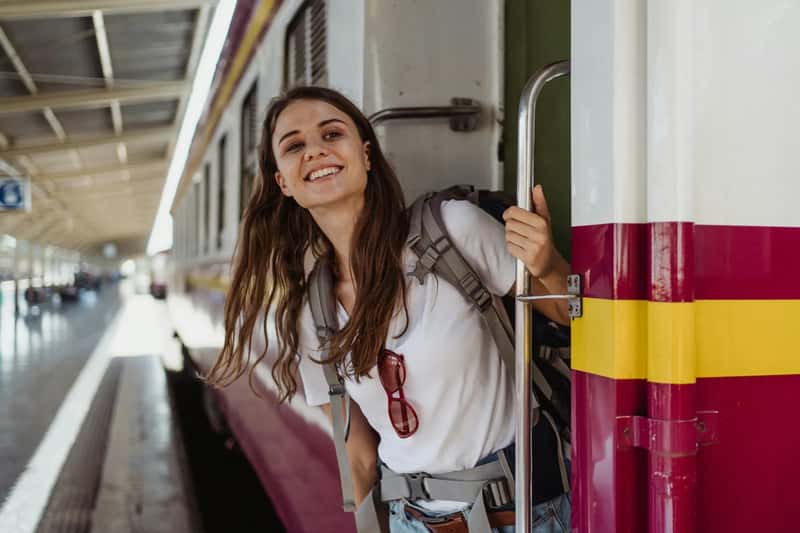
Because that version of you – standing on a clifftop in Lisbon, squinting into the sun, backpack strapped tight – felt like someone worth being.
There is a name for this. It isn’t wanderlust. It isn’t aesthetic. It is the Identity Gap – the cold, dark distance between who we perform ourselves to be online and who we actually are at 11 PM on a Tuesday, eating dinner alone in a flat that doesn’t feel like home. The traveler-self is aspirational. Curated. Lit correctly. The present self is tired, restless, and quietly dissatisfied with almost everything the algorithm can’t see.
But the photograph cannot do what you need it to do. It cannot close the gap. It cannot make the present livable. It can only illuminate, briefly, the fact that you once felt at home somewhere.
1. The Memory Edit
Before you post that throwback, your brain has already done the work.
It has clipped the bad parts. Removed the blisters. Forgotten the three-hour delay, the argument, the hostel that smelled of mildew and regret.
A key factor in nostalgic avoidance is the distortion of memory. The mind tends to filter out negative aspects of past experiences, amplifying positive emotions while minimizing pain, conflict, or hardship. Psychologists call this “rosy retrospection.”
What you post isn’t the trip. It’s the highlight reel of a highlight reel.
And the dangerous part? You believe it. You look at that photo and you feel – genuinely feel – that life was better then. That you were better then. The image becomes proof. Evidence of a self that once existed, unbothered and free, somewhere warm and far from here.
The edit is the escape. And the escape, if you’re honest, is the whole point.
2. The Dissatisfaction Engine
Here is the uncomfortable truth that psychologists have been circling for years.
You don’t post the flashback when you’re happy. You post it when something in your present life feels airless and wrong.
Research suggests that nostalgia is more likely triggered by dissatisfaction with the present. If people are unhappy for any reason with how things are today, they’re more likely to experience this sense that things must have been better in the past.
The beach in Thailand. The riad in Morocco. The apartment in Berlin for six wild weeks.
These images surface not randomly but strategically, pulled from the archive by a dissatisfied present self looking for relief.
Feeling like “life was better back then” leads to dissatisfaction with the present. It becomes a loop. The dissatisfaction triggers the flashback. The flashback deepens the gap. The gap breeds more dissatisfaction. The loop tightens. The posts keep coming.
3. The Curated Self
Social media didn’t invent the travel identity. It just gave it a gallery.
We have always used movement to define ourselves. The explorer. The nomad. The person who has been places and therefore is a certain kind of person. But now the gallery never closes. It is open at 3 AM when you can’t sleep. Open on a Monday morning when your inbox makes you feel small.
Our self-perception is now exposed to a much wider and less consistent mirror, one that rewards appearance over authenticity, performance over presence.
The flashback travel photo is the most potent artifact in this performance. It doesn’t just say I went here. It says: I am the kind of person who goes places. I have been free. I could be free again.
It is identity management. Quiet, compulsive, and deeply human.
4. The Avoidance Architecture
Let’s call it what it is.
Not nostalgia. Not wanderlust. Architecture. A carefully constructed psychological shelter built from old JPEGs and amber-filtered light.
Nostalgia can shift from healthy reflection to emotional avoidance when it consistently replaces engagement with the present. This tendency is especially common during periods of stress, failure, or dissatisfaction. Instead of confronting difficult emotions, some individuals immerse themselves in idealized versions of the past, creating a psychological refuge that feels safer than reality.
The architecture is elegant. You don’t have to deal with the job that is slowly grinding you down. You don’t have to face the relationship that has gone flat and fluorescent. You don’t have to sit with the quiet terror of a life that isn’t what you planned.
You just open the camera roll. Find the right light. Post.
5. The Gap I Know Personally
I will be honest with you here.
There was a period – two years after a move, one year into a job that looked good on paper and felt like a slow erasure in practice – when I posted more old travel photos than current ones. Not because the images were better. Because I needed the person in them to exist somewhere. I needed evidence that I had once been somewhere that felt like living rather than maintaining.
I wasn’t lying to my followers. I was lying to myself. Or not lying, exactly – more like borrowing. Borrowing a self from the past to cover the deficit in the present. It felt like relief. It also felt, if I am honest, like a very small shame. Because avoidance of present opportunities – preferring to live in digital memories rather than engaging in new experiences – isn’t a travel strategy. It’s a grief response dressed as a lifestyle.
The gap between the Lisbon photo and the Tuesday night reality was the story I wasn’t telling.
6. The Borrowed Identity
Travel, at its best, is genuinely transformative.
Travel increases our tolerance for uncertainty and enhances our psychological flexibility, contributing to a stronger sense of self. The traveler who navigated the wrong train in a language they didn’t speak, who ate alone and found it peaceful, who got lost and discovered that being lost was instructive – that person changed.
But here is the problem with the flashback post.
You are not that person anymore. You are borrowing their passport. Wearing their confidence like a coat that no longer fits.
Many people go on trips and encounter experiences that spark an interest of change in different aspects of their lives. Although some change may occur for a short period of time after returning home, often time they can fizzle out and the traveler may go back to old habits or lifestyles.
The borrowed identity is warm for a moment. Then the warmth fades. And you are still here. Still Tuesday. Still the same inbox.
7. The Negative States That Pull the Trigger
Nostalgia does not arrive neutral.
It is summoned. Called up from the archive by specific emotional states that the conscious mind often refuses to name directly.
Negative affective states such as sadness, loneliness, and meaninglessness trigger nostalgia and nostalgia, in turn, enhances well-being, feelings of social connectedness, and perceptions of meaning in life.
This is the bittersweet physics of it. The lonelier you feel now, the brighter the old photo looks. The more meaningless the present feels, the more the past seems saturated with purpose.
Nostalgia becomes a way to escape rather than process current emotions.
The photo of the Amalfi Coast doesn’t comfort you because the coast was beautiful. It comforts you because in that moment, you were not lonely. You were not dissatisfied. You were, for once, exactly where you wanted to be. That is what you are reaching for. Not the place. The feeling.
8. The Looking-Glass Traveler
There is a sociological concept worth holding here.
Sociologist Charles Horton Cooley coined the term the “looking-glass self” to describe this phenomenon. He suggested that we don’t just imagine how others see us – we become that imagined perception. We form our identity not just from who we are, but from who we think others think we are.
Apply that to the flashback post and it becomes something uncomfortable.
You are not just sharing a memory. You are shaping a perception. You are constructing the version of yourself that others will believe in – and then, crucially, you are beginning to believe in it too. The traveler-self becomes the real self in the looking glass. The present, untraveled, quietly struggling self becomes the interloper. The ghost. The one who doesn’t belong in the narrative.
This is how the gap widens. Post by post. Filter by filter.
9. The Mixed Emotions in the Archive
Not every throwback post is avoidance. It would be dishonest to say so.
One of the few studies examining social media nostalgia concluded that within nostalgic posts, people tend to express mixed emotions. Approximately 40% of all nostalgic posts examined contained both positive and negative emotions, 37% contained only positive emotions, and only less than 6% of the examined posts contained only negative emotions.
Nostalgia is not the enemy. Memory is not the enemy.
Research in psychology suggests that nostalgia serves multiple roles, functioning both as a source of emotional resilience and, at times, as a retreat from present discomfort.
The question is not whether you remember. The question is what you are doing instead of remembering. Are you using the old photo as a compass – a reminder of what aliveness feels like, pointed toward the future? Or are you using it as a wall – a way to stay sealed inside the past and avoid the cold air of the present altogether? The answer lives in the frequency. In the urgency. In whether you post and feel better, or post and still feel the same hollow thing underneath.
10. The Heaviest Thing: The Present Is the Only Place You Can Actually Live
This is the part no one wants to post about.
The present is difficult. It is unfiltered. It has bad lighting, complicated feelings, and a mortgage. It does not have the romance of departure or the clean emotional logic of a journey with a beginning and an end. The present just continues. Relentlessly. Without a caption.
Reminiscing about the past is a natural part of human psychology, but excessive engagement with nostalgic content on social media can indicate underlying emotional distress.
In clinical settings, therapists sometimes observe patients using nostalgic narratives to sidestep painful topics. For instance, someone struggling with career stagnation might repeatedly recount college achievements rather than address current job dissatisfaction. While these memories provide temporary relief, they delay necessary growth and problem-solving.
The flashback travel photo, at its most compulsive, is a way of saying: I am not ready to be here yet. It is tender and human and understandable. It is also, if it becomes the primary mode of self-narration, a way of slowly vacating a life that still has rooms you haven’t opened.
The past was real. The trip happened. The joy was genuine. Nothing about using old photographs to remember who you were capable of being invalidates the original experience. Memory is not a crime. Longing is not a flaw. The desire to have been someone freer, somewhere warmer, in a moment that asked nothing of you but presence – that is one of the most honest things about being alive.
The capacity for that feeling still exists inside you, not inside the image. Nostalgia offers a deeper understanding of each of our journeys in life, which can give us purpose and meaning in times of uncertainty – but only if you let it point forward, not backward. Only if you use it as evidence of what you are capable of, rather than proof of what you have lost.
The gap between who you were in that photo and who you are right now is not a failure. It is just the distance between one version of yourself and the next. And somewhere in that uncomfortable, unfiltered, badly lit present, the next version is already waiting to be met.