I remember the exact smell of it. Jet fuel and stale coffee and the particular brand of loneliness that only exists at 4 AM in an airport terminal where nobody knows your name. I had a connection in Frankfurt, a rolling carry-on bag with a broken wheel, and approximately eleven hours before anyone in my life would notice I hadn’t texted back. I sat down on the cold metal of a gate chair and I felt something I can only describe as relief. Not happiness, exactly. Relief. Like a dial inside my chest had finally been turned down from a frequency it had been stuck on for months.
What I didn’t understand then – but psychology is beginning to map with increasing precision – is that this moment wasn’t a quirk. It wasn’t loneliness in disguise. It was my nervous system locating its natural resting state. Solo travel isn’t just a choice; it often reflects a deeper personality type. And the people who feel most alive when they are moving through the world without a companion aren’t broken, antisocial, or emotionally avoidant.
These travelers aren’t necessarily loners or antisocial. Instead, they tend to value freedom, self-growth, and meaningful experiences on their own terms. If you’ve ever sat in a terminal at an ungodly hour and felt the specific quiet joy of being completely, utterly, and temporarily no one’s responsibility, you don’t have a problem. You just have a particular set of traits that make solo travel feel less like a luxury and more like oxygen.
1. The Autonomous Architect: A Near-Biological Need for Self-Directed Experience
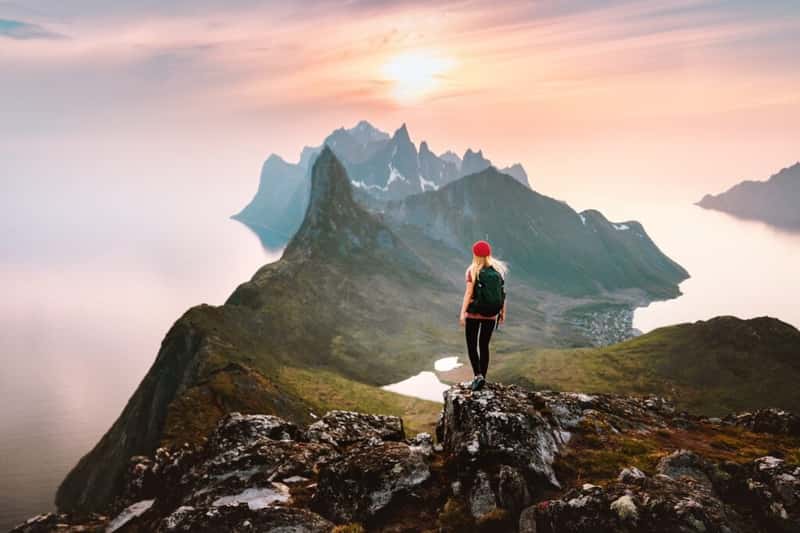
There is a specific kind of suffering that happens when someone else chooses the restaurant. It sounds trivial. It is not trivial. For people who genuinely prefer solo travel, the ability to control the texture of their experience isn’t a preference – it is a psychological requirement woven into the architecture of who they are.
The primary motivations for solo travel include transformative experiences, self-discovery, self-actualization, self-confidence, freedom, escape, relaxation, personal indulgence, and learning something new. What links almost all of these? Autonomy. The self-directed life. Not the freedom to be reckless, but the freedom to be exactly yourself, at the pace that fits your inner rhythm.
Studies suggest that solo travel may produce even greater stress reduction due to increased autonomy and reduced social obligation stress. That phrase – social obligation stress – is doing enormous psychological work. It names the invisible tax that group travel levies on certain nervous systems.
For solo travelers, the ultimate luxury isn’t a five-star hotel. It’s having complete control over their schedule. They don’t have to compromise on destinations, dining choices, or wake-up times. This freedom allows them to fully immerse themselves in experiences they personally find meaningful. For the Autonomous Architect, compromise isn’t just inconvenient. It is the quiet theft of the whole point.
2. The Solitude Connoisseur: Finding Fullness Where Others Find Emptiness
Most people use solitude as a waiting room. They tolerate it until the next social event, the next notification, the next person. The Solitude Connoisseur is different. For them, time alone is not absence. It is presence. A specific, irreplaceable kind of presence that crowds cannot produce.
Traveling alone allows you to have access to many more thoughts and sensations that may be blocked when distracted by a second person or group. It also allows you to focus your energy. This is not poetic language. This is a neurological reality. When you are not performing for, managing, or monitoring another person, cognitive resources reallocate. You begin to actually see the places you are in.
Spending time alone doesn’t scare solo travelers – it energizes them. They enjoy quiet moments, whether it’s sipping coffee at a local café or watching a sunset in silence. This comfort with solitude reflects a high level of emotional maturity. It takes strength to be alone with your thoughts without needing constant distractions.
Research has also challenged the long-held assumption that introversion is the engine behind this comfort. Contrary to popular belief that introverts spend time alone because they enjoy it, results showed no evidence that introversion is predictive of either preference or motivation for solitude. What predicts it, instead, is something deeper – a dispositional autonomy, a tendency to act in congruence with one’s own values rather than external pressure. Psychologists say people who are comfortable with solitude tend to have better self-awareness and emotional balance. Rather than feeling lonely, these travelers see solo moments as opportunities for reflection and inner peace. For them, solitude isn’t empty – it’s full of meaning.
3. The Sensory Cartographer: Reading the World Through Undiluted Perception
There is a specific heartbreak in traveling with someone who narrates everything. Who pulls you from the cathedral window to show you something on their phone. Who turns the soundscape of a foreign market into background noise for a conversation about people back home. Not because they are bad companions, but because their presence rewrites the frequency on which you receive the world.
Seeing a place, hearing its sounds, noticing its smells, its textures, or the feelings evoked requires sensitivity to your own internal processes. Impressions form as you observe and then percolate as your experience unfolds. Your ongoing internal dialogue, known as your stream of consciousness, takes your observations and sensations and assembles them into stories. Alone, there’s no one else to affect or taint your creation – whether a visual image, a series of sounds, or an emotion. It’s all yours.
The Sensory Cartographer doesn’t just visit places. They metabolize them. They are the person who notices the specific quality of light in a Portuguese alley at 6 PM. Who remembers the weight of the air before a storm in a city where they didn’t speak the language.
Travelling alone encourages mindfulness and mental clarity, as you’re often more attuned to your surroundings without the distraction of conversation or companionship. Whether you’re hiking through a forest, sitting in a quiet café, or exploring a bustling city, solo travel provides ample moments of stillness and presence. This mindfulness can help alleviate stress and anxiety, allowing you to truly disconnect from the pressures of daily life. For the Sensory Cartographer, this isn’t a side effect of solo travel. It is the entire purpose.
4. The Resilience Economist: Turning Disruption Into Personal Currency
A missed train is just a missed train. Unless you are alone. Then it is a problem to be solved, a decision to be made, a small act of self-trust to be performed in a language you may not fully speak. And when you solve it – when you find the alternate route, when you negotiate the rebooking, when you end up somewhere unplanned and quietly magnificent – something inside you permanently recalibrates.
Traveling alone requires problem-solving on the spot – handling delays, language barriers, or lost luggage without panicking. Psychologists note that people with high self-reliance tend to have better resilience and adaptability. It’s not that challenges don’t happen to them. It’s that they know they can handle them when they do.
Successfully navigating a foreign transit system or resolving a booking issue solo provides tangible proof of your capability, directly combating self-doubt and building a “can-do” attitude that transfers back home. Without companions to immediately share frustrations with, you learn to sit with discomfort, process setbacks like missed trains calmly, and find your own emotional equilibrium, a skill that reduces anxiety in other life areas.
The Resilience Economist doesn’t travel despite disruption. They unconsciously travel toward it. Not out of masochism, but because some people feel most lucid when they are the only variable they can control. Whether it’s dealing with a missed flight, navigating a language barrier, or simply managing solitude, these difficulties teach valuable lessons in patience, problem-solving, and emotional regulation. Solo travellers often report a heightened sense of accomplishment after tackling such challenges, which fosters greater confidence in their ability to handle stress and setbacks in other areas of life.
5. The Identity Archaeologist: Using Travel as a Mirror, Not a Backdrop
Most people take photographs on trips. The Identity Archaeologist takes measurements. Of themselves. Of who they become when stripped of context, role, and social expectation. They don’t visit cities to see them. They visit cities to use them as a diagnostic.
This form of independent travel strips away the daily roles you play at home – employee, partner, parent – allowing your core identity space to breathe and be re-examined. This is not an accident of solo travel. It is the engine of it.
I’ve felt this shift in my own chest more times than I can count. That particular Tuesday afternoon in a Portuguese town with no tourist infrastructure, where I sat in a square for two hours and realized I had no idea which version of myself I actually liked most. The performing one, or this quiet, slightly awkward one who ordered the wrong food and was grateful for it. The question alone felt worth the flight.
Traveling alone provides a unique opportunity for introspection and self-discovery. This is why many solo travelers have a strong sense of self-awareness. When you’re on your own, you have the time and space to reflect on your thoughts, feelings, and reactions. You become more aware of your strengths and weaknesses, your likes and dislikes, and your comfort zones. This heightened self-awareness often leads to personal growth. The Identity Archaeologist doesn’t need a therapist’s couch. They need a one-way ticket and enough time for the sediment to settle.
6. The Internal Validator: Immune to the Performance of Travel
There is a version of travel that is entirely designed for the audience back home. The carefully curated photograph. The itinerary shared to Instagram before it’s lived. The group trip where half the experience is the collective narration of the experience. For some people, this is genuinely joyful. For the Internal Validator, it is exhausting.
Psychological research on self-validation shows that people who can affirm their own experiences without external input have stronger internal self-worth. They don’t need their ex to see them thriving in Bali. They don’t need their friends to comment on how brave they are. The experience itself is enough.
Psychologists say that jetting off solo is almost always about not just exploring a new location, but exploring oneself. The Internal Validator understands this instinctively. They are not uninterested in other people. They are uninterested in performing a version of themselves for other people’s consumption while simultaneously trying to be present in a foreign city.
Solo travel creates a unique psychological environment combining freedom, challenge, and self-directedness that promotes growth across multiple dimensions. The Internal Validator arrives at that environment and breathes out. The audience has gone home. The real trip can finally begin.
7. The Adaptive Reframer: Turning “Wrong” Into “Different”
Fluency in imperfection is a radical trait. Most people encounter disruption and begin an unconscious audit of what went wrong, who is to blame, and what the trip should have been. The Adaptive Reframer encounters the same disruption and begins a different calculation entirely: what does this make possible that the original plan didn’t?
Traveling alone forces you to dance with the unexpected. You learn to reframe: “This is a disaster” becomes “This is a pivot.” Adaptability isn’t pretending you’re thrilled when you’re not; it’s acknowledging the gap between plan and reality and moving anyway.
Another common trait among solo travelers is adaptability. Travel, by its very nature, is unpredictable. But in a group, unpredictability triggers collective anxiety – a chorus of competing reactions that often makes the disruption larger and longer than it needs to be. Alone, it’s just a fact. A door that closed. A window to look for.
These people can sit with the discomfort of not knowing exactly where they are or what comes next without their anxiety taking over. They trust themselves to figure it out, and more importantly, they trust that even if things go sideways, they’ll handle it. This is not recklessness. This is a calibrated, hard-won emotional technology that most people only develop alone, and usually at altitude.
8. The Nervous System Steward: Protecting Their Biological Capacity for Presence
There exists a form of depletion that no vacation cures, because the vacation itself is, structurally, the source of the depletion. Coordinating preferences. Managing group moods. Attending to the emotional weather of seven different people in an unfamiliar city. Some people return from group trips requiring their own trip to recover.
This kind of autonomy can be incredibly healing. It gives your nervous system a break from the constant social calibration we do in everyday life. And for people who are introverted, highly sensitive, or simply burned out, that space can feel like a breath of fresh air.
Loneliness can be a time to untangle thoughts and reflect. It can help you understand your own pace, rhythm and preferences. We rarely have time to just be still and be with ourselves, which is a luxury we get when travelling solo. The Nervous System Steward is not running from people. They are running toward a state of nervous system regulation that crowd dynamics make biologically impossible.
For many people, especially those who are more introverted and many who are neurodivergent, solitude is how they recharge. To dismiss this as selfishness is to misunderstand the physiology entirely. This isn’t a character flaw. It is a body knowing what it requires to be capable of anything at all.
9. The Self-Efficacy Accumulator: Building an Unshakeable Internal Archive of Proof
Every time you navigate something alone – a border crossing in a language you don’t speak, a medical inconvenience in a city where you know no one, a single table at a restaurant where every other diner is coupled or grouped – you make a deposit into an internal account. The Self-Efficacy Accumulator is, perhaps quietly and without ceremony, building one of the most durable psychological resources a human being can possess.
Nearly half of respondents said that solo trips boosted their confidence and decision-making skills. “I think solo travel is very empowering because you need to do everything yourself. Once you navigate a new city, problem solve how to deal with flight delays, or order food in a foreign language successfully, you realise there is nothing you can’t do.”
The psychological benefits of solo travel can continue when you return home. You have already started to build confidence, self-reliance and trust in yourself, which can apply to your day to day life too. The problem-solving, decision making and social skills you have strengthened can be transferable to situations at work or in your relationships.
The Self-Efficacy Accumulator is not collecting passport stamps. They are collecting evidence. Evidence against every internal voice that has ever suggested they couldn’t manage alone. Each solo trip is a filed brief in an ongoing internal legal case – and they are winning. The personal growth that stems from travelling alone is undeniable. The independence, self-discovery, resilience, and mindfulness gained from solo travel combine to create a sense of empowerment.
10. The Depth Seeker: Choosing the Difficult, Nourishing Thing Over the Easy, Empty One
It would be simpler to book the group tour. To have the logistics handled, the itinerary agreed upon, the discomfort of decision pre-dissolved by consensus. Simpler. And for the Depth Seeker, deeply, almost unbearably, beside the point.
The current trend of solo travel is seen as a social phenomenon that highlights the complex needs of people in modern society. Among those complex needs is a hunger that group travel, by its very architecture, cannot satiate – the need for experience that belongs entirely and exclusively to you. Not curated for collective enjoyment. Not softened by the presence of familiar faces. Raw, unmediated, and yours alone.
Contemporary life often involves rigid routines that, while providing stability, can contribute to psychological stagnation and burnout. Solo travel disrupts these patterns, creating what researchers term a “psychological reset.” This disruption interrupts rumination patterns, provides mental distance from chronic stressors, and allows cognitive and emotional resources to replenish.
The Depth Seeker chooses the harder itinerary not to prove something, but because they have learned – perhaps slowly, perhaps through years of polite group itineraries that left them vaguely hollow – that the difficult, nourishing thing is the only thing that actually reaches them. Solo travel can promote personal growth, self-discovery and development of independence and resilience. In my experience, it also offered adventure, clarity, a deeper sense of purpose and more fulfilment in life. For the Depth Seeker, this is not a bonus. This is the only acceptable destination.
If you recognized yourself in any of these portraits – or in all of them – it is worth sitting with what that recognition actually means. Not as a diagnosis, and not as a permission slip you needed from psychology to justify a preference you already had. But as a small, quiet validation of the fact that the way you are wired is not a deficit in need of correction. It is a specific, coherent, deeply human way of needing the world.
The question that haunts people who prefer solitude – am I running away from something? – deserves a more honest answer than it usually gets. Sometimes the answer is yes. But more often, for the people described in these pages, the answer is something richer: when you travel alone, you’re not just exploring new places – you’re exploring yourself. Without the noise of familiar routines or the influence of others, solo travel creates space to ask deeper questions. Running toward a question is not the same as running from an answer.
There is a particular kind of person who books a flight the way other people schedule therapy. Who finds, in the act of moving alone through unfamiliar geography, the specific quality of silence that allows them to finally hear themselves think. Going travelling makes anyone a more dynamic, open-minded and interesting person; however, doing this on your own can have even more benefits on your wellbeing, sense of self and in growing into the person you want to be. You don’t need to justify the solo seat. You just need to keep taking it.
Somewhere, right now, there is a terminal at an indelicate hour. Cold metal chairs. The smell of jet fuel and possibility. And one person sitting there alone, feeling – unmistakably, inexplicably – exactly like themselves.