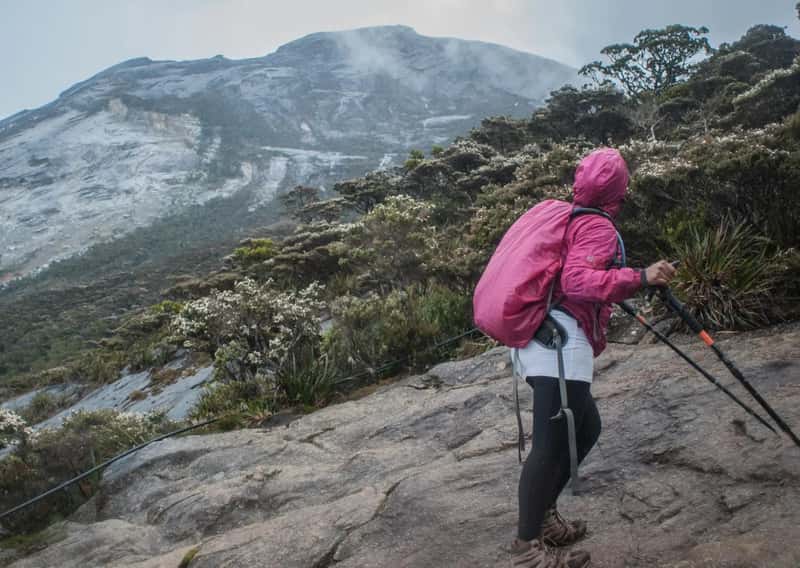
The trailhead is quiet at 5 AM.
You are not.
Something in your chest is still running – some old algorithm, still counting logos, still tallying worth.
You look down at your worn, no-name jacket. Faded. Functional. Yours.
And for the first time in a long time, something in you exhales.
This isn’t minimalism for minimalism’s sake. This isn’t poverty cosplay or contrarian theatre. This is something older and more urgent – the feeling of a self reclaiming its edges after years of being defined by what it wore, what it owned, what logo was stitched across its chest at twelve years old when the stakes felt enormous and the hallways felt like a gauntlet. The identity gap isn’t between who you are and who you want to be. It’s between who you were told to be – through every advertisement, every social hierarchy, every birthday wish list – and who you actually are when the brand tags are cut out and the mountain doesn’t care what you paid for your boots.
1. The Childhood Ledger
It started before you could read.
Modern-day children are immersed in cultures of consumption such that every aspect of their lives is touched by a buy-and-consume modality. That immersion isn’t passive. It’s architectural. It builds the internal scaffolding through which a child understands worth – their own and others’.
Young people are receiving an endless barrage of material messages encouraging purchasing behavior and consumption that impacts the self-image. Indeed, children from the ages of 4 to 12 have increasingly been defined and viewed by their spending capacity.
Read that again. Defined by spending capacity. At age four.
So when an adult refuses to buy the $400 jacket with the famous logo, they are not simply making a purchase decision. They are making a statement to the child they once were. They are rewriting the ledger. They are quietly, defiantly saying: I am not my spending capacity. I never was.
The rebellion begins not on the mountain but in memory.
2. The Status Wound
There is a specific kind of shame that lives in the body of someone who wore the wrong brand as a kid.
It isn’t dramatic. It rarely announces itself. It just sits there – a low hum of not-enough behind the sternum – every time a logo enters the room.
A qualitative study of English 15–16 year olds found that those from low-income households placed greater importance on visible “status” symbols, expensive clothing brands and money than their high-income peers. The cruelty of this is breathtaking. The children with the least resources were the most tormented by the need for visible markers of worth.
That torment doesn’t vanish at eighteen. It migrates.
It becomes the adult who avoids the outdoor gear store because the prices feel like a verdict. Or the adult who buys the expensive brand compulsively, chasing a retroactive dignity that no logo can actually deliver.
Or – and this is the road less traveled – the adult who walks past all of it and reaches for something plain, something honest, something that asks nothing of the room.
The status wound is real. The rebellion against it is realer.
3. The Extrinsic Trap
Psychology has a word for what happens when a child is raised in a culture that equates things with worth.
Extrinsic motivation.
Kasser distinguishes extrinsic goals – which tend to focus on possessions, image, status and receiving rewards and praise – from intrinsic ones, which aim at outcomes like personal growth and community connection and are satisfying in and of themselves.
When people organize their lives around extrinsic goals such as product acquisition, they report greater unhappiness in relationships, poorer moods and more psychological problems.
The child who is taught that the right brand equals the right person grows into an adult perpetually chasing external approval. Every purchase becomes a plea. Every logo becomes a question: am I enough now?
The person who refuses the brand-name gear has – consciously or not – begun to answer that question differently. They’ve started locating worth inside the experience rather than on the label. They’ve started the slow, difficult work of switching tracks.
From extrinsic to intrinsic. From performance to presence.
From the hallway to the mountain.
4. The Social Proof Machine
Here is the mechanism that keeps the trap operational.
In the age of social media, gear obsession is often amplified by the idea of social proof – seeing others using certain gear validates its worth and increases our desire to own it. Influencers and experienced adventurers often showcase their gear online, creating a cycle where certain brands or products become must-haves not just for their performance but for the status they confer within the outdoor community.
The machine runs on visibility. It runs on comparison. It runs on the ancient, exhausting human fear of being the one who doesn’t belong.
Those who looked at the pictures of cars, electronics, and jewelry rated themselves higher in depression and anxiety, less interested in social activities like parties, and more in solitary pursuits than the others.
The outdoor world, theoretically a place of escape, has simply migrated the machine to a different setting. The trailhead becomes the hallway. The gear list becomes the dress code. The status check moves from the school corridor to the Instagram grid.
The person who opts out isn’t naïve. They’ve simply recognized the machine for what it is. And they’ve decided the mountain doesn’t care what they paid for their jacket. It never did.
5. The Anecdote at 6,000 Feet
I once hiked with a man who carried a thirty-year-old pack. Canvas. No brand. No logo. A few improvised repairs with duct tape along the left strap.
Three people in our group were wearing $600 packs from a famous outdoor house. They asked him – politely, but unmistakably – if he needed to borrow something sturdier. He looked at them with a quietness that felt like a complete sentence.
“It carries what I need,” he said. “It always has.”
He summited first.
I thought about that pack for months. I thought about what it meant to carry something that asks nothing of the culture around it. Something that just works. Something with no aspirational promise stitched into the lining.
A person who selects ultralight gear and embraces minimalist packing might see themselves as a purist who values efficiency and resourcefulness. This mindset aligns with a desire for simplicity, and the gear reinforces that identity.
His gear reinforced an identity the market had no hand in building. That, I understood, was the point.
6. The Insecurity Root
No rebellion is clean. Most of them are soaked in something old.
A line of research suggests that insecurity – both financial and emotional – lies at the heart of consumeristic cravings. And the inverse is equally true. The rejection of consumerism is often rooted in the same insecurity – just processed differently.
The biggest intrinsic factor is insecurity, especially when it stems from a lack of nurturing homes throughout one’s childhood. In a 1997 study in the Journal of Consumer Research by Aric Rindfleisch, it was found that children whose parents separated or were divorced were more likely to develop more materialistic values as they grew older.
Some of those children become compulsive brand-seekers as adults. Others swing the opposite direction entirely – rejecting the logic of the marketplace with a fervor that is, itself, deeply emotional.
Neither response is wrong. Both are honest. Both are navigating the same original wound with different maps.
The anti-brand outdoorsperson is not above the wound. They are simply walking a different trail through it. And sometimes, that trail leads somewhere quieter.
7. The Commodity Self
There is a term that deserves to live in the open air of conversation more than it does.
Historian and media theorist Stuart Ewen coined the term “commodity self” to describe an identity built by the goods we consume.
The commodity self is the self the market built for us. It wears the right logo. It performs the right aspiration. It stands at the trailhead looking appropriately equipped for whatever image it has purchased.
The commodity self is exhausting to maintain.
Opponents of consumerism argue that many luxuries and unnecessary consumer-products may act as a social mechanism allowing people to identify like-minded individuals through the display of similar products, again utilizing aspects of status-symbolism to judge socioeconomic status and social stratification.
The person who refuses the brand-name gear is refusing to be read that way. They are pulling back from the social semiotics of the trailhead. They are saying: you cannot decode me through my logo. I have retired the commodity self. What remains is just a person, moving through the trees.
That is a quiet act of profound self-reclamation.
8. The Minimalist Architecture
There is a specific architecture to the mind of someone who has left the brand behind.
The process of minimizing physical items forces a rigorous evaluation of personal values. When deciding what stays and what goes, the individual is compelled to ask: “Does this object serve my most important life goals?” This repeated practice solidifies a clear, internal hierarchy of values, leading to greater congruence between one’s external life and internal belief system. This congruence, known in psychology as authenticity, is a powerful predictor of life satisfaction.
That congruence is what the brand-name outdoor culture promises but rarely delivers. It sells the aesthetic of adventure without the architecture of authenticity. It sells belonging without the harder work of becoming.
Minimalism emerges from an internal drive for simplicity, mindfulness, and anti-materialism. And on the trail, that internal drive takes on physical form. No-name boots. Patched fleece. A pack with a story, not a price tag.
The architecture becomes visible in what is absent. No logos shouting from the summit. No brand allegiances performing for the camera.
Just the climb itself. Just the self that showed up for it.
9. The Rebellion That Heals
Not every rebellion is an act of rage.
Some rebellions are quiet. Some are soft and deliberate and almost imperceptible to the outside eye. Some look, from a distance, simply like a person choosing a different jacket.
The human refusal to be tamed, controlled, or diminished by systems that demand conformity endures. In a culture that increasingly values compliance and consensus, those who push back celebrate independence, authenticity, and the transformative power of saying “no.”
The “no” in this case is not loud. It does not carry a placard. It does not announce itself on social media. It is the “no” of a person standing at the gear wall, feeling the familiar pull of status, the old gravitational tug of the childhood hallway – and choosing, instead, the thing that simply works.
Social scientists have known for years that young people whose ‘operating system’ aims to accumulate ever more stuff are less happy than those who prioritize heartier pursuits. The rebel who chooses function over brand is not living in deprivation. They are living in a different operating system entirely. One that was theirs to write.
That is a rebellion that heals. Slowly. Stitch by stitch. Trail by trail.
10. The Weight You Don’t Carry
The heaviest thing most people carry into the wilderness isn’t in their pack.
It is the accumulated weight of other people’s definitions of them. The childhood verdict about worth. The adolescent taxonomy of cool. The adult performance of aspiration. The invisible but bone-crushing weight of a self built for an audience rather than a life.
Adopting a minimalist gear philosophy not only lightens your load physically but also mentally. With fewer items to manage, you free up cognitive space for the adventure itself – enjoying the environment, reflecting on your journey, and connecting with the natural world. It’s a deliberate choice to focus on the essentials, reinforcing a deeper connection with the experience and a less materialistic approach to adventure.
The person who refuses the brand-name gear is refusing to carry that invisible weight up the mountain. They have done the harder calculation. They have figured out that what the logo costs in money is far cheaper than what it costs in self-sovereignty.
Minimalism at a deeper level serves as a philosophical framework for decoupling self-worth from purchasing power and cultural expectations. On a trail, at altitude, in the cold clean air above the treeline, that decoupling feels less like a philosophy and more like a physical fact. The brand doesn’t keep you warm. The gear does. The person inside it does.
The childhood status culture told you that you were the logo. The mountain has always known differently.
There is a particular kind of freedom that arrives not with a fanfare but with a silence. It is the freedom of a self that has stopped performing for an audience that stopped watching years ago. The child who needed the right shoes to survive the hallway grew up. The hallway is gone. But the nervous system that learned to scan for logos – to calibrate worth against brand, belonging against price point – that system stayed. It is loyal, if nothing else.
What psychology is beginning to map, and what people who choose the worn, unbranded jacket already know in their bodies, is that the rebellion is not about the gear at all. It is about the right to author one’s own story. Minimalism enables a shift in identity where the personal story is defined by experiences and contributions, not consumption. That shift doesn’t happen all at once. It happens one deliberate choice at a time, on one trail at a time, in one quiet act of refusal that says: I know what I’m worth, and it has nothing to do with what’s written on my chest.
You are standing at the trailhead. The pack is plain. The boots are broken in. The mountain doesn’t know your income bracket or your childhood or the hallways you survived. It only knows you showed up. That, in the end, is the only credential the wilderness has ever asked for.