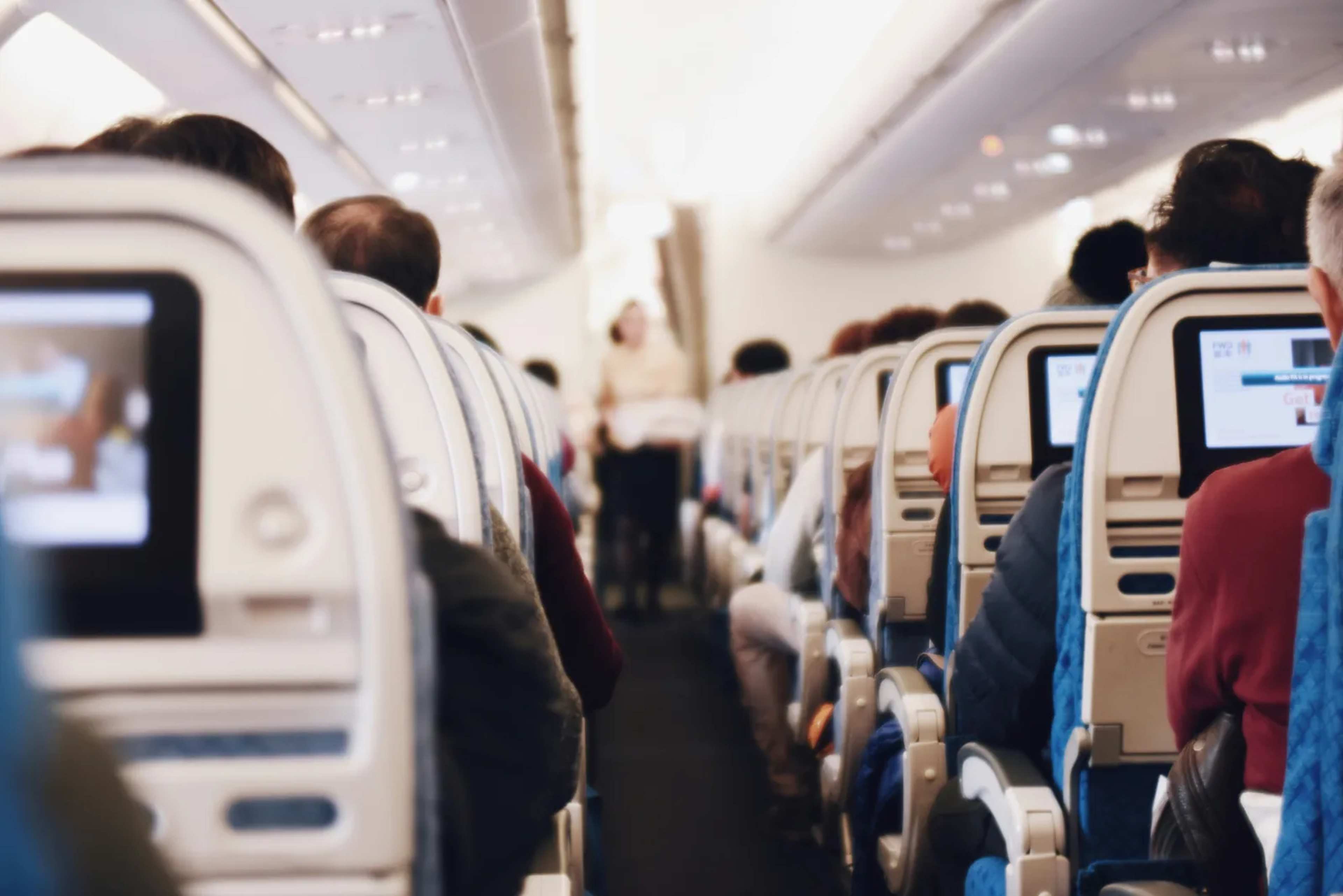
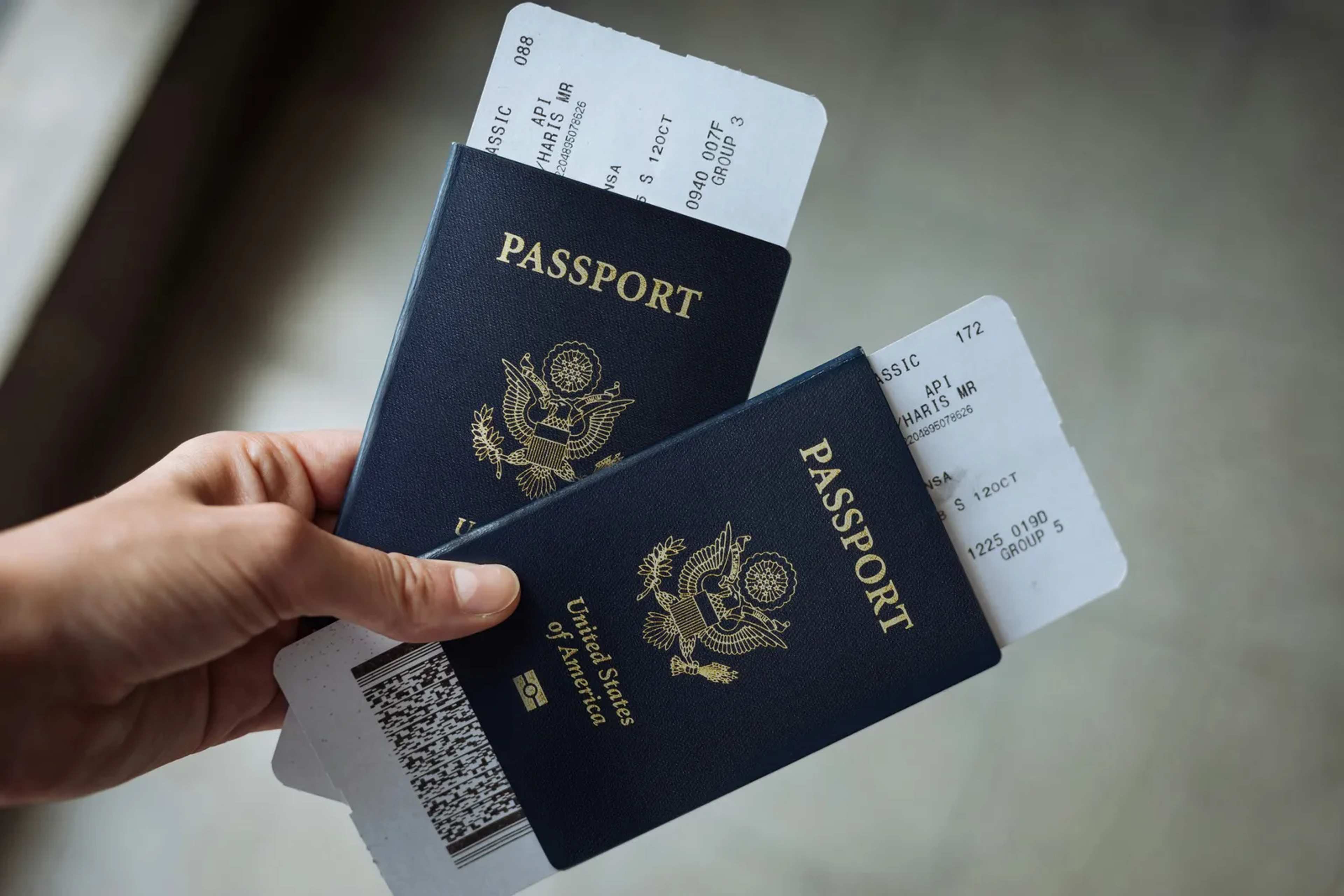
The terminal smells like recycled air and old ambition.
You are moving through it carrying nothing that announces you.
No swoosh. No monogram. No logo stitched in gold.
Just a bag. Just a body. Just a person trying to get somewhere without becoming a story someone else tells.
There is a gap between the traveler the industry wants you to be – conspicuous, branded, legible – and the one you actually are when you strip away everything that was sold to you. One version of you is a target. The other is simply a human being in motion. Most of us spend our entire traveling lives negotiating the distance between those two people.
1. The Quiet Refusal

There is a specific kind of person who shows up to an international airport with a bag that could have come from anywhere.
No brand. No statement. Just function.
Psychology has a name for what they’re doing – even if they don’t. In a culture obsessed with standing out, people who don’t wear obvious brands are actually making a quiet statement. They’re comfortable being visually unremarkable because they know their worth isn’t tied to being noticed.
This is not indifference. It is precision.
The refusal to carry a brand-name bag through a foreign city is a calculated act of self-protection. It is the traveler’s version of drawing the blinds. When you finally let go of worrying about how your choices look to others, the sense of relief is unexpected. It isn’t rebellion. It’s release.
The gear is not the point. The invisibility it grants is everything.
To move through a crowd unclocked, untagged, unread – that is the quiet power these travelers are chasing. They are not making a fashion statement. They are making a survival decision. And they have likely been making it for years without ever needing to explain it.
2. The Branded Body as Social Signal
Every logo you wear while traveling is a sentence in a language you did not choose to speak.
It says something about your income. Your country of origin. Your level of sophistication – or lack of it.
Luxury brands like Rolex or Louis Vuitton don’t sell watches or bags. They sell belonging to the 1%. They sell aspiration. But in the context of travel – especially solo travel through unfamiliar cities – that aspiration becomes a liability. It paints a target.
The branded body signals wealth in environments where wealth makes you vulnerable.
Consumption has been recognized as a means of identity construction and social validation beyond mere material satisfaction. In daily life, that might feel empowering. In a crowded souk, a dimly lit train station, or a border crossing, it feels like wearing a sign that reads: *I have things worth taking.*
The psychology here is not paranoia. It is environmental reading. The experienced traveler learns – sometimes the hard way – that the body is a text. And a branded body is a very loud one. Choosing to go unbranded is choosing to go quiet. To reduce your readability. To exist in a space without telegraphing your contents.
3. The Independence Sign
There is a deeper thing happening underneath the surface of the no-logo choice.
It isn’t just about safety. It’s about who you believe yourself to be.
These aren’t people who avoid name brands just to be different or to make a political statement. They’ve simply developed the habit of questioning why things are the way they are. Why should this shirt cost ten times more because it has a logo? Why do we accept that certain brands indicate success? Who decided these rules anyway?
That question – *who decided these rules?* – is the engine of the rebellion.
This questioning mindset often extends to other areas of life. People who think independently about consumption tend to think independently about other social expectations too. The traveler who refuses the branded backpack is often the same person who books the non-tourist neighborhood. Who eats where the locals eat. Who skips the itinerary entirely.
The brand refusal is not the story. It is a symptom of a larger, quieter independence. A mind that has decided to opt out of other people’s scripts.
4. Conspicuous Non-Consumption as Identity
There is an academic term for what these travelers are doing. It sounds dry. The psychology underneath it does not.
Conspicuous non-consumption represents traveler behavior when they deliberately avoid lavish expenditure during vacations and holidays, and simultaneously, they offer social signaling to motivate others.
The no-brand bag is its own kind of statement. Just a whispered one.
Some individuals of higher social standing prefer inconspicuous signaling, choosing minimalist styles, culturally symbolic products, or socially responsible consumption as identity markers.
The choice to be visually neutral is, paradoxically, a form of self-expression. A high-confidence one. It says: I do not need this environment to confirm me. I do not need the right logo to prove I belong.
There is something deeply grounded about that posture. People who opt out of this game have realized something important: true confidence doesn’t need an audience. They’re secure enough in themselves that they don’t need external markers to feel successful.
That security is not given at birth. It is learned. Usually in a foreign city, at some point, after something went wrong.
5. The First Time You Felt Like a Target
I remember the exact moment I stopped caring about gear brands while traveling.
I was twenty-four, standing at a train station in a city I won’t name. I had a bag with a visible logo – a name everyone recognized. Within thirty seconds of sitting down on a bench, I had been approached three times. A vendor. A man asking for change. Another man who wanted to know where I was staying.
I wasn’t afraid. But I was clocked. Read. Identified as a certain type of person in a certain tax bracket from a certain country.
I packed differently after that trip. Everything I wore on subsequent journeys became more neutral, more anonymous, more deliberately unremarkable. When tourist identity becomes active, it can increase psychological anonymity – the feeling that one’s everyday identity is less visible or less likely to be judged. This occurs because the tourist identity involves unique cognitive structures that reduce self-diagnosticity and promote escapism. These factors decrease self-awareness and enhance feelings of anonymity, as individuals have psychological distance from their usual environment, thereby making them feel less constrained by their everyday social roles.
The unbranded bag was not a fashion choice. It was a boundary.
6. The Social Identity Underneath the Zipper
What a person carries while traveling reveals something they may never say out loud.
It reveals their relationship to visibility.
Social identity theory was developed by Tajfel and Turner, who defined it as “that part of an individual’s self-concept which comes from the knowledge of his membership of social groups as well as the value and emotional significance attached to the membership.”
A branded bag says: I am a member of this group. Recognize me as such.
An unbranded bag says something more complex. It says: I am not seeking group membership here. I am passing through. I am choosing not to be classified.
Consumers are eager to express their identities and differentiate themselves through certain brands. The traveler who refuses brands is doing something subtler. They are choosing to make their identity private. Portable. Interior. Something that does not require external confirmation from strangers in a foreign city.
That is not anti-social behavior. It is a sophisticated form of self-sovereignty – the kind that does not need to announce itself.
7. The Target Psychology
Being perceived as a target is not simply a physical safety concern. It is a psychological wound.
It changes how you move through space. How often you look over your shoulder. How much mental energy you spend monitoring your environment instead of experiencing it.
According to social comparison theory, exposure to others’ tourism content can implicitly trigger social status and self-concept evaluations. When such content conveys markers of superior quality of life, cultural capital, or values, viewers may experience social identity threat – a perceived challenge to their social standing, group belonging, or self-identity.
The branded traveler constantly performs status in an environment where that performance is often unsafe.
The unbranded traveler has opted out of the performance entirely. They have decided that the cost of being read – being positioned, categorized, and approached – is too high. What they gain in return is the rarest thing available in modern travel: cognitive freedom. The ability to simply be somewhere without managing how that somewhere perceives you.
That is not a small thing. That is, in many ways, the entire point of going anywhere at all.
8. The Value Audit
At some point, the experienced traveler runs a quiet internal audit.
They hold up the branded bag and ask: what, exactly, am I paying for here?
These individuals have learned to assess actual value. They’ll pay more for something genuinely better, but they won’t pay extra just for a label.
The label, in the context of travel, is not neutral. It is a liability. Conspicuous consumption is a concept coined by economist Thorstein Veblen, which refers to the act of purchasing luxury goods and services to display one’s wealth and social status. It is often used as a social marker to differentiate oneself from others.
In everyday life, that differentiation might carry social currency. In an unfamiliar city at 11 PM when you are tired and slightly lost, it carries a different kind of weight entirely.
The value audit strips the brand down to its function. Does the bag hold your things? Does it survive rain? Does it open quietly and close securely? Those are the only questions that matter. Everything else is theater. And the experienced traveler has stopped performing for an audience they never chose.
9. The Camouflage Imperative
There is a word military strategists use. It applies here.
Concealment.
Not deception. Not fraud. Simply: do not advertise yourself to people whose intentions you cannot read.
Public groups with higher exposure tend to prefer subtle signals of conspicuousness, in order to differentiate themselves from the mainstream. The seasoned traveler has internalized this instinct at a bone-deep level. The nondescript jacket. The worn-in bag. The shoes that say “local” rather than “tourist fresh off the plane.”
This is camouflage as psychological self-care.
It reduces the cognitive load of being in an unfamiliar place. It narrows the gap between where you are and how safe you feel. Travel is inherently emotional. It is tied to the deepest human desires for exploration, freedom, connection, and self-discovery. None of those desires are well-served by spending your energy managing how strangers perceive your net worth. The unbranded traveler has made more room for the actual experience of being alive in a new place.
10. The Self You Carry Through the Gate
Here is the heaviest truth at the bottom of all of this.
The bag was never really about the bag.
What a person chooses to carry – and what they choose to hide – reveals the architecture of their interior self. Their relationship to vulnerability. Their comfort with being perceived. Their trust (or deep mistrust) of strangers and systems.
A backpacker travel brand does not sell budget accommodation and cheap flights. It sells the exhilarating freedom of unplanned adventure, of connecting with strangers who become lifelong friends, of discovering who you truly are when stripped of routine and comfort.
The person who refuses the branded gear has already arrived at the end of that sentence. They know who they are when everything is stripped away. They tested it. In a city where no one knew their name. In an airport at 3 AM when the flight was delayed and the phone was at 4% battery.
They’ve identified their core values and make purchasing decisions that align with them, not with what advertising tells them they should want.
The rebellion isn’t loud. It never was. It doesn’t need to be. The loudest statement this kind of traveler makes is the one they make by saying nothing at all – by moving through the world as a person rather than a product, carrying only what they actually need, advertising nothing, defending nothing, performing for no one.
They are not minimalists. They are not anti-consumerists on a soapbox. They are simply people who looked at the gap between who they were told to be and who they actually are – and chose, quietly, decisively, and without ceremony, to live on the other side of it.
Somewhere right now, one of them is checking in. There is no logo on their bag. There is no label on their jacket. There is nothing about them that says: *here, take something from me.*
They have been every age. Every income. Every background.
They all learned the same thing, in different cities, in different years, sometimes gently and sometimes not: the most liberating thing you can do in a world that wants to sell you an identity is to simply refuse to wear one on the outside.
You already know who you are.
You carry it differently now.