The building has no roof anymore.
The wallpaper is breathing with mold.
You drove four hours to get here.
And you have never felt more awake.
There is a name for this pull. There is a gap – a yawning, restless chasm – between the person you perform in your daily life and the person who stands quietly inside a collapsed ballroom, listening to what silence actually sounds like. The performed self wears clean shoes. Makes plans. Answers emails. The real self? The real self wants to stand inside a metaphor and let it breathe. In the silence of these abandoned spaces, there is a strange comfort. They invite us to pause and reflect, to listen to the echoes of the past and contemplate our place in the vast tapestry of time. They remind us that, though we may be forgotten, the traces of our existence will linger, whispering our stories to those who come after.
1. The Ruinenlust Instinct
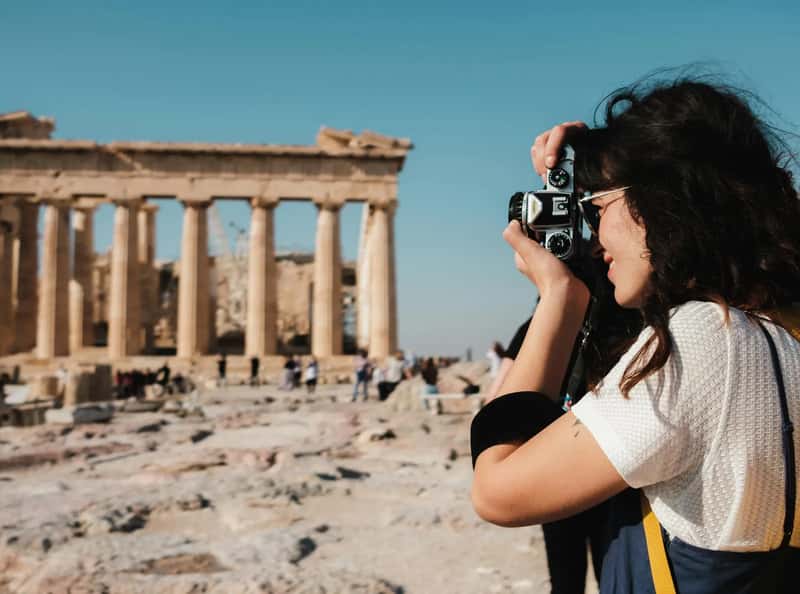
There is a German word for it: Ruinenlust – literally translated as the irresistible draw to crumbling buildings and abandoned places.
The Germans didn’t coin it by accident.
They coined it because it needed a name. Because too many people were feeling it and calling it something lesser – curiosity, wanderlust, a “phase.”
It lives in our subconscious. We are all, perhaps, a little obsessed with ruin without even realizing it. We all experience it in different ways, relate to it from different backgrounds, and contemplate its meaning through our unique relationship with abandonment.
Ruinenlust is not a quirk. It is not a personality type or a niche travel trend.
It is a confession. A quiet, persistent admission that the broken thing still has something to say. That you still want to hear it. That maybe – just maybe – its brokenness is exactly what makes it worth standing in front of.
The ruin calls. Most people walk past it. A few of us turn around and go back.
2. The Mortality Mirror
You didn’t come here to think about death. And yet.
Psychologists suggest our fascination with ruins taps into deep-seated emotions about mortality, memory, and the impermanence of human achievement.
The peeling ceiling. The collapsed staircase. The window frame still holding its shape, even though the glass has long surrendered.
Abandoned spaces force us to confront our own fears of isolation, decay, and death. The empty halls and crumbling walls reflect our deepest anxieties about our impermanence and the fragility of human existence. These spaces become mirrors, reflecting our own mortality back at us.
And we go anyway. Willingly. Eagerly.
Because there is something clarifying about staring at the evidence of time. Something honest. Something that strips the calendar from your wrist and reminds you that you are also, eventually, a structure subject to weather.
The ghost town doesn’t scare you. It relieves you. It says: this too is allowed to end.
3. The Identity Archaeologist
You are not just exploring a building. You are excavating yourself.
Place attachment refers to the affective bond that develops between individuals and specific locations that matter to them. This bond evolves through emotional connections, shared meanings, and personal understandings of a specific place or its features. It is not merely about liking a location – it is a deep psychological connection that shapes behaviour, identity, and well-being.
The ruin-seeker is not a tourist. They are an archaeologist of the self.
Every cracked tile speaks to a version of something that once held together. Every collapsed wall is a referendum on permanence. And somewhere in the act of walking through it all – carefully, reverently – the explorer begins to take inventory. Of their own load-bearing walls. Of the rooms in themselves they have boarded up and stopped visiting.
The abandoned place is not external. Not really. It is always, on some level, a map of the interior.
4. The Sensation-Seeking Psyche
Some people need noise to feel real. Others need the opposite.
Higher openness to experience, preference for solitude, artistic temperament, and sensation-seeking all correlate with attraction to abandoned places. These aren’t random traits. They are the traits of people who feel too large for their current container.
The ordinary world has edges that are too smooth. Streets that are too clean. Conversations with conclusions already baked in.
This drive is related to the psychological concept of sensation seeking – a personality trait characterized by a desire for novel, complex, and intense experiences.
The abandoned place delivers all three simultaneously. The creak of a warped floorboard is novel. The architecture of collapse is complex. And the feeling of being the only human in a space that once held hundreds – that is intense in a way no bar or stadium can replicate.
The sensation-seeker doesn’t want adrenaline for its own sake. They want proof that there is still a world that hasn’t been smoothed into a product.
5. The Unfinished Self
I remember the first time I walked through a derelict hotel ballroom in a mid-century building that hadn’t seen a paying guest since before I was born. The chandeliers had long since been stripped, but the ceiling rosettes remained – ornate, preposterous, perfect in their refusal to surrender. I stood there longer than made any practical sense. I wasn’t thinking about the building.
I was thinking about the version of myself I had quietly abandoned somewhere along the way. The one who had ambitions that felt too large, too theatrical, too gilded for the life I’d actually built around them.
The ghost town gives room. Room to be unfinished. Room to be uncertain. Room to stand inside a metaphor and let it breathe.
That ballroom wasn’t a ruin. It was a permission slip. It said: ornate things are allowed to outlast their purpose. It said: you don’t have to be functional to still be worth something.
I took a photograph. I didn’t share it with anyone for years. Some mirrors are private.
6. The Narrative Engine
The mind cannot tolerate blankness. It will always fill the frame.
When people visit these sites, they instinctively try to fill in the missing story. The mind doesn’t tolerate blank spaces. It searches for narrative, for reason, for meaning. And when no clear explanation is available, imagination becomes its own historian.
Abandoned sites practically drip with half-told tales. The peeling wallpaper, the scattered papers on the floor, or the rusted machinery each raise silent questions: Who lived here? What were their dreams? Why did they leave? These places never provide a definitive answer, which only increases our desire to learn more.
And desire, in the psychological sense, is a force of maintenance. It keeps us engaged. It keeps us present. In a world where most information arrives pre-digested and pre-concluded, the ruin offers the radical luxury of the open ending.
You get to finish the story. You get to choose what it means. That is, quietly, an act of profound psychological autonomy.
7. The Dark Tourism Dividend
There is a formal name for this category of travel. Academia calls it dark tourism – the deliberate seeking of sites associated with difficulty, tragedy, and human loss.
Scientists have a name for deliberately visiting places of darkness and difficulty. And the research confirms what the ruin-seekers already feel in their bones.
Self-reflection and self-rumination were determinants of self-discovery, which subsequently affected well-being. This study offers a new theoretical lens for understanding the role of dark tourism in promoting tourists’ well-being.
Happiness tourism – the resort, the spa, the curated experience – asks nothing of you. You arrive. You consume. You depart unchanged.
Dark tourism makes a different demand. It asks you to sit with discomfort. To acknowledge that the world contains endings. That human effort is not always rewarded with permanence. And in that sitting – in that deliberate, chosen discomfort – something in the psyche reorganizes itself. Slightly. Permanently.
You return from the ghost town different. Not broken. Recalibrated.
8. The Wabi-Sabi Revelation
The Japanese have a concept for this that Western psychology took centuries to catch up to.
Wabi-sabi is a Japanese aesthetic concept that celebrates the beauty of impermanence, imperfection, and the natural process of decay. Urban exploration photography embraces wabi-sabi by highlighting the textures of rusted metal, peeling paint, and cracked walls.
This is not mere aesthetics. This is a philosophical stance on survival.
There is a strange, melancholic beauty in decay. The peeling paint, the broken windows, the creeping vines reclaiming what was once theirs – all of these elements create a visual poetry that is both haunting and mesmerizing.
The person who seeks out ruins is, consciously or not, practicing wabi-sabi in the field. They are looking at a thing that has been through something – fire, flood, neglect, time – and finding it more beautiful for the ordeal.
They are practicing, in every shutter click and every slow step through debris, a belief system that their own culture rarely endorses: that what has been broken has not been made worthless.
That belief doesn’t stay in the ruin. It follows you home.
9. The Permission Architecture
In most social spaces, there are strict invisible rules about how much of yourself you are allowed to present.
In the ordinary world, there are rules about how much of yourself you’re allowed to reveal. In an abandoned building, those rules collapse along with the ceiling plaster.
This is not a small thing.
Urban exploration offers a form of escapism from the monotony of everyday life. It allows individuals to step outside their comfort zones, confront their fears, and push their limits.
But the limit being confronted is rarely physical. Rarely the crumbling staircase or the uncertain floor.
The real limit is the interior one. The belief that you must be useful to be present. That you must be functioning to deserve space. The ruin, magnificently, proves otherwise. It takes up enormous space. It demands attention. It offers nothing in return. And it is extraordinary for exactly that reason.
Standing inside it, you are granted – briefly, powerfully – the same permission. You do not have to perform. You do not have to produce. You can just be, inside something that has also, stubbornly, chosen to remain.
10. The Beautiful Proof
This is the one that weighs the most. The one that lives deepest.
Every person who makes the deliberate journey to an abandoned ruin or a ghost town is, at some level, conducting an experiment. They are testing a hypothesis the modern world aggressively resists: that something can lose its original function – entirely, irreversibly – and still be worth standing in front of.
Ruins raise questions about memories and imaginations of a foregone past, and of potential futures. They visualise the passage of time and the inevitability of collapse, reminding us of our own transience.
Something in us wants to believe that meaning lingers even when life does not. And the ruin – standing there in its patient, moss-covered refusal to disappear – is the most tangible proof we have that this belief is not naive. It is correct.
The hypothesis holds. The experiment succeeds. The ruin is beautiful. Devastatingly, triumphantly, quietly beautiful – not despite what it has lost, but because it kept standing after losing it.
And if that can be true of a building, then something in the ruin-seeker already knows – in the marrow and the muscle memory, in the place where logic doesn’t quite reach – that it might be true of a person, too.
Of a dream that didn’t survive contact with reality. Of a version of yourself that got quietly left behind in a city you no longer live in, in a relationship that ended without ceremony, in a career that collapsed before it ever had a grand opening. The ruin says: endings are not erasure. The ghost town says: what was real stays real, even when the people leave.
You already knew this. You just needed somewhere to stand while you remembered it.