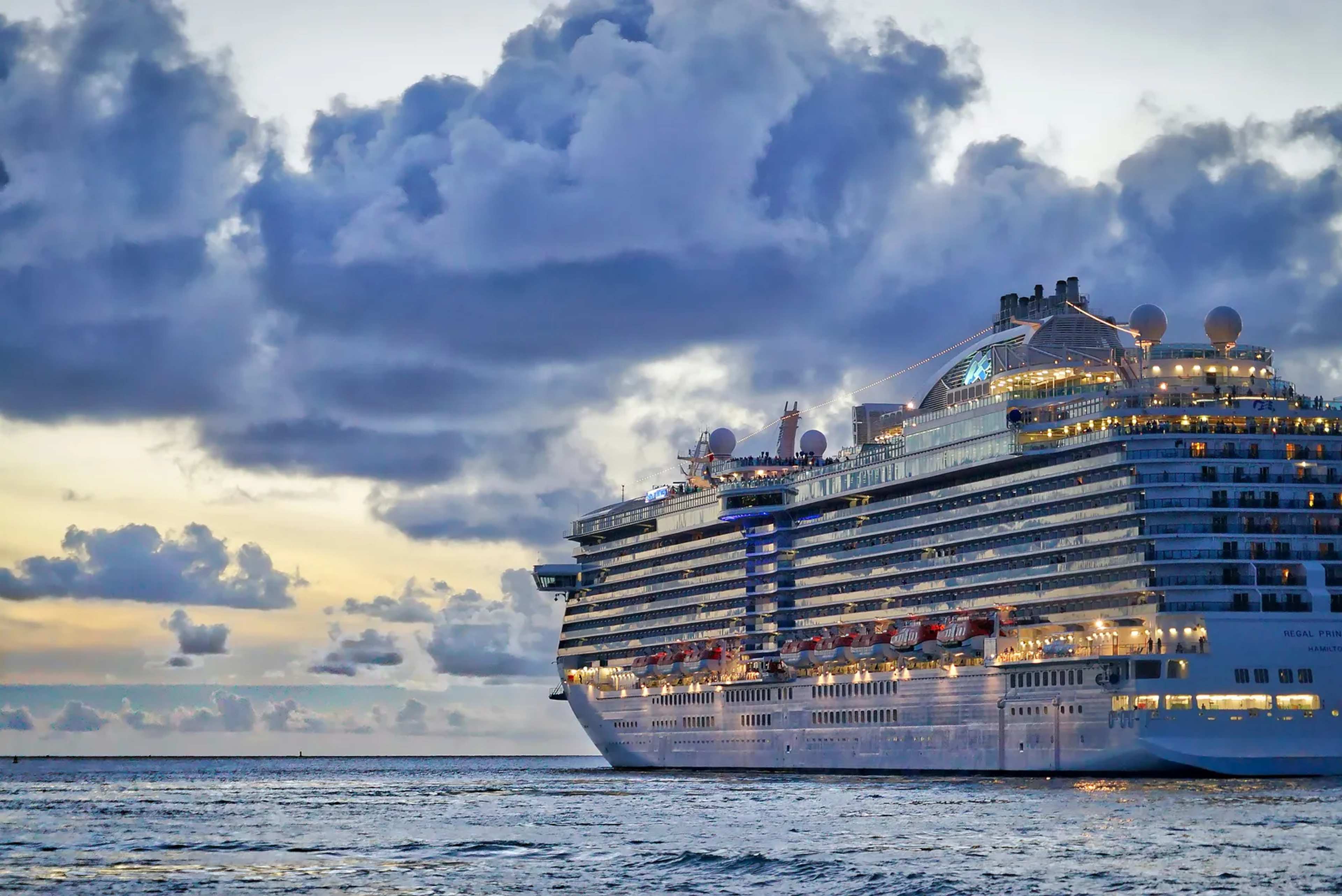
The airport is quiet at 3 AM.
You are not.
Another city. Another check-in. Another version of yourself you haven’t had time to examine.
Your bag is already packed for the next one.
There is a particular kind of person who books the next flight before the current one has landed. Who knows the layout of a foreign metro before they know the name of their own street. Who feels the most like themselves in the forty-minute window between baggage claim and the hotel – suspended, unnamed, gloriously undefined. This is the Serial City-Breaker. And psychology has a lot to say about what’s really going on beneath all that movement.
1. The Dopamine Architecture

Here is what your brain is actually doing when you book that tenth city.
It is flooding itself with a chemical reward.
When we encounter something new and exciting, our brains release a surge of dopamine, creating a sense of pleasure and reinforcing the behavior that led to this rewarding experience. The Serial City-Breaker isn’t reckless. They are, in neurological terms, extremely well-rewarded for their behavior.
A sense of novelty activates the dopamine system directly. As a result, it enhances mood, positive outlook, motivation, and goal setting. A positive sense of novelty has also been shown to increase creativity in dealing with stress, lower perceived stress and anxiety, and lessen depression.
This is the architecture of the habit. Each new city is not indulgence. It is, chemically speaking, medicine. The brain learns the pattern early: stillness equals flatness, movement equals aliveness. And once that circuit is wired, sitting still doesn’t just feel boring. It feels like withdrawal. The body starts to associate the familiar with the depleted. And the unknown – a different skyline, a language you can’t quite read – becomes the only thing that makes the internal noise quiet down.
The city is not the destination. The dopamine spike is.
2. The Evolutionary Alibi
You have been doing this for thousands of years.
You just didn’t have Instagram for it.
At its core, wanderlust can be traced back to our evolutionary past. Early humans were nomadic by necessity, constantly moving in search of food, safety and resources. This propensity for exploration wasn’t just about survival; it was also about adaptation.
The urge to explore may be part of how the brain evolved: a built-in craving for the unfamiliar that sharpens cognition, boosts emotional resilience, and even promotes neurological health.
The Serial City-Breaker is not broken. They are, in the most ancient sense, doing exactly what the species designed them to do. Travel writer Richard Grant has suggested that dromomania as a disorder is defined by sedentary cultures which pathologize a desire for travel that is present as an instinct in humans from their history as nomadic hunter-gatherers. The desire to keep moving is not a malfunction. It is a feature. The sedentary world around you labeled it a problem. Your nervous system labeled it home.
The crisis is not the wandering. The crisis is being judged for it in a world that built offices and settled suburbs and called that civilization.
3. The Restlessness Underneath
But let’s be honest about what else is in the suitcase.
Because not all of it is evolutionary glory.
If there is one key characteristic of the Wanderer, it is restlessness, which appears as a constant need to chase the next thing, whether it be in the outer world – new places, careers, or relationships – or in the inner world – memories, dreams, and reflections.
This method defeats itself – it is the bad infinite, an endless progression. Once something is achieved, the Wanderer is no longer satisfied, and seeks something else, ad infinitum.
The tenth city is thrilling on the plane. By day two, you’re already pricing flights. The city itself becomes almost irrelevant – a backdrop to the sensation of arrival. What the Serial City-Breaker is quietly chasing is not the place. It is the feeling of possibility that exists in the forty-eight hours before a place becomes ordinary. That window when everything is still unknowable, when you are still unknowable – even to yourself. The moment that window closes, the urge to open another one begins.
4. The Fear Wearing a Passport
Let’s name the thing that’s actually running the show.
It’s not wanderlust.
It’s atychiphobia. The fear of failure. Wearing very good shoes.
Atychiphobia, the intense and irrational fear of failure, shapes the lives of millions in ways often left unspoken. Far more than a simple reluctance to take risks, this deep-seated phobia fuels anxiety, avoidance, and self-sabotage across personal, professional, and social domains.
For the Serial City-Breaker, stillness is where failure lives. Stillness is where you can be evaluated. Stillness is where you have to answer the questions: Is this enough? Am I enough? Movement makes those questions impossible to ask. You can’t interrogate a person who is already at the gate. This disproportionate response reveals a cognitive distortion – believing failure defines personal worth, when in reality, failure is a natural part of growth. But when the fear is baked deep enough, no amount of logic rewires it. Only motion does. And so the motion continues. City after city. Year after year. A life lived in perpetual pre-boarding.
5. The Confession Between Terminals
I know this airport. I know this feeling.
There was a year I visited nine cities in eleven months and told everyone I was “living freely.” What I was actually doing was outrunning a version of myself that had stayed too long in one place and started to feel like a ceiling. Every new city reset the clock. Every new hostel, every unfamiliar coffee order, every street I had to navigate without knowing the language – it was all permission. Permission not to be the person I was afraid I was becoming back home.
The movement felt like courage. It was also, I would understand later, a very elegant avoidance strategy. They’re leveraging environmental shifts to recalibrate internal ones. While not everyone feels an overwhelming urge to travel, ignoring a consistent craving for novelty can lead to mental stagnation. What I had confused for growth was actually motion. They feel identical, right up until the moment you stop and realize you’ve been running a very scenic loop.
6. The Temporary Identity
There is something intoxicating about being a stranger.
Nobody in Lisbon knows you failed. Nobody in Seoul knows you stayed in bed for three days last March. You arrive clean. Anonymous. Authored entirely by your own narration.
Traveling, especially to unfamiliar cultures, can prompt introspection and help us question our beliefs and values. This search for meaning and identity is a powerful motivator, drawing people to places where they can learn not only about the world but also about themselves.
The Serial City-Breaker becomes a different person in each city. Not dishonestly – genuinely. The self is more fluid than we admit. In Tokyo you are patient and quiet. In Seville you are expansive and loud. In both places, you are real. But neither version has to reconcile with the other. Neither version has to be sustainable. That’s the seduction. The identity is always temporary. And temporary things can’t really fail. They just expire. There’s a profound psychological relief in that. A life made of departures is a life where nothing is ever truly over – because nothing was ever truly settled.
7. The Social Media Amplifier
The city-breaking is real.
But the performance of it has its own engine now.
In the digital age, the psychological pull of wanderlust is amplified by social media. Travelers share their journeys online, often making it appear as though everyone is on an exciting adventure except for us. Platforms like TikTok and Instagram showcase carefully selected snapshots of idyllic destinations, creating a sense of “travel FOMO.”
What this creates is a feedback loop with no off switch. The Serial City-Breaker is no longer just moving for themselves. They are moving for an audience. The dopamine hit of a new destination is now doubled by the dopamine hit of likes. But here’s what the algorithm never shows: the Sunday afternoon in a foreign city when you run out of things to look at. The moment the novelty evaporates and you’re just a person sitting in a room, anywhere, staring at the ceiling, still yourself. It is essential to note that a positive sense of novelty is far different from novelty-seeking behavior, which is typically associated with extreme risk, impulsiveness, and extravagance and can lead to addictions and destruction in mental health. The camera obscures the cost. The feed never shows the crash between cities.
8. The Exit Strategy
Every departure is also an escape.
The Serial City-Breaker rarely examines what they are leaving. They are too focused on where they are going. But the psychology is blunt about this.
Unlike transient stress, atychiphobia is sustained, often stemming from early experiences, trauma, or deeply internalized beliefs about self-worth. For many compulsive travelers, the first exit happened long before any airport. It happened in a childhood home where stillness felt dangerous. Where being seen – really seen, not performing – felt like exposure.
Understanding that as a teen, you had to fling yourself – fearful, untutored, and unprepared – into the larger world if you wanted to escape a claustrophobic upbringing and broaden your life with new places and people is a formative wound many Serial City-Breakers carry. The movement that began as survival becomes a vocabulary. And eventually it becomes the only language you trust. The problem with exit strategies, psychologically speaking, is that they are always written for a single door. But the thing you’re running from has legs too.
9. The Novelty Hangover
There is a cost nobody puts in the travel blog.
It arrives quietly, usually around city seven or eight.
While frequent travel can boost your mood and positively impact your mental health, there are limits. The reduced stress and increased feelings of happiness after a vacation typically last less than one week before the baseline reasserts itself.
The Serial City-Breaker discovers this the hard way: that the city is not the medicine. The novelty is. And novelty, by definition, expires. People with high wanderlust often report restlessness in routine and a compulsion to seek out the unfamiliar. That compulsion, when unchecked, starts to narrow the gap between what satisfies and what merely distracts. Cities that once felt electric start to feel like wallpaper. You need more of them, more frequently, with less recovery time between. Excessive novelty seeking – characteristic of impulsivity and behavioral addictions – might be caused by increases in dopamine stemming from less reuptake. The neuroscience doesn’t lie. At a certain point, the escape becomes indistinguishable from the addiction. The suitcase feels lighter. The self feels heavier.
10. The Arrival You Keep Deferring
Every Serial City-Breaker is waiting for a specific feeling.
They don’t always know its name. But they’ll recognize it when it comes – that sense of landing, not in a city, but in themselves. The quiet that doesn’t feel like emptiness. The stillness that doesn’t feel like stagnation.
From the standpoint of existential positive psychology, growth includes five dimensions: meaning seeking, reconstructing a life philosophy, identity, prosocial behavior, and awe of nature. None of these dimensions are geography-dependent. None of them require a boarding pass.
Individuals with the fear of failure tend to view failure as a reflection of their worth, leading to paralyzing anxiety and a reluctance to try new things. For the Serial City-Breaker, the thing they’ve been most reluctant to try is staying. Not staying in a city. Staying in themselves. Sitting with the version of their life that exists when the motion stops. The version that isn’t curated, isn’t arriving anywhere, isn’t lit by the flattering ambiguity of a new place. Fear of failure is learned, which means it can be unlearned. Recognizing that atychiphobia limits your potential is the first step to reclaiming control over your life. The potential that gets limited is not just professional or social. It is the potential for depth. For the kind of knowing – of a place, of a person, of oneself – that only comes from staying long enough to be disappointed and staying anyway.
The heaviest luggage the Serial City-Breaker carries was never checked. It was always carry-on. The belief that motion equals value. That a life measured in cities is a life being well-spent. That to pause is to plateau. That the person you are when you are nowhere in particular – not arriving, not departing, not performing the adventure – is a person not worth being.
But that person, the quiet one between the cities, is the only one who actually knows the way home.
The next flight can wait. Sit with that for a minute.